Hunan Cuisine (Xiang): Chopped Chili Fish Head, Stir-Fried Pork and Fiery Flavors
Hunan — the province of Mao Zedong, mountains and merciless chillies — makes some of the most direct, aromatic, aggressively satisfying food in China. Xiang cuisine (湘菜) is often confused with Sichuan, but where Sichuan numbs with peppercorn, Hunan simply burns: fresh chilli, pickled chilli, dried chilli, all at once. It is bold, salty, smoky and, for heat lovers, the most exciting table in the country.
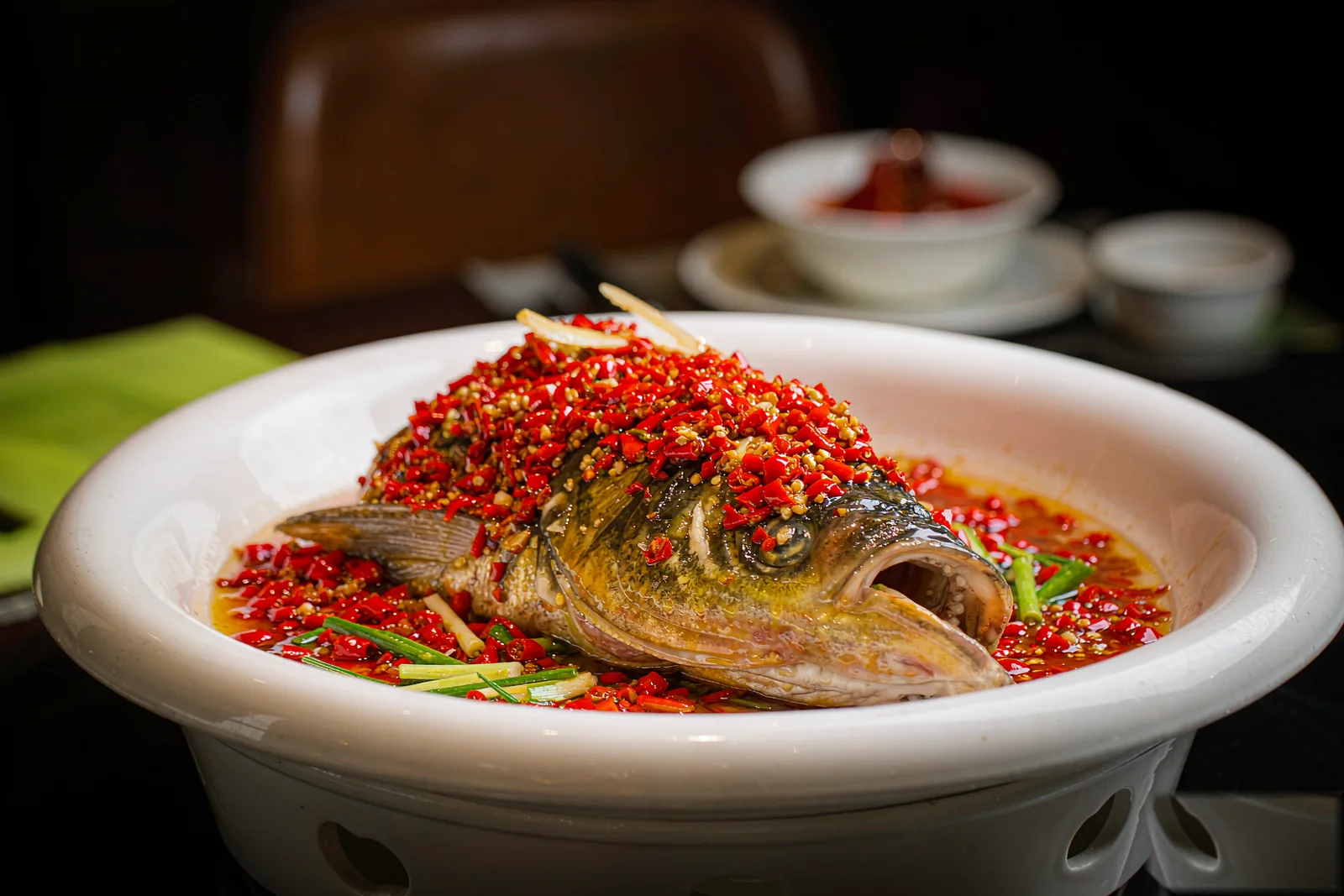
How Hunan heat differs from Sichuan
The cliché is that Sichuan food is "numbing-hot" (麻辣) and Hunan food is "pure-hot" (鲜辣) — and it holds up. Hunan leans on fresh and pickled chillies rather than dried chilli and Sichuan peppercorn, so the burn is cleaner and sharper, without the buzzing numbness. There is also a strong current of smoke: Hunan cures pork and fish over tea leaves and rice, giving the cuisine its deep, savoury undercurrent. If you like Sichuan but want more intensity and less tingle, Hunan is your next step up.
The dishes that built the reputation
- Duojiao yutou (剁椒鱼头) — a whole fish head steamed under a bright-red blanket of chopped pickled chilli and garlic. The defining Hunan dish; order the noodles that soak up the sauce afterward.
- Xiaochao rou (小炒肉) — the "farmers' stir-fry": pork belly and green chilli tossed fast over high heat. Mao's favourite comfort food.
- Kouwei xia (口味虾) — crayfish in a garlicky chilli bath, the summer street-food obsession.
- Larou (腊肉) — tea-smoked bacon, usually stir-fried with garlic shoots.
Smoked and cured: the winter pantry
Hunan's curing tradition is what sets it apart from its neighbours. Larou (腊肉), layu (腊鱼) and laji (腊鸡) — bacon, fish and chicken smoked over rice husks and tea leaves — hang from every rural kitchen in winter. They turn up stir-fried with vegetables, steamed over rice, or chopped into the region's famous leicha (擂茶) and rice dishes. The flavour is deep, woody and unlike anything else in Chinese cooking.
What else is on the table
Beyond the fire, Hunan does comfort brilliantly: changsha choudoufu (长沙臭豆腐) the black fermented tofu that smells alarming and tastes wonderful, tangyou baba (糖油粑粑) sticky rice cakes in brown sugar, and mi fen (米粉) the rice noodles that Changsha eats for breakfast, lunch and everything between. For how Hunan's rice noodles fit the national breakfast picture, see our breakfast guide.
How to eat it without losing your eyebrows
Order rice — it is the firebreak. Ask for wei la (微辣, mildly spicy) if you need to, though Hunan cooks have a generous idea of "mild". Pair the heat with yogurt, soy milk or a sweet drink, which cut chilli oil far better than water. And pace yourself: Hunan's burn builds, so the first five bites are the easiest five. For the full spice-survival playbook, our Chengdu food guide translates the scale.
Where to eat it
Changsha is the capital of the cuisine and of the night-market scene; the surrounding countryside is where the smoked and cured pantry lives. Our Zhangjiajie page connects Hunan's food to its staggering mountain scenery, and a local guide will order the fish head, calibrate the heat and show you how locals eat crayfish at midnight.
FAQ
Is Hunan food hotter than Sichuan food?
Usually, yes — Hunan uses fresh and pickled chilli for a sharper, purer burn, while Sichuan adds numbing peppercorn. If you like heat, Hunan is the more intense of the two.
What is a "fish head" dish — is it edible?
It is the cheeks, collar and skin of a big fish head, steamed under chilli. The meat around the cheeks is the prize. It is one of Hunan's most loved dishes, not a novelty.
Can I ask for mild?
You can request wei la (mildly spicy), and it will help, but Hunan's baseline is still spicy by most standards. Rice and a sweet drink are your real protection.
Is there non-spicy Hunan food?
A little — the smoked meats, steamed dishes and rice cakes can be mild, but the cuisine's soul is chilli. See our vegetarian guide if you need to avoid it entirely.
Related reading
Compare Hunan's clean burn with Sichuan's numbing spice and the mild end at Cantonese cuisine.
Related guides