Sichuan Cuisine Beyond Spice: The Classic Flavor Profiles Explained
Málà is one note in a twenty-plus-note vocabulary. From fish-fragrant to strange-flavour to lychee: the classic Sichuan taste profiles, the dishes that show each one best, and how to use them to order smarter.
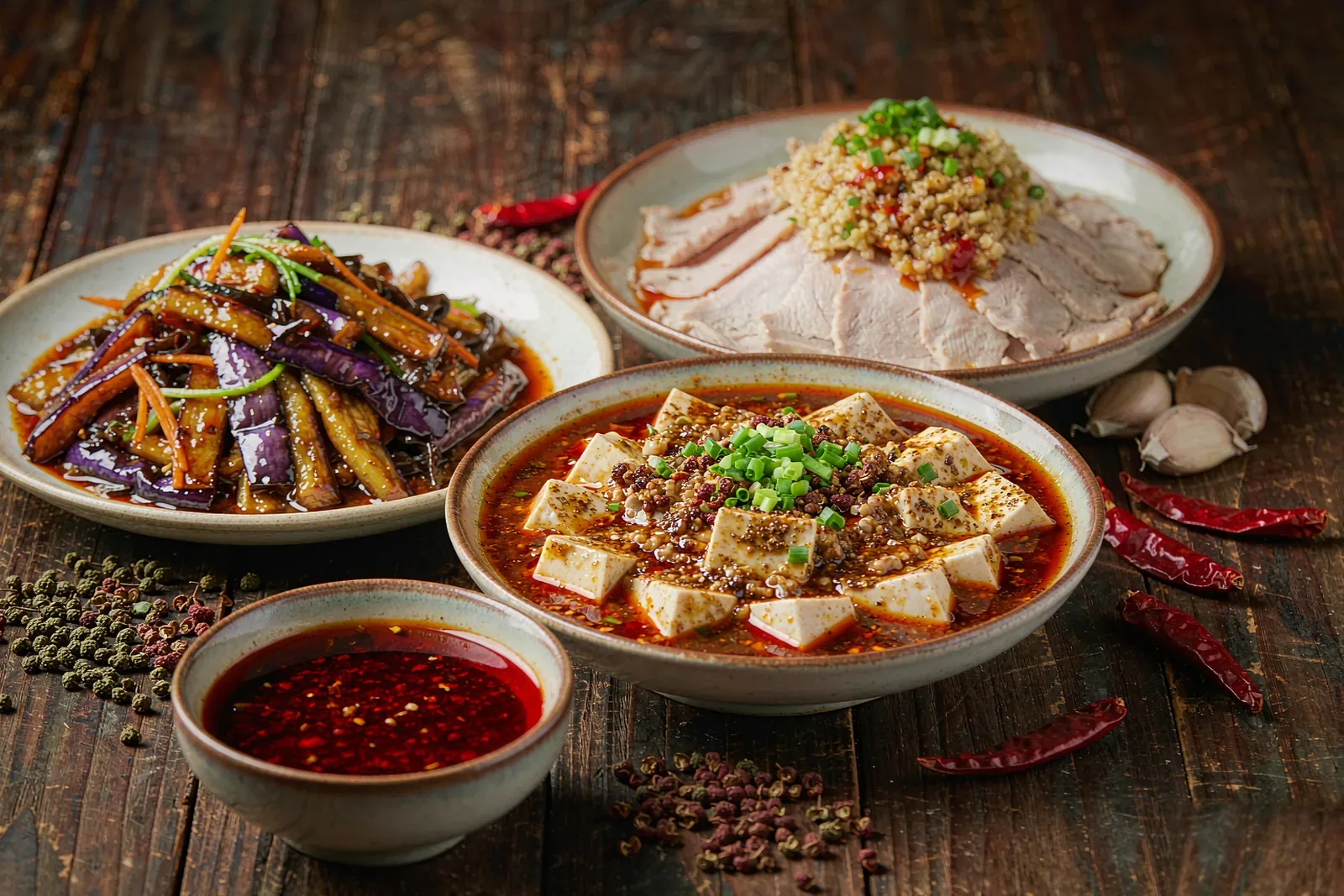
Why "spicy" undersells Sichuan food
Sichuan cuisine classically counts two dozen flavour profiles (味型), of which málà — the chilli-and-pepper burn visitors expect — is only one. A third of the canon contains no chilli at all. Knowing even five or six of these profiles changes how you order: you stop asking "how spicy?" and start asking "which flavour?", which is the question locals are actually answering.
The profiles worth knowing by name
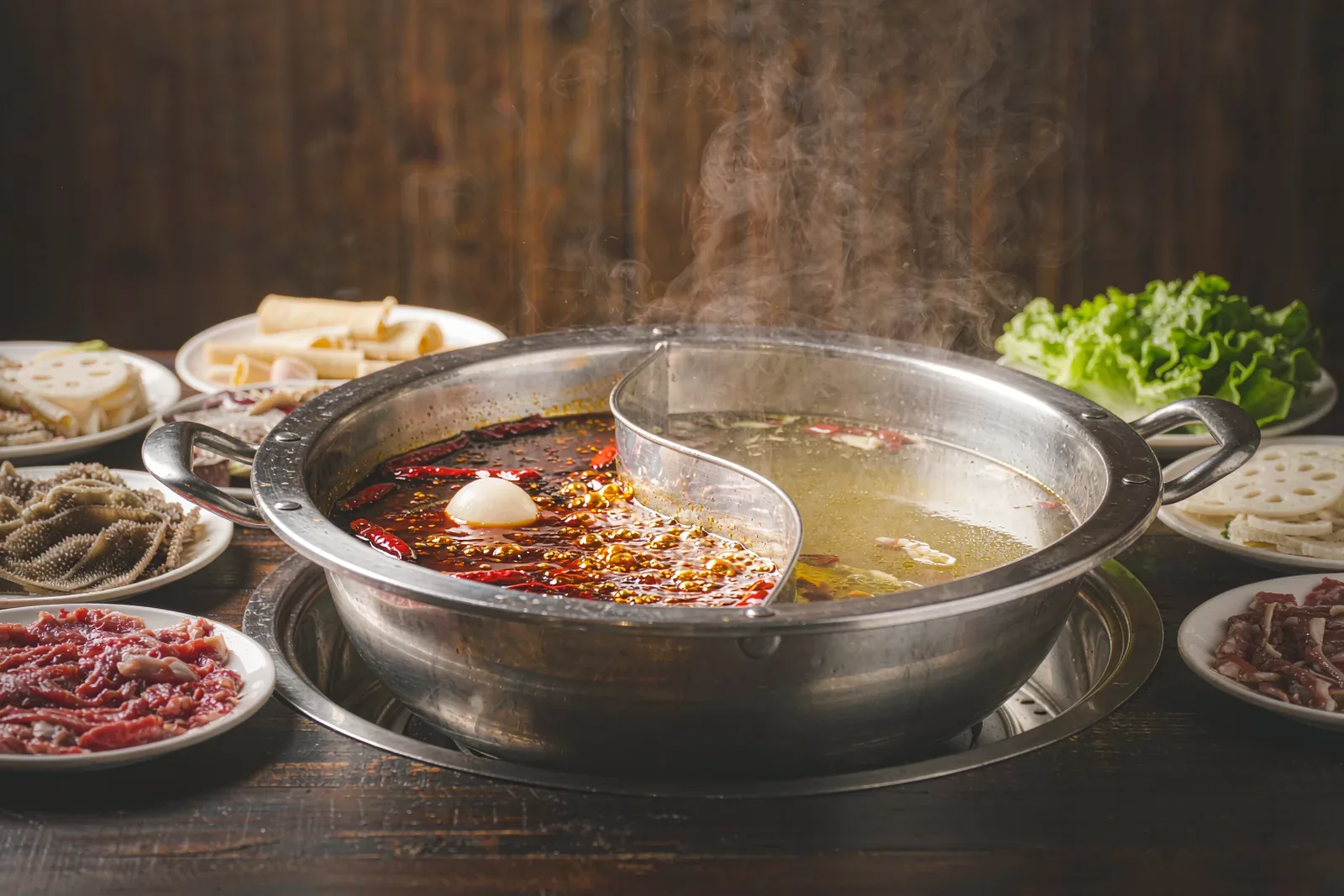
- Málà (麻辣) — chilli heat plus Sichuan pepper tingle. Mapo tofu, hotpot. The famous one.
- Yú xiāng (鱼香, fish-fragrant) — no fish anywhere: pickled chilli, garlic, ginger and scallion fermented into a sweet-sour-savoury sauce. Yu xiang eggplant is the gateway dish.
- Guài wèi (怪味, strange flavour) — every taste at once: sesame, vinegar, sugar, garlic, chilli. Ban huang gua with strange-flavour dressing shows why "strange" is affectionate.
- Lì zhī (荔枝, lychee flavour) — sweet-sour with a faint fruit illusion, no fruit involved. Classic in guoba roupian (crispy pork with rice cakes).
- Suān là (酸辣) — sour heat. Hot-and-sour soup's original home.
- Jiāo má (椒麻) — fresh green Sichuan pepper ground into a jade sauce for cold chicken. Rattan pepper (藤椒) is its fashionable younger sibling.
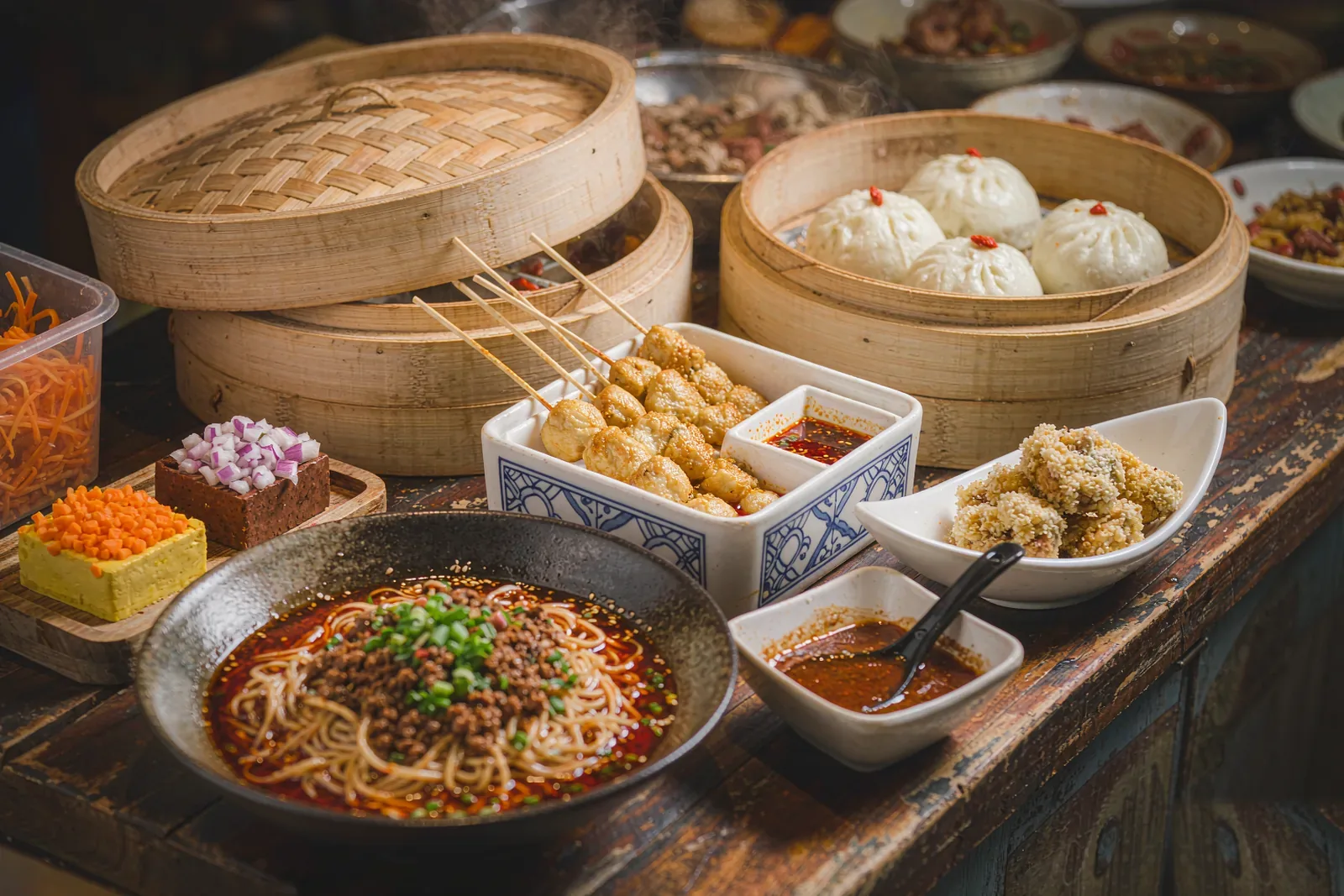
- Hóng yóu (红油, red chilli oil) — the workhorse dressing for cold dishes like fu qi fei pian.
- Jiāng zhī (姜汁) — warm ginger-scallion dressing, the standard counterpoint to delicate seafood and dumplings.
- Yán xū (盐熏) / wǔ xiāng (五香) — five-spice smoke and braise; the profile of tea-smoked duck.
- Qín xiāng (芹香) / suān tún (蒜泥, garlic paste) — white meat with garlic paste is a summer standard.
How to order with this vocabulary
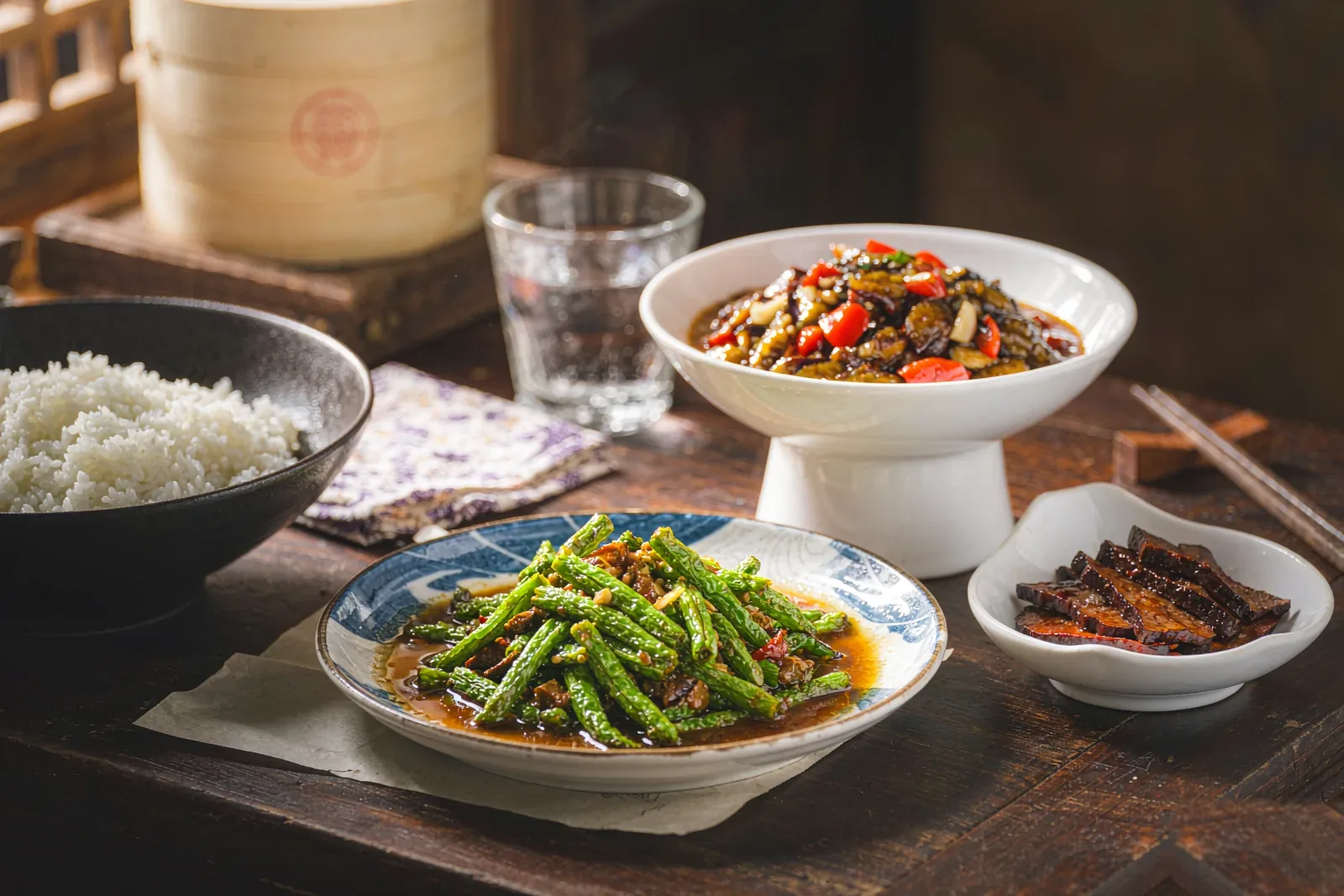
A well-built Sichuan table alternates profiles the way a concert alternates movements: one málà centrepiece, one yú xiāng vegetable dish, one cold red-oil starter, one clear-broth soup to reset. If a menu lists no broth or steamed dishes, you are in a snack shop, not a restaurant — both are fine, but know which evening you are having. Our Chengdu food guide pairs these profiles with concrete dishes and a spice scale.
Where to taste the range deliberately
The Sichuan Cuisine Museum in Pidu District runs cooking classes covering several profiles hands-on, and banquets order-by-order are easy to arrange at classic kitchens. A local guide translates the profile names at the table — most menus list only dish names, not flavour profiles — and any Chengdu tour can include a cooking class or a tasting-menu evening. Expect ¥80–150 per person for a full profile-spanning dinner.
FAQ
Does "fish-fragrant" mean the dish contains fish?
No. The name comes from the sauce's origin in fish cookery; yú xiāng dishes contain no fish. The flavour is pickled chilli, garlic, ginger, sugar and vinegar.
Which single dish shows the most profiles at once?
A banquet-style cold platter — typically red-oil, strange-flavour and ginger-dress sections side by side — or a good kǒu shuǐ jī (mouth-watering chicken) with rattan-pepper sauce.
Are all these dishes burning hot?
No. Roughly a third of the classic profiles use no chilli — ginger, five-spice, lychee, garlic-paste and strange-flavour dishes range from warm to sweet-sour.
What is rattan pepper vs Sichuan pepper?
Rattan pepper (藤椒) is a fresher, greener, more citrus-relative of huājiāo — sharper tingle, less numbing. It dominates modern cold-dish sauces.
Related guides