Chengdu Teahouse Culture: Gaiwan Tea, Snacks and Slow Mornings
Bamboo chairs, gaiwan tea refilled forever, ear cleaners with tuning forks and mahjong until dusk: how Chengdu's teahouses actually work, what to order, what things cost, and how to spend a proper slow morning.
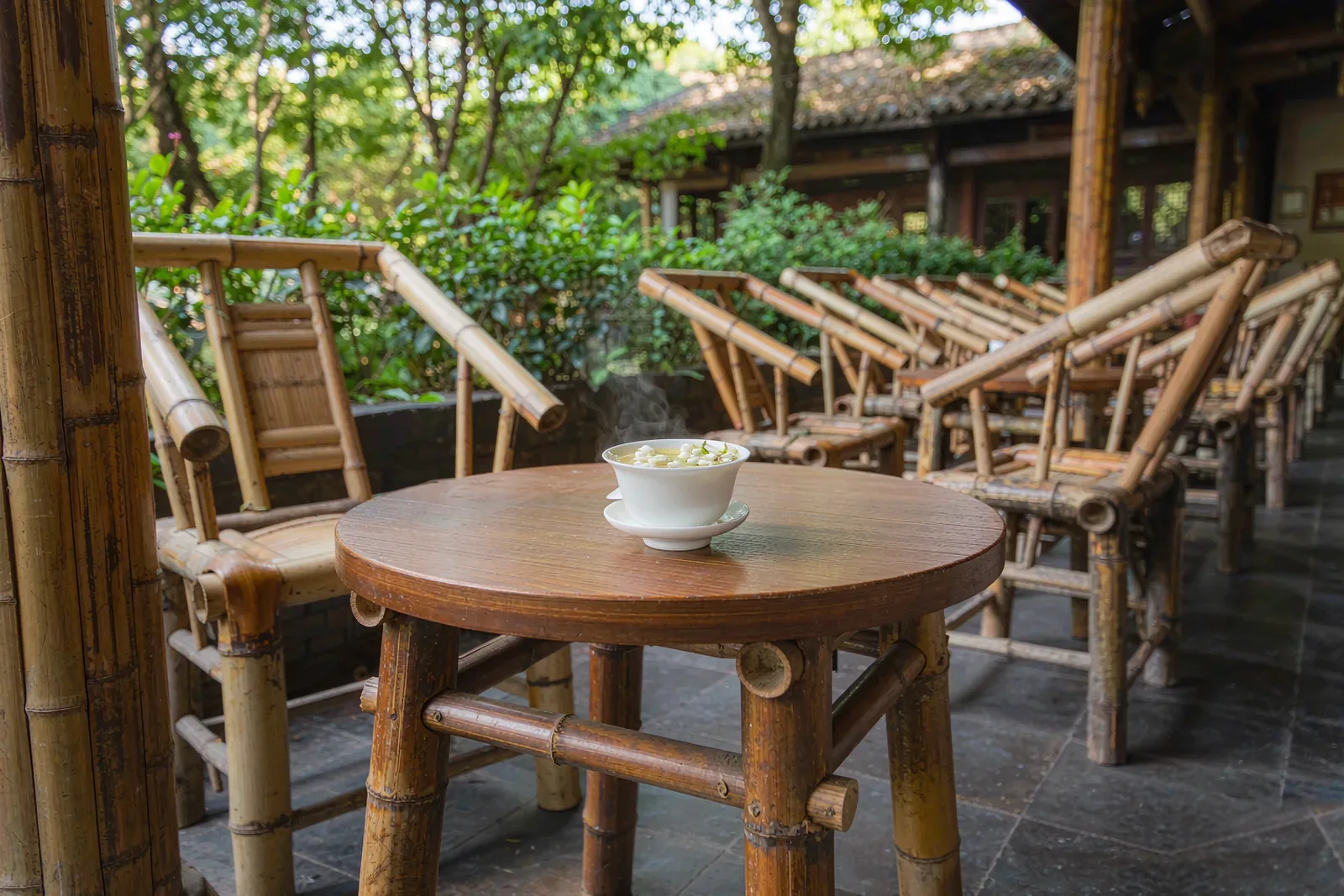
A teahouse is not a café
In Chengdu the teahouse (茶馆) is a public living room: retirees arrive at 8 am with newspapers, mahjong tiles clack by noon, and the tea is almost incidental to the socialising. Tourists photograph the scene; the correct move is to join it. A seat costs ¥15–40 for the day in the classic parks — hot water refills are unlimited and nobody will ever ask you to leave.
What to order
- Gaiwan tea (盖碗茶) — the three-piece lidded bowl, usually jasmine (bì tán piāo xuě is the Sichuan classic: jasmine-scented black tea) or green tea. The lid regulates temperature and pushes leaves aside; sip without removing it entirely.
- Zhú yè qīng (竹叶青) — premium local green tea from Emei Shan, the upgrade order.
- Snacks — sunflower seeds, candied fruit, and from roaming vendors: bing fen, dougan, or a proper sugar-oil guoba. See Chengdu street food for the snack vocabulary.
- Ear cleaning (采耳) — the legendary service: a practitioner with tuning fork and swabs cleans your ears for ¥30–60. Strange, deeply relaxing, very Chengdu.
Where to go
People's Park (人民公园) Heming Teahouse is the classic: a thousand seats under trees, TeaArt performances, and the blind massage and ear-cleaning vendors in residence. Wenshu Monastery's teahouse is quieter and pairs with the temple; Wuhou Shrine area has upscale garden teahouses with Sichuan-opera shows at weekends. For a full day plan: teahouse morning, market lunch, then our food guide takes over the evening.
Teahouse etiquette in five lines
Seat yourself; a server will come. Tap two bent fingers on the table when someone pours your tea — that is the silent thank-you. Leaving the lid open means "refill please"; resting it on the bowl edge means you are stepping out briefly. No tipping. And nobody is on a schedule, so bring a book or embrace the eavesdropping.
Pairing tea with the rest of a Chengdu day
A slow morning at Heming, lunch in the surrounding lanes, an afternoon spa or the Sichuan Cuisine Museum, and hotpot at night (see the hotpot guide) is the most-liked Chengdu rhythm among our travellers. A local guide picks the right teahouse for your energy level and orders the correct local tea; half-day teahouse modules slot easily into any Chengdu tour. Budget ¥30–80 per person including snacks and an ear-clean.
FAQ
Can I sit for hours without ordering more?
Yes — one gaiwan purchase is a day licence. Refills are part of the deal; that is the entire social contract of a Chengdu teahouse.
Is the ear cleaning hygienic?
Reputable practitioners use sterilised tools and disposable swab tips, visible on a tray. If you are hesitant, watch a session first — you will either book one or firmly decline, both acceptable.
Do teahouses take QR payment?
Everywhere. Cash is accepted but QR (WeChat Pay/Alipay) is the default even for ¥15 tea. See the payments guide.
Which teahouse has Sichuan opera?
Shufeng Yayun near Wuhou Shrine runs nightly face-changing shows; garden teahouses sometimes host weekend afternoon performances. Book ahead in high season.
Related guides