Guest — sign in to save your enquiries.
My account
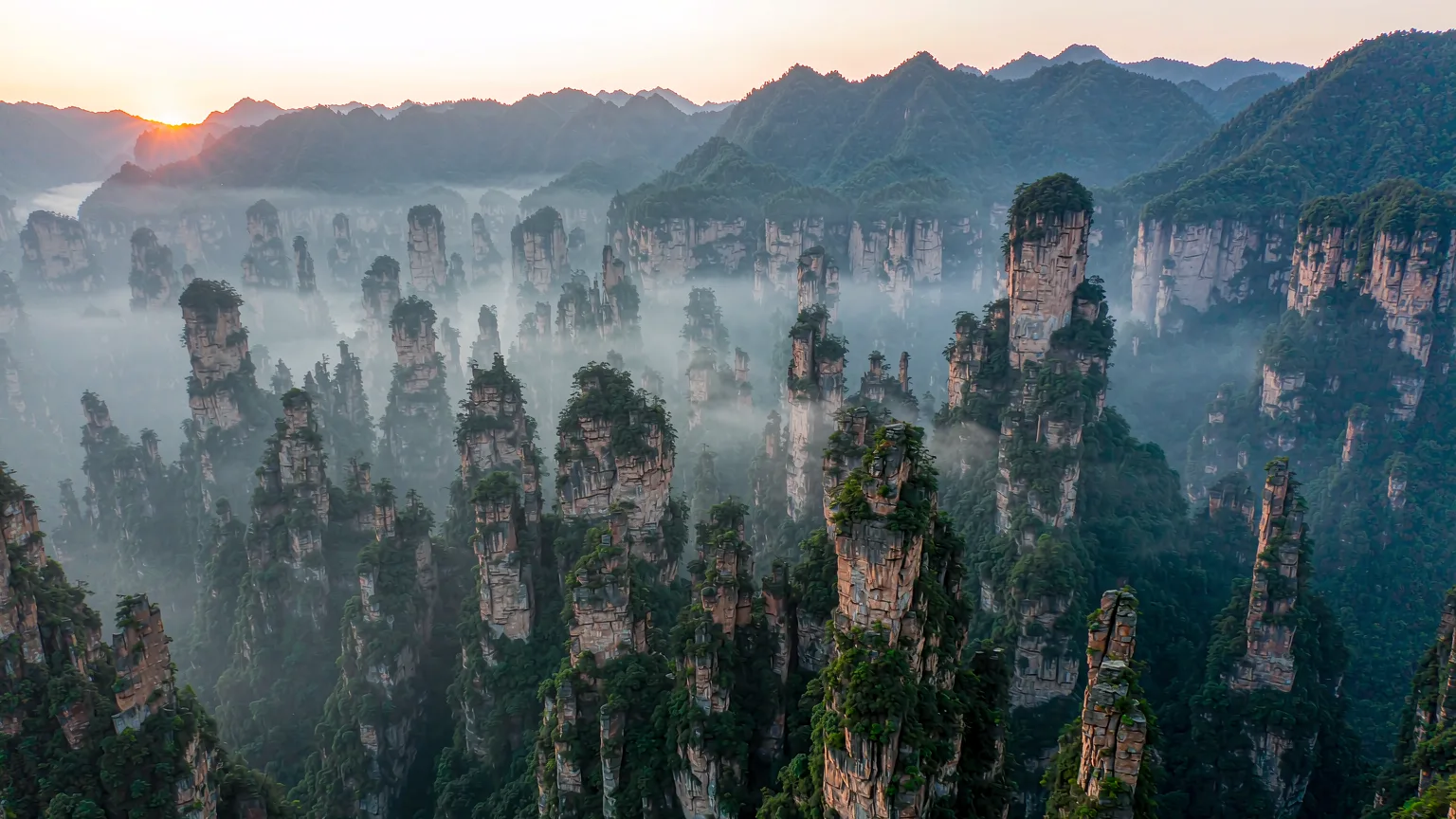
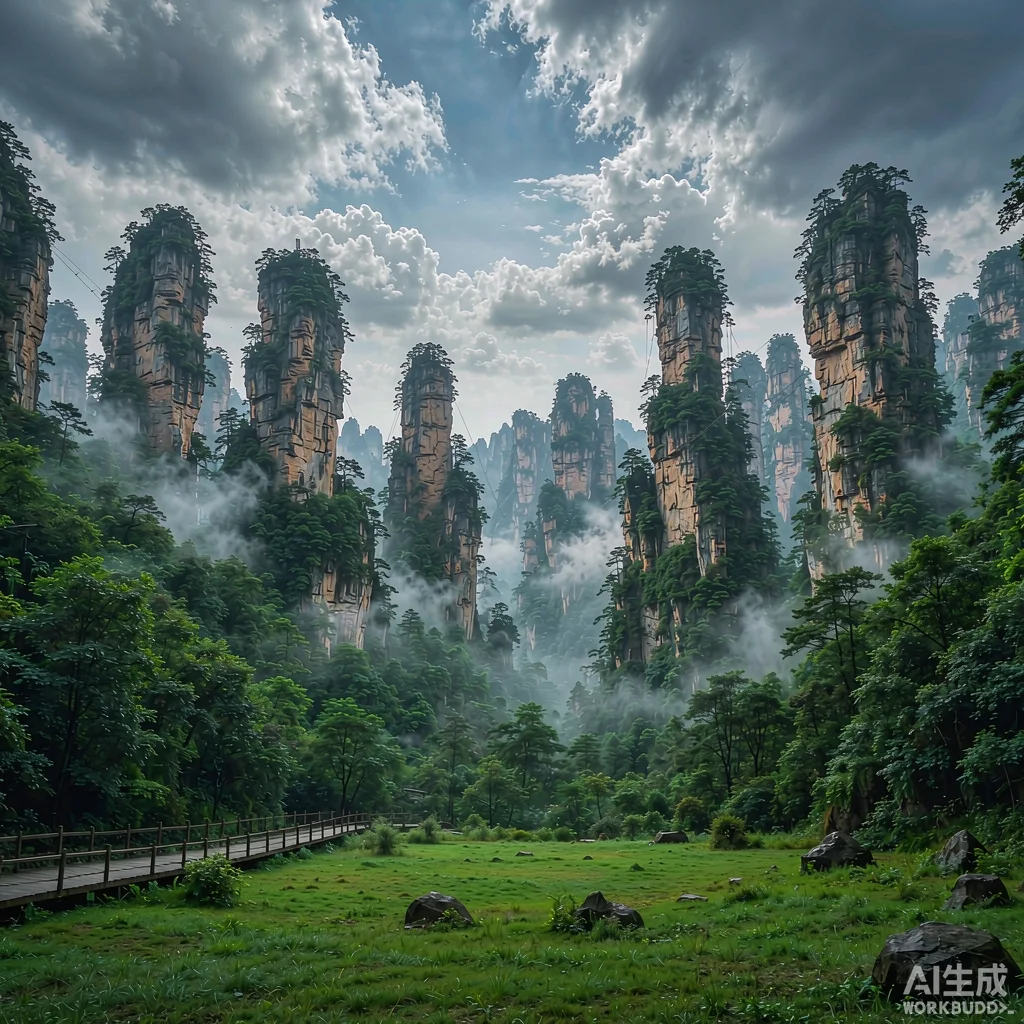
The sandstone pillars of Zhangjiajie inspired Avatar's floating mountains, and hiking among them feels suitably otherworldly. Walk the glass bridge, ride cliff-hugging cable cars, and descend Yuanjiajie's misty valleys. A must for hikers, photographers, and fantasy-film fans with moderate fitness.
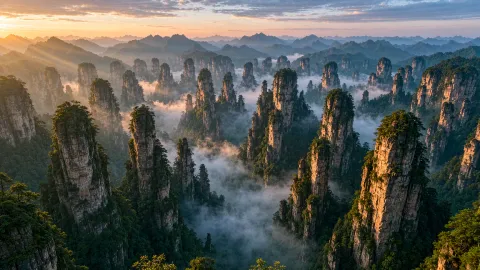
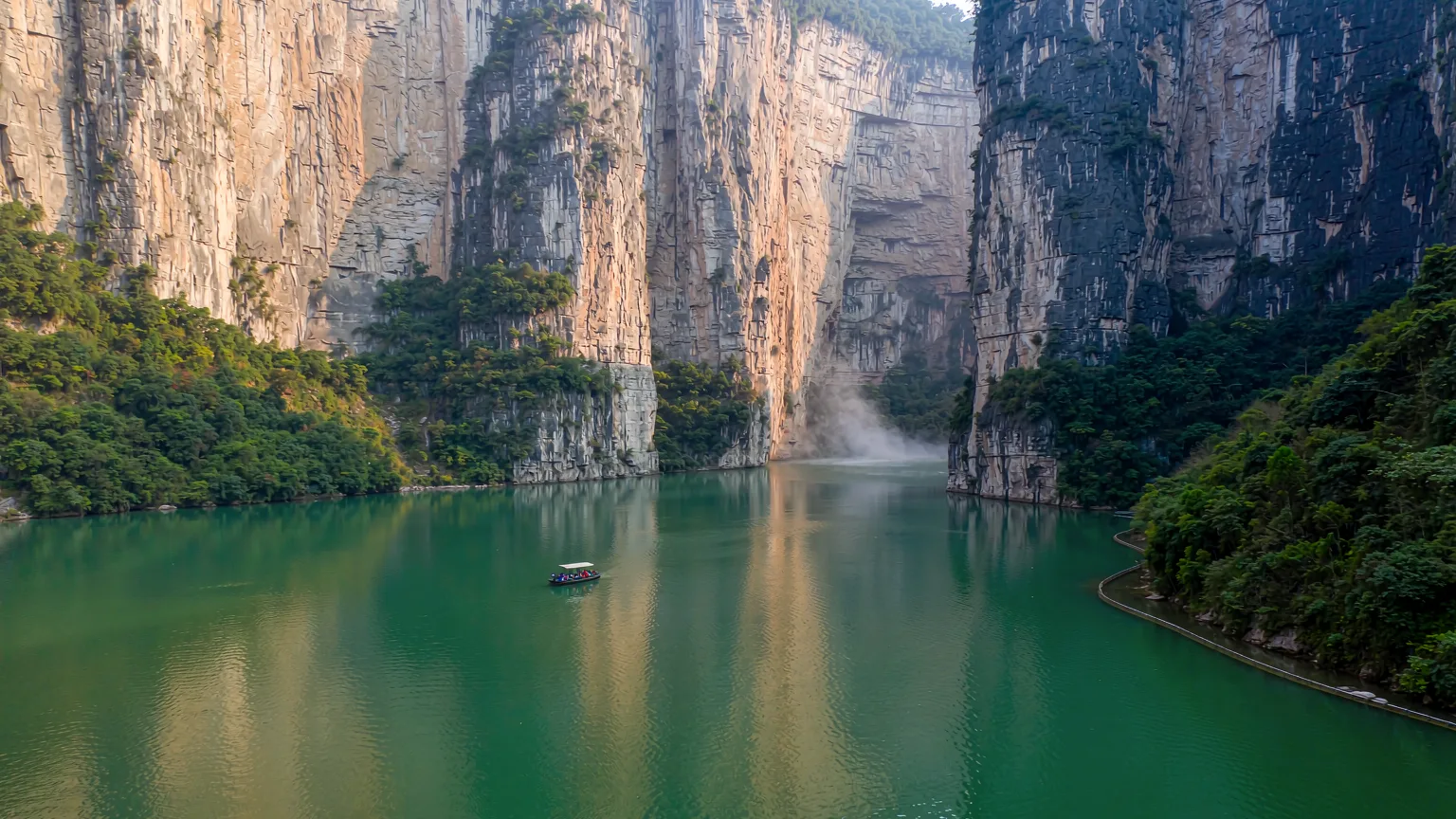
Zhangjiajie, in northwestern Hunan Province, is a city born of stone. Its name means 'Zhang family boundary', recalling a Ming-dynasty garrison, but the world knows it for the quartz-sandstone pillars that rise like a forest of giants from the Wulingyuan Scenic Area. These formations, some over 200 meters tall, were shaped by water and wind over 300 million years and became China's first national forest park in 1982. In 1992 UNESCO inscribed Wulingyuan on the World Heritage List, and in 2004 it joined the Global Geoparks Network. The city itself is young, established in 1988 as Dayong and renamed Zhangjiajie in 1994, but its landscapes are ancient beyond measure.
Zhangjiajie is administratively a prefecture-level city covering 9,516 square kilometers, with two urban districts—Yongding and Wulingyuan—and two counties, Cili and Sangzhi. Yongding is the transport and hotel hub, where the airport, railway station and most restaurants cluster. Wulingyuan District is the gateway to the national park, a small town of guesthouses and ticket gates. Between them, a 40-minute drive or shuttle links city life to the stone forest. The core scenic area is further divided into Zhangjiajie National Forest Park, Suoxi Valley, Tianzi Mountain and Yangjiajie, each with its own character and cable cars.
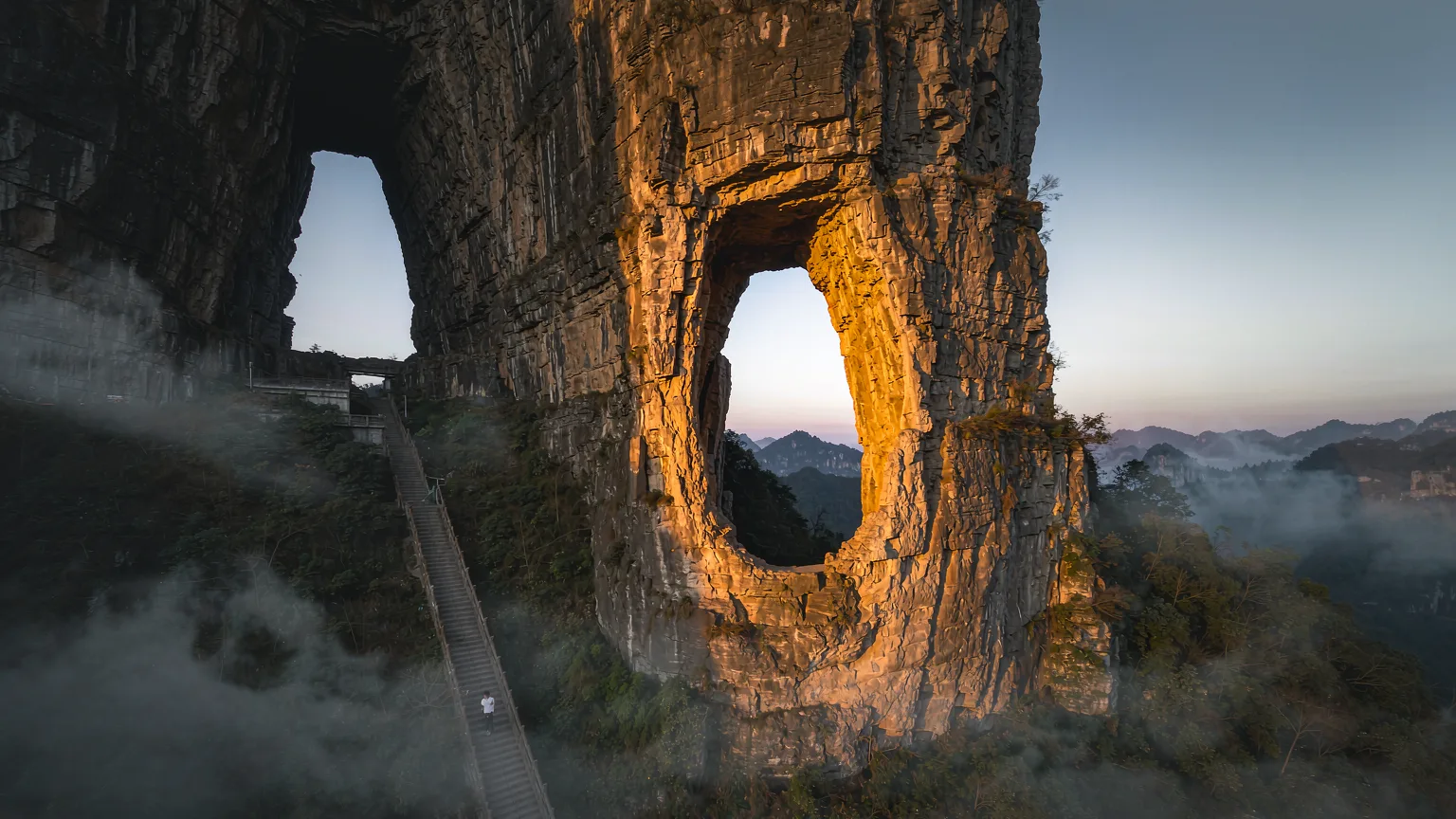
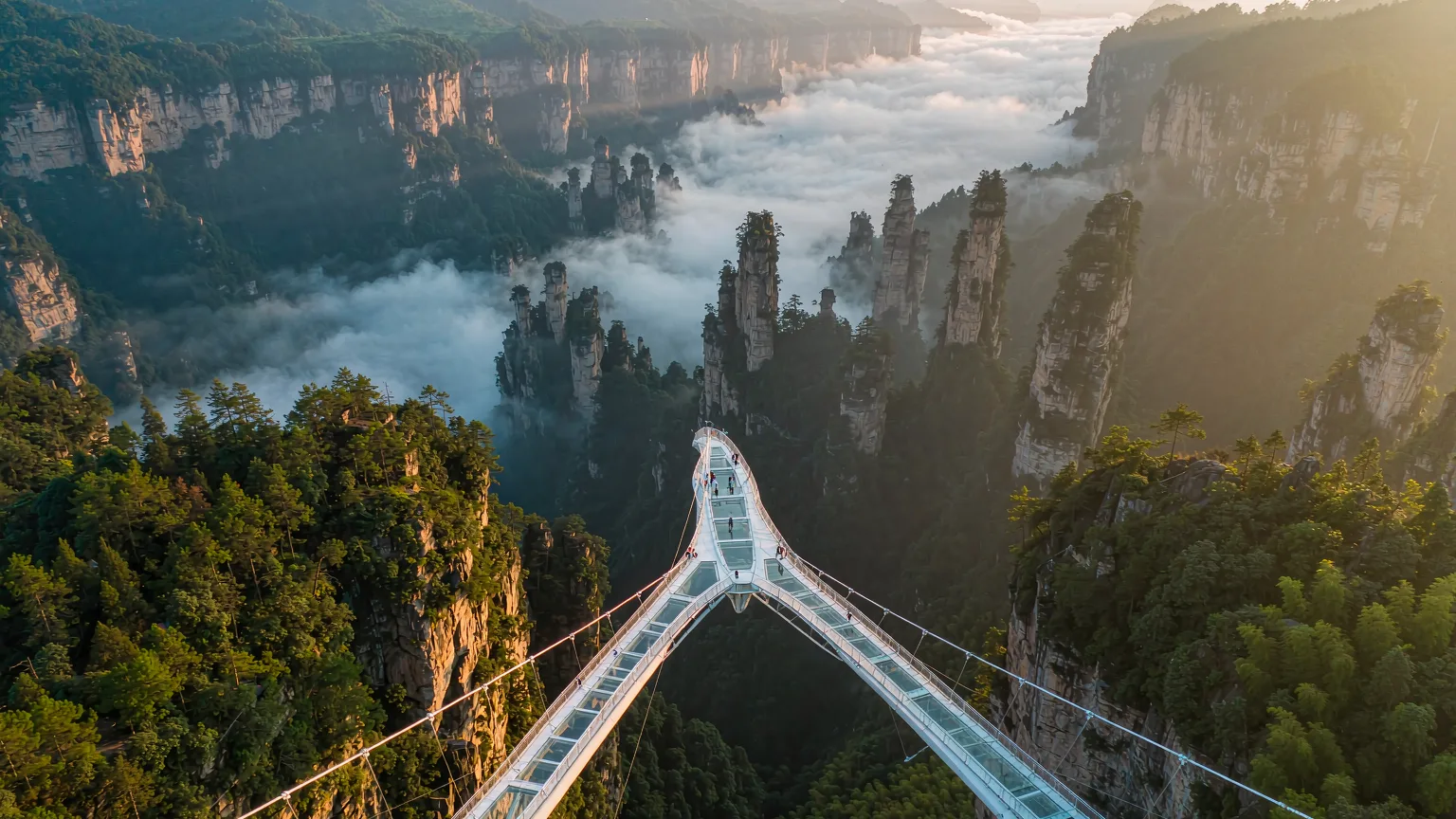
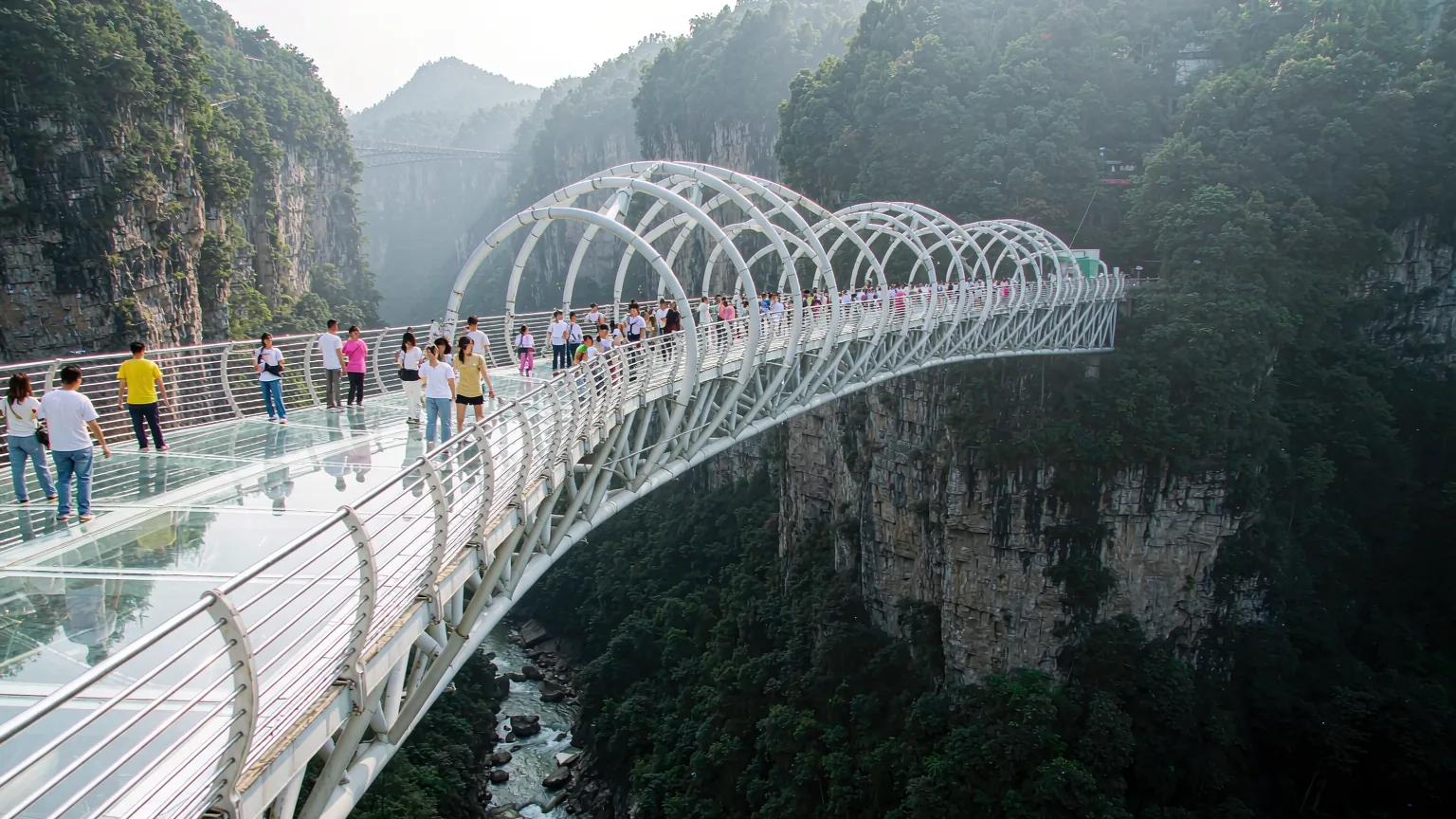
For travelers, Zhangjiajie is a place of vertigo and wonder. You ride the Bailong Elevator—a glass lift bolted to a cliff—up 326 meters in under two minutes. You walk the Avatar Hallelujah Mountain trail, where mist coils around pillars that inspired the film's floating peaks. You cross the glass bridge over the Grand Canyon, 300 meters above the gorge floor. And you climb Tianmen Mountain's 999 steps to Heaven's Gate, a natural arch pierced through the sky. Every turn offers a new angle on the same impossible landscape, and every evening the Tujia and Miao minority cultures offer song, dance and spicy smoke from street grills.
Zhangjiajie covers 9,516 km² in northwestern Hunan and has a population of about 1.5 million. It administers two districts (Yongding, Wulingyuan) and two counties (Cili, Sangzhi). Its defining feature is the Wulingyuan Scenic Area, a UNESCO World Heritage Site since 1992 and a Global Geopark, home to over 3,000 quartz-sandstone pillars, including the 1,074-meter Avatar Hallelujah Mountain.

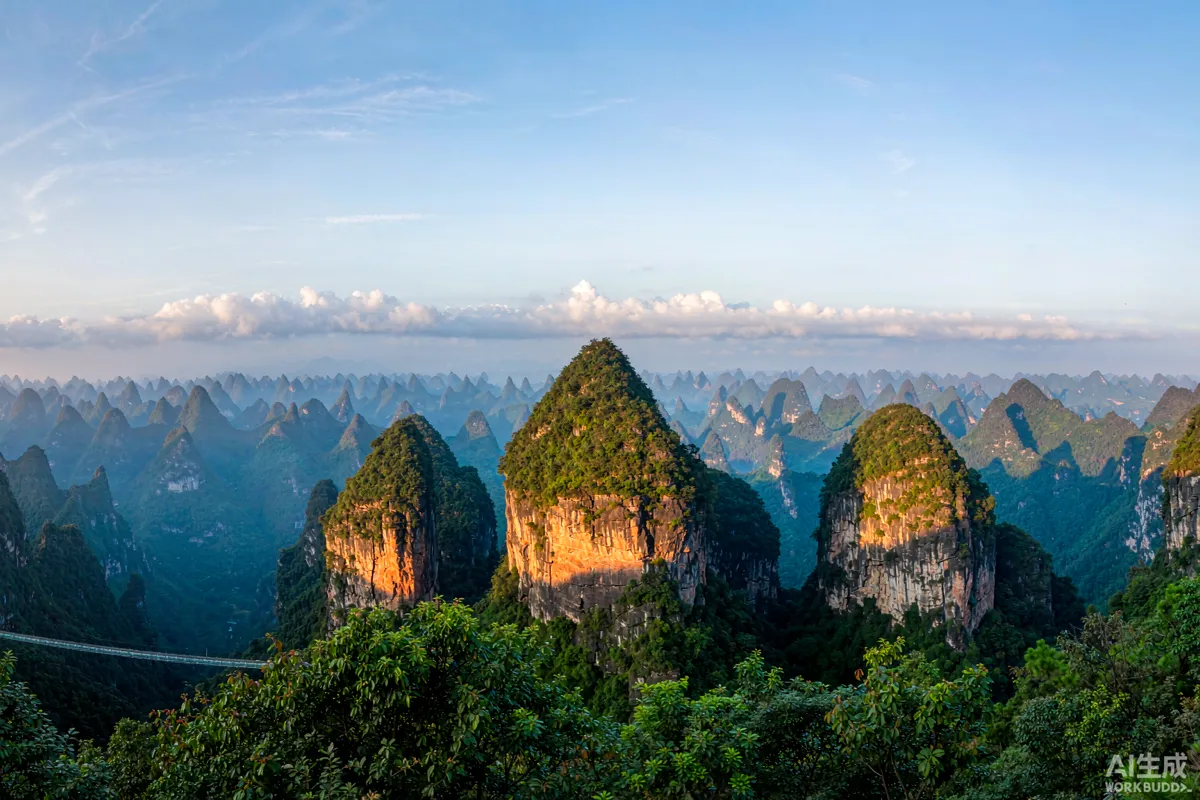
Wulingyuan · Tianmen Mountain · Glass Bridge · See All of Zhangjiajie at Once
View details →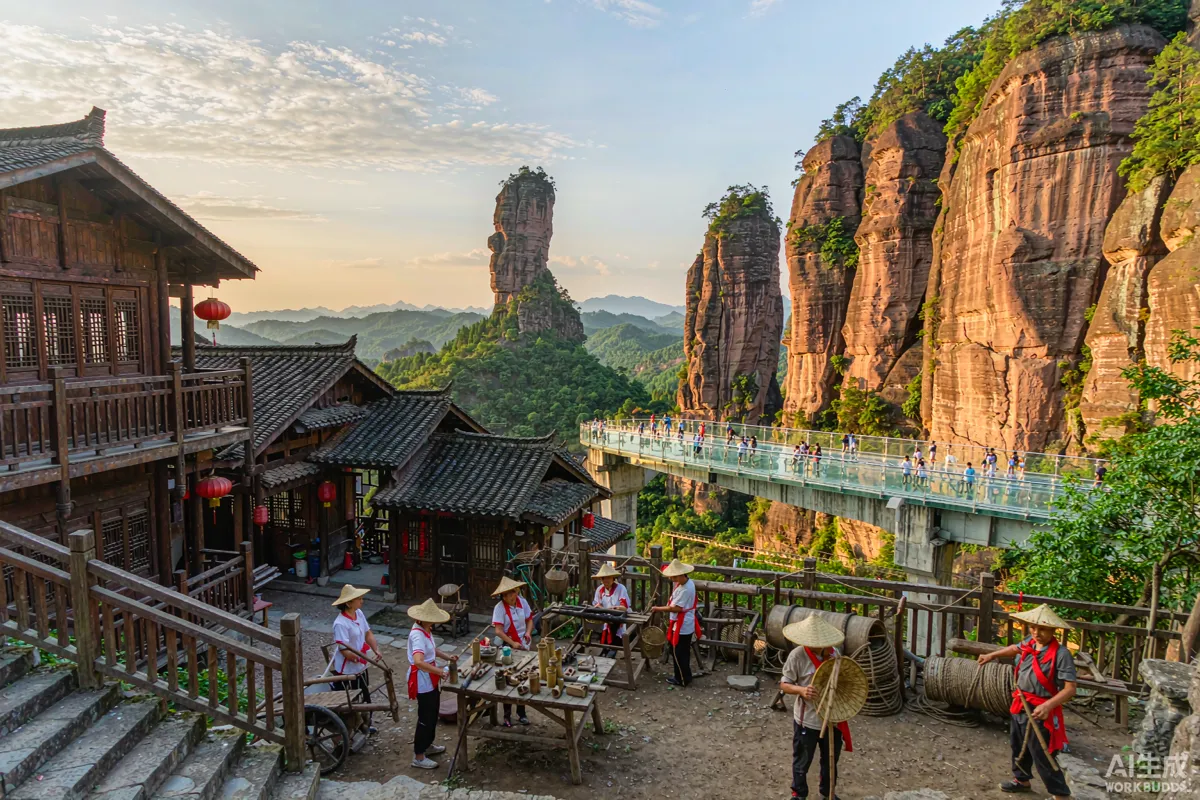
Tujia Customs · Intangible Cultural Heritage Handicrafts · Ancient Towns · Understanding Xiangxi
View details →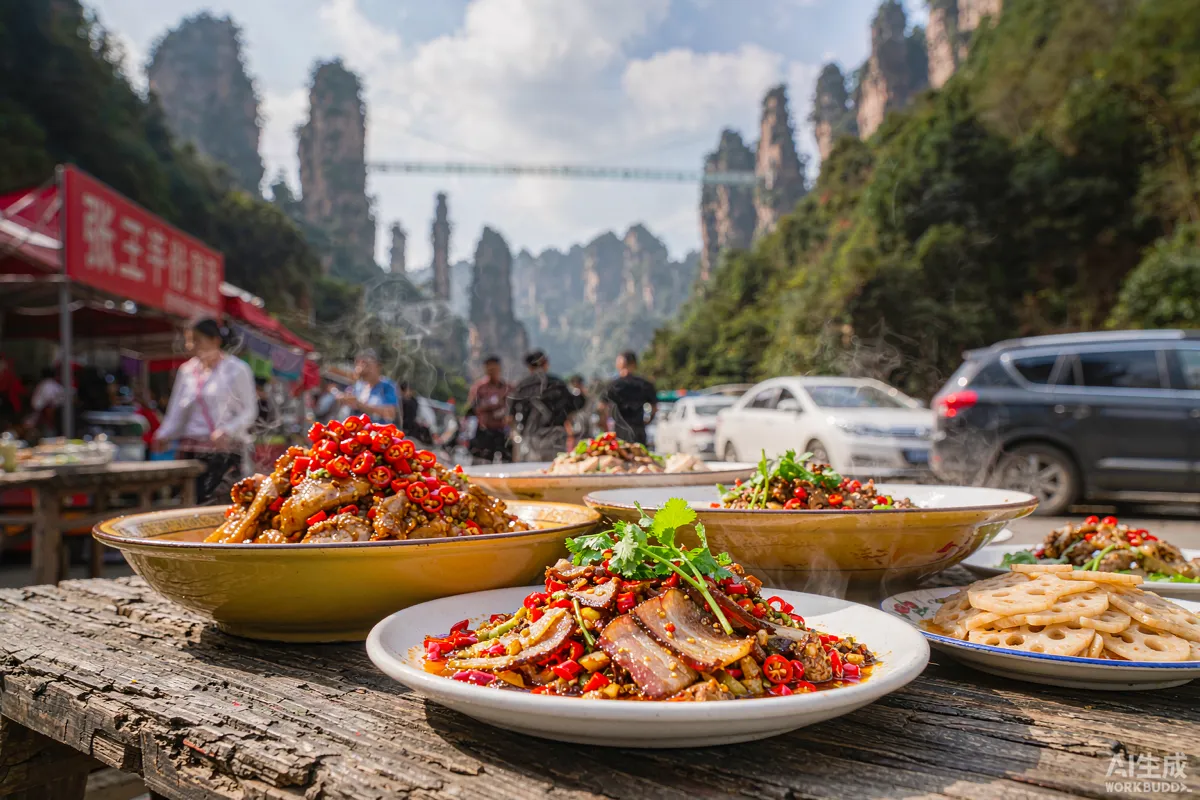
Wet Market · Street Snacks · Sanxiaguo · Two Days to Understand Xiangxi
View details →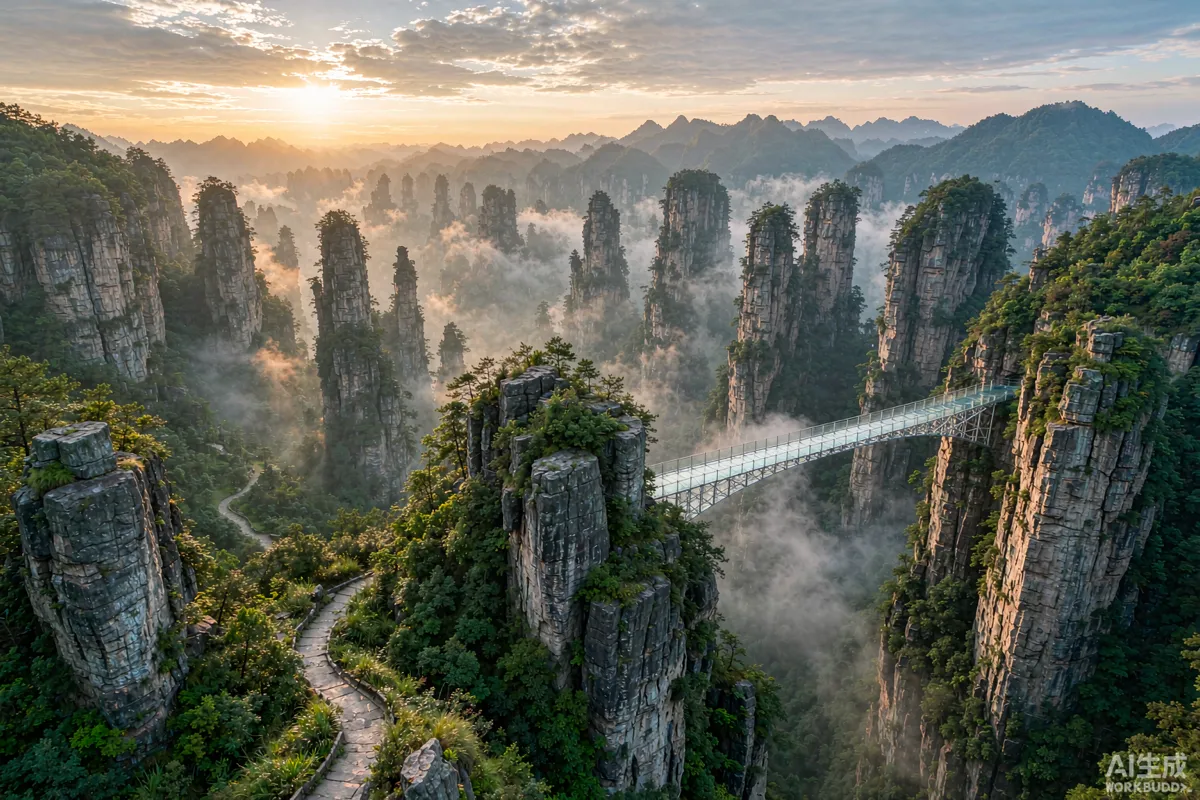
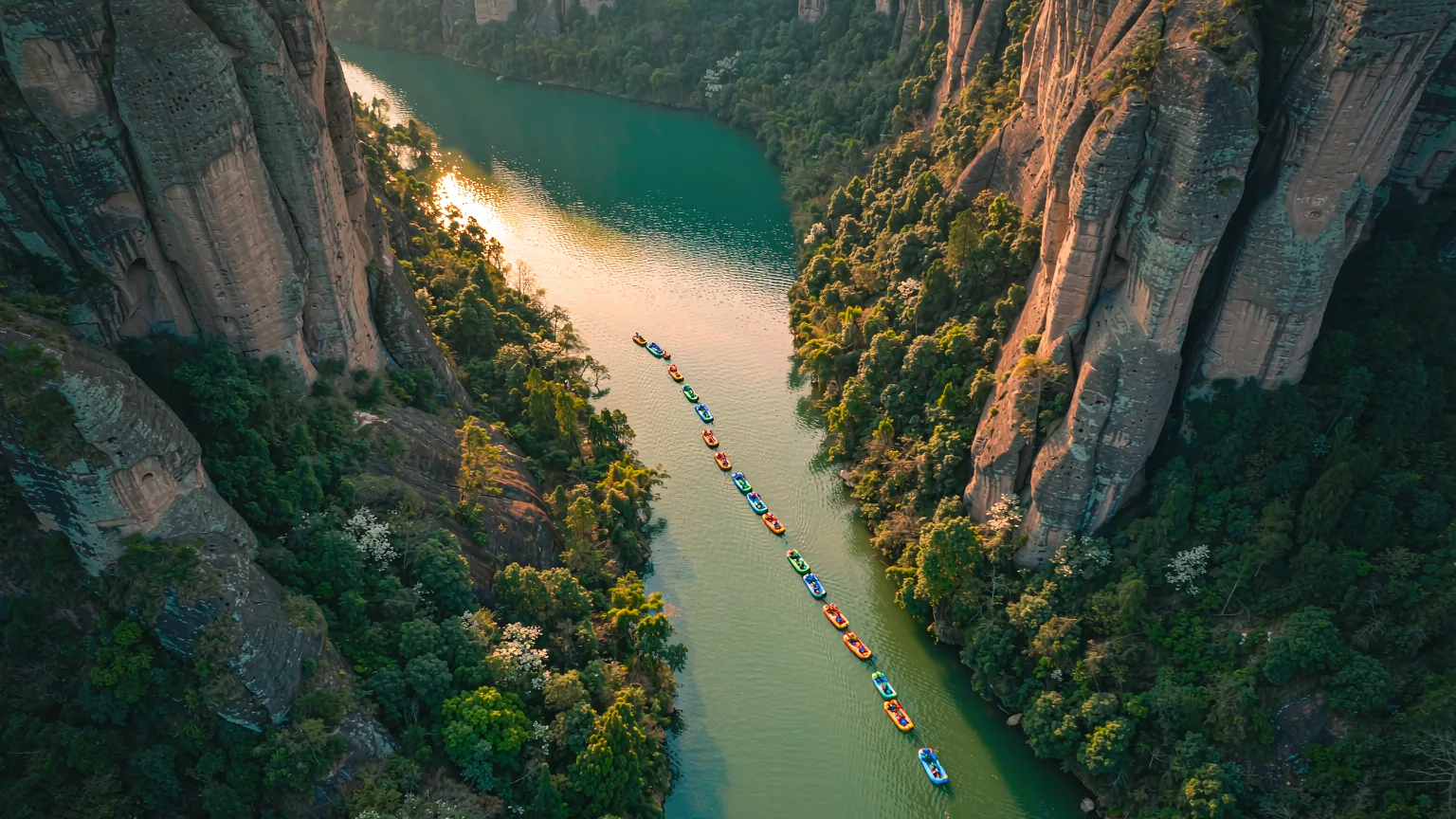
Peak Forest Hiking · Canyon Rafting · Cave Exploration · 5-Day In-Depth Outdoor Adventure
View details →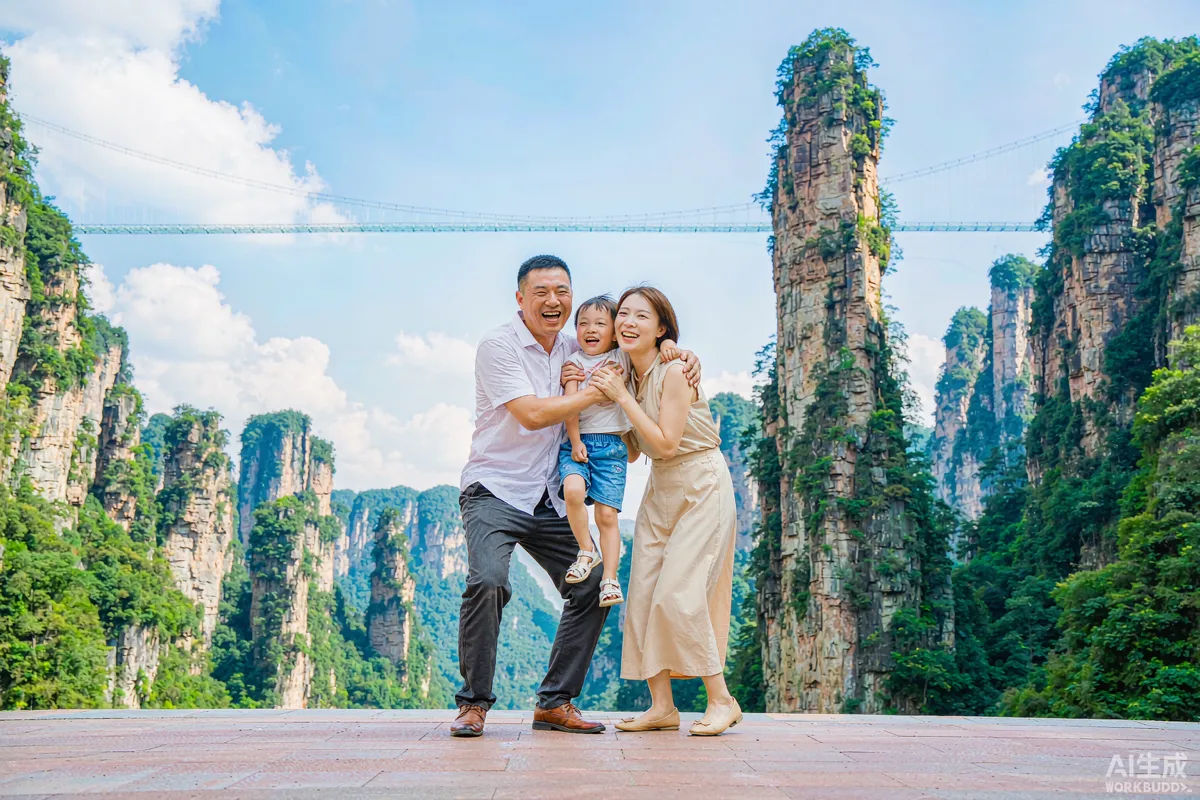
Relaxed Pace · Nature Classroom · Parent-Child Handicrafts · Four Days Without Fatigue
View details →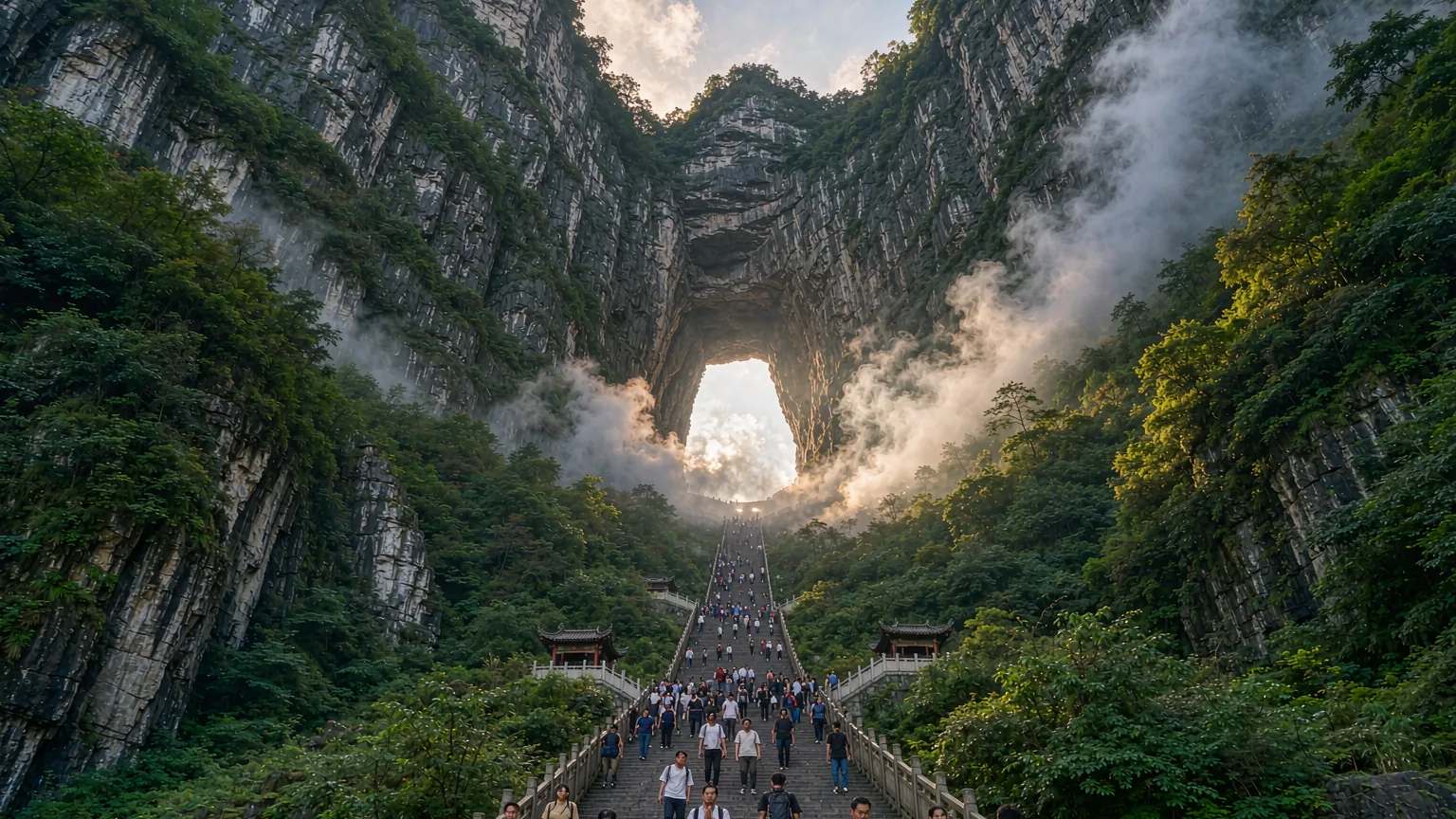
| Fleet | Airport pickup & drop-off | Chauffeur by the day | Intercity transfers |
|---|---|---|---|
 Economy | from $84Book → | from $280Book → | from $170Book → |
 Comfort | from $134Book → | from $448Book → | from $272Book → |
 Luxury | from $202Book → | from $672Book → | from $408Book → |
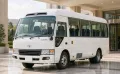 Special vehicles | For groups of 7+, please contact our trip designer for a quote | ||
prices may vary by date & route
Zhangjiajie is a prefecture-level city in Hunan, but its heart is not a downtown skyline—it is a UNESCO-listed landscape of quartz-sandstone pillars. The city proper, Yongding, serves as the arrival hub with the airport, railway station and most hotels. From there, a 40-minute drive leads to Wulingyuan District, the gateway to the national park. The scenic area itself is vast, divided into Zhangjiajie National Forest Park, Suoxi Valley, Tianzi Mountain and Yangjiajie, each with trails, cable cars and shuttle buses.
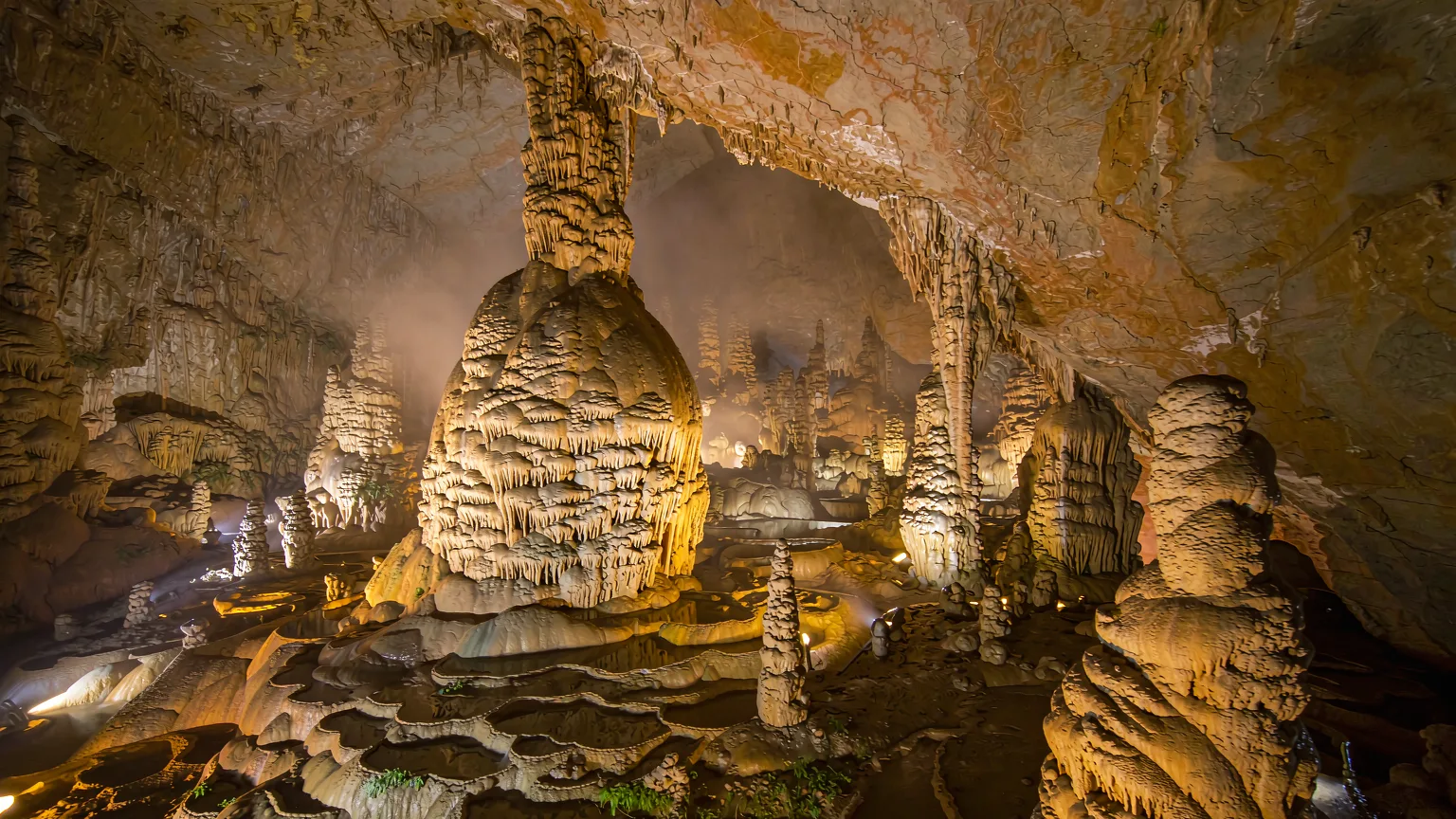
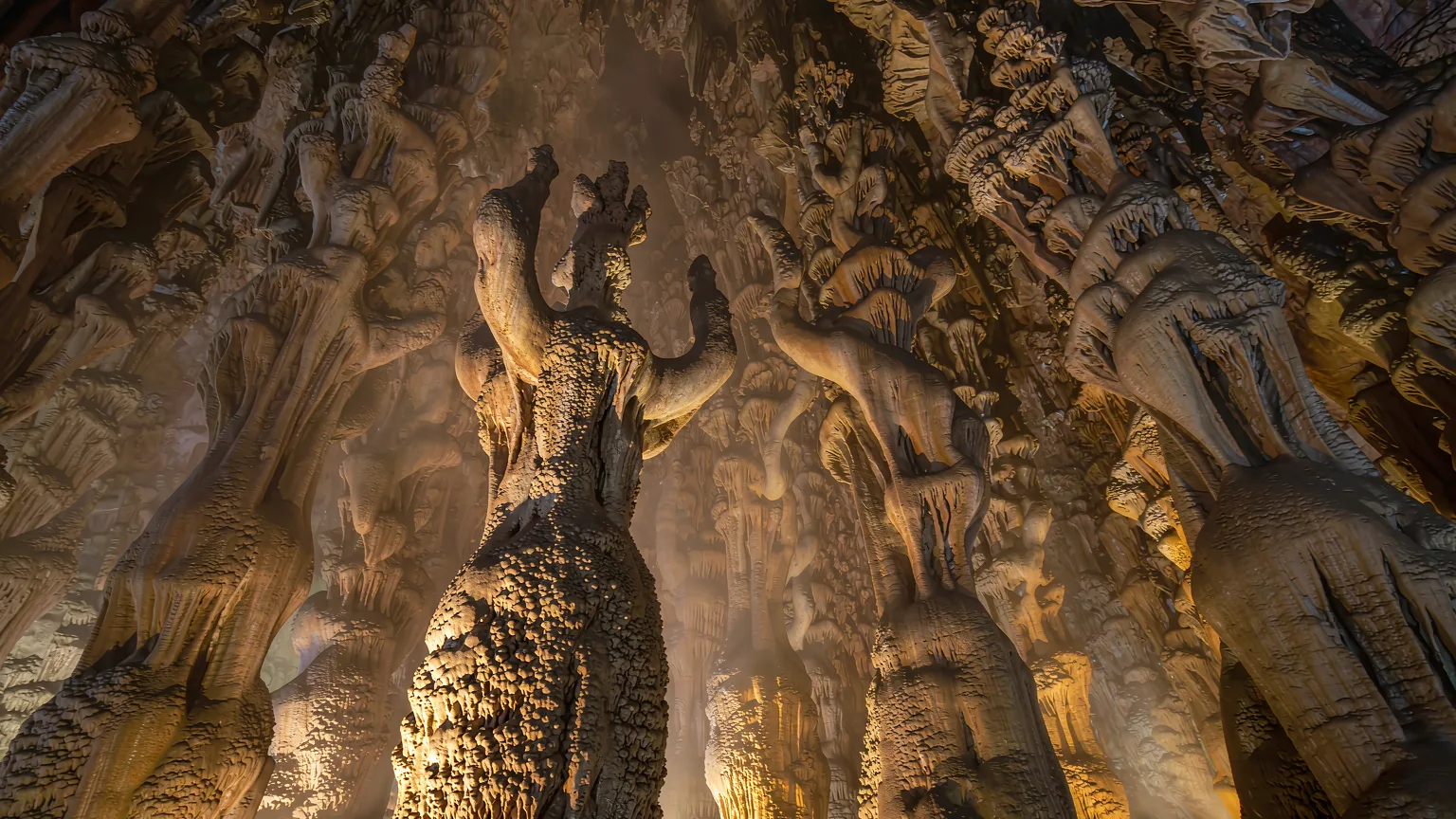
Beyond the stone forest, Zhangjiajie offers Tianmen Mountain with its 999-step stairway and glass skywalks, the Grand Canyon with its record-breaking glass bridge, and Huanglong Cave, one of Asia's largest karst caves. The city is also home to Tujia, Miao and Bai minorities, whose culture is visible in architecture, cuisine and nightly performances. Whether you have three days or a week, the rhythm here is set by cable car schedules, mountain weather and the sheer scale of the scenery.
Zhangjiajie Hehua International Airport (DYG) receives flights from major Chinese cities and a few international routes. The high-speed railway connects Zhangjiajie West Station to Changsha in about 2.5 hours, and from there to the national network. Long-distance buses also link to nearby provinces. Within the city, taxis and ride-hailing are cheap, but for the scenic area you rely on the official shuttle bus network, cable cars and the Bailong Elevator.
The park's shuttle buses are included in the multi-day ticket and run between trailheads, cable car stations and viewpoints. The Bailong Elevator, Tianzi Mountain Cableway, Yangjiajie Cableway and Huangshizhai Cableway are separate paid options. For Tianmen Mountain, the cable car departs from downtown Yongding. The Grand Canyon Glass Bridge requires a timed-entry ticket. Always check weather; heavy fog can close cable cars and glass walkways.
Zhangjiajie's cuisine is Hunan cooking at its most rustic and fiery—smoky, sour and chili-heavy. Tujia minority dishes dominate, featuring cured meats, wild vegetables and mountain herbs. The signature is sanxiaguo (three-down-pot), a dry pot of pork, offal and vegetables simmered with chilies and spices. You'll also find tujia shi'er (Tujia ten-course feast), smoked bacon, sour fish soup and fern root noodles. Street stalls near the park entrances sell grilled tofu, sweet potato cakes and rice noodles. For a sit-down meal, head to Yongding's pedestrian streets or the restaurant clusters near Wulingyuan's ticket gate.
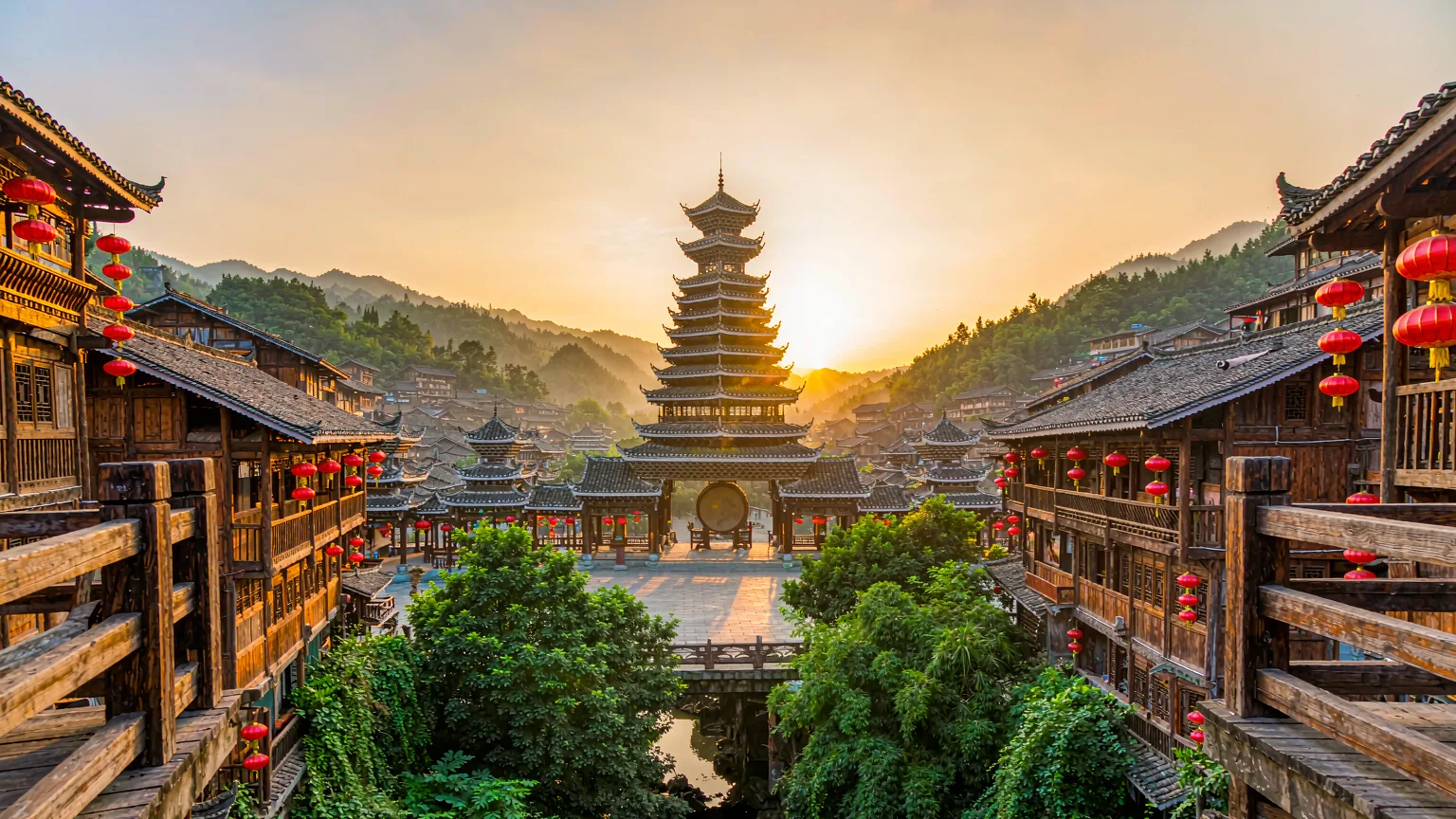
Shopping in Zhangjiajie is mostly about local crafts and mountain products. Tujia brocade (xilankapu) is the signature textile, woven with geometric patterns and bright colors. You'll also find silver jewelry from Miao artisans, bamboo carvings, and herbal medicines like eucommia and gastrodia. The main shopping areas are along Jiefang Road and Renmin Road in Yongding, and the small shops around Wulingyuan's flag-raising square. For souvenirs, consider Tujia brocade bags, smoked bacon vacuum-packed, and wild honey. Avoid buying 'rare' animal products; they are illegal and often fake.
Zhangjiajie's nightlife is low-key and cultural rather than clubbing-focused. The highlight is the Tujia folk performances, such as the 'Charming Xiangxi' show in Wulingyuan, featuring song, dance, fire-breathing and acrobatics. In Yongding, the area around the pedestrian street comes alive with street food stalls, tea houses and small bars. Many hotels also host evening bonfires with Tujia singing. For a quiet evening, take a stroll along the Lishui River or enjoy a local tea. Nightlife here ends early, as most visitors rise before dawn to catch the mountains before the crowds.
Zhangjiajie is a year-round destination, but each season offers a different experience. Spring brings mist and blooming azaleas, summer is green but crowded and hot, autumn offers the clearest views and comfortable temperatures, and winter turns the pillars into snow-dusted sculptures. The busiest periods are Chinese New Year, May Day and October Golden Week—avoid these if you can. For the best combination of visibility and comfort, aim for April-May or September-October. Always pack rain gear and layers, as mountain weather changes quickly.
| Period | Temperature | Conditions |
|---|---|---|
| Mar–May | 6-22°C | Spring mist, blooming flowers, moderate crowds. |
| Jun–Aug | 22-34°C | Hot and humid, lush green, peak crowds and afternoon thunderstorms. |
| Sep–Nov | 12-26°C | Clear skies, comfortable temperatures, best for photography. |
| Dec–Feb | -1-10°C | Cold, occasional snow, fewer crowds, dramatic icy scenery. |
Every private guide is licensed and vetted. Choose a tier that fits your trip — rates are per guide, per day, in USD.
A dependable all-rounder for an easy, well-planned day.
An experienced specialist with deeper local insight.
A senior expert — and, on request, medical-travel accompaniment.
Hand-picked, licensed guides based right here. Tap book to start a conversation and lock in your dates.
Most travellers spend 3-4 days in Zhangjiajie, though many stay longer once they arrive. If you want to combine Zhangjiajie with other cities — pandas, mountains, food streets — our consultants design one private itinerary at your own pace.
Yes. MyGuideTrip arranges vetted, licensed local guides in Zhangjiajie and across China. Your guide speaks fluent English, stays with you for the entire trip, and handles tickets, transport and restaurant picks. Meet them on the Guides page.
Zhangjiajie is best known for the Bailong Elevator 326 meters up a cliff face in under two minutes. The recommended itineraries below cover these highlights with smart timing to beat the crowds.
Send us your dates, group size and interests — a dedicated consultant replies within 24 hours with a tailor-made Zhangjiajie itinerary covering guide, driver, hotels and tickets. Start with a free consultation below.
Tell us a little about your trip and we'll get back to you within 24 hours.
We'll reply within 24 hours.