
Guest — sign in to save your enquiries.
My account
West Lake is the heart of Hangzhou and China's most celebrated cultural landscape, a UNESCO World Heritage Site where causeways, pagodas and gardens have inspired poets for a thousand years. It was the first 5A-rated scenic area to drop its entrance fee, so the whole shoreline is open to wander. With our private guide, you skip the guesswork and see the lake the way locals do.
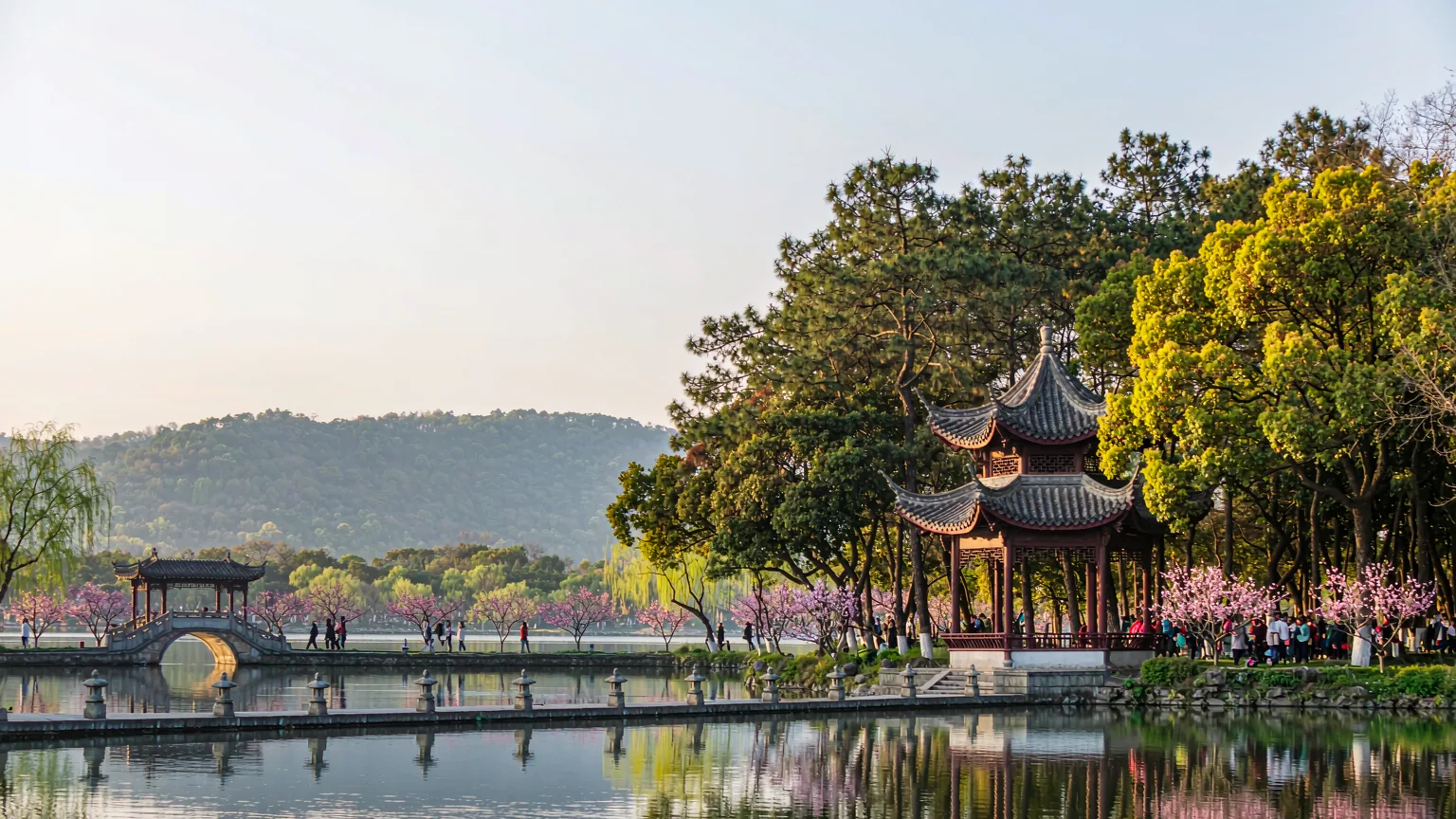
West Lake has shaped Chinese aesthetics for over a millennium. Its fame begins with poets and officials of the Tang and Song dynasties, especially Su Dongpo, who as governor of Hangzhou dredged the lake and used the silt to build the Su Causeway. Later, during the Southern Song, the lake became the pleasure ground of the imperial court, and the 'Ten Scenes of West Lake' were codified as a canon of beauty. Every bridge, island and pavilion carries a story, and the landscape is as much a work of art as a natural lake.
The lake covers about 6.5 square kilometres, ringed by hills, temples and gardens. Its layout is a masterpiece of Chinese garden design: the Bai and Su causeways divide the water into distinct vistas, while Three Pools Mirroring the Moon and Solitary Hill create layered views. In 2011 UNESCO inscribed it as a cultural landscape, recognising the harmony between humans and nature. Today it remains free to enter, though individual attractions like boat rides and pagodas charge modest fees.
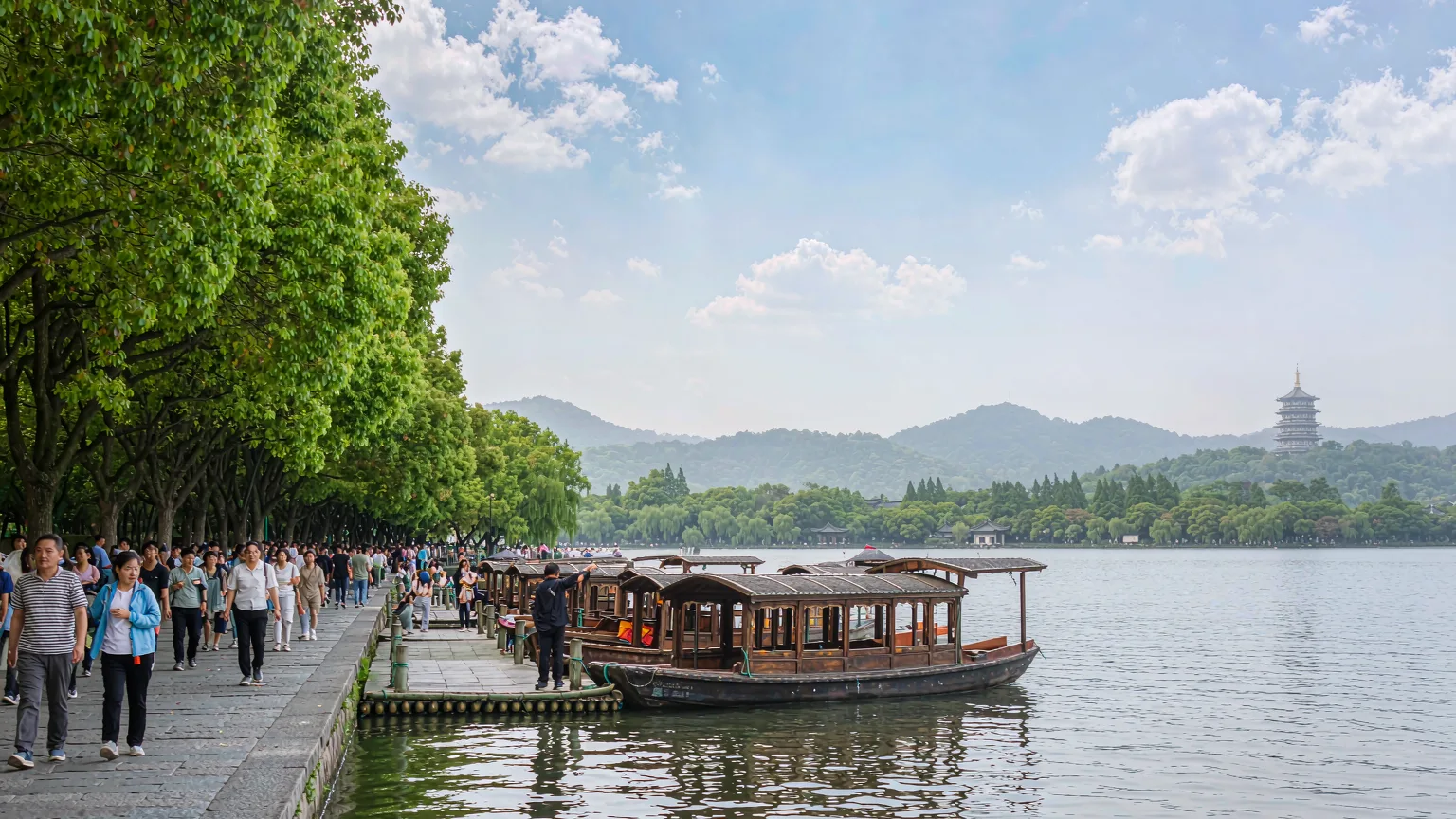
West Lake is a 10-minute taxi or metro ride from central Hangzhou; Line 1 to Longxiangqiao or Ding'an Road puts you at the eastern shore. High-speed trains from Shanghai Hongqiao take about an hour to Hangzhou East, and we can arrange a private transfer to your hotel or directly to the lake. Most travellers spend a full day here, combining a boat ride, a causeway stroll and a visit to Lingyin Temple. Our guide meets you at your hotel and tailors the route to avoid the busiest spots.
West Lake itself is free to enter, making it ideal for flexible exploring. Individual sights charge separately: Leifeng Pagoda ¥40, Three Pools Mirroring the Moon ¥55 (includes ferry), and Lingyin Temple ¥45 plus ¥30 for the Feilai Feng grottoes. Boat rides range from ¥55 for a public ferry to ¥150 per hour for a private rowboat. Opening hours vary by site, generally 8:00–17:30. Book popular attractions like Lingyin in advance via WeChat mini-programs; foreign cards work on Alipay and WeChat Pay, but cash is still accepted at ticket windows.
Spring (March–May) and autumn (September–November) offer the most comfortable weather, with plum blossoms and osmanthus respectively. Early morning, before 8am, is the quietest time to walk the causeways and catch mist over the water. Avoid weekends and Chinese public holidays if you can, as the shoreline becomes crowded. Evening is lovely for a sunset boat ride, when the lake reflects the city lights.
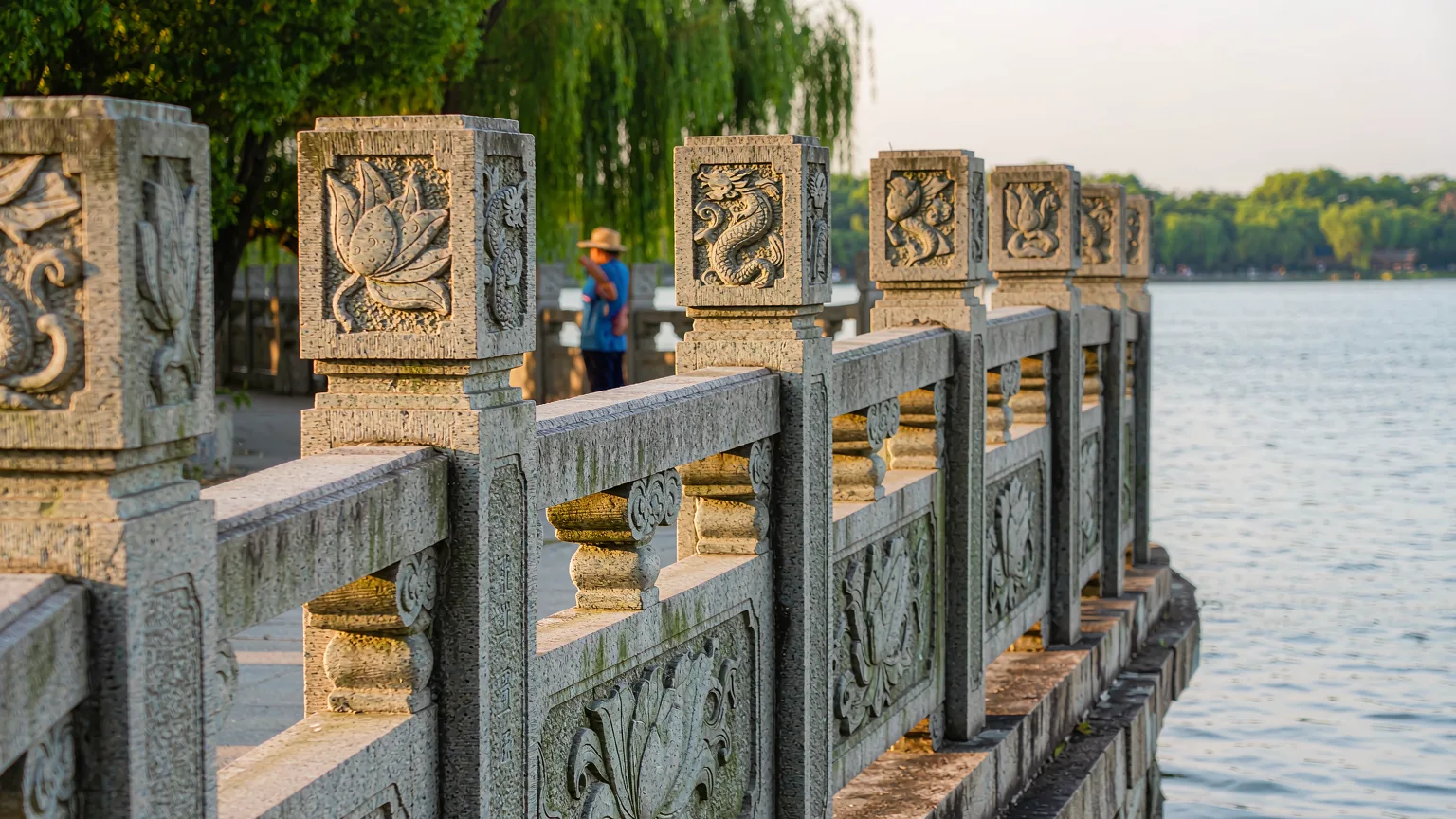
Yes, the lake and its causeways are open to the public at no charge. You only pay for specific attractions like pagodas, boat rides and temples, which range from ¥30 to ¥150.
A half-day covers the highlights, but a full day lets you enjoy a boat ride, walk a causeway and visit Lingyin Temple. Our guide can tailor the pace to your interests.
Major attractions and larger shops accept international cards, but many smaller vendors prefer WeChat Pay or Alipay. Link your foreign card to these apps before you travel, or carry cash as backup.
Walking and boats are the most scenic. You can also hire a bike, take the electric sightseeing bus, or use taxis between distant points. Our guide handles logistics so you focus on the views.
Tell us your dates, group size and preferences — a dedicated consultant will reach out within 24 hours.