Chengdu Street Food: 15 Snacks to Try and Where to Find Them
From dan dan noodles to sugar-oil guoba and egg-baked cakes: the fifteen snacks Chengdu people actually queue for, what each one is, typical prices, and the streets where locals — not tourists — eat them.
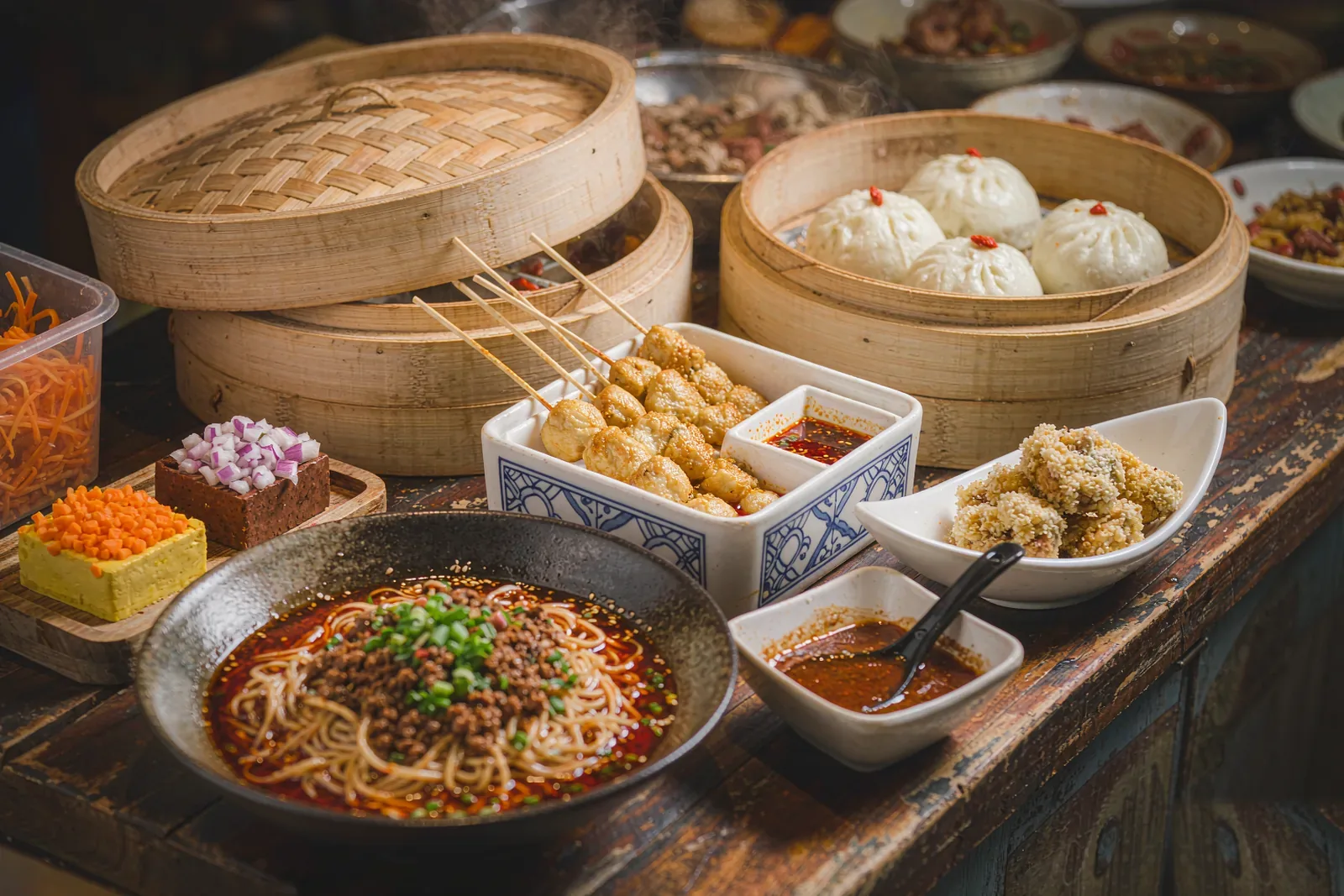
Why Chengdu snacks deserve their own trip
Chengdu was named a UNESCO City of Gastronomy largely on the strength of its snack culture: small, fast, absurdly inexpensive plates that locals eat as meals. Most items cost ¥5–15, which means an afternoon of grazing through four or five stalls still costs less than one restaurant dinner. The trick is knowing what to point at — this list is ordered the way you might actually eat them, from savoury to sweet.
The savoury essentials
- Dan dan noodles (担担面) — a small bowl of springy noodles under chili-oil, preserved vegetable and minced pork. ¥8–12.
- Sweet water noodles (甜水面) — thick chewy strands under a sweet-spicy-sesame sauce. The sauce dominates; noodles barely fight back.
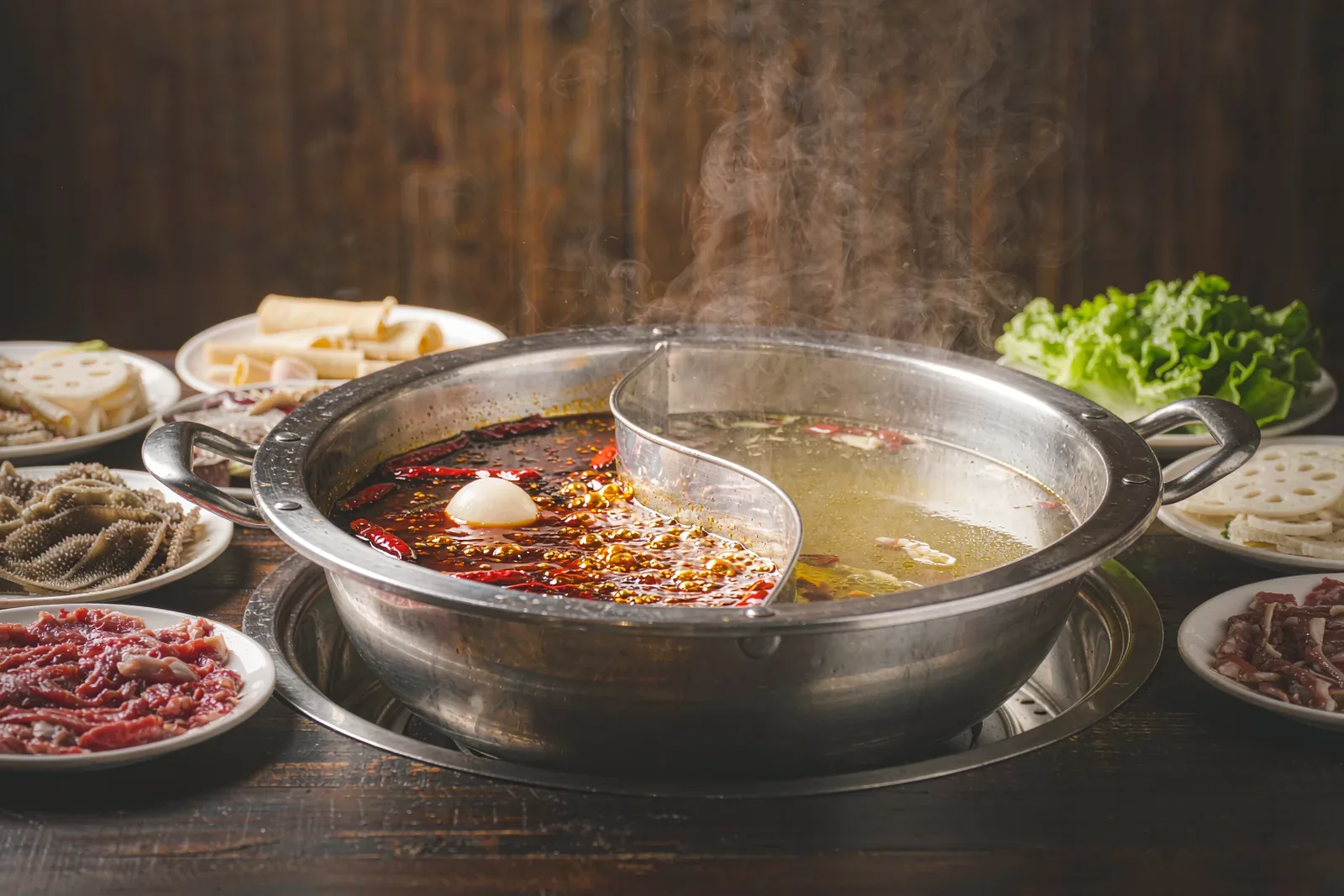
- Chuan chuan (串串香) — cold skewers of everything, eaten hotpot-style or straight. Count your sticks; each runs ¥0.5–2.
- Bo bo ji (钵钵鸡) — cold skewers bathed in red oil or rattan-pepper broth, Leshan's gift to Chengdu. The rattan-pepper version is the connoisseur's order.
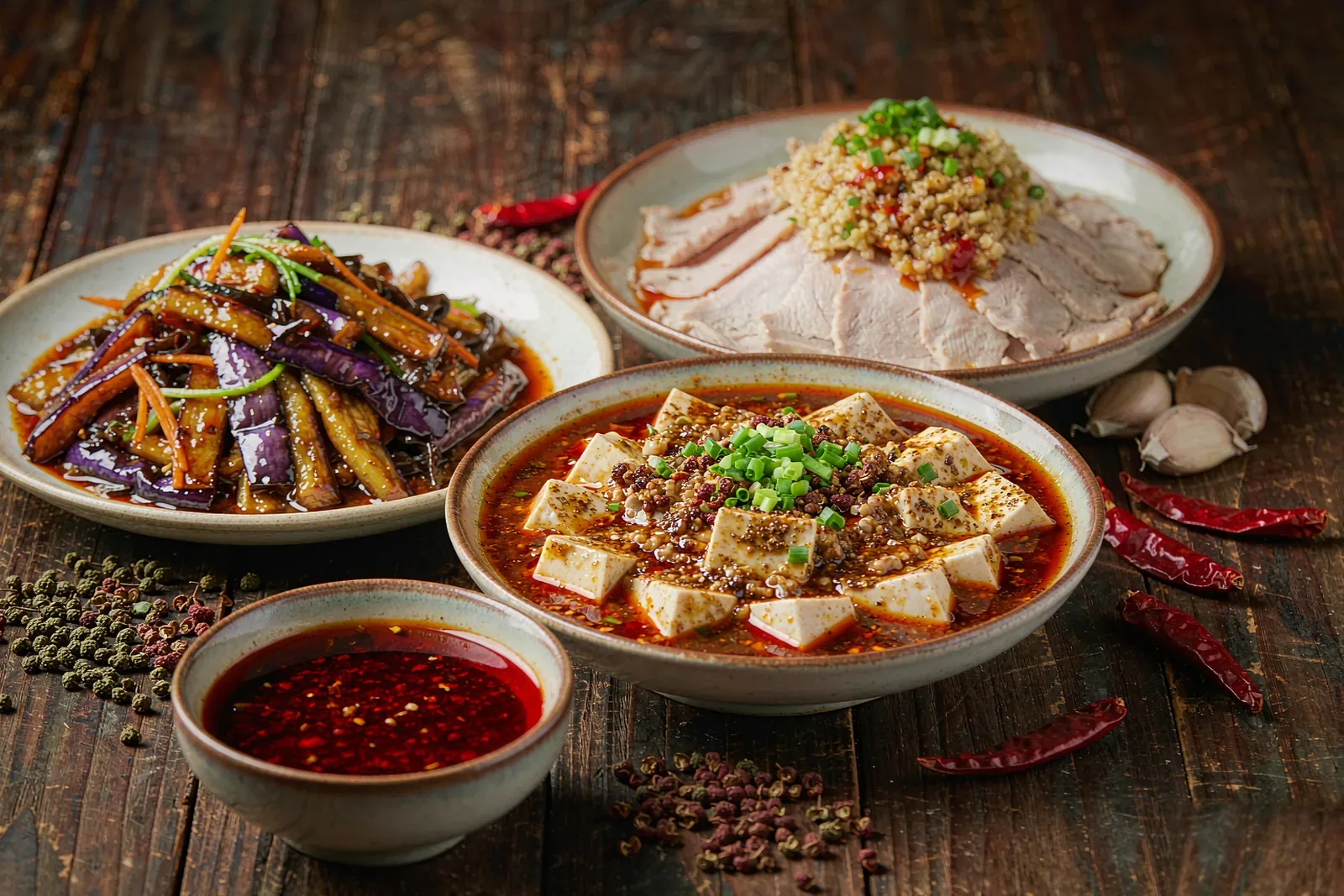
- Fu qi fei pian (夫妻肺片) — sliced beef and offal in chili oil. The English name "husband-and-wife lung slices" scares more people than the dish deserves.
- Jiao yan pai gu (椒盐排骨) — salt-and-pepper ribs, fried crisp and eaten by hand.
- Long chao shou (龙抄手) — Chengdu-style wontons in clear or red-oil broth; try the red-oil version once.
The comfort middle course
- Jian bing guo zi (煎饼果子) — the northern import: crepe with crispy cracker, egg and chili brush. The best stands open at breakfast.
- Jun tun (军屯锅盔) — flaky thousand-layer flatbread fried then baked, stuffed with beef or pork. Look for the sound: proper guokui crackles.
- Yan ta ji (盐踏鸡) / bang bang ji (棒棒鸡) — chicken pounded under a mallet, dressed in chili-sesame sauce.
The sweet finishers
- Dan hong gao (蛋烘糕) — a small egg-flour cake griddled to order, folded around sweet or savoury fillings. The definitive Chengdu street snack; find the stands with ten flavours of filling.
- Bing fen (冰粉) — a jelly dessert under brown sugar, crushed peanuts and hawthorn. The antidote to a spicy afternoon.
- Sugar-oil guoba (糖油果子) — sticky rice doughnuts fried in sugar oil and rolled in sesame. Three on a stick, eaten warm.
- Suan mei tang (酸梅汤) — sour-plum drink, the standard palate reset.
Where locals actually graze
Wenshu Monastery area, Yulin Road and Jianshe Road food lanes, and the alleys around Kuanzhai Alley — walk one block off the tourist spine and prices drop a third. Evening is prime time: snack streets fully wake around 6 pm. Our hotpot guide covers the sit-down end of the spectrum; combine both and you have Chengdu eating covered. For structured tastings, any Chengdu tour can add a snack-street walk with a local guide.
FAQ
Is Chengdu street food safe to eat?
Follow the queues: high turnover means nothing sits around. Cooked-to-order items (dan hong gao, guokui) are as safe as restaurant food. See the stomach-safety rules in our Chengdu food guide.
How much should I budget for a snack crawl?
¥40–70 covers four to six snacks plus drinks — about $6–10. Cash rarely needed; QR payment is universal (see the payments guide).
What if I can't handle spice?
Point at the sweet side of the menu: bing fen, sugar-oil guoba, dan hong gao with sweet fillings, and clear-broth wontons are all chilli-free. Most vendors can do wēi là on request.
Which single snack says "Chengdu" most?
Dan hong gao — it exists almost nowhere else in China at this quality, it is made to order, and locals eat it daily, not just for tourists.
Related guides