Cantonese Cuisine: A Guide to Roast Meats, Seafood and Wok Hei
Cantonese food is the cuisine most of the world thinks of first when it hears "Chinese food" — and for good reason. This is the cooking of Guangzhou and the Pearl River Delta, where fresh seafood, silky roast meats and the smoky breath of a properly seasoned wok matter more than any chilli. From char siu and roast goose to double-boiled soup and steamed fish with ginger and scallion, here is what to order and how to eat it like a local.
What makes Cantonese cooking different
Cantonese cooks obey one rule above all: let the ingredient taste like itself. Spice is a whisper, not a shout; sauces glaze rather than drown. The other obsession is wok hei (镬气) — that faintly smoky, seared breath a dish gets when it is tossed over a roaring flame in a seasoned iron wok. You cannot fake wok hei; it arrives in the first thirty seconds of a plate hitting the table. This is why Cantonese food is best eaten straight from the kitchen, not from a delivery box.
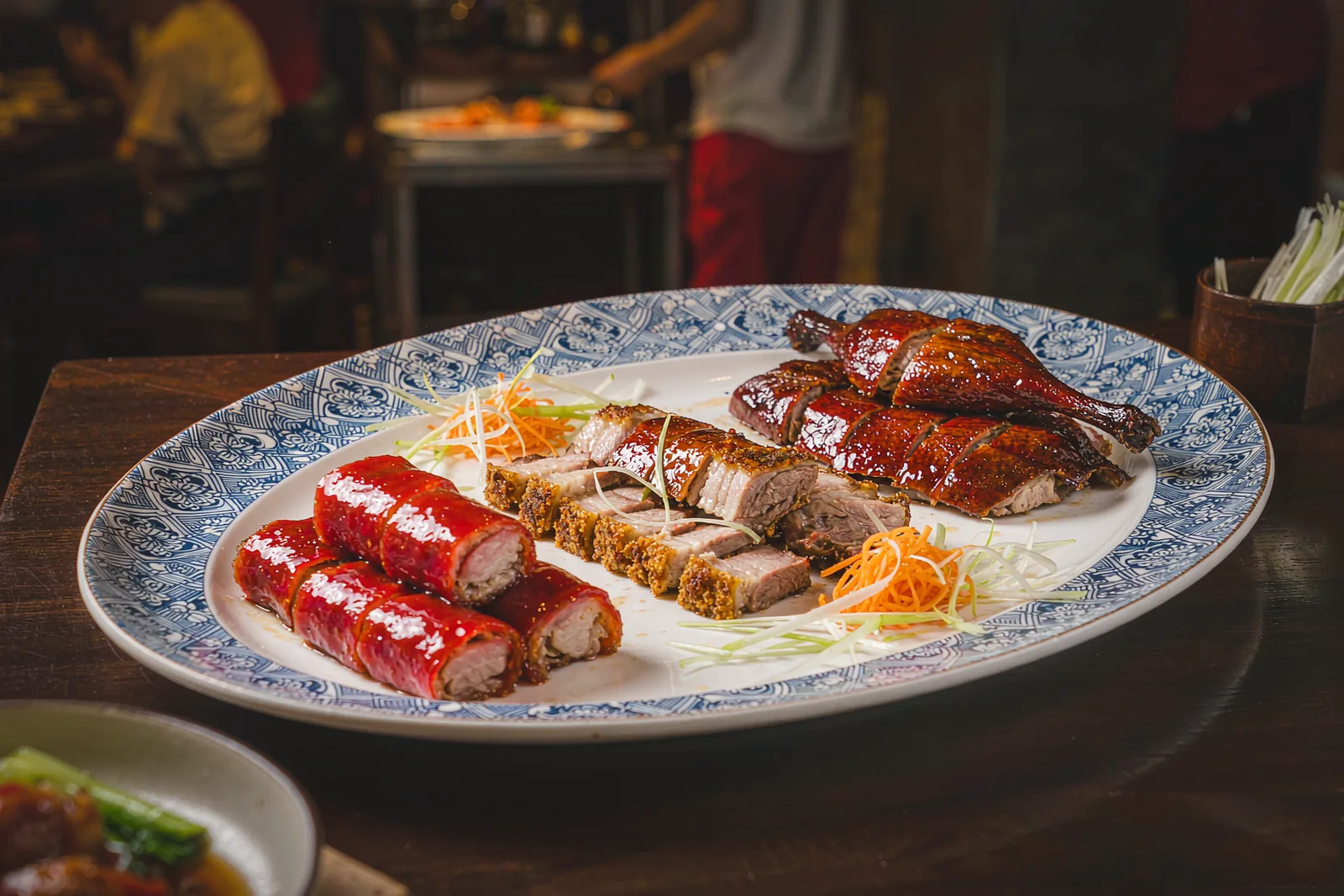
The roast meat holy trinity
- Char siu (叉烧, roast pork) — honeyed, lacquered strips of pork shoulder roasted until the edges caramelise. Ask for banshou feishou (半瘦肥瘦), half-lean half-fat, which is the purist's cut.
- Siu yuk (烧肉, roast pork belly) — crackling you can hear two tables away, layered over melting fat.
- Siu ngo (烧鹅, roast goose) — the crown jewel of Guangzhou; skin like lacquer, meat with a deep, gamey sweetness. Goose beats duck in flavour every time.
Order a mixed platter (烧味拼盘) first to compare all three, then commit to your favourite for a second round.
Seafood: steamed, never smothered
The Cantonese way with a live fish is to steam it whole with ginger and scallion, then pour over smoking-hot oil and light soy. The result — qingzheng yu (清蒸鱼) — is the single best test of a Cantonese kitchen, because there is nowhere to hide. Live shrimp get the same treatment or a quick blanch; crab and lobster often meet ginger-scallion sauce. In a proper Guangzhou or Hong Kong seafood restaurant you point at the tank, name your fish, and it lands on your plate fifteen minutes later.
Soup and the art of slow time
Old-fire soup (老火汤) is Cantonese nourishment in a bowl: pork bones, dried ingredients and herbs simmered for four or five hours until the broth turns milky and faintly sweet. It is served free with set meals or ordered by the pot. Double-boiled soup (炖汤), made in a sealed ceramic pot inside a water bath, is the more refined cousin — try winter melon with dried scallop or black-bone chicken with ginseng. Drink soup first, before anything else, the way locals do.
Dim sum and the morning ritual
No visit is complete without a yum cha session, but if you have already worked through the classics, push into the deeper menu: cheung fun (肠粉) with shrimp, lo mai gai (糯米鸡) lotus-leaf rice, fung zao (凤爪) black-bean chicken feet, and egg tarts for the sweet finish. See our dedicated dim sum guide for the full ordering strategy and tea-pouring etiquette.
Wok dishes worth hunting for
- Beef chow fun (干炒牛河) — wide rice noodles seared with beef and scallion until charred at the edges; the benchmark for wok hei.
- Stir-fried pea shoots with garlic (蒜蓉炒豆苗) — greenery so tender it is a luxury, not a side dish.
- Salt-and-pepper squid (椒盐鲜鱿) — crisp, tossed with chilli and garlic salt.
- Claypot rice (煲仔饭) — rice cooked in a clay pot with lap cheong sausage and cured meat, the crusty bottom the prize.
Where to eat it
Guangzhou is the mother city: roast goose and soup in the old Liwan district, seafood along the river, dim sum from dawn. Shenzhen and Hong Kong push the same canon with more polish and a bigger bill. For a guided run through the essentials, our Guangzhou and Hong Kong pages pair food with the city's other draws, and a local guide can translate the tanks and the tea menu for you.
FAQ
Is Cantonese food spicy?
Almost never. The heat ceiling is a slice of ginger or a scatter of white pepper. It is the mildest of China's major cuisines and ideal for first-timers and children.
What is the difference between roast goose and roast duck?
Goose (烧鹅) is larger, richer and gamier, with a deeper flavour prized in Guangdong and Hong Kong. Duck (烧鸭) is milder and cheaper. If you must choose one, take the goose.
Why is my stir-fry smoky but not burnt?
That is wok hei — the rapid caramelisation from a very hot, seasoned wok. It is the hallmark of a good Cantonese kitchen, not a mistake.
How do I order a whole steamed fish?
Ask for it steamed with ginger and scallion (清蒸). The kitchen debones or leaves it whole on the plate with the head and tail for luck. Eat the cheeks first — locals consider them the best part.
Related reading
Pair this with our dim sum and morning tea guide, the beginner's guide to ordering in China, and for the opposite end of the flavour spectrum, Sichuan's flavour profiles.
Related guides