Fujian Cuisine (Min): Buddha Jumps Over the Wall, Oyster Omelette and Seafood
Fujian, the mountainous coast opposite Taiwan, gave China one of its most refined culinary traditions. Min cuisine (闽菜) is famous for its soups, its seafood and its signature broth so luxurious it is named for a legend — Buddha Jumps Over the Wall. Light, clean and umami-driven, Fujian food is the quiet master of the coastal south, and it pairs naturally with the province's other obsession: oolong tea.
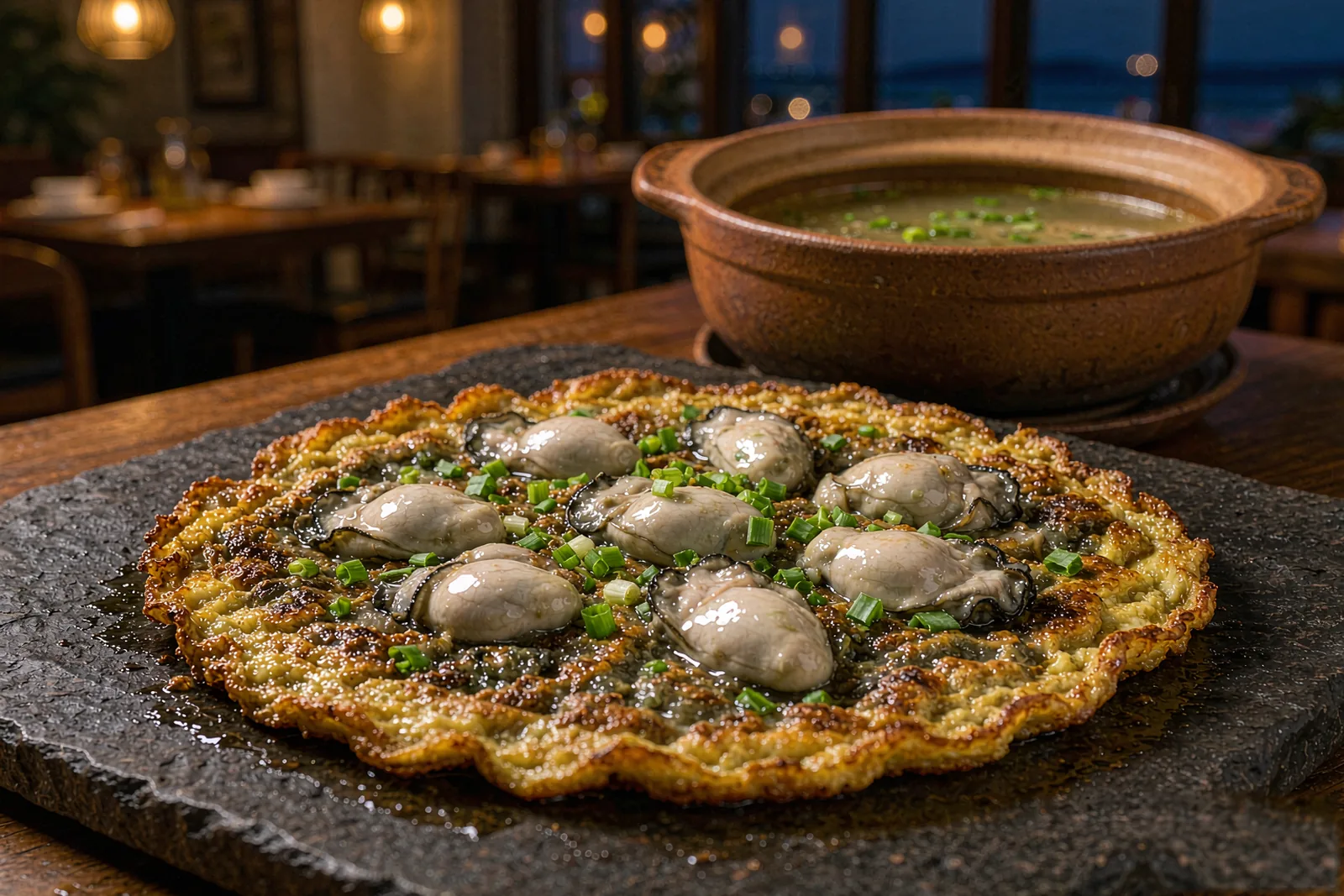
The taste of a seafaring province
Fujian's cuisine is shaped by the sea and by the Fujianese diaspora that ran kitchens across Southeast Asia. The flavour profile is fresh, sweet and savoury, built on seafood, slow-simmered stocks and the region's famous red yeast rice (红糟). Where Cantonese food prefers the quick breath of the wok, Fujian food prefers the long patience of the pot — soups and braises are the heart of the table.
Buddha Jumps Over the Wall: the legend in a pot
Fotiaoqiang (佛跳墙) is Fujian's summit — a clay-pot soup of shark fin (or its substitutes), abalone, sea cucumber, fish maw, dried scallop, chicken and ham, simmered for days. The name comes from the story that a monk, forbidden meat, was so undone by the aroma he jumped the wall of his temple to reach it. It is a banquet dish, expensive and ceremonial; order it once for the experience, then live on the everyday table for the rest of the trip.
The everyday coastal classics
- Haolijian (海蛎煎) — the oyster omelette: fresh oysters folded into sweet-potato-starch batter with egg and scallion, crisp at the edge. The street-food king of Xiamen.
- Shacha mian (沙茶面) — noodles in a peanut-satay broth, a direct inheritance from Fujian's Southeast Asian trade.
- Yuxiang rou (鱼丸) — fish balls, springy and stuffed with pork, the province's favourite snack.
- Bianrou yan (扁肉燕) — the "flying swallows", paper-thin pork wrappers folded into soup.
Soups, stocks and tea
Fujian is soup country — clear, double-boiled broths that the province treats as medicine as much as food. And no table is complete without gongfu tea (工夫茶), the ceremonial oolong brewing that Fujian invented and that now marks hospitality across the south. Ordering a pot of tieguanyin (铁观音) after a seafood meal is as much part of the cuisine as the dishes themselves.
Red yeast, dried seafood and the pantry
The Fujianese pantry leans on hongzao (红糟), fermented red-yeast rice that stains dishes rose and adds a subtle, sweet-savoury depth; on dried scallops, shrimp and oysters that concentrate the sea; and on loquat, lychee and tea for the sweet finish. It is a cuisine of restraint — flavours are layered, never forced — which is why it often reads as the most "refined" of the southern styles.
Where to eat it
Xiamen for the oyster omelette and satay noodles, Quanzhou for the deeper, older traditions, and Fuzhou for the soups and the wall-jumping legend itself. Our Xiamen and Quanzhou pages pair the food with the coastal scenery, and a local guide can source a proper fotiaoqiang and walk you through the tea ritual.
FAQ
Is Buddha Jumps Over the Wall worth the price?
It is a once-in-a-lifetime banquet dish of abalone, sea cucumber and fine ham simmered for days. For the experience, yes; for a daily meal, the simpler seafood and noodles deliver more value.
Is Fujian food spicy?
No. It is fresh, sweet and umami-forward, with almost no chilli heat. It is one of China's mildest cuisines.
What is gongfu tea?
The ceremonial, small-pot brewing of oolong that originated in Fujian. It is served after meals as a matter of hospitality, and is as central to the cuisine as the food itself.
I've seen Fujianese food abroad — is it the same?
Much overseas "Chinese" cooking descends from Fujian and Guangdong. The noodles, satay dishes and oyster omelette will feel familiar, but the local versions are fresher and more varied.
Related reading
Compare Fujian's soups with Cantonese seafood and soup, and its tea culture with Chengdu's teahouses.
Related guides