Shanghai Cuisine (Benbang): Red-Braised Pork, Soup Dumplings and More
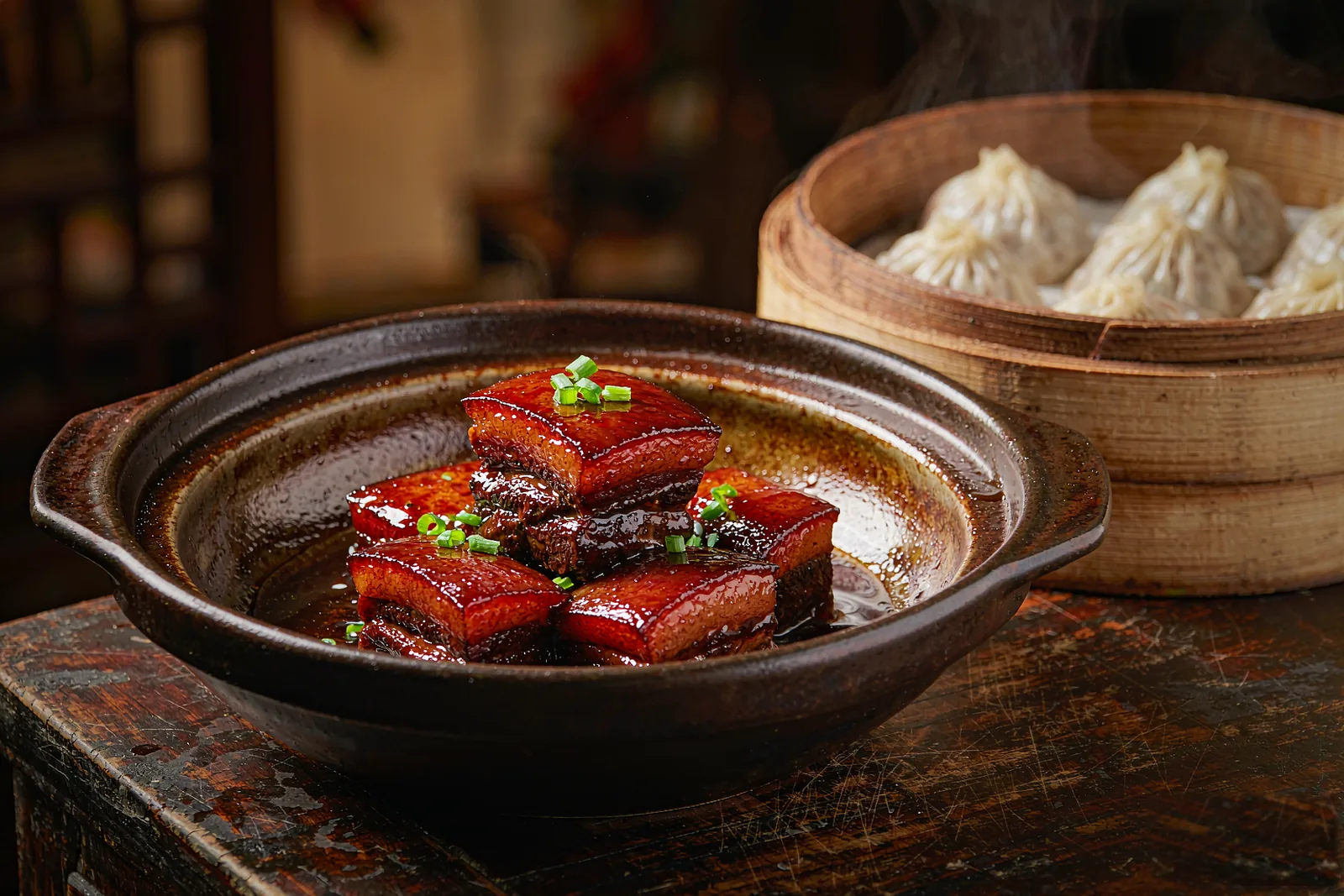
Shanghai eats rich, sweet and dark. The city's home cooking — benbang cuisine (本帮菜) — is famous for red-braised pork belly glistening in soy, and for xiaolongbao, the soup dumplings that turned a snack into an art form. It is comfort food with a river-town soul, built on the phrase nong you chi jiang (浓油赤酱): thick oil and dark soy, the twin pillars of everything on this table.
What benbang actually means
Benbang (本帮) means "this place's guild", and it names Shanghai's indigenous cooking as distinct from the Suzhou and Ningbo styles that also shaped the city. The signature is hongshao (红烧), red-braising — cooking in dark soy, rock sugar and Shaoxing wine until the sauce reduces to a glossy, sweet-savoury lacquer. Expect more sweetness than anywhere else in China, a legacy of the city's sugar-trading wealth.
The dishes that define the city
- Hongshao rou (红烧肉) — pork belly braised until each cube wobbles, the sauce almost candy. The definitive benbang dish.
- Xiaolongbao (小笼包) — delicate soup dumplings from the Nanxiang tradition; the broth is set as aspic and melts inside the wrapper.
- Shengjianbao (生煎包) — the pan-fried, sesame-seeded cousin, crisp on the bottom, scalding inside.
- Youbao xia (油爆虾) — river shrimp flash-fried and glazed in sweet soy.
- Xiefen shizitou (蟹粉狮子头) — crab-roe lion's head meatball, the city at its most luxurious.
The soup dumpling ritual
Xiaolongbao punish the impatient. The correct sequence: lift the dumpling by its knot with chopsticks, rest it in your spoon, nibble a hole, sip the broth, then dip in black vinegar with ginger and eat. Never bite straight in — the broth is hot enough to burn. The classic temple is Nanxiang Mantou Dian in Yu Garden, but neighbourhood shops across the city do the same thing without the queue. For the broader world of Chinese buns and dumplings, see our dumpling guide.
Beyond the classics
Shanghai's food scene splits into two streams. One is the old river-town cooking: xiangcun gan si (响油鳝糊) eel in hot oil, baiqie ji (白切鸡) poached chicken, kaofu (烤麸) cold gluten appetiser. The other is the glamorous haipai (海派) fusion born of the city's treaty-port past — Russian borscht adapted, French-influenced pastries, and the city's own Shanghai-style coffee. Both are worth a day each.
Sweet and street food
Finish with the sweet side of Shanghai: tangyuan (汤圆) glutinous rice balls, congyou bing (葱油饼) scallion pancakes, and the legendary xieke huang (蟹壳黄) crab-shell sesame pastries. For breakfast staples and how they compare across the country, our breakfast guide has the full picture.
Where to eat it
Yu Garden for the tourist-famous dumplings, the former French Concession for refined benbang and haipai, and any hole-in-the-wall for honest shengjianbao at breakfast. Our Shanghai page connects the food to the Bund, the museums and the rest, and a local guide will steer you past the tourist traps to the kitchens locals actually queue for.
FAQ
Why is Shanghai food so sweet?
A mix of geography and money — Shanghai was a sugar-trading port, and sweetness became a status marker. Expect a caramel note even in savoury braises.
How do I eat xiaolongbao without burning myself?
Nibble a small hole, sip the broth slowly, then eat. The broth inside is set gelatin that melts to near-boiling liquid; patience is the whole technique.
What is the difference between xiaolongbao and shengjianbao?
Xiaolongbao are steamed, thin-skinned and delicate. Shengjianbao are pan-fried, thicker, crisp on the bottom and topped with sesame and scallion. Both hold hot broth.
Is benbang food spicy?
Essentially not. The flavour is sweet-savoury from soy and sugar, with the heat ceiling at a little white pepper or ginger.
Related reading
Compare the sweet, dark braises here with Huaiyang's knife-work subtlety and Zhejiang's West Lake classics — the three great cuisines of the Yangtze delta.
Related guides