Chengdu Food Guide: What to Eat and How Spicy to Go
Chengdu is a UNESCO City of Gastronomy, and the locals treat eating as a hobby, a sport, and a philosophy. This guide covers the dishes that matter, how to calibrate spice without suffering, and the street-smart rules that keep your stomach happy all week.
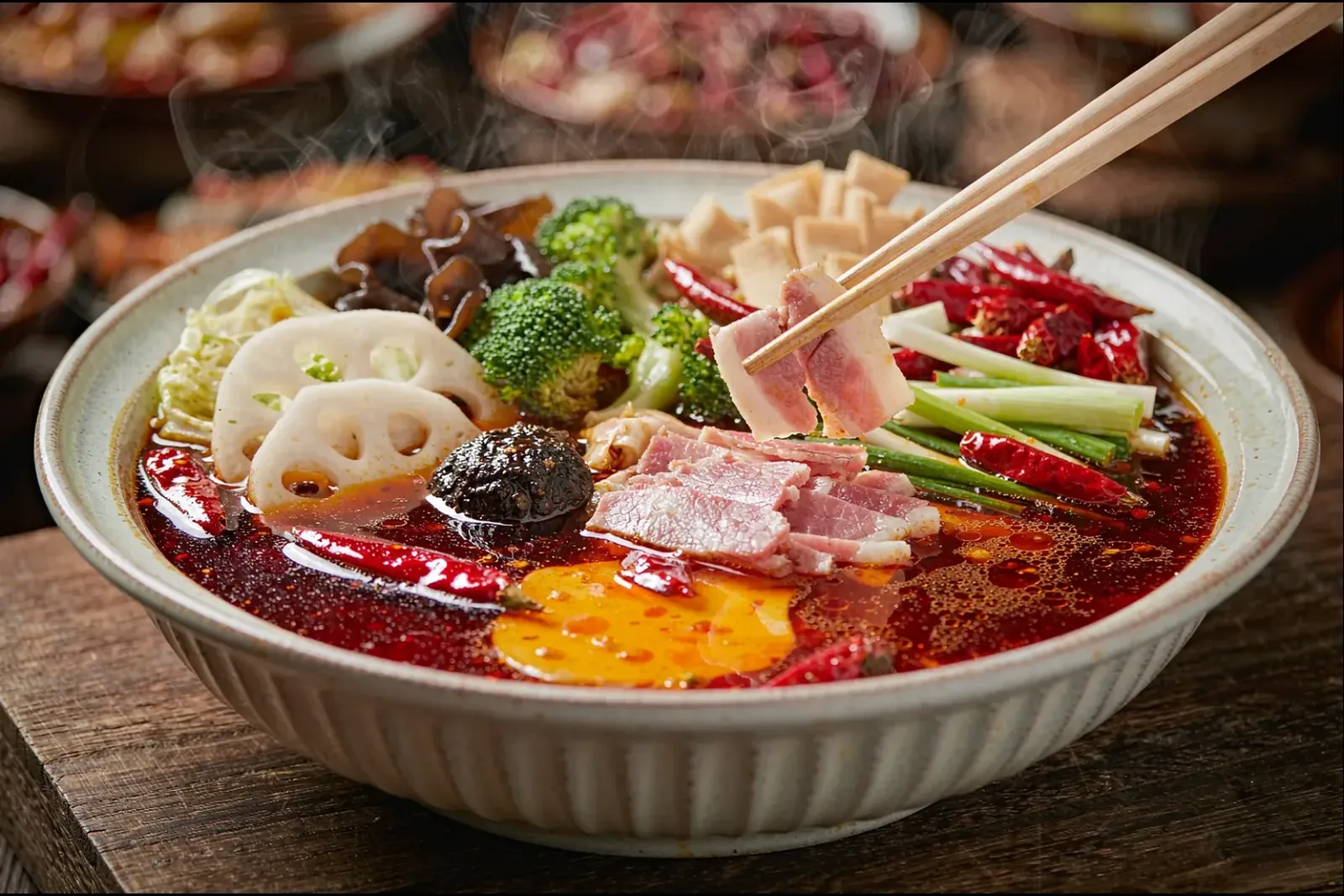
The dishes that define Chengdu
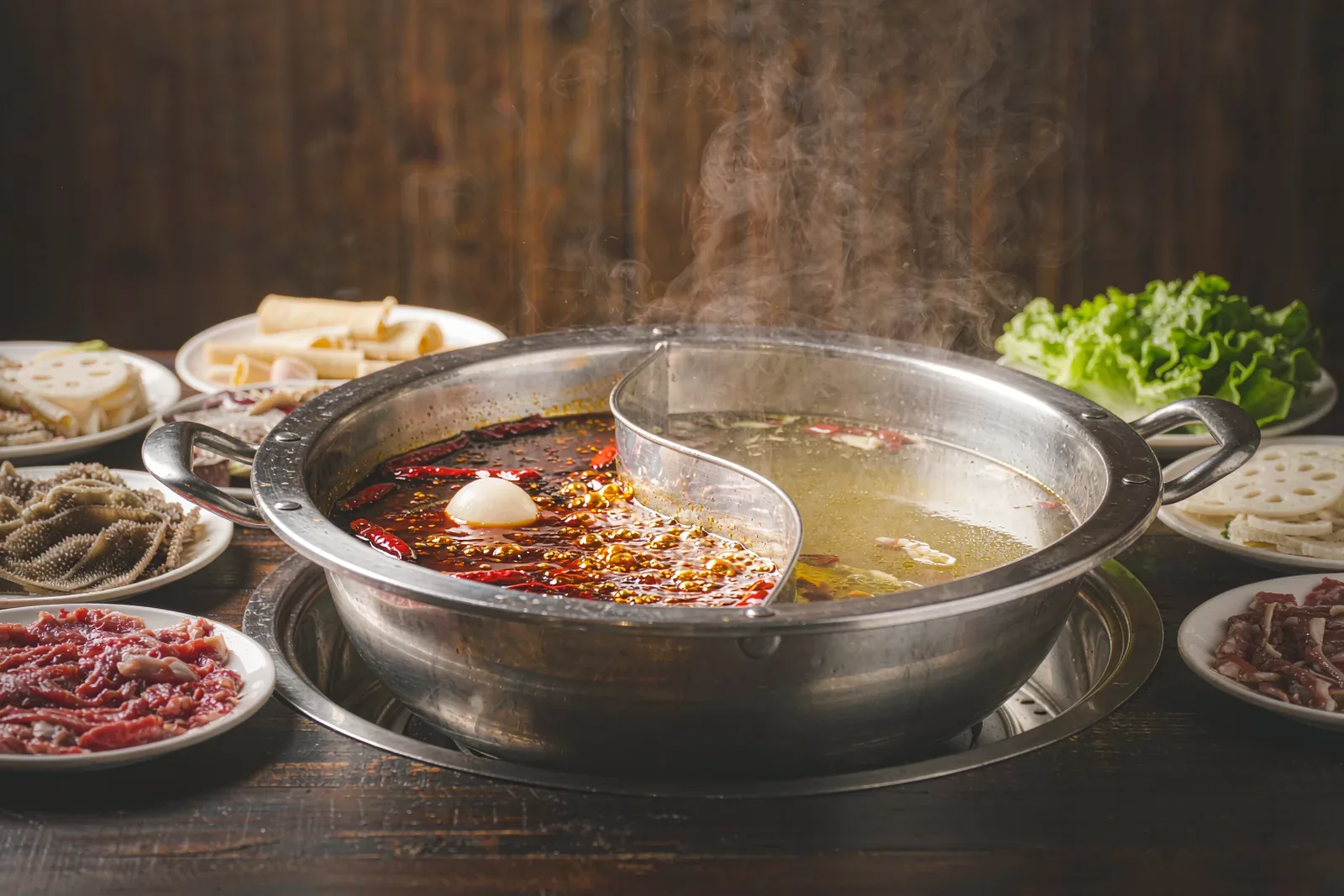
- Hotpot (火锅) — the social heart of Sichuan food. A cauldron of red-chilli broth simmers at your table while you cook meats and vegetables in it. Order a yuanyang (half-and-half) pot — spicy side, mild bone-broth side — and share.
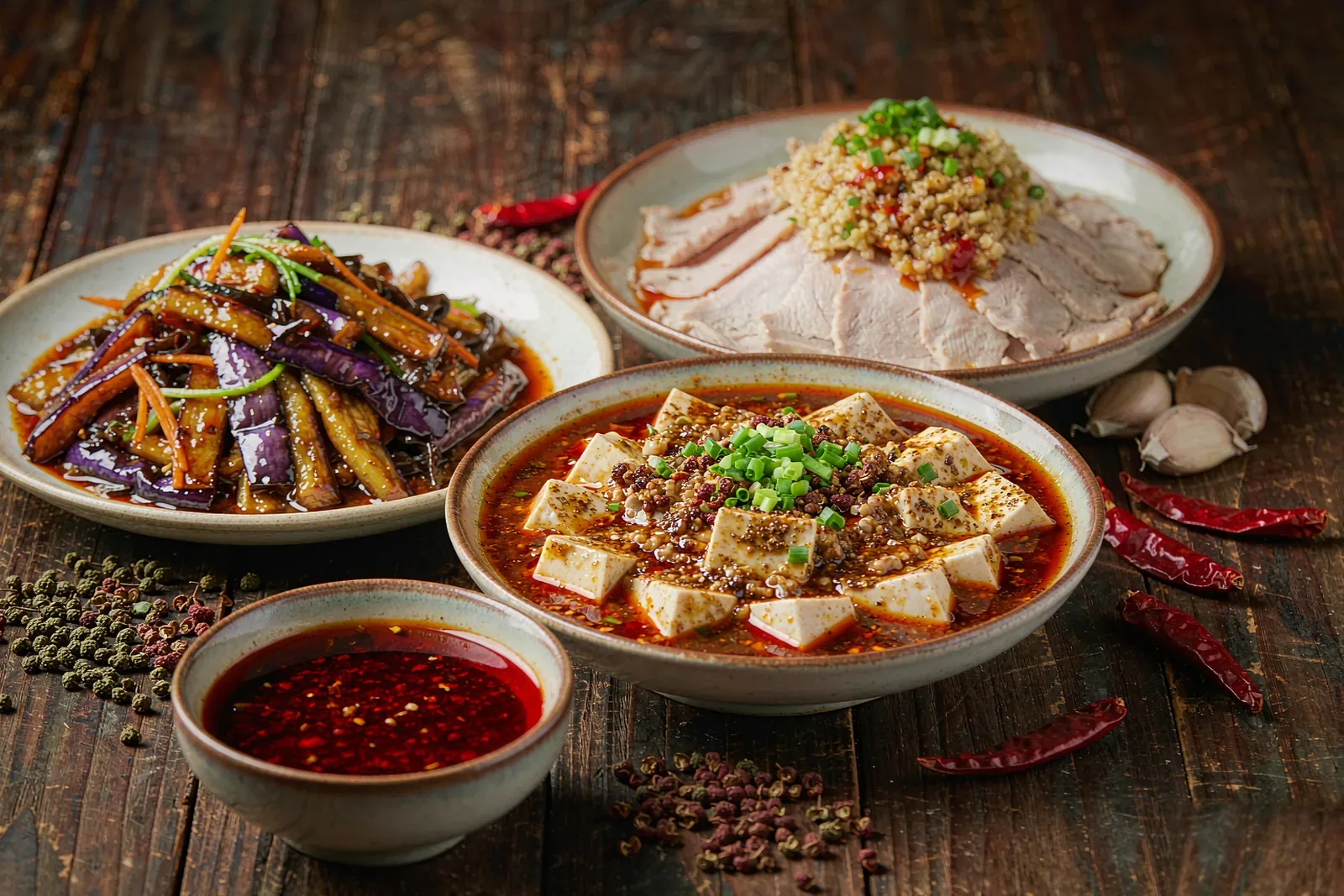
- Mapo tofu — born in Chengdu; silken tofu and minced beef in a chilli-bean sauce with the numbing tingle of Sichuan pepper. The reference standard for the city's "málà" flavour: numbing and hot at once.
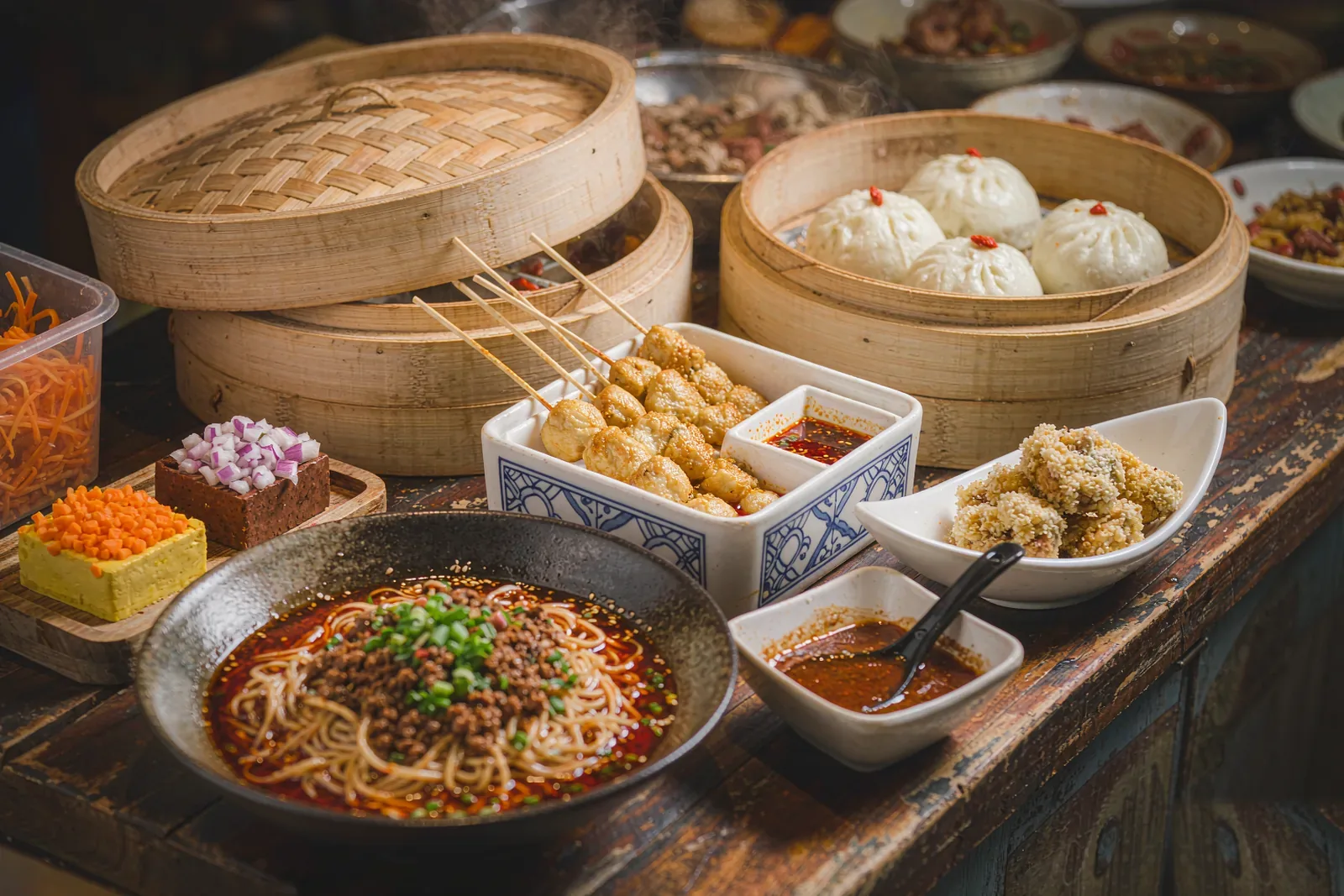
- Dan dan noodles — small bowls of noodles with chilli oil, preserved vegetables and a whisper of peanut. Deceptively addictive.
- Chuan chuan / bobo chicken (串串 / 钵钵鸡) — skewers you pick yourself from a fridge, counted by the stick at the end. Cold bobo-chicken skewers in a spicy or sesame broth are the perfect afternoon snack.
- Maocai (冒菜) — "hotpot for one": choose your ingredients, they cook them in spiced broth and serve in a bowl. The ideal solo lunch.
- Sweet water noodles (甜水面) — thick chewy noodles in a sweet-spicy sauce; the sugar against the chilli is pure Chengdu logic.
Calibrating the spice: a five-level scale
Chengdu kitchens respect a frank "wēi là" (mild). Use this scale when ordering:
- Level 1 — no chilli: broths, sweet dishes, steamed fish. Perfectly respectable.
- Level 2 — wēi là (mild): real flavour, gentle warmth. Most visitors should start here.
- Level 3 — zhōng là (medium): what locals call "not spicy". Serious heat for the untrained.
- Level 4 — tè là (extra hot): for the experienced and brave.
- Level 5 — local default: assume nothing; this level ends friendships and holidays.
Two survival notes: Sichuan pepper numbs rather than burns — the tingling lips are málà doing its job, not a warning sign. And dairy kills chilli better than water; a cold soy milk or yogurt drink is the local antidote.
Where the locals actually eat
Skip the famous food streets for dinner — they're atmospheric for a stroll and a snack, but the best meals happen where queues are locals on plastic stools. Yulin Road, Jianshe Road, and any residential block after 6 pm are hunting grounds. The rule of thumb from our three-day itinerary holds: the busier the shop with locals, the better and safer the food.
For a structured introduction, the Sichuan Cuisine Museum runs cooking classes where you make your own lunch; combining it with a market walk is one of our most requested Chengdu tour modules. Our guides order for guests daily and can dial every dish to your heat tolerance — just tell them level 2 and enjoy.
Stomach-safety rules that actually matter
- Busyness is freshness. High turnover means nothing sits around. The empty restaurant at 7 pm is the only red flag you need.
- Hotpot broth is boiled continuously — one of the safest meals you can eat. Street-cold dishes are fine from high-volume vendors.
- Go easy on night one. Sichuan pepper and chilli oil take adjustment; ramp up over days, not hours.
- Pace the oil. Much Chengdu food is oil-rich rather than purely spicy — alternate with noodles, rice and lighter dishes.
- Carry your usual remedies; pharmacies are everywhere, and hotel staff can point you to one.
Planning an eating-focused trip
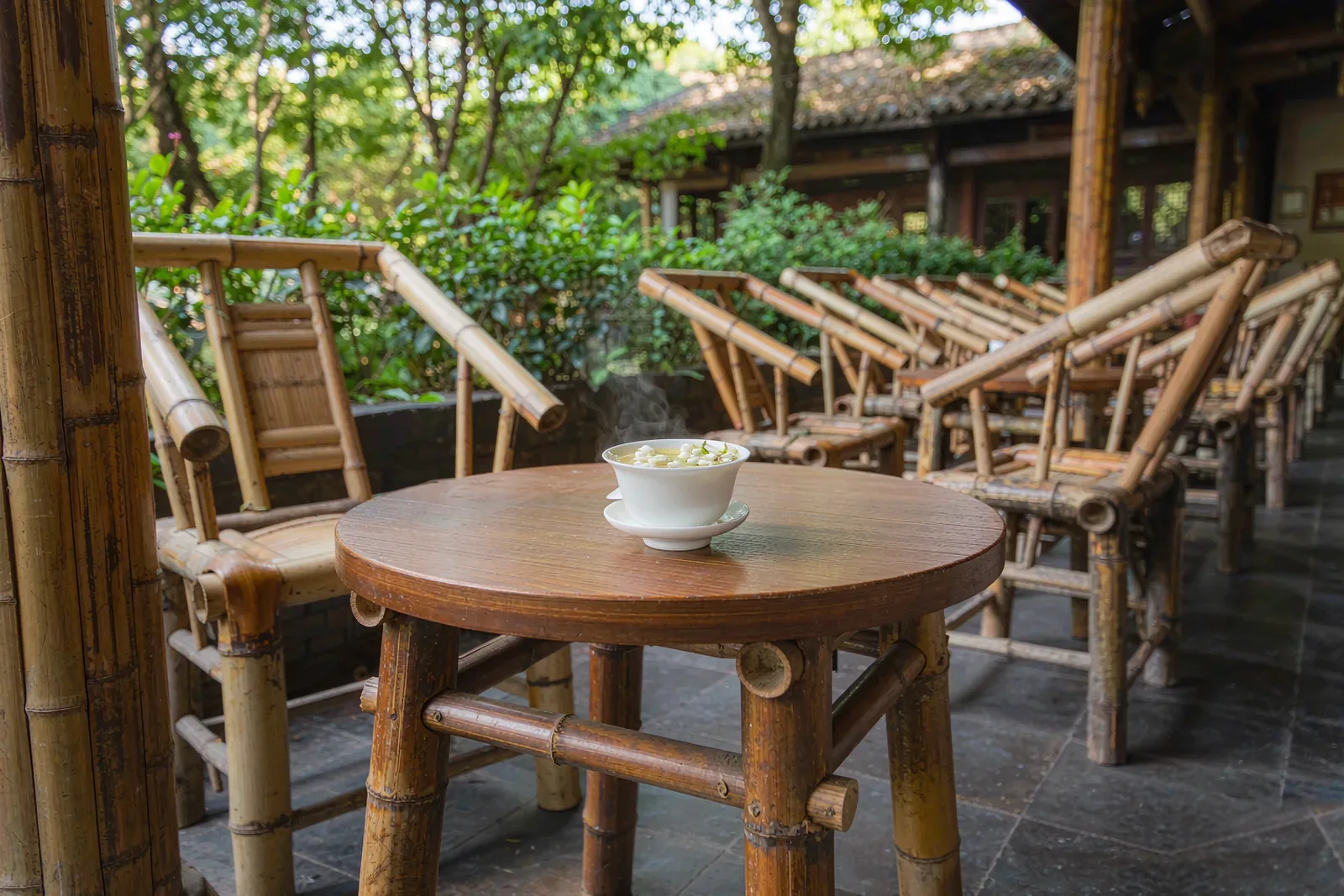
Give food its own days rather than scraps between sights: a morning market, a long lunch, an afternoon teahouse, a hotpot dinner is a perfectly full Chengdu day. Costs are gentle — a standout meal rarely exceeds ¥60–120 (about $8–17) per person; hotpot with drinks around ¥100–150 (about $14–21). Check latest prices on the day, but eating brilliantly here costs less than dinner at home. For wider trip budgeting, see our China trip cost breakdown, and if you're arriving on a short window, our 48-hour stopover plan lists the must-eat shortlist.
FAQ
I can't handle spice at all — is Chengdu still worth it?
Absolutely. Order wēi là or no-chilli versions, explore broths, dumplings, sweet dishes and teahouse culture. Locals accommodate non-spicy palates without blinking.
What is "málà"?
The signature Sichuan sensation: málà combines the heat of chilli (là) with the citrusy numbing buzz of Sichuan pepper (má).
Is street food safe?
From busy vendors, yes — high turnover and fresh cooking are the rule. Choose stalls with queues of locals.
How much should a good meal cost?
Typically ¥60–120 per person for an excellent meal; hotpot around ¥100–150 with drinks. Check latest prices, but eating well here is inexpensive.
Can guides help with dietary restrictions?
Yes — vegetarian, halal and allergy needs are workable; a guide translating at each meal removes the guesswork entirely.
Related guides