Mount Qingcheng and Dujiangyan: A Complete Guide from Chengdu
One day, two wonders: a 2,300-year-old irrigation system that still waters the Chengdu plain, and the greenest Taoist mountain in China. Here's how to explain the engineering miracle to your travel companions — and how to choose between Qingcheng's two very different sides.
Dujiangyan: the 2,000-year-old machine that still works
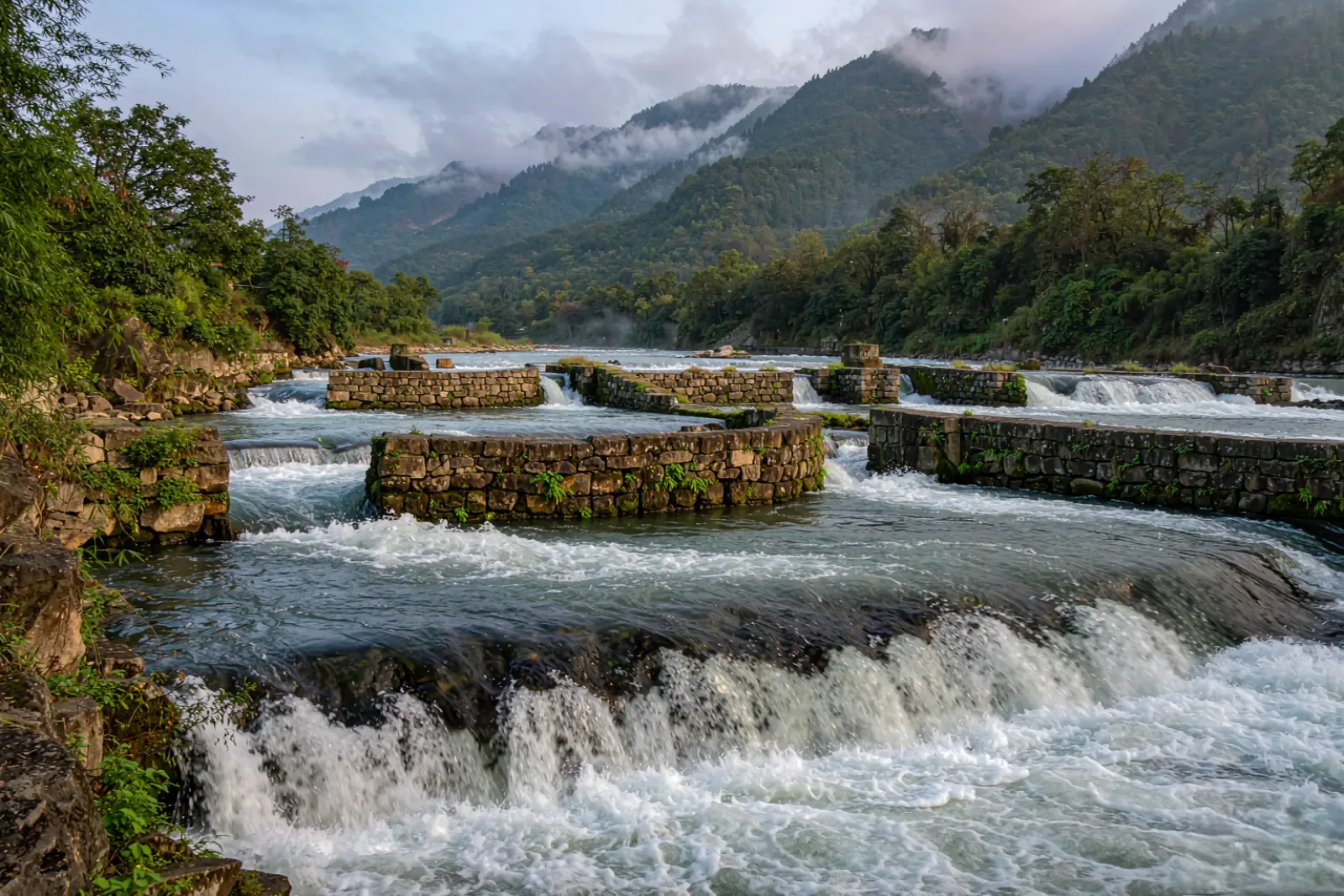
Built around 256 BC and still functioning today, Dujiangyan is the world's oldest large-scale irrigation system in continuous use. Before it, the Min River flooded the plain unpredictably; after it, Chengdu became "the Land of Abundance". No dam — just three clever structures working with the river's own physics.
Here's the version to tell your companions as you walk the site:
- The Fish Mouth (Yuzui) splits the river into an inner channel (for irrigation) and outer channel (for flood discharge) — a levee shaped like a fish that divides the flow naturally, more water to the fields in dry season, more to the spillway in flood.
- The Flying Sand Weir (Feishayan) is the overflow valve: when floods come, excess water and sediment swirl back into the outer channel — the curve of the channel does the work, no moving parts.
- The Bottle-Neck Channel (Baopingkou) is the controlled intake, cut through a mountain, metering water into the plain.
Stand on the Anlan Suspension Bridge to see all three at once. Engineers in your group will be quietly astonished; everyone else will be on a beautiful riverside park. A guide earns their fee here — the site is subtle without the story.
Mount Qingcheng: front mountain or back mountain?
Qingcheng — "the most serene mountain under heaven" — is where Taoism was formally established in the 2nd century. It has two faces:
- Front mountain (Qian Shan) — temples, pavilions, stone steps through humid forest, cable cars, crowds. This is the cultural experience: Shangqing Palace, the Zhangren Peak views, active Taoist temples. Choose this for your first visit.
- Back mountain (Hou Shan) — waterfalls, gorges, and long shaded trails, popular with Chengdu locals on weekends. Wilder and quieter, but a fuller day on foot.
A front-mountain loop with cable car takes about 3–4 hours and suits most fitness levels; comfortable shoes still matter, as steps are the rule. Combine with Dujiangyan in the morning and you have the classic one-day pairing.
Logistics from Chengdu
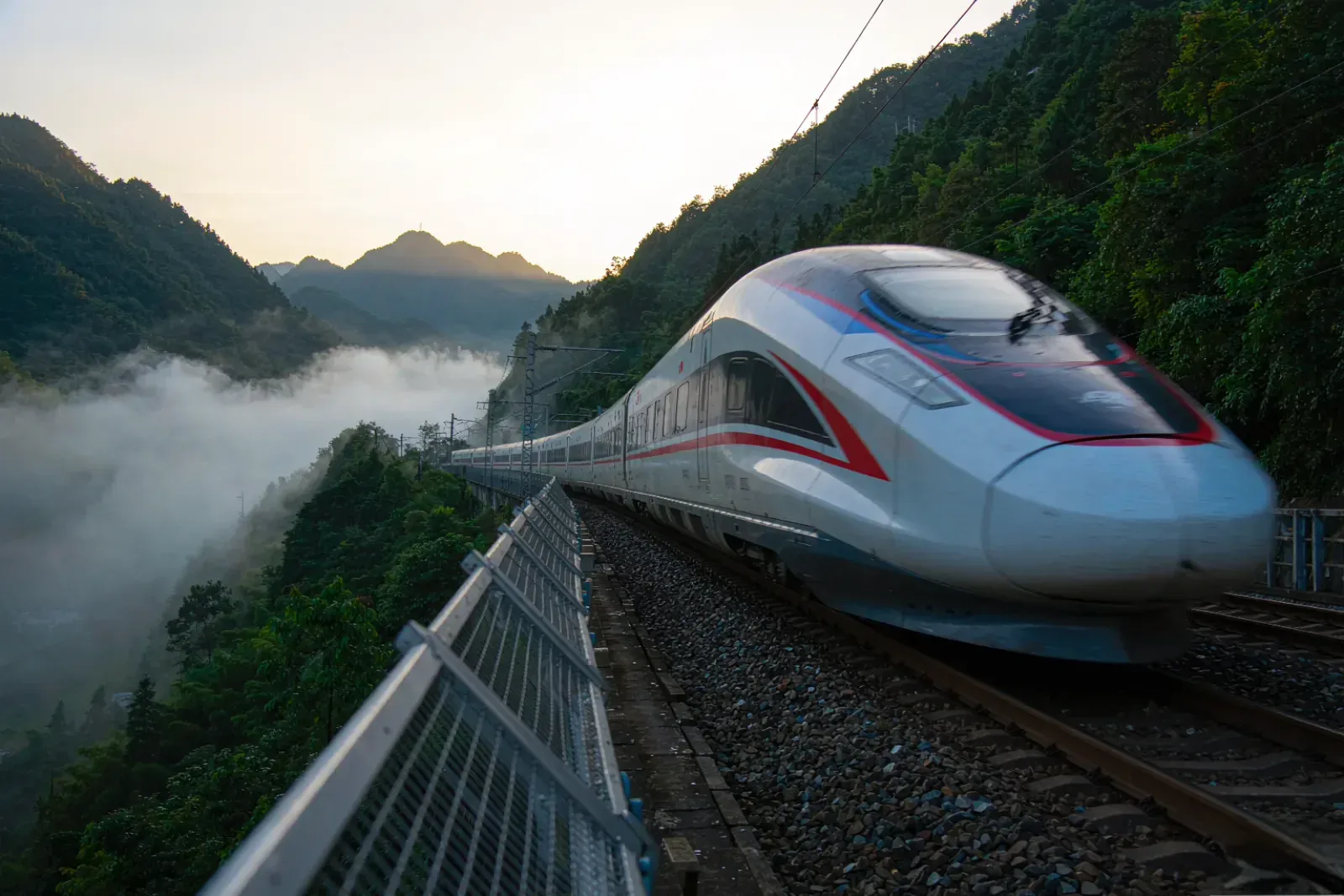
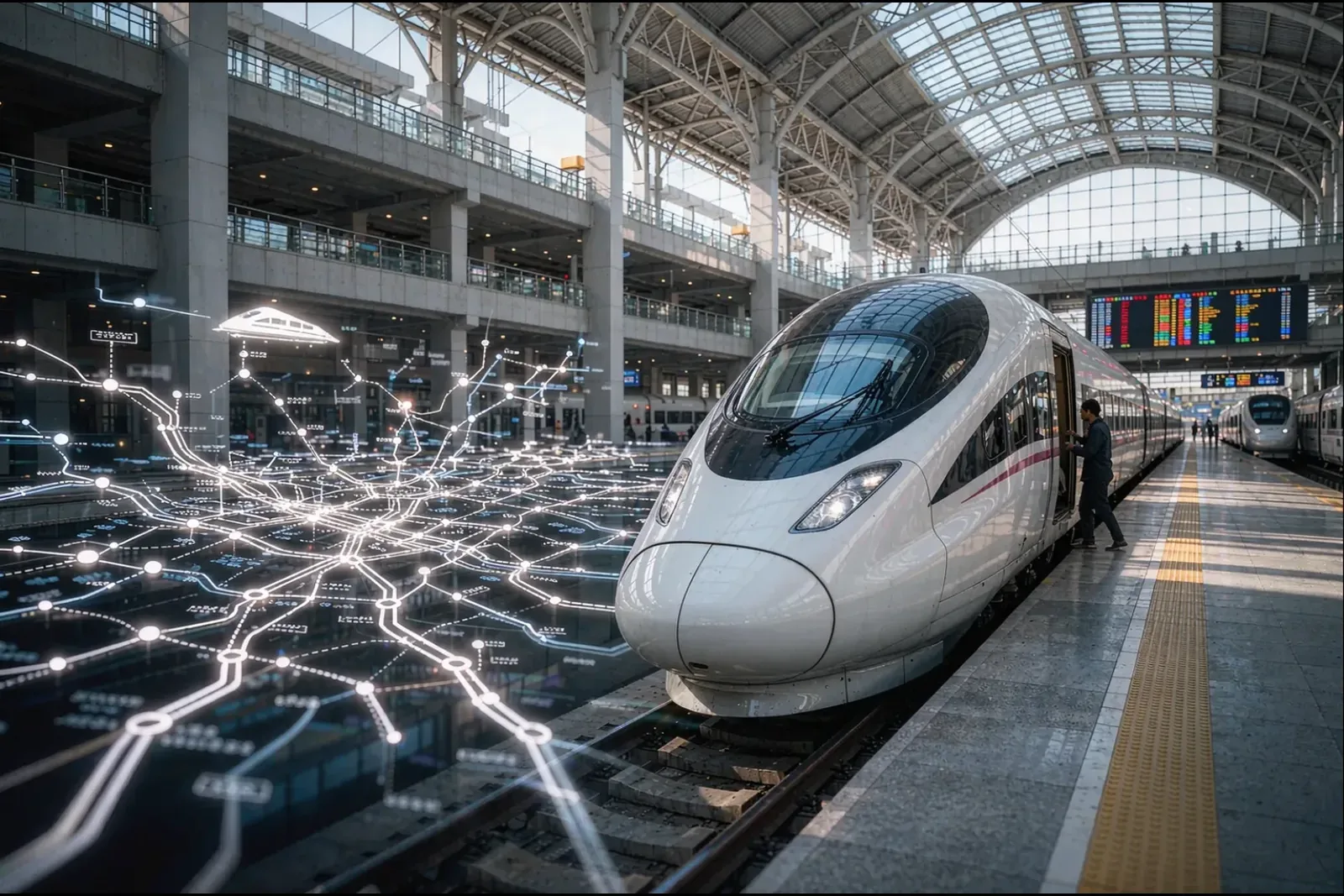
High-speed trains run from Chengdu to Dujiangyan or Qingchengshan stations in roughly 30–40 minutes, fares around ¥15–25 (about $2–4) — check latest schedules. From the station, buses and taxis reach both sites within 20 minutes. A private driver simplifies everything: the two sites are about 20–30 minutes apart, and door-to-door saves real time when you're fitting both into one day.
Plan 2–3 hours at Dujiangyan and 3–4 hours at Qingcheng, plus lunch. Teahouses on Qingcheng serve tofu dishes the mountain is known for — a slow lunch in a temple courtyard is part of the experience, very much in the spirit of our three-day Chengdu itinerary.
When to go, and who this trip suits
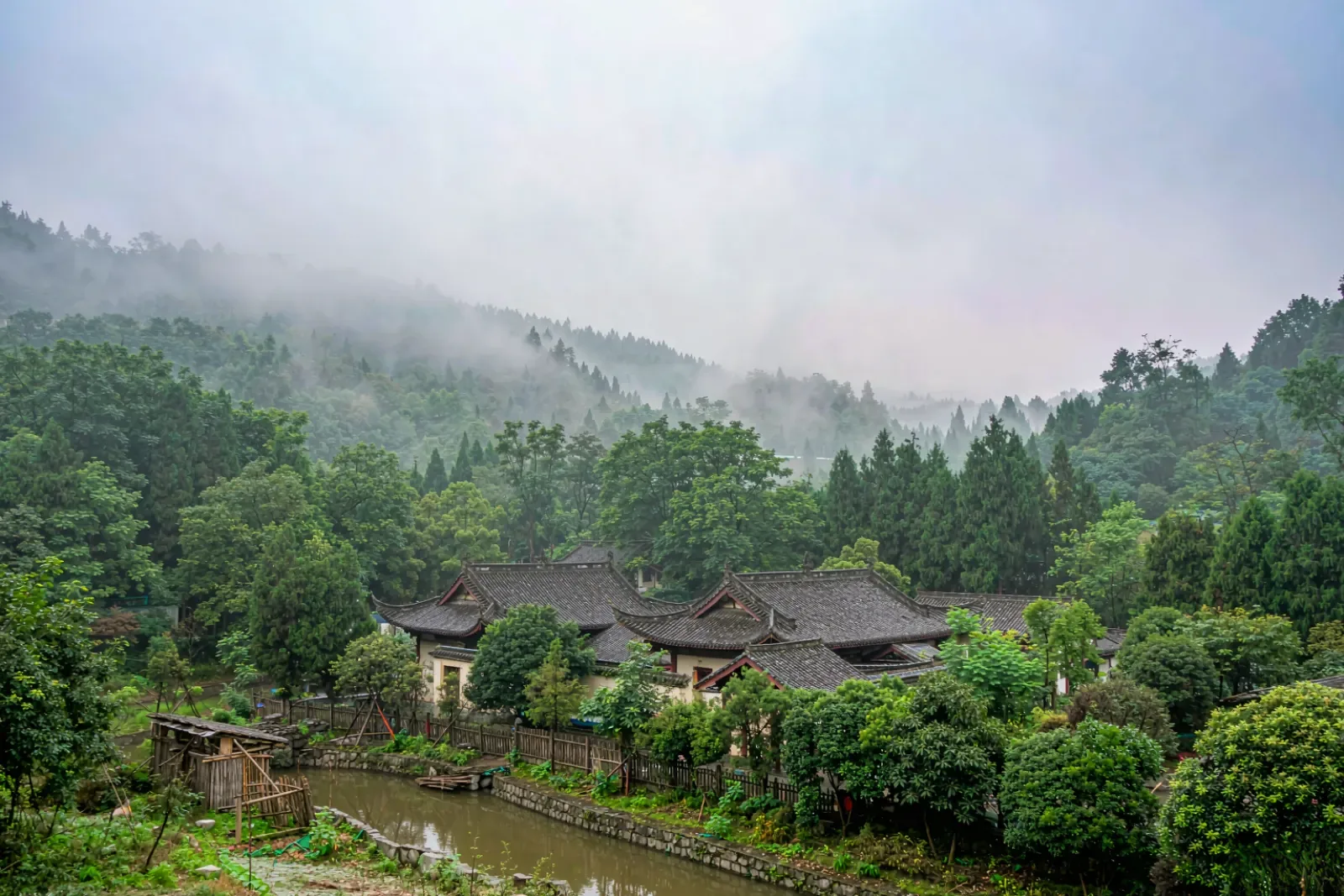
Qingcheng is glorious in every season but shines in spring and autumn — mild, green, mist clinging to the firs. Summer is cool under the canopy (a genuine escape from Chengdu's heat); winter is quiet and moody. For month-by-month detail see our season guide.
- History and culture fans: front mountain + a good guide, non-negotiable.
- Families: Dujiangyan's park-like paths work well for kids — see our family guide for pacing.
- Photographers: the suspension bridge mid-morning, Qingcheng's misty gates after.
Both sites pair naturally with Leshan on a longer route — see our Leshan day-trip guide — and our Chengdu tours can cover both day trips back to back.
FAQ
Can I do Dujiangyan and Mount Qingcheng in one day?
Yes, comfortably — 2–3 hours at Dujiangyan, lunch, then a 3–4 hour front-mountain loop, returning to Chengdu by evening.
Front mountain or back mountain?
Front mountain for temples, views and first visits; back mountain for waterfalls and quieter hiking. Most first-timers choose front.
Is Dujiangyan interesting without an engineer in the group?
Very — it's a scenic riverside park with bridges, temples and watchtowers. The engineering story just makes it remarkable.
How do I get there by train?
High-speed trains from Chengdu reach Dujiangyan/Qingchengshan in about 30–40 minutes, around ¥15–25 — check latest schedules.
Is it hilly? I'm not a hiker.
Dujiangyan is flat and easy. Front mountain involves steps but a cable car removes most of the climb.
Related guides