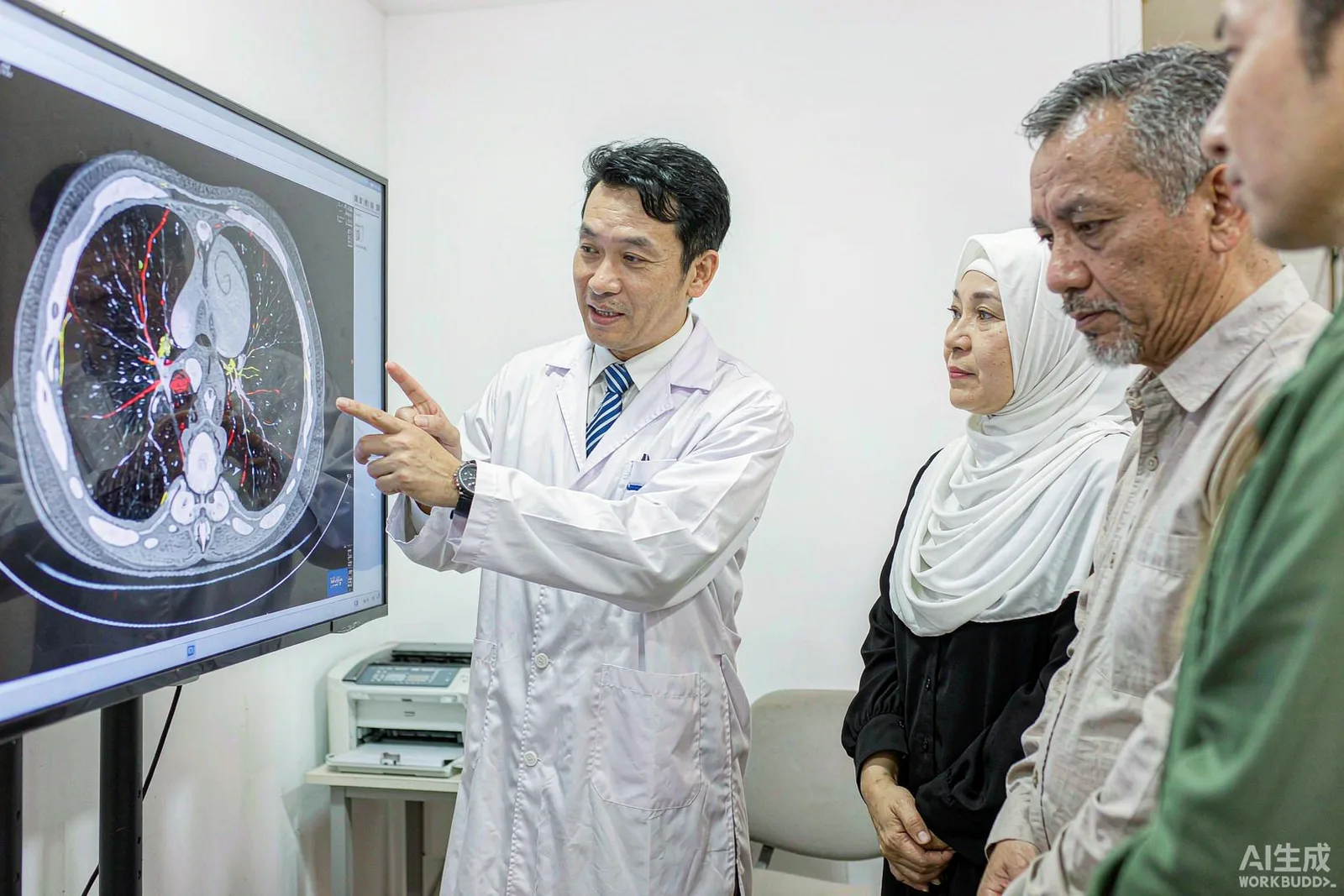
Heart Surgery in China: Costs, Top Hospitals & Real Patient Stories
Cardiac surgery shows China's value proposition at its clearest: bypass surgery at roughly a third of US prices, stent patients discharged within a week, and congenital repairs for children whose families could afford care nowhere else. Two patient stories and the full cost picture, here.

The cardiac cost gap, in one table
Published comparisons make the case faster than any argument:
- Coronary bypass (CABG): about US$40,000 in China versus US$130,000+ in the US — and Chinese centers routinely compress evaluation and surgery into the same admission.
- Coronary stenting (PCI): roughly one-third of Singapore's private pricing.
- Diagnostics: echocardiograms, CT angiography and MRI at a fraction of Western costs; a cardiac MRI costs a few hundred RMB.
- Recovery: enhanced-recovery protocols mean stent patients typically walk the next day and discharge within a week.
China's 1.28 million annual foreign-patient visits include a growing cardiac share, and the official strategy explicitly positions complex cardiac and neurosurgical care — not cosmetic procedures — as the country's differentiation.
Story 1: The stent that beat Singapore's calendar (Santoso, 52, Indonesia)
Santoso, an Indonesian trader, had three-vessel coronary disease: chest tightness walking on flat ground. Indonesia's option was open-heart bypass with a three-month wait; Singapore's stenting quote ran triple China's price. He chose Hainan's Boao Super Hospital.
In April 2026 his team performed radial-access PCI — entering through the wrist, a 2 mm puncture leaving no need for bed rest — placing drug-eluting stents across the diseased vessels. The enhanced-recovery protocol did the rest: out of bed the next day, discharged on day seven with a bilingual cardiac rehabilitation plan and remote follow-up scheduled.
What the story shows: Chinese cardiac centers have adopted the same ERAS (enhanced recovery) protocols as leading Western programs; the differentiator is the combination of price, speed and scheduled — not rationed — access.
Story 2: A 3-year-old's heart, repaired without opening the chest (Sharina, 3, Tajikistan)
Sharina was born with a ventricular septal defect complicated by pulmonary hypertension. Recurrent pneumonia and stalled growth told her parents time was short; Tajikistan performed no pediatric cardiac surgery, and European quotes were unreachable. The Shanghai Cooperation Organisation's medical green channel brought her to Qingdao University Affiliated Hospital.
Surgeons repaired the defect through a single thoracoscopic port — no sternum-splitting, no cardiopulmonary bypass. She left the ICU on day five and the hospital within a week. Remote follow-up through the year confirmed the shunt had closed completely.
What the story shows: China's pediatric cardiac volume is enormous — leading centers run 1,200+ congenital surgeries a year, with success rates near 99% and a documented world-first in axillary-incision coronary repair for infants. High volume builds the instincts that rare-disease families elsewhere cannot buy at any price.
Where to go, and for what
- Fu Wai Hospital (Beijing): China's national center for cardiovascular disease; the reference standard for complex congenital and adult surgery.
- Zhongshan Hospital (Shanghai): top-tier adult cardiology and structural heart programs.
- Boao Super Hospital (Hainan): the pilot zone's flagship — fast international pathways, new-drug access, visa-free-friendly logistics.
- Provincial university hospitals (Chengdu, Qingdao, Wuhan): strong cardiac surgery at the lowest price points, often with the shortest coordination lead times.
Match the center to the case: straightforward stenting works well almost anywhere in the designated-hospital network; complex redo surgery, aortic dissection and neonatal cases belong at the national centers.
Planning a cardiac trip: the realistic timeline
- Pre-arrival (2–4 weeks): send echocardiogram, angiography films and medication history; receive candidacy confirmation, itemized estimate and admission date.
- Arrival window: plan 3–5 days of pre-op testing (bloods, echo, anesthesia clearance).
- Treatment: PCI stays run about a week; bypass stays two to three weeks including initial recovery.
- Aftercare: fly home with bilingual discharge summaries; cardiac rehab plans are bilingual, and many centers do remote video follow-up. Build in-flight precautions — most cardiac patients fly commercially with physician clearance once stable.
Paying for it
Self-pay dominates, and the arithmetic favors it: even adding flights and a companion's stay, total trip cost typically lands below 40% of a single US private-hospital quote. International insurance direct billing exists at designated hospitals — confirm eligibility with a guarantee letter before flying. Our payment guide covers deposits, cards and mobile payment setup; our visa guide explains which entry route fits a 2–3 week cardiac stay.
Related guides