Guilin vs Zhangjiajie: Which Landscape Should You See?
Both are China's most surreal landscapes — Guilin's dreamy karst rivers versus Zhangjiajie's floating sandstone pillars. Here is how to choose between two very different kinds of beauty.
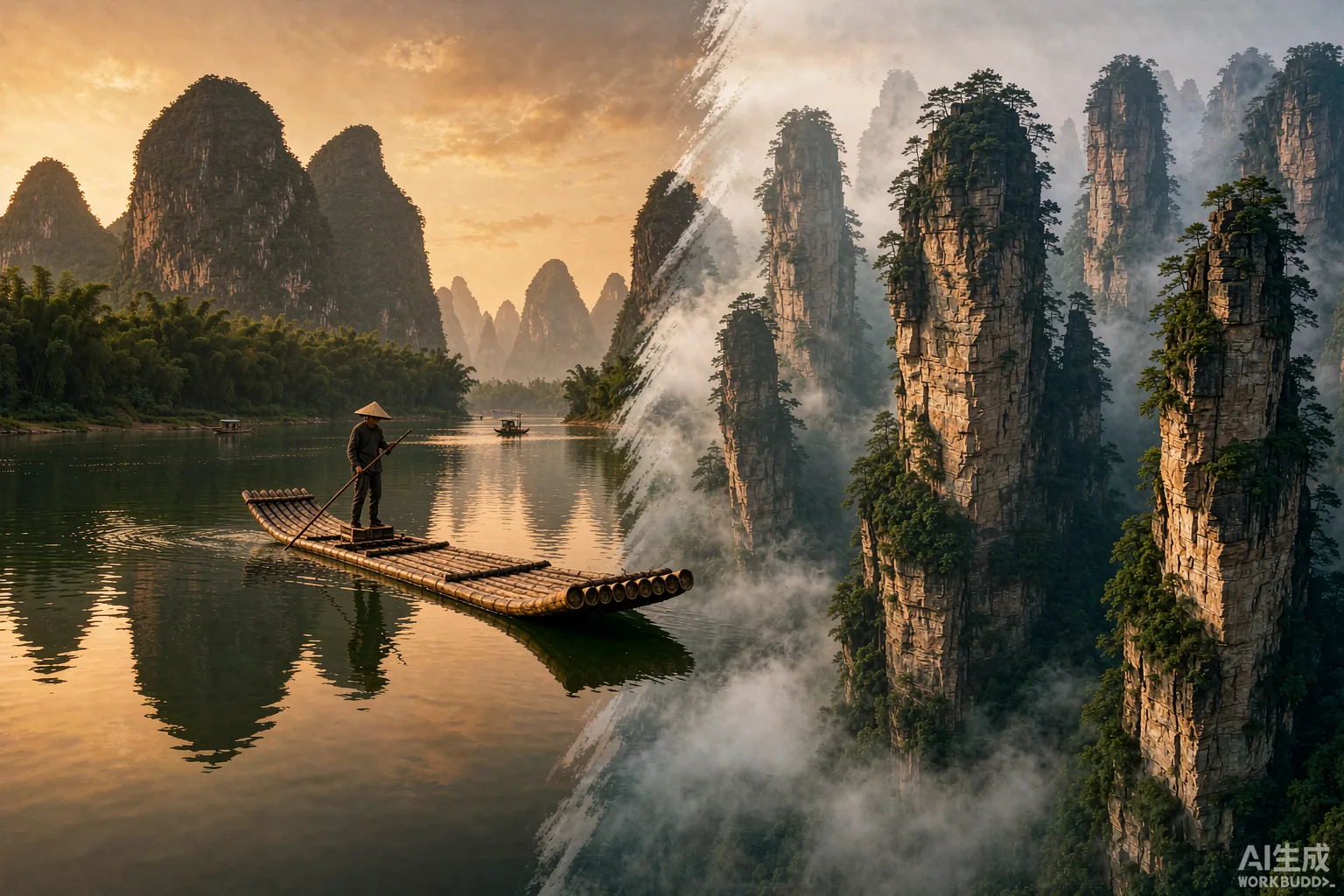
The honest difference
Guilin is gentle — a river winding through green karst peaks, bamboo rafts, rice terraces and a slower, painterly beauty that inspired centuries of Chinese art. Zhangjiajie is dramatic — thousands of vertical sandstone pillars rising out of mist, the landscape said to have inspired the floating mountains in Avatar. One is a watercolour; the other is a fantasy film.
What you actually do
- Guilin and Yangshuo: the Li River cruise, bamboo rafting on the Yulong River, cycling through the countryside, the Longji rice terraces. It is an active but relaxed, low-key experience.
- Zhangjiajie: the national forest park, the glass bridge, the Tianmen Mountain cable car and cliffside walkways, the Bailong elevator. It is more adrenaline, more infrastructure, more built attractions.
Ease and pace
Guilin and Yangshuo are easier and more suited to independent travel — hire a bike or a scooter and go at your own pace. Zhangjiajie's sights are spread across a large park with shuttle buses and queues; it rewards a guided or well-planned visit. Both are best in clear weather, which matters more in Zhangjiajie, where mist can hide the pillars entirely.
How to choose
- Pick Guilin and Yangshuo if you want a serene, romantic, active landscape — cycling, rafting and quiet riverside towns.
- Pick Zhangjiajie if you want drama, heights and the surreal pillar views — and don't mind more infrastructure and stairs.
- Do both if you have time; they are different enough that one does not substitute for the other, though they sit far apart on the map.
Bottom line
Guilin is the classic China landscape of paintings and poetry; Zhangjiajie is the landscape of fantasy and scale. Choose the mood you want — serenity or spectacle — and you have your answer. For timing, see our month-by-month guide.
Related guides