
Guest — sign in to save your enquiries.
My account
The Yarlung Tsangpo Grand Canyon is the deepest canyon on Earth, a 504-kilometre chasm where the Yarlung Tsangpo River plunges past Namcha Barwa and carves a dramatic horseshoe bend. Its scale is staggering, yet access is surprisingly gentle thanks to scenic roads and viewing platforms. With our private guide handling permits, transport and timing, you simply stand at the rim and take it all in.
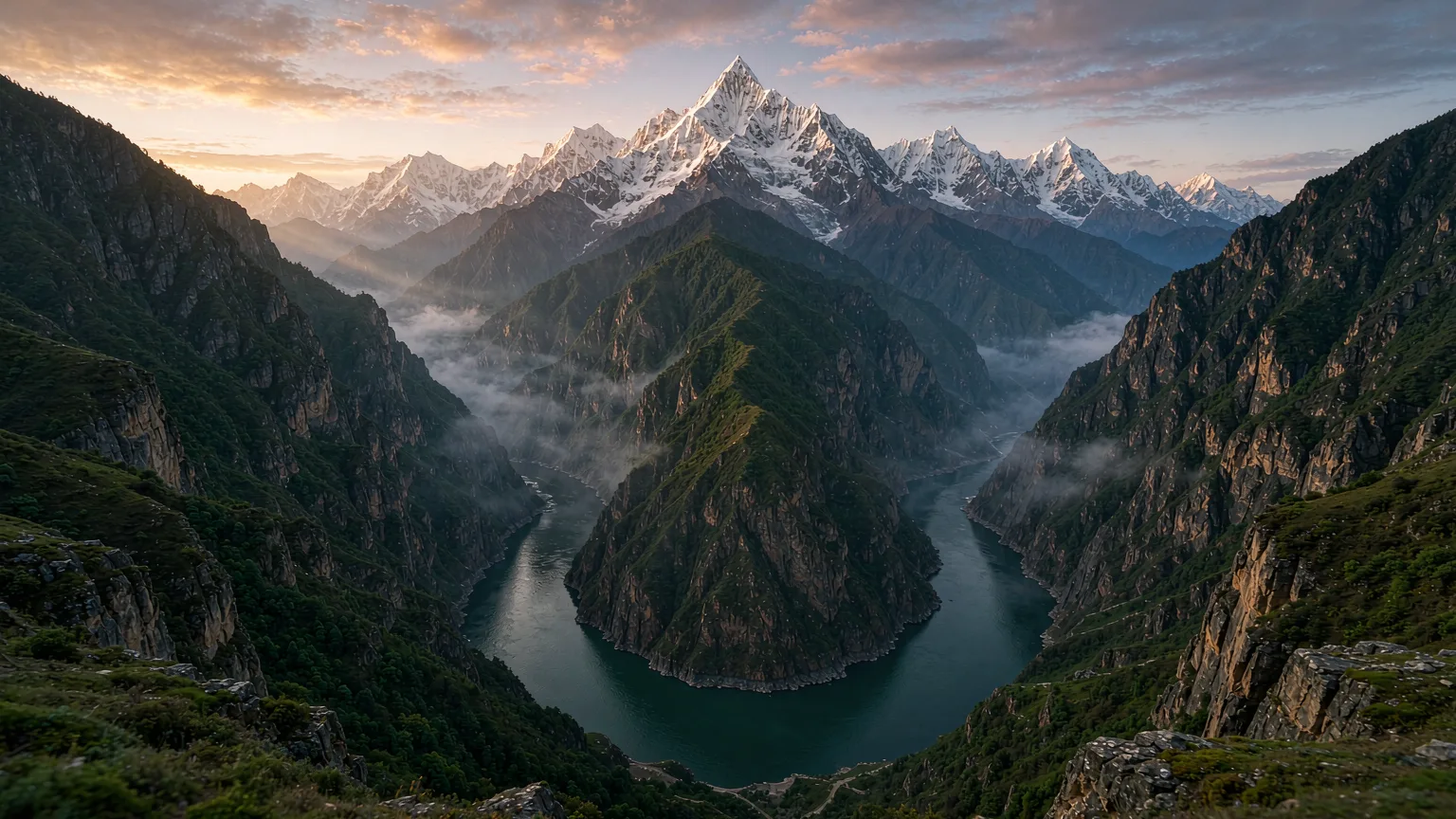
Carved over millions of years by the Yarlung Tsangpo River, the canyon reaches a maximum depth of 6,009 metres, more than three times that of the Grand Canyon. It slices through the eastern Himalayas in Nyingchi, Tibet, wrapping around the 7,782-metre Namcha Barwa peak in a near-perfect horseshoe. The river then escapes into India as the Brahmaputra. For geographers and adventurers alike, this is hallowed ground, and its remote, sacred landscape remains one of the last great frontiers of exploration.
The canyon lies about 100 kilometres from Nyingchi's Bayi District, and a paved scenic road now leads to several viewpoints, including the famous Daduka and the horseshoe bend platform. Along the way, you pass Tibetan villages, prayer flags and forests of rhododendron and pine. Altitude here is lower than Lhasa, making it a comfortable introduction to Tibet. For a deeper look at the region's culture, see our Basum Tso guide.
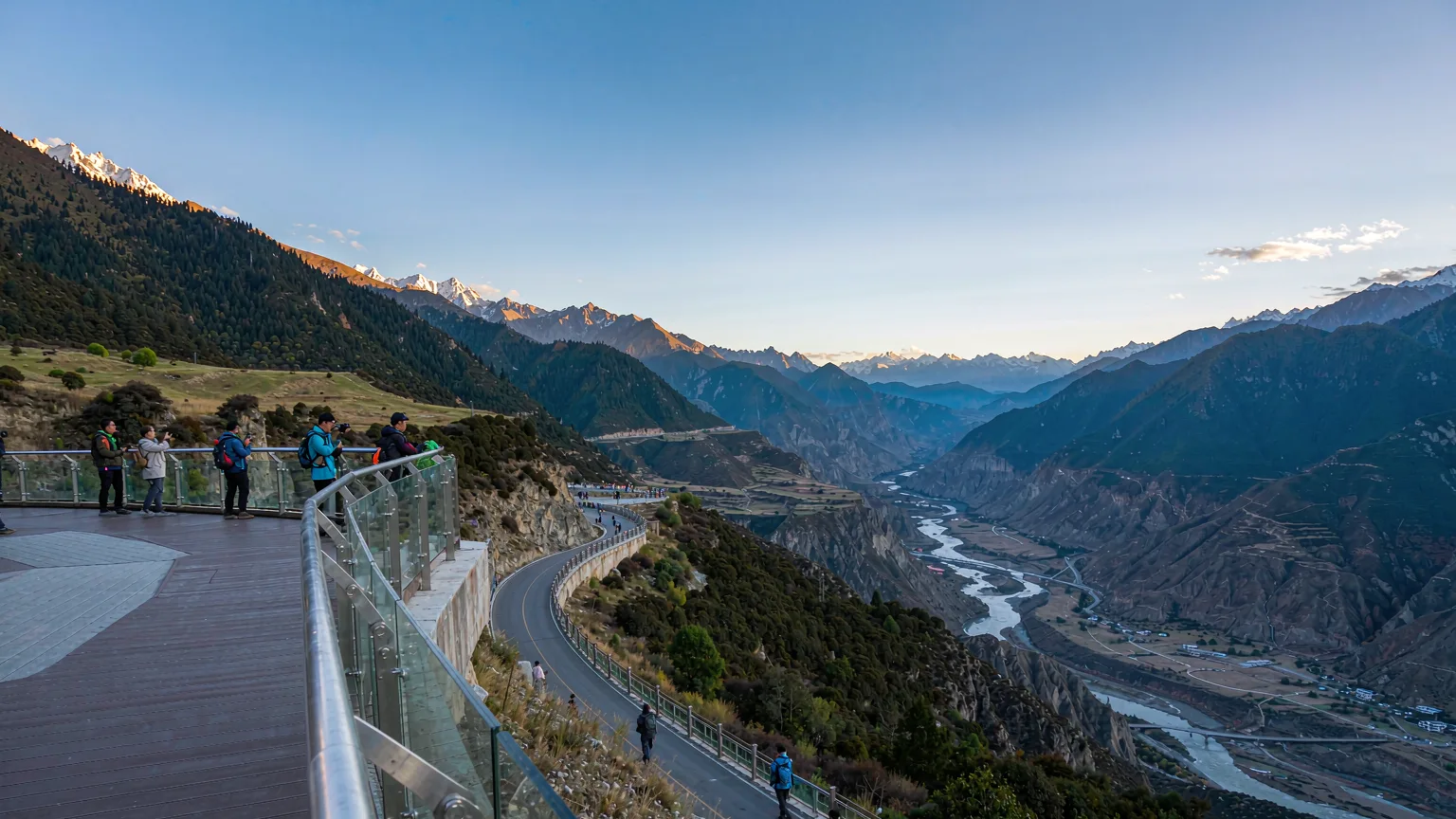
From Nyingchi Mainling Airport, it's a 2.5-hour drive to the canyon's main entrance at Pai Town. Most travellers base in Bayi District and join a guided day trip. Public transport is limited, so a private vehicle with a local driver is essential. Our guides arrange the necessary Tibet Travel Permit and handle all checkpoints, making the journey seamless. Combine with Basum Tso for a full Nyingchi loop.
Entrance fee is ¥150–¥240 depending on the route and season (includes shuttle bus). Opening hours are roughly 8:00–18:00, but last entry is often 16:00. Book through your guide in advance, especially in peak season (May–October). Major credit cards are rarely accepted; use WeChat Pay or Alipay linked to an international card, or bring cash.
Visit between late March and May for blooming rhododendrons and clearer skies, or September to October for stable weather and golden autumn colours. Avoid the monsoon (June–August) when clouds hide Namcha Barwa. Early morning offers the best chance to see the peak before clouds gather; aim to be at the first viewpoint by 9am.
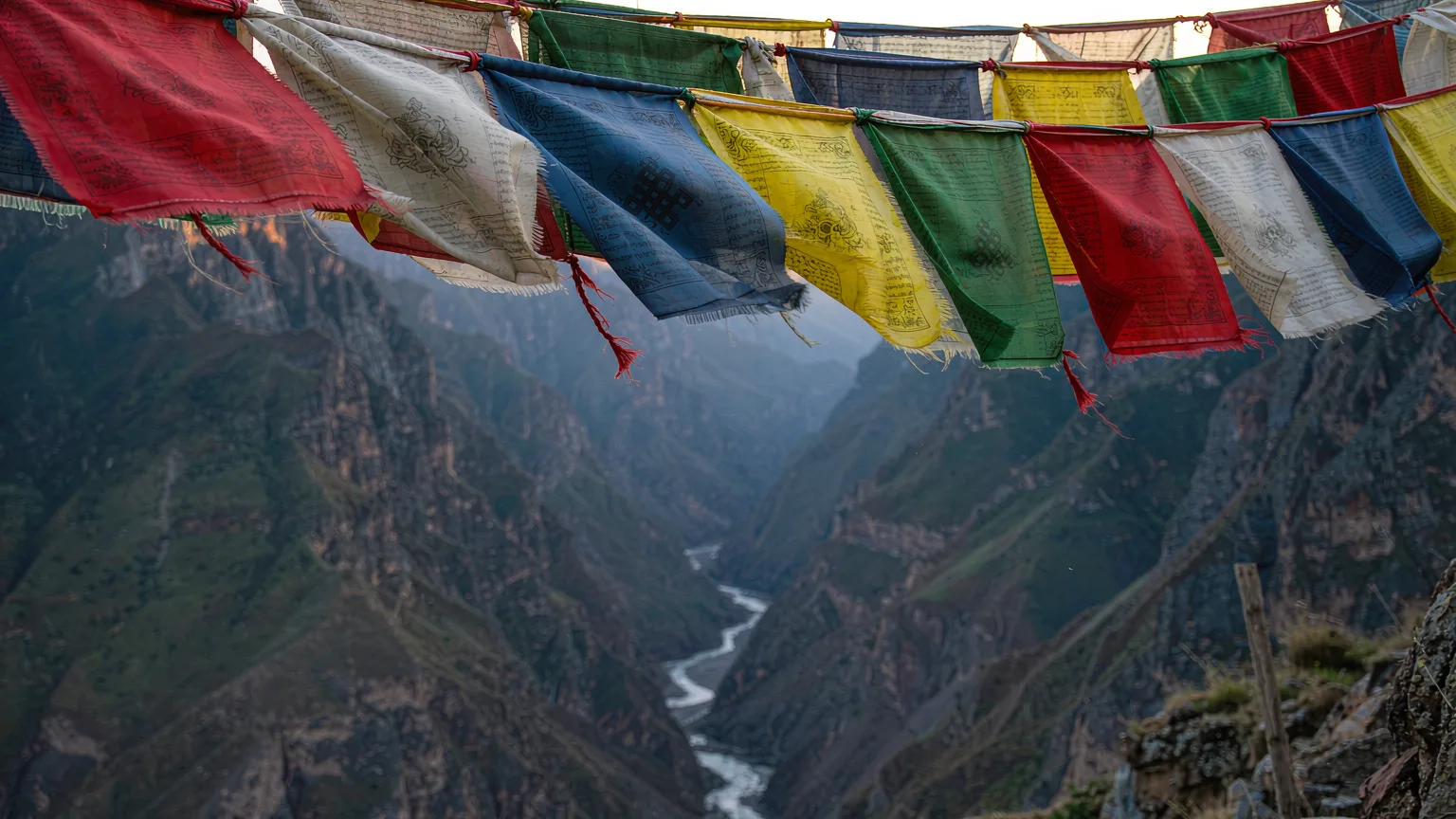
Yes, all foreign travellers need a Tibet Travel Permit, arranged through a licensed tour operator. Your guide will handle the paperwork; you must provide your passport and China visa at least 20 days in advance.
The main viewpoints are accessible by vehicle and short walks, so it's suitable for most fitness levels. However, the altitude (around 3,000m) can cause breathlessness; take it easy and stay hydrated.
Yes, on clear days the peak is visible from several platforms, especially in the early morning. Cloud cover often hides it by midday, so plan your visit accordingly.
Take a 5-hour high-speed train or a 1-hour flight to Nyingchi, then drive 2.5 hours to the canyon. Our private transfer includes all permits and stops at scenic points.
Tell us your dates, group size and preferences — a dedicated consultant will reach out within 24 hours.