
Guest — sign in to save your enquiries.
My account
White Horse Temple is where Buddhism first took root in China, founded in 68 AD under the Eastern Han emperor Ming. Often called the cradle of Chinese Buddhism, it predates the famous Shaolin Temple by more than four centuries. With our private guide, you'll decode its layered history, from the original Han-era site to the international halls built with Thai, Indian, and Burmese support.
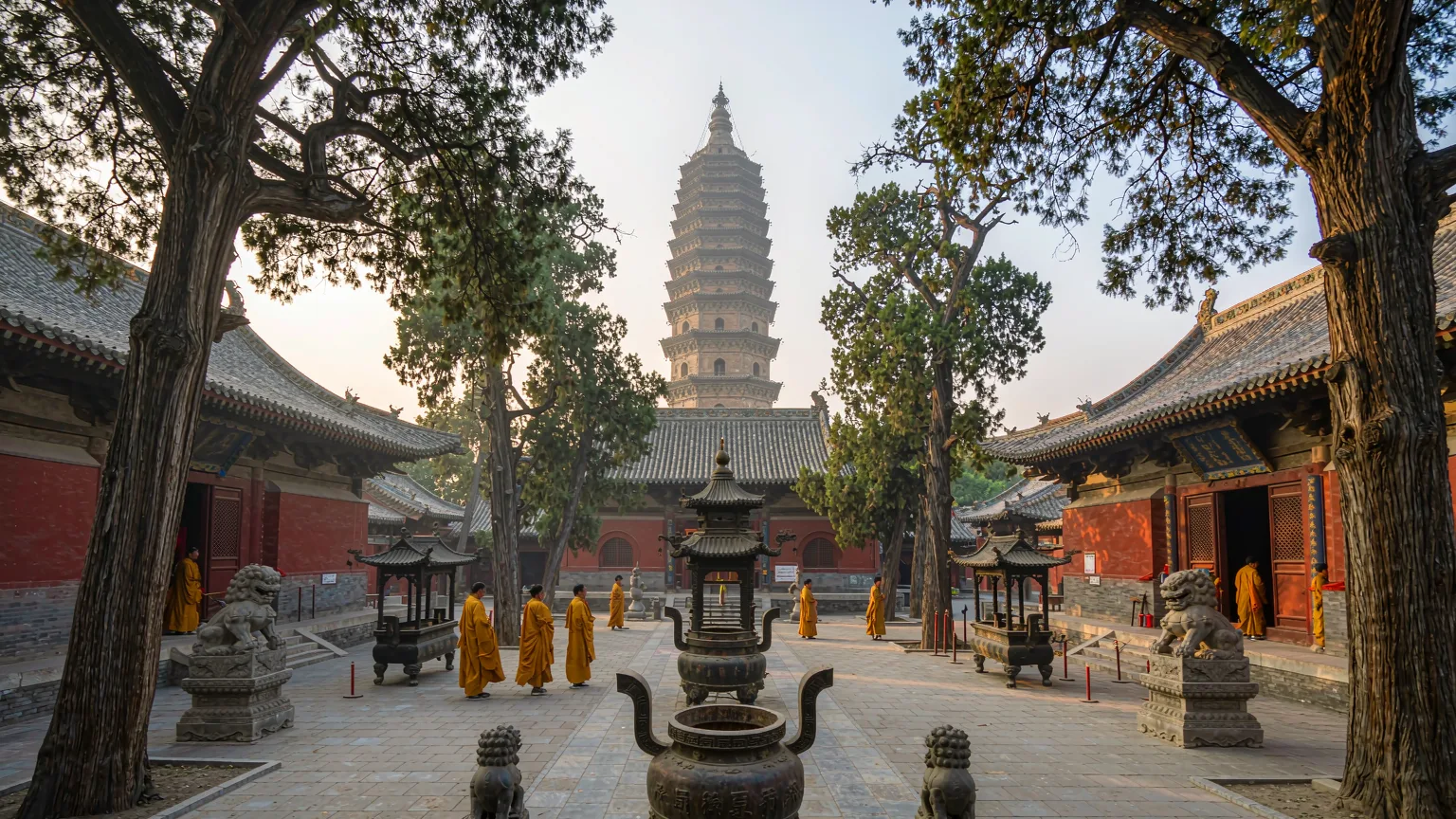
White Horse Temple (Baima Si) was established in 68 AD during the Eastern Han dynasty, making it the first officially sanctioned Buddhist temple in China. According to legend, Emperor Ming dreamed of a golden figure and sent envoys to India, who returned with two Indian monks and sacred texts on white horses—hence the name. The temple became the birthplace of Chinese Buddhist translation and scholarship, with the first sutras rendered into Chinese within its walls. Despite fires and reconstructions, the site has remained a working monastery for nearly two millennia, preserving a continuity rare in Chinese religious architecture.
Today the temple complex blends ancient and modern. The original Han-era foundations lie beneath later structures, while the main halls date largely from the Ming and Qing dynasties. In the 1990s, an international Buddhist garden was added, featuring halls built in Thai, Indian, and Burmese styles—each donated by their respective countries. This makes White Horse Temple a living museum of Buddhist art across Asia. For travellers, it offers a serene escape from Luoyang's urban bustle and a chance to trace the Silk Road's spiritual legacy.
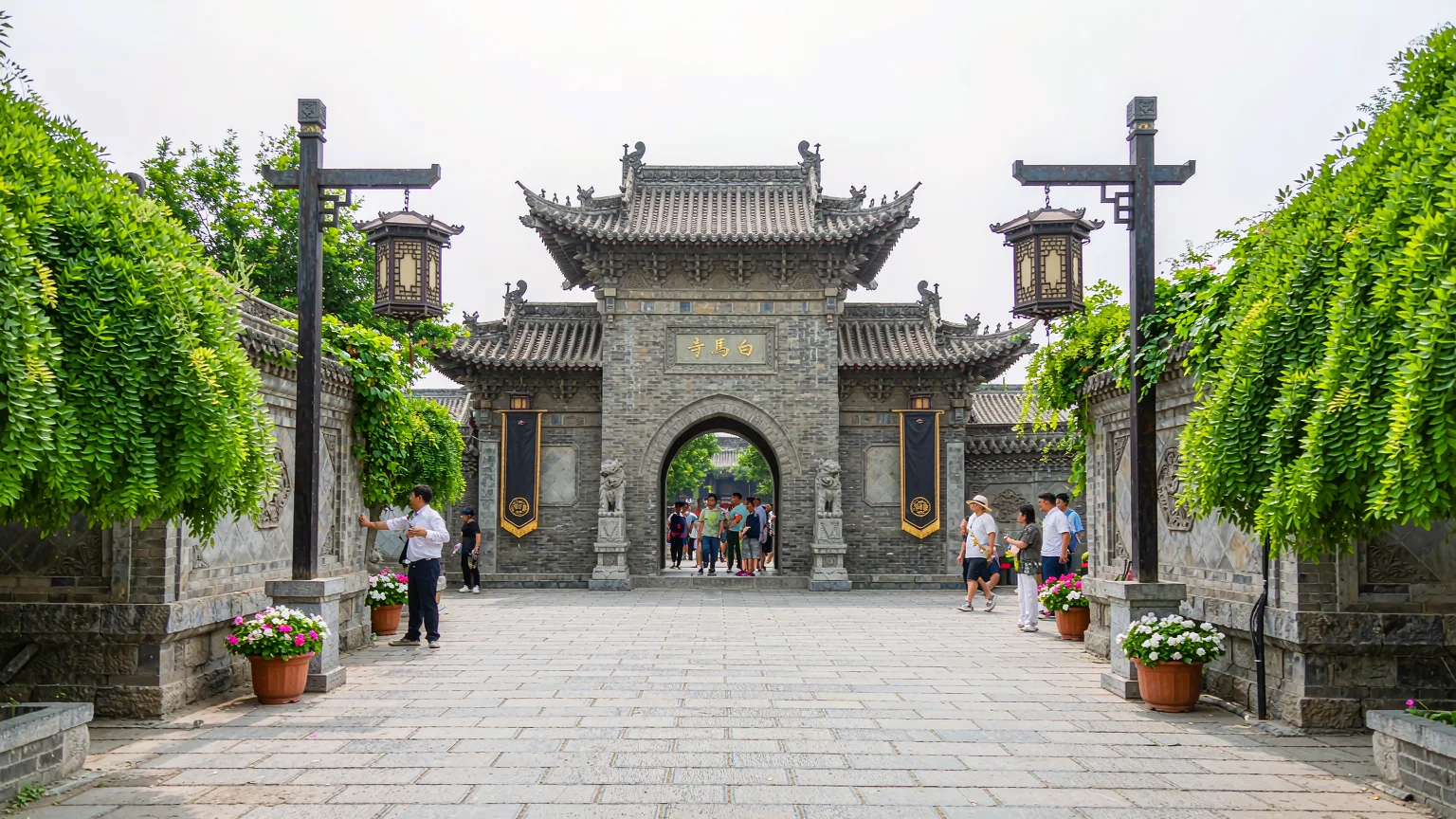
White Horse Temple is about 12 km east of Luoyang's old town. The easiest way is a taxi or DiDi (¥30–40, 25 minutes) from Luoyang Railway Station or the Longmen high-speed rail station. Public bus 56 also goes there from downtown (¥1–2, 40 minutes). We usually combine it with a morning at the Longmen Grottoes, then lunch and an afternoon here—our driver handles the transfers so you avoid navigating local buses.
Admission: ¥35 (peak season, Apr–Oct), ¥30 (low season, Nov–Mar). Opening hours: 7:30–17:30 (last entry 17:00). Book via WeChat mini-program 'White Horse Temple' or at the gate; foreign cards are not accepted at the ticket office, so bring cash or use WeChat Pay/Alipay linked to an international card.
Visit in spring (April–May) or autumn (September–October) for mild weather and fewer crowds. Early morning (7:30–9:00) is ideal: monks chant, incense fills the halls, and tour groups haven't arrived. Avoid weekends and Chinese public holidays, when the site can feel congested, especially around the international halls.
No. White Horse Temple is in Luoyang and is China's first official Buddhist temple, founded in 68 AD. Shaolin Temple, in Dengfeng, is famous for martial arts and was founded later, in 495 AD.
No, the ticket office only accepts cash or Chinese mobile payments. Set up WeChat Pay or Alipay with your international card before your trip, or bring enough cash in CNY.
Most visitors spend 1.5 to 2 hours exploring the main halls, pagoda, and international halls. With a guide, allow 2.5 hours to fully appreciate the history and symbolism.
Some signs have English, but they are limited. Our private guides provide in-depth commentary in fluent English, bringing the stories and sutras to life.
Tell us your dates, group size and preferences — a dedicated consultant will reach out within 24 hours.