
Guest — sign in to save your enquiries.
My account
Just outside Pingyao's ancient walls, Shuanglin Temple holds over 2,000 vivid painted sculptures, a trove often called the 'Oriental Treasure House of Painted Sculpture.' While the old town draws the crowds, this quiet sanctuary offers a masterclass in Chinese Buddhist art. With our private guide, you'll decode the stories behind each figure and experience it without the hassle.
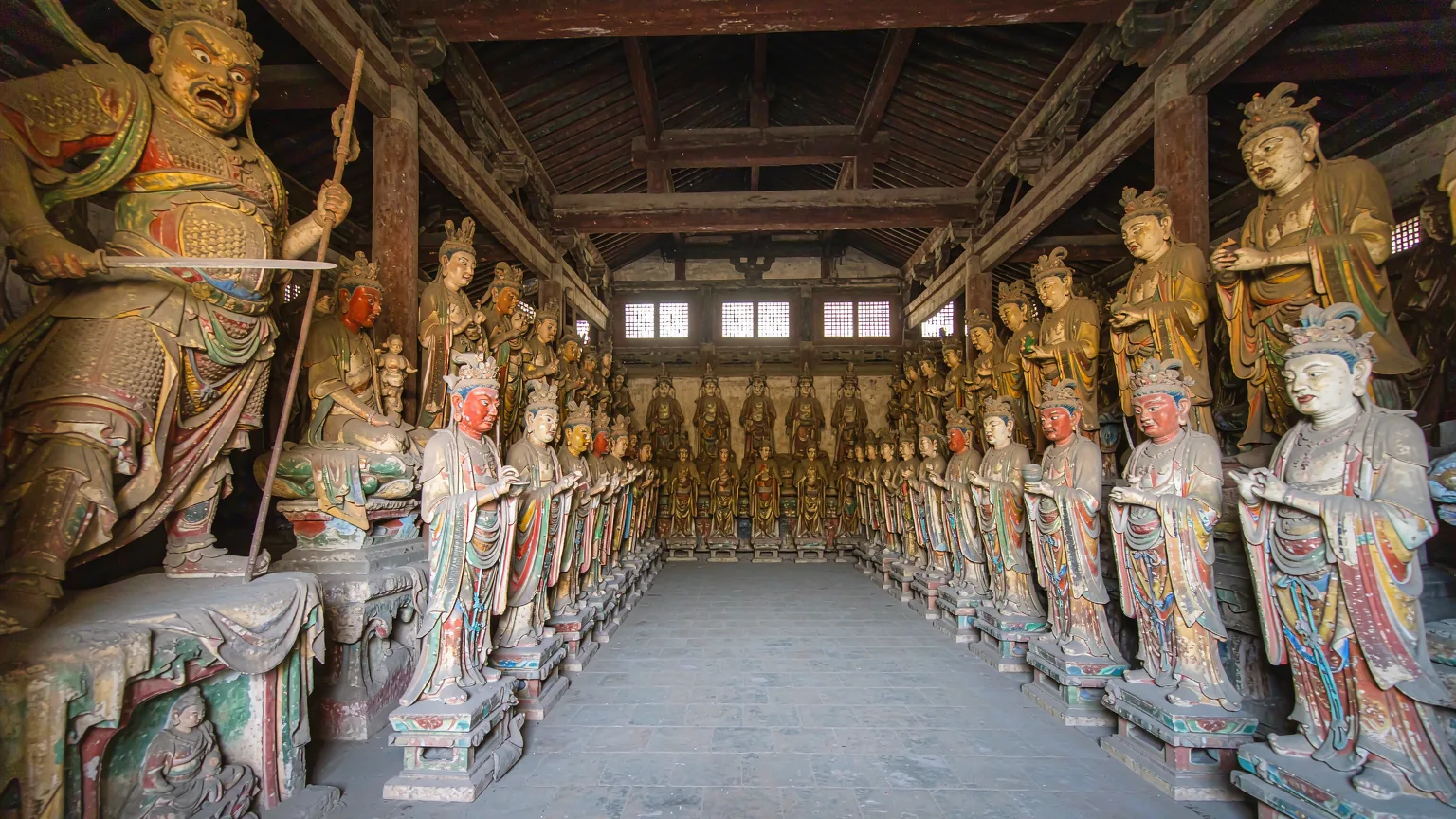
Shuanglin Temple, originally named Zhongdu Temple, was founded during the Northern Wei dynasty (386–534) and rebuilt in the Northern Song. It flourished as a center of Buddhist worship through the Ming and Qing dynasties. The temple's ten halls are dedicated to different deities, but its fame rests on the more than 2,000 painted clay sculptures that fill them. These works, created over several dynasties, showcase the evolution of Chinese sculptural style and are revered for their lifelike expressions and intricate detailing.
Unlike many temples that suffered destruction, Shuanglin's sculptures survived largely intact, thanks to careful preservation and its location away from major conflict zones. The sculptures range from towering figures of Guanyin and Sakyamuni to miniature narrative scenes, each painted with mineral pigments that retain much of their original color. The temple was listed as a UNESCO World Heritage Site in 1997 as part of the Ancient City of Pingyao. Today, it's a must-see for art historians and curious travelers alike, offering a window into China's spiritual and artistic past.
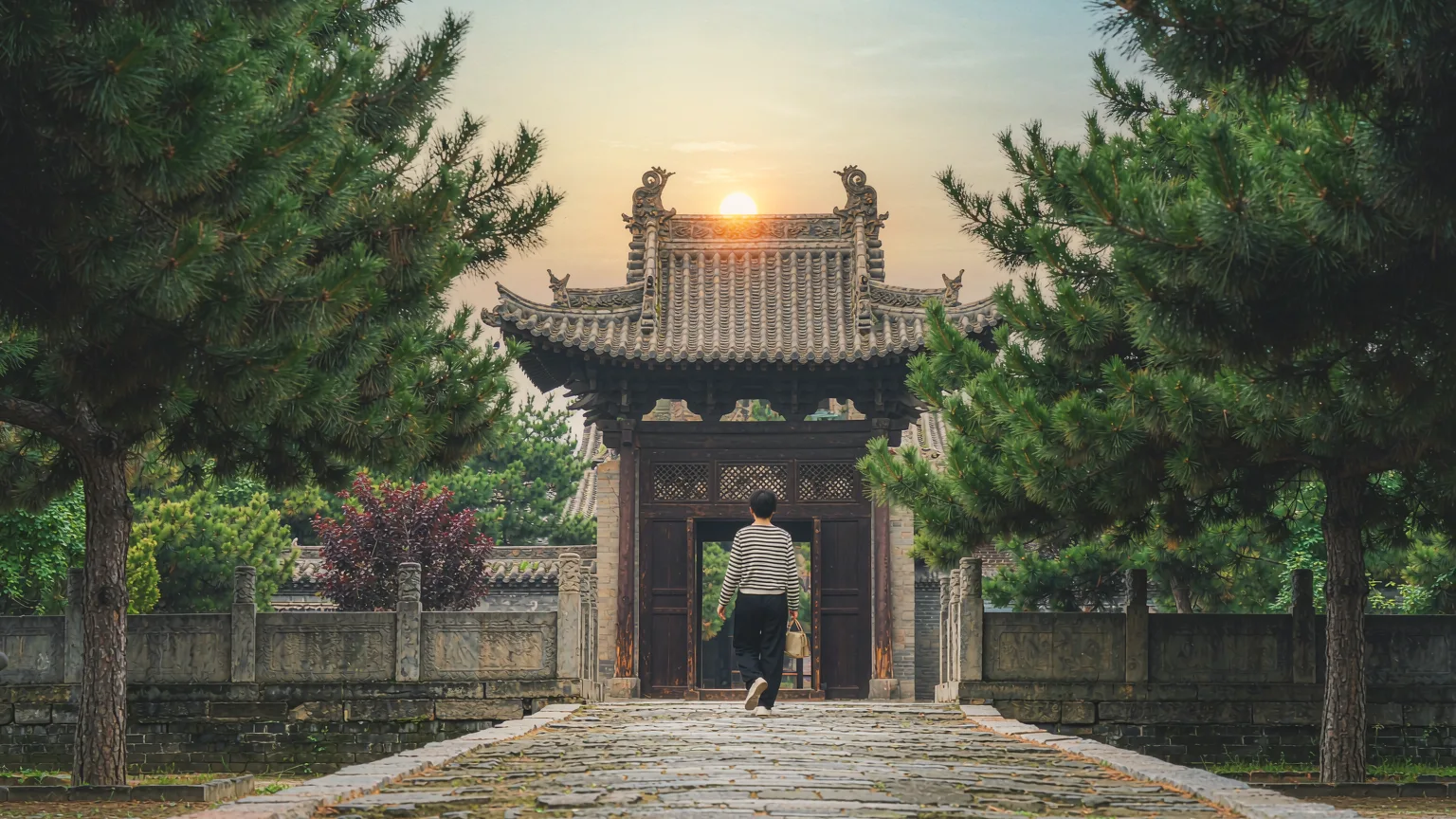
Shuanglin Temple is about 6 km southwest of Pingyao's ancient city. The easiest way is by taxi or Didi, costing around ¥20–30 and taking 15 minutes. Alternatively, take bus 108 from the old town's south gate. Many travelers combine it with a visit to the ancient city, spending half a day here. Our private guide can arrange seamless transfers, so you maximize your time exploring.
Admission: ¥35 (peak season), ¥25 (off-peak). Opening hours: 8:00–18:00 (April–October), 8:00–17:30 (November–March). Tickets can be purchased on-site, but we recommend booking through our guide to skip lines. Foreign credit cards are not accepted at the ticket office; bring cash or use WeChat Pay/Alipay linked to an international card.
Visit in spring (April–May) or autumn (September–October) for mild weather and fewer crowds. Early morning, right at opening, offers the best light for photography and a peaceful atmosphere. Avoid weekends and Chinese holidays, when domestic tour groups peak.
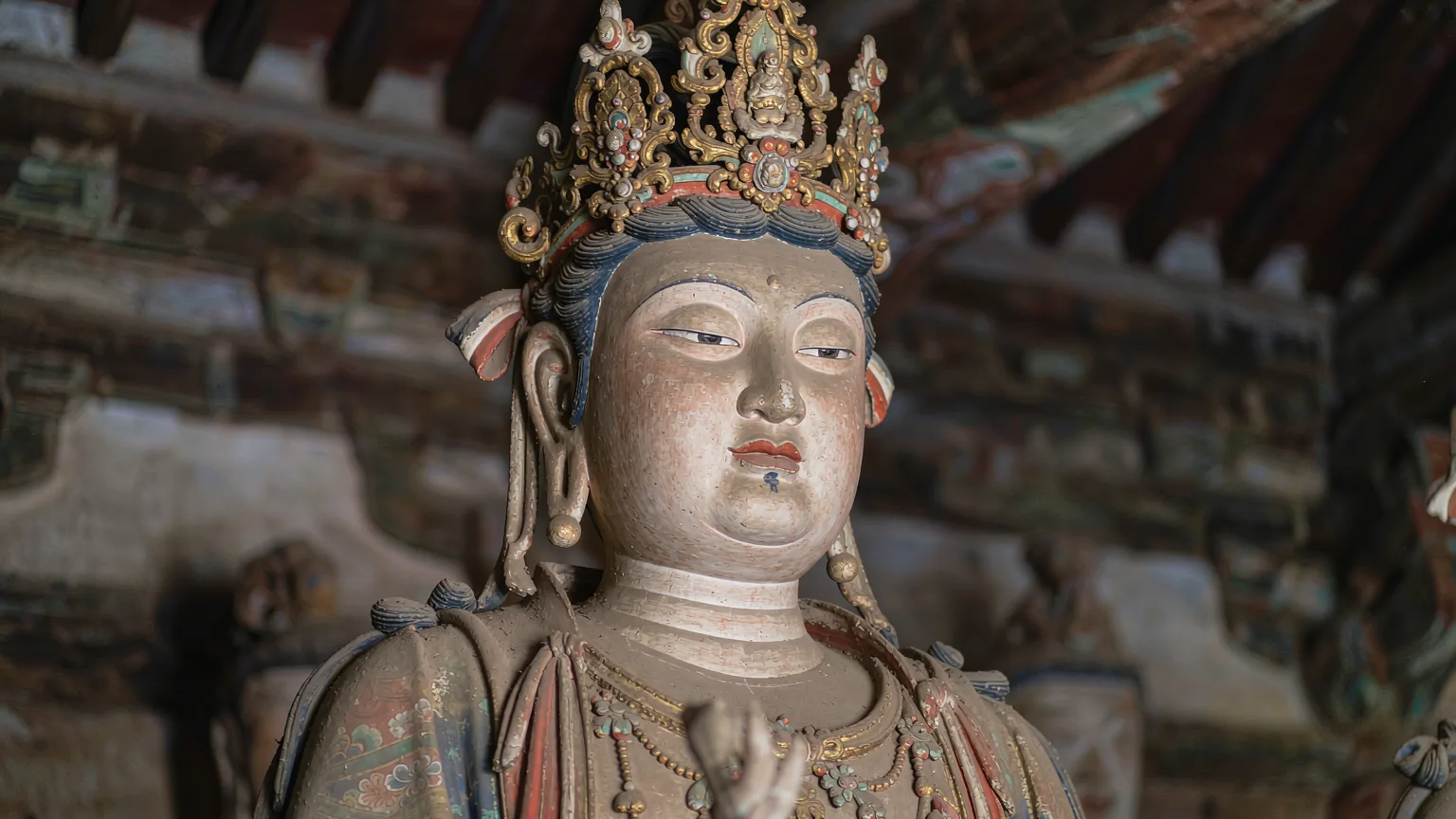
Yes, most date from the Ming and Qing dynasties, with some earlier pieces. They have been restored over centuries but retain original clay and paint.
Limited. Our guide provides detailed explanations, bringing the sculptures' stories to life and translating key inscriptions.
Yes, without flash or tripods. Be respectful and avoid blocking others' views.
About 1.5 to 2 hours to see all halls at a leisurely pace. With a guide, you'll gain deeper insights in the same time.
Tell us your dates, group size and preferences — a dedicated consultant will reach out within 24 hours.