
Guest — sign in to save your enquiries.
My account
Nishan Sacred Land is the birthplace of Confucius, a sprawling cultural resort in Qufu, Shandong, crowned by a 72-meter bronze statue of the sage and the opulent University Hall. It brings the life and teachings of China's greatest philosopher to life through architecture, ritual and performance. With our private guide, you skip the confusion and dive straight into the stories that make this place meaningful.
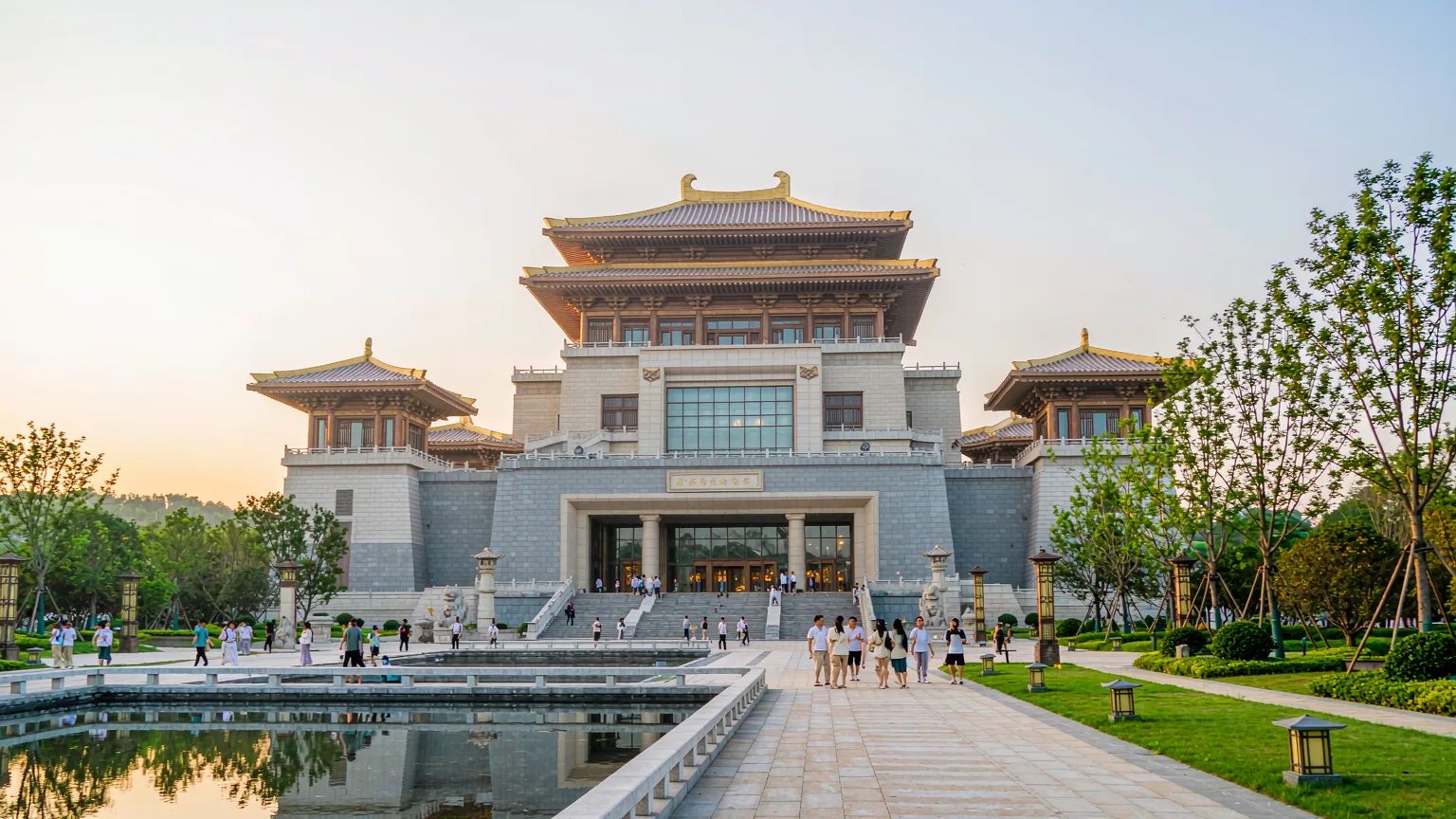
Nishan, a modest hill about 30 kilometers southeast of Qufu, is revered as the birthplace of Confucius (551–479 BCE). According to tradition, his parents prayed here for a son, and the cave where he was said to be born—Zhimu Cave—remains a pilgrimage site. For centuries, emperors and scholars made the journey to pay homage. The modern Nishan Sacred Land, opened in 2018, transforms this quiet landscape into a monumental tribute, blending ancient symbolism with contemporary scale. The 72-meter statue of Confucius, representing his 72 disciples, dominates the skyline, while the University Hall (Daxuetang) serves as a cultural palace filled with ritual halls, libraries and performance spaces.
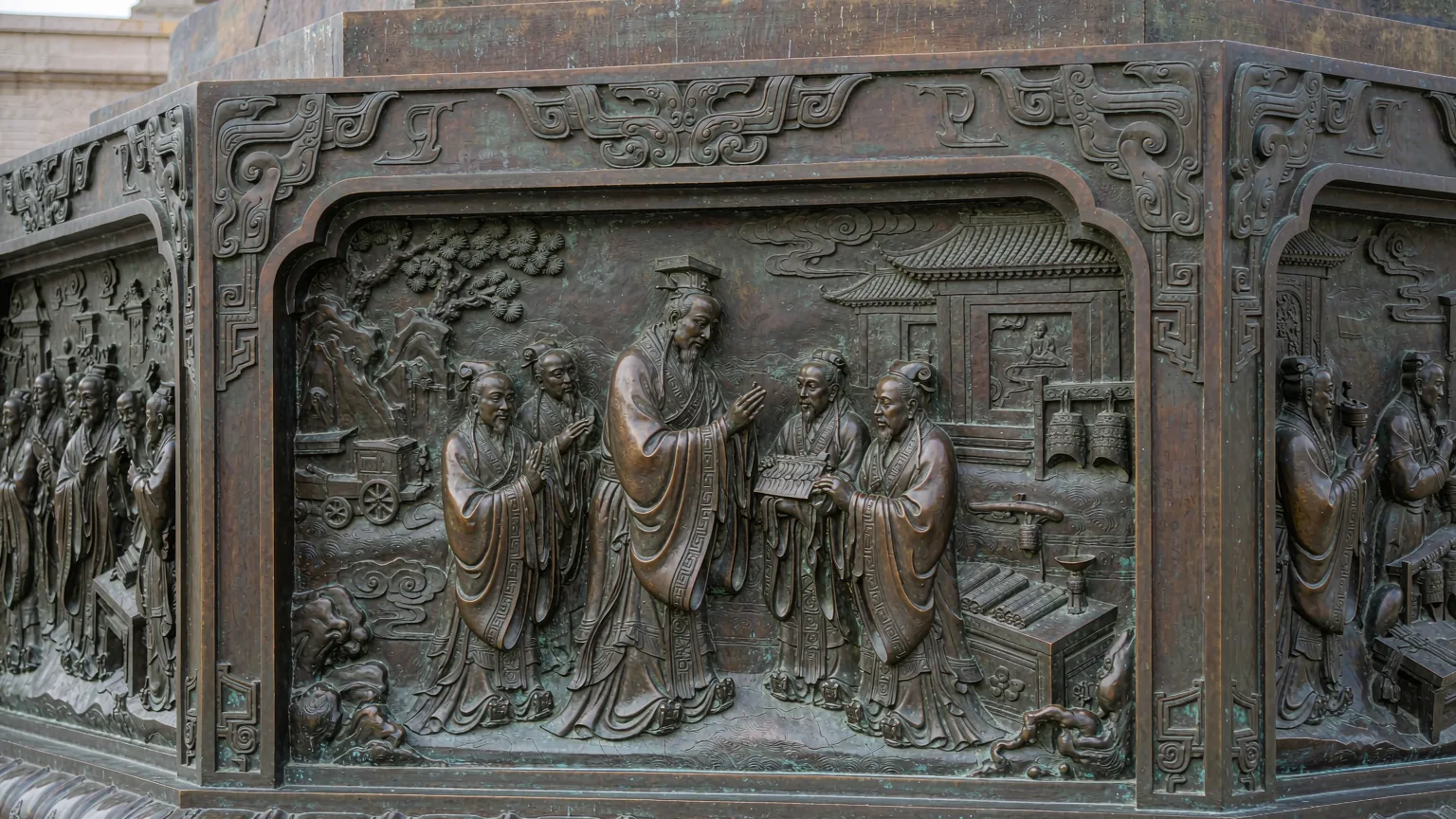
The site is divided into several zones: the statue and its towering pedestal, the University Hall with its nine grand halls, and the surrounding gardens and lake. The architecture draws on Han and Tang dynasty styles, using marble, bronze and wood to evoke classical China. Inside the University Hall, you'll find the Hall of Rituals, the Hall of Music, and the Hall of Books, each decorated with intricate carvings and murals depicting Confucian virtues. The complex also hosts nightly light shows and cultural performances, making it a full-day or evening destination. As a 4A-rated attraction, it offers English signage and audio guides, but our private guide ensures you grasp the deeper philosophical context.
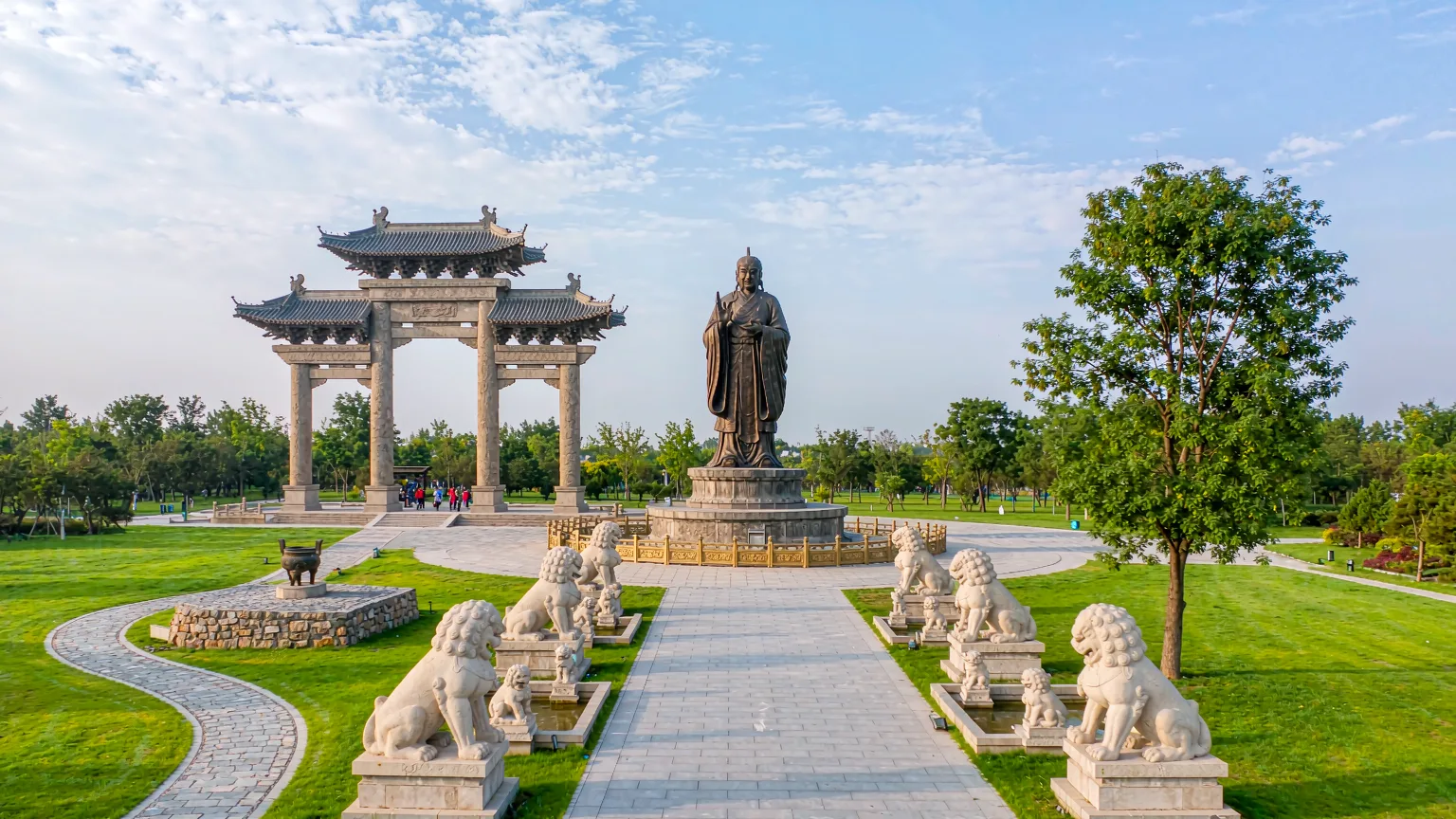
From Qufu, Nishan Sacred Land is about a 40-minute drive (30 km) via taxi or private car; our guide can arrange a comfortable transfer. If you're coming from Jinan or Beijing, take the high-speed train to Qufu East Station, then a 30-minute taxi. Many travelers combine it with the Temple of Confucius in Qufu city. We recommend a half-day visit, ideally arriving by mid-afternoon to explore the halls, watch the sunset over the statue, and stay for the evening light show before returning to Qufu.
Admission is ¥120–¥160 depending on the season and whether you include the evening show. Opening hours are typically 9:00–21:00, with the light show around 19:30. Book online via WeChat or Trip.com to avoid queues; foreign credit cards are accepted on Trip.com, but for on-site purchases, use WeChat Pay or Alipay linked to an international card. Our guide can pre-book tickets for you.
The best time to visit is during spring (April–May) or autumn (September–October), when the weather is mild and the crowds are manageable. Arrive in the late afternoon to explore the halls in daylight, then stay for the illuminated night show. Avoid Chinese public holidays, especially National Day (October 1–7), when the site is packed.
Yes, especially if you're interested in Chinese philosophy and culture. The scale is impressive, and the night show is a highlight. It complements a visit to Qufu's Confucius Temple and Cemetery.
Allow at least 3–4 hours to see the main halls, statue, and cave. If you stay for the evening show, plan for 5–6 hours including dinner.
Major international cards are not accepted at ticket counters. Use WeChat Pay or Alipay linked to your card, or book through Trip.com. Our guide can handle payments for you.
A taxi or private car takes about 40 minutes and costs ¥80–¥120. Alternatively, take bus K01 from Qufu Railway Station, but it's slower. We recommend a private transfer for comfort.
Tell us your dates, group size and preferences — a dedicated consultant will reach out within 24 hours.