
Guest — sign in to save your enquiries.
My account
Munigou Valley is Jiuzhaigou's quieter, wilder sibling — a 4A scenic area of travertine terraces, primeval forest and two star attractions: Zhaga Waterfall and Erdao Lake. It delivers the same otherworldly calcium-carbonate scenery without the tour-bus crowds. With our private guide handling permits, transfers and timing, you simply walk, breathe and photograph.
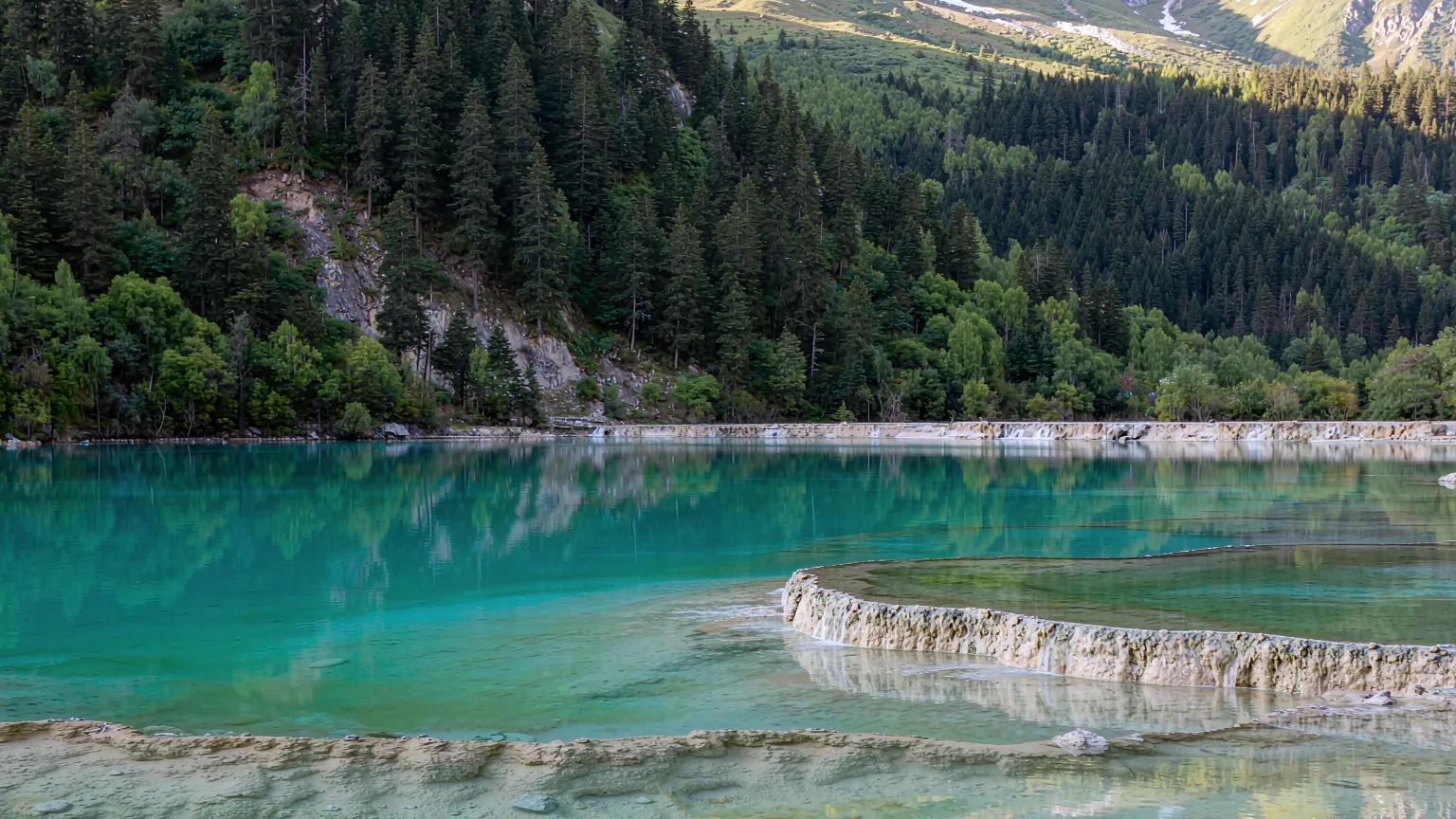
Munigou (牟尼沟) lies in Songpan County, about 30 km southwest of Jiuzhaigou's core and roughly 330 km from Chengdu. It sits on the eastern edge of the Qinghai-Tibet Plateau at 2,800–4,000 m, where mineral-rich streams have been depositing travertine for millennia. The valley is split into two distinct zones: Zhaga Waterfall in the north and Erdao Lake in the south. Unlike Jiuzhaigou's heavily managed boardwalks, Munigou retains a raw, forested feel — Tibetan villages, prayer flags and grazing yaks are part of the landscape. It was upgraded to a 4A-rated scenic area for its geological and ecological value, and remains a favourite among repeat visitors to Sichuan.
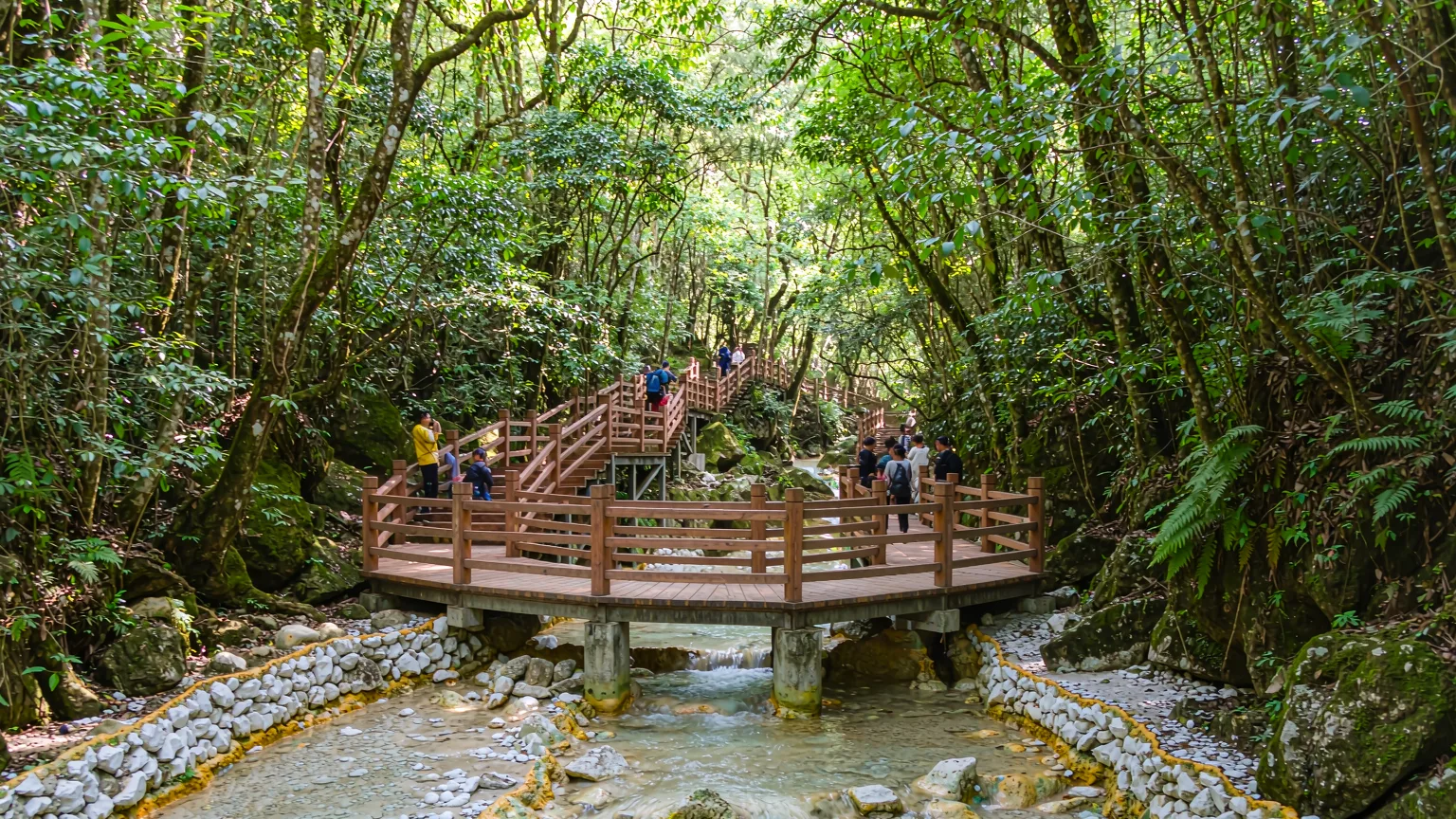
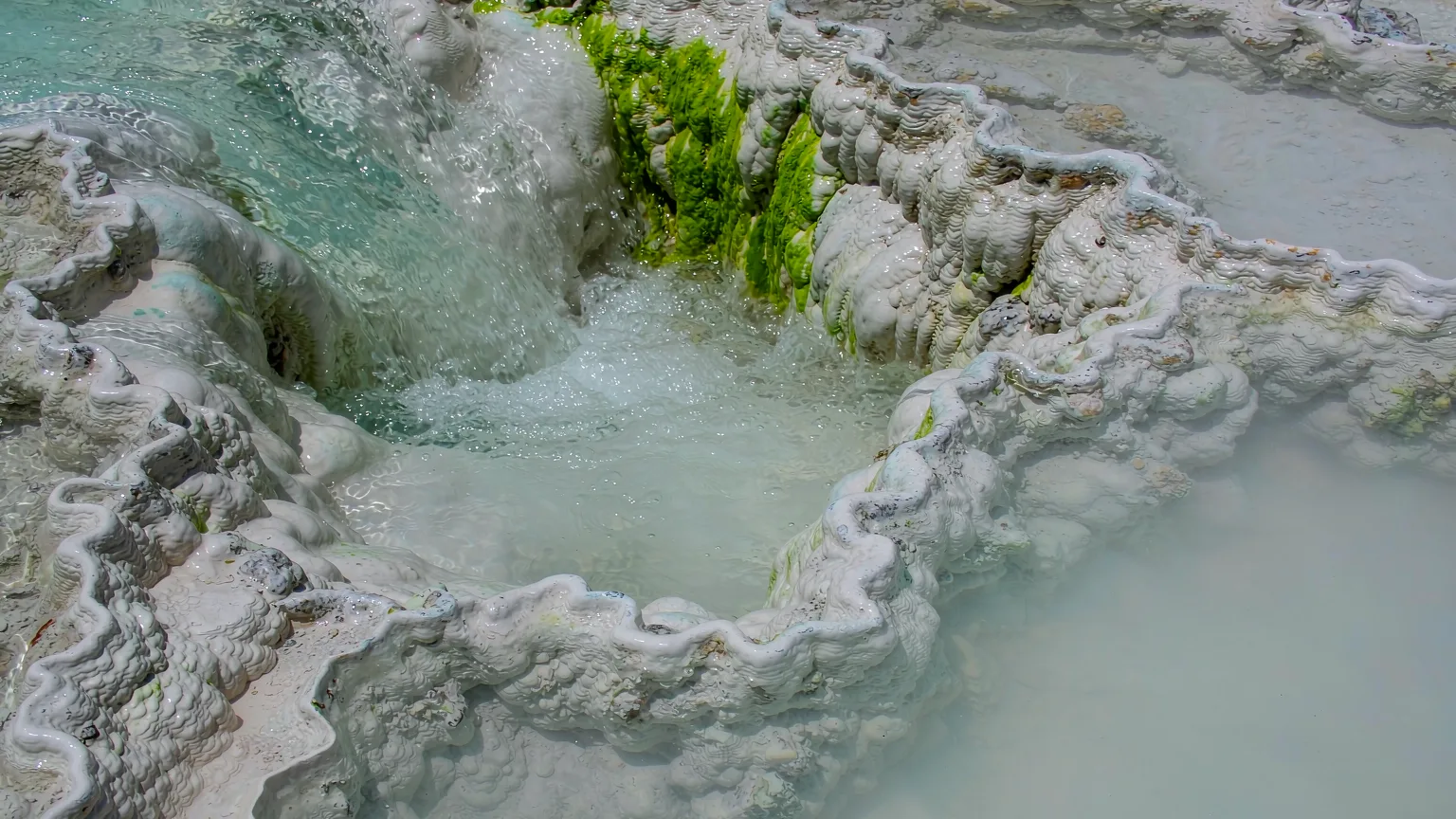
The name Munigou is Tibetan in origin, referring to the valley's sacred status among local Amdo communities. Zhaga Waterfall is China's largest travertine cascade, dropping about 93 m in a series of stepped pools, while Erdao Lake is a chain of terraced lakes and calcified shoals that glow turquoise in sunlight. Because the site is less commercialised, facilities are simpler than Jiuzhaigou's: expect basic shuttle buses, wooden paths and few English signs. Our guides bridge that gap, explaining the geology, arranging tickets and ensuring you see both zones in one smooth day.
Munigou is usually visited as a day trip from Jiuzhaigou or Songpan. From Jiuzhaigou town, it's about 1 hour by private car or taxi (¥200–300 round trip); public buses are infrequent. Most travellers fly into Jiuzhaigou Huanglong Airport (JZH) or take the high-speed rail to Huanglong Jiuzhai station, then arrange a transfer. We include Munigou as a flexible add-on to any Jiuzhaigou itinerary, with a guide who times the visit to avoid tour groups and handles the park shuttle.
Admission is ¥100 per person in peak season (Apr–Nov) and ¥70 in low season (Dec–Mar), with a separate ¥30 shuttle bus fee inside the park. Opening hours are roughly 8:00–17:00, last entry around 15:30. Book through our guide or at the gate; foreign cards are not accepted on-site, so bring cash or use WeChat Pay/Alipay linked to an international card.
Visit from late September to late October for autumn colours, or May–June for lush greenery and strong waterfall flow. Arrive by 9:00 to catch Erdao Lake before the wind picks up and to have Zhaga Waterfall largely to yourself. Avoid Chinese public holidays, when domestic crowds surge.
Yes — it offers similar travertine scenery with a fraction of the crowds. Many travellers prefer its raw, forested atmosphere and the chance to see Tibetan village life.
It's possible but tricky: signage is mostly Chinese, buses are infrequent and tickets are cash-only. A guide smooths transfers, timing and interpretation.
Allow 4–5 hours to cover both Erdao Lake and Zhaga Waterfall at a relaxed pace, plus 2 hours for round-trip transport from Jiuzhaigou.
The valley ranges from 2,800 m to 4,000 m. Healthy children generally cope fine, but keep them warm, hydrated and take the shuttle rather than rushing on foot.
Tell us your dates, group size and preferences — a dedicated consultant will reach out within 24 hours.