
Guest — sign in to save your enquiries.
My account
The Ecological Monkey Area on Mount Emei is where wild Tibetan macaques live along the pilgrim trail, and where a walk can turn into an unforgettable encounter. Our private guide knows exactly where the troops gather, how to read their mood, and how to keep your bag, snacks and nerves intact. It's wildlife, not a zoo — and that's the point.
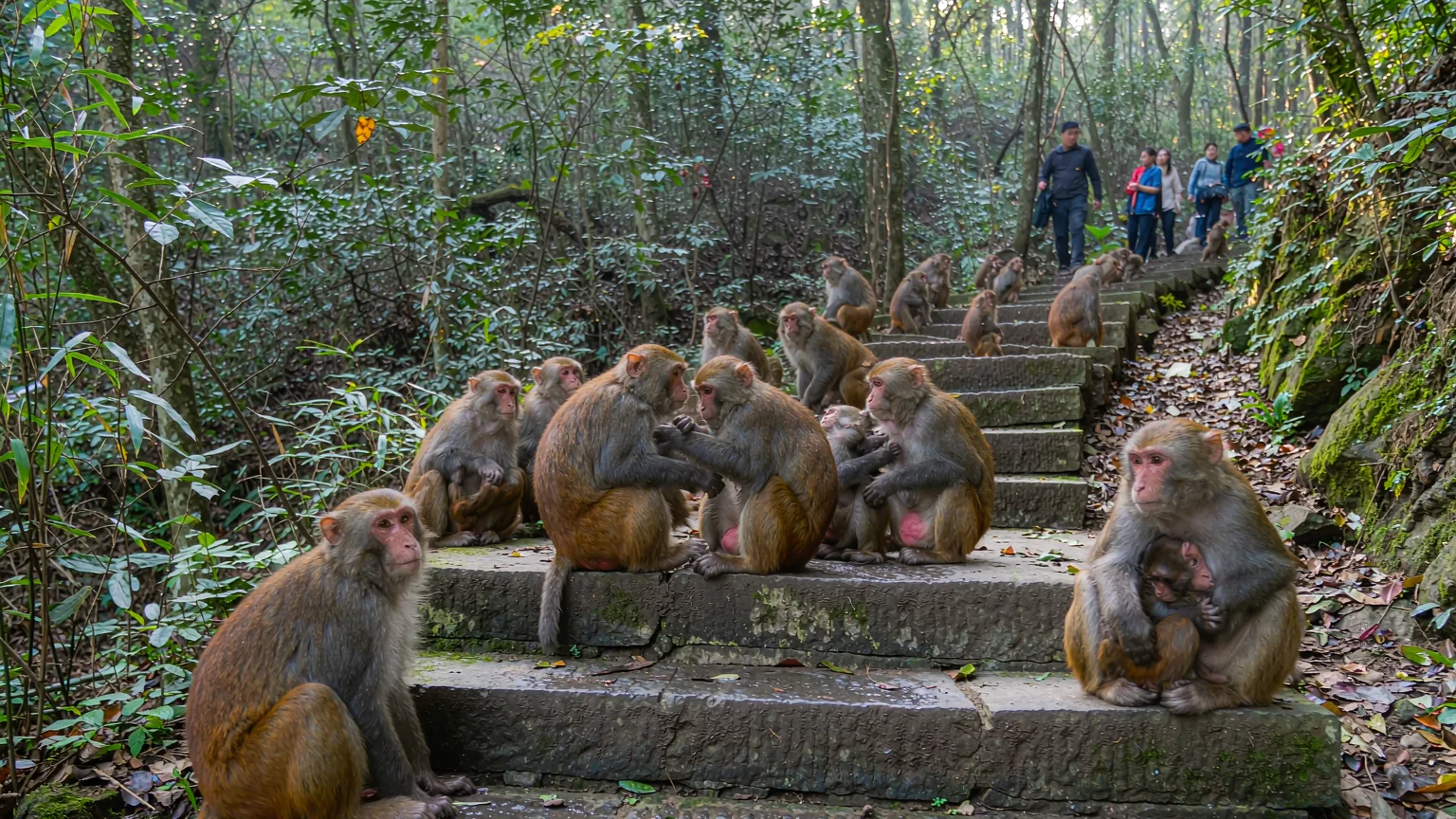
The monkeys here are Tibetan macaques (Macaca thibetana), a species native to the forests of western China and one of the largest macaques. They are genuinely wild, not captive, but generations of passing pilgrims and tourists have made them bold around people. The area sits along the main walking route between Qingyin Pavilion and the Wannian Temple cable car, roughly 1,000–1,200 metres above sea level, in cool, damp broadleaf forest. Monkeys often appear on the stone steps, railings and roofs, especially in the morning when troops move down to forage near the path.
Mount Emei itself is one of China's four sacred Buddhist mountains and a UNESCO World Heritage Site, with temples dating back to the Eastern Jin dynasty. The monkey zone is a relatively modern addition to the visitor experience, formalised as a managed ecological area to protect both animals and people. Rangers and staff monitor the main clusters, but feeding is discouraged and plastic bags are a magnet for trouble. For travellers, this is the most accessible place on the mountain to see primates up close — a short detour that many visitors rate as the highlight of the middle section of the trail.
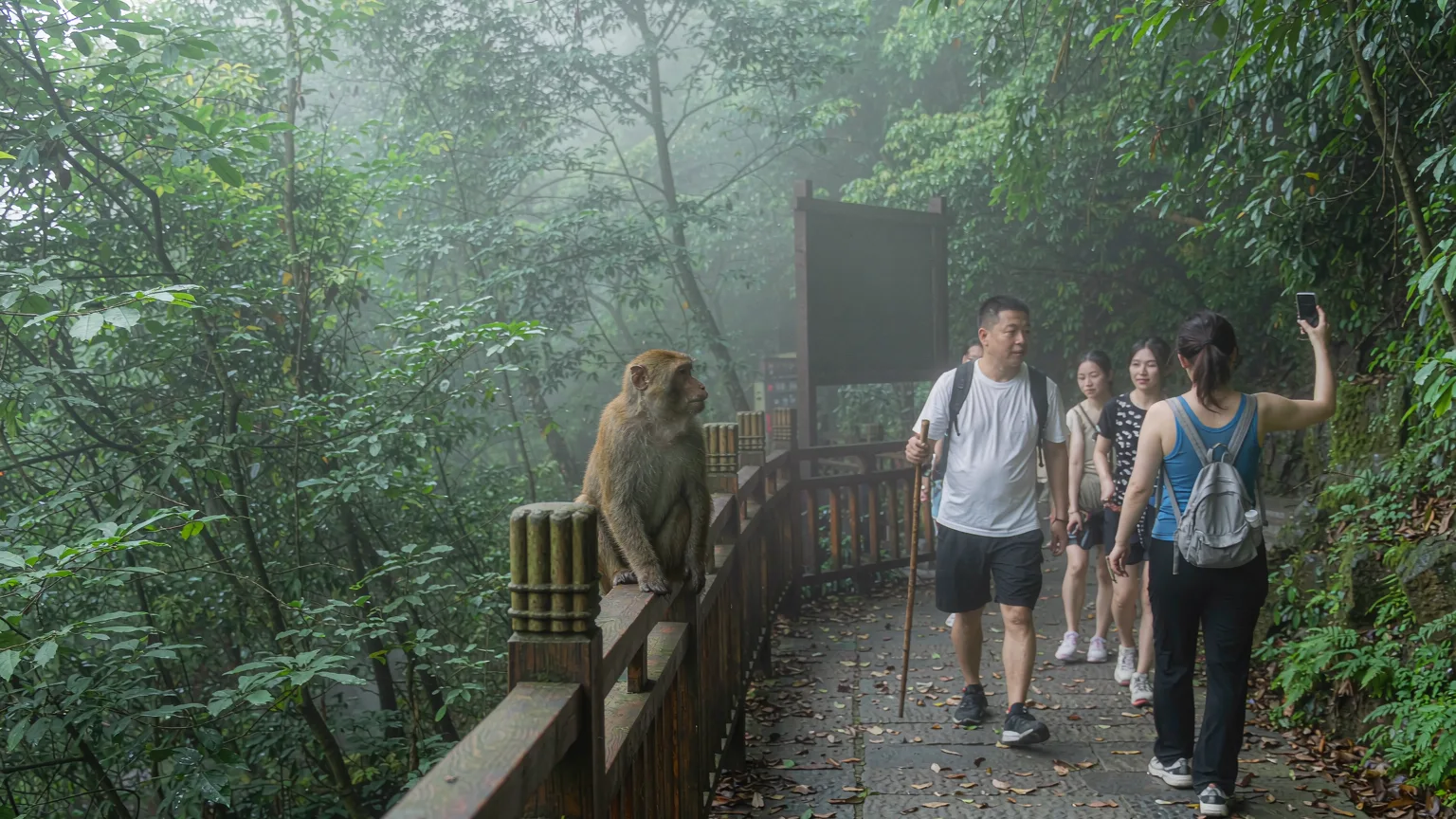
From Emeishan city, take a taxi or the local bus to the Mount Emei Scenic Area entrance, then the official shuttle bus to Wannian Temple parking lot. From there it's a 20–30 minute walk down to Qingyin Pavilion and the monkey zone. Most travellers do this as a half-day trip, combining it with Wannian Temple. Our guide arranges the shuttle tickets and meets you at the parking lot so you don't waste time deciphering signs.
Mount Emei entrance ticket is ¥160 (peak season) or ¥110 (low season), valid for two days; the Wannian Temple shuttle bus is around ¥20 each way. The monkey area itself has no separate fee. Opening hours are roughly 06:00–18:30, with last shuttle buses mid-afternoon. Book via the official WeChat mini-program or let our guide handle it — foreign cards often fail on Chinese booking apps, so WeChat Pay or Alipay linked to an international card is the practical option.
Visit between April and June or September and October for mild weather and active monkeys. Arrive before 10:00 — troops are most visible in the morning and crowds are thinner. Avoid the Golden Week holidays (early October and early May) when the trail becomes a slow-moving queue. Light rain is common; a poncho beats an umbrella, which monkeys may grab.
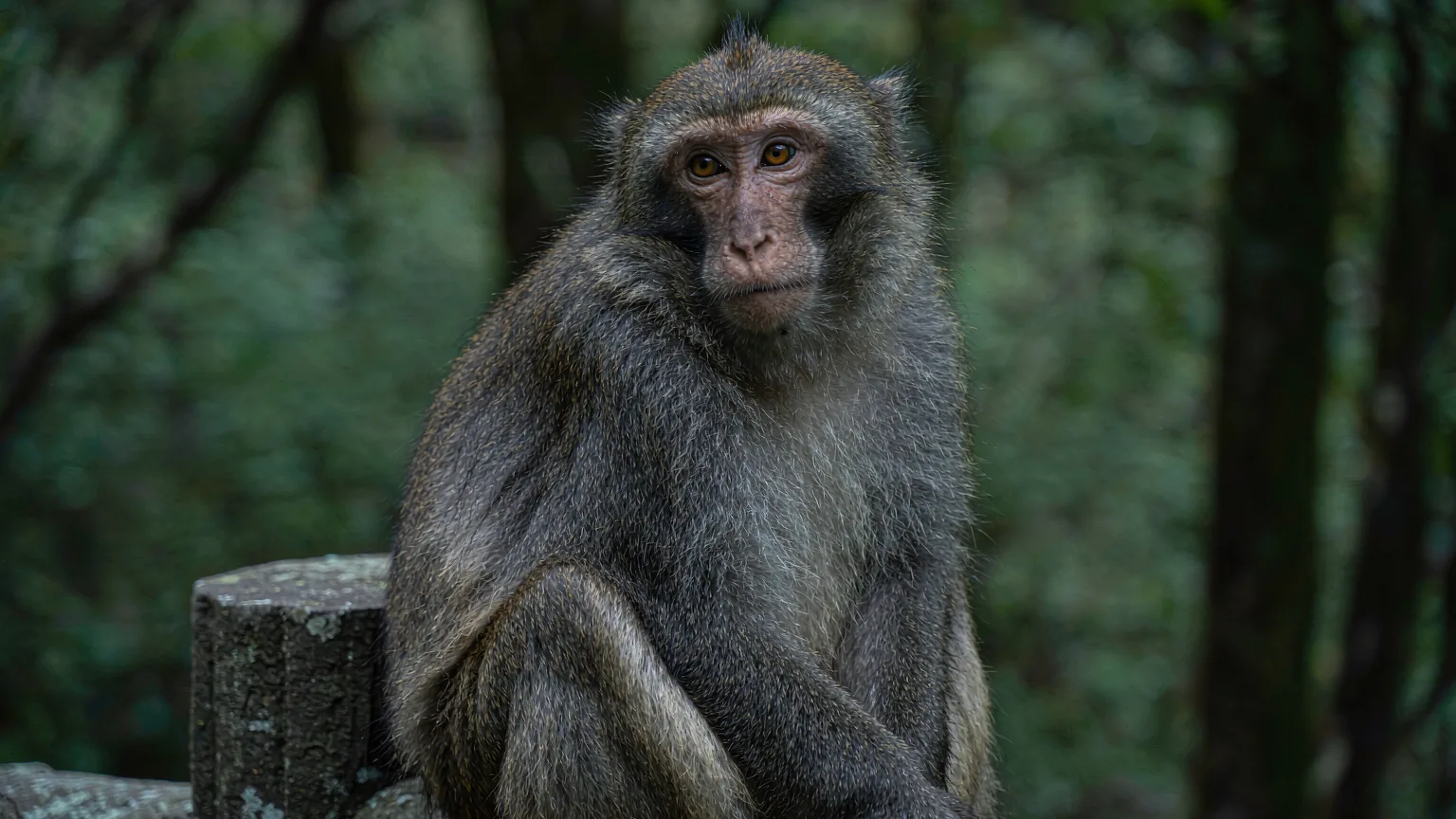
They are wild and can bite or scratch if provoked or if you hold food. Serious incidents are rare when you follow ranger advice, keep distance and don't tease them. Our guide stays with you throughout.
No. Feeding is discouraged and can make monkeys aggressive toward the next visitor. Enjoy watching them forage naturally — it's better behaviour to photograph anyway.
Most travellers spend 30–60 minutes watching and photographing. Combined with the walk from Wannian Temple and a temple visit, allow three to four hours in total.
Yes, with supervision. Keep young children close, don't let them hold food or bags, and avoid letting them crouch at monkey eye level. Our guide can adjust the pace for families.
Tell us your dates, group size and preferences — a dedicated consultant will reach out within 24 hours.