
Guest — sign in to save your enquiries.
My account
Milk Lake, or Niunai Hai, is a glacial lake at 4,600 metres in the Yading Nature Reserve, its milky-blue waters ringed by snow peaks. Reaching it is a high-altitude trek, but our private guides handle permits, pacing and oxygen so you can simply absorb the view. It's the crowning reward of Sichuan's most sacred mountain landscape.
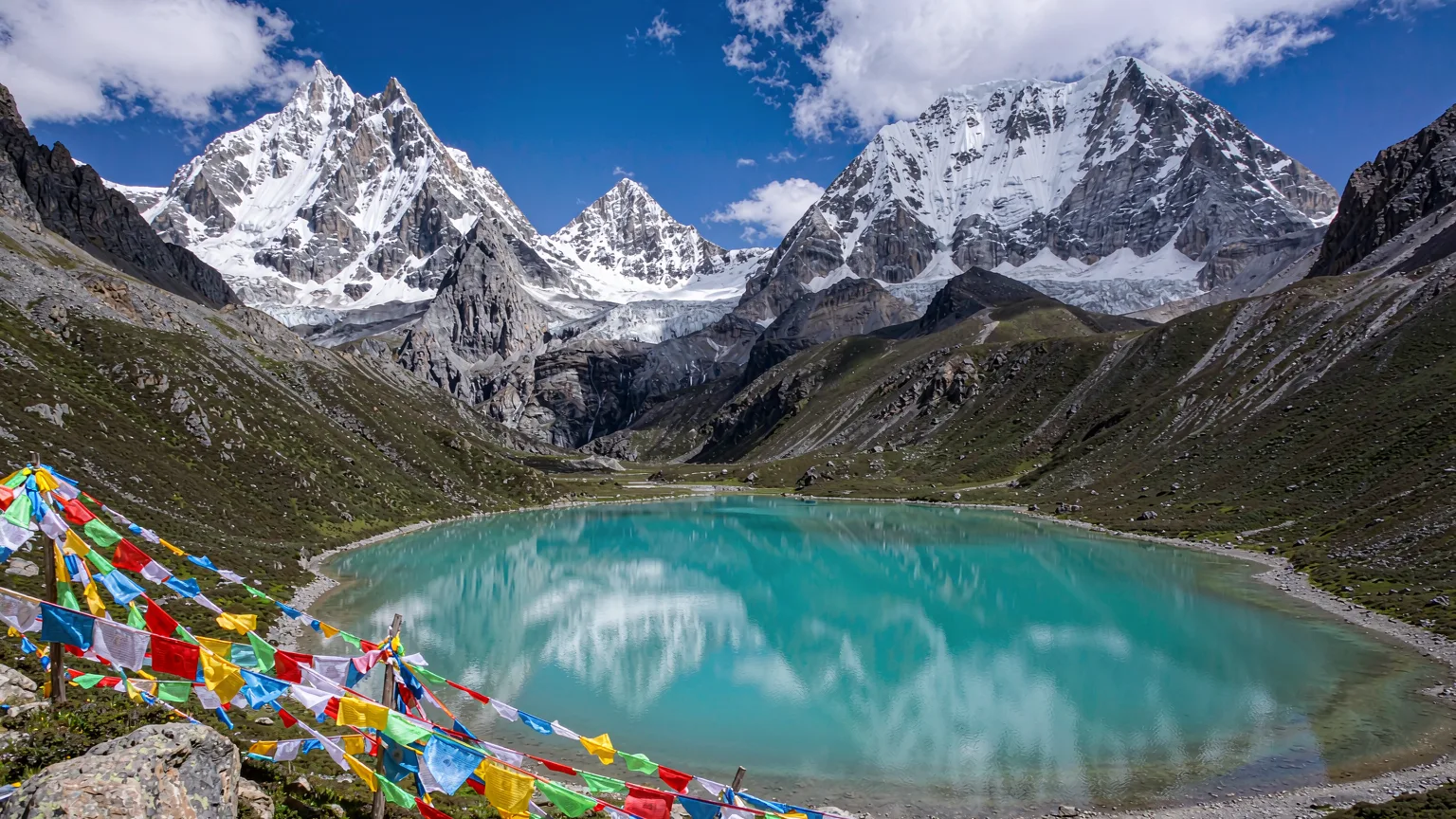
Milk Lake sits in the Yading Nature Reserve, a UNESCO World Heritage site in Daocheng County, Sichuan. The lake formed from glacial melt and gets its distinctive milky-blue colour from suspended rock flour. For Tibetans, the three peaks guarding the valley—Chenresig, Jampelyang and Chanadorje—are embodiments of bodhisattvas, and the lake is a place of pilgrimage. The name Niunai Hai means 'Milk Sea', a reference to its opaque, creamy hue. The area was little known outside China until the early 2000s, when improved roads and park infrastructure opened it to travellers.
The trek to Milk Lake typically starts from Luorong Pasture, reached by shuttle bus from Yading Village. From there, a steep 5-kilometre trail climbs about 500 metres to the lake, passing Five Colour Lake (Wuse Hai) just below. The altitude makes it strenuous; most hikers take 3–5 hours round trip. Horses are sometimes available but are not recommended for the final steep section. Our guides arrange park tickets, shuttle seats and, if needed, portable oxygen, and they know the best times to avoid the biggest crowds.
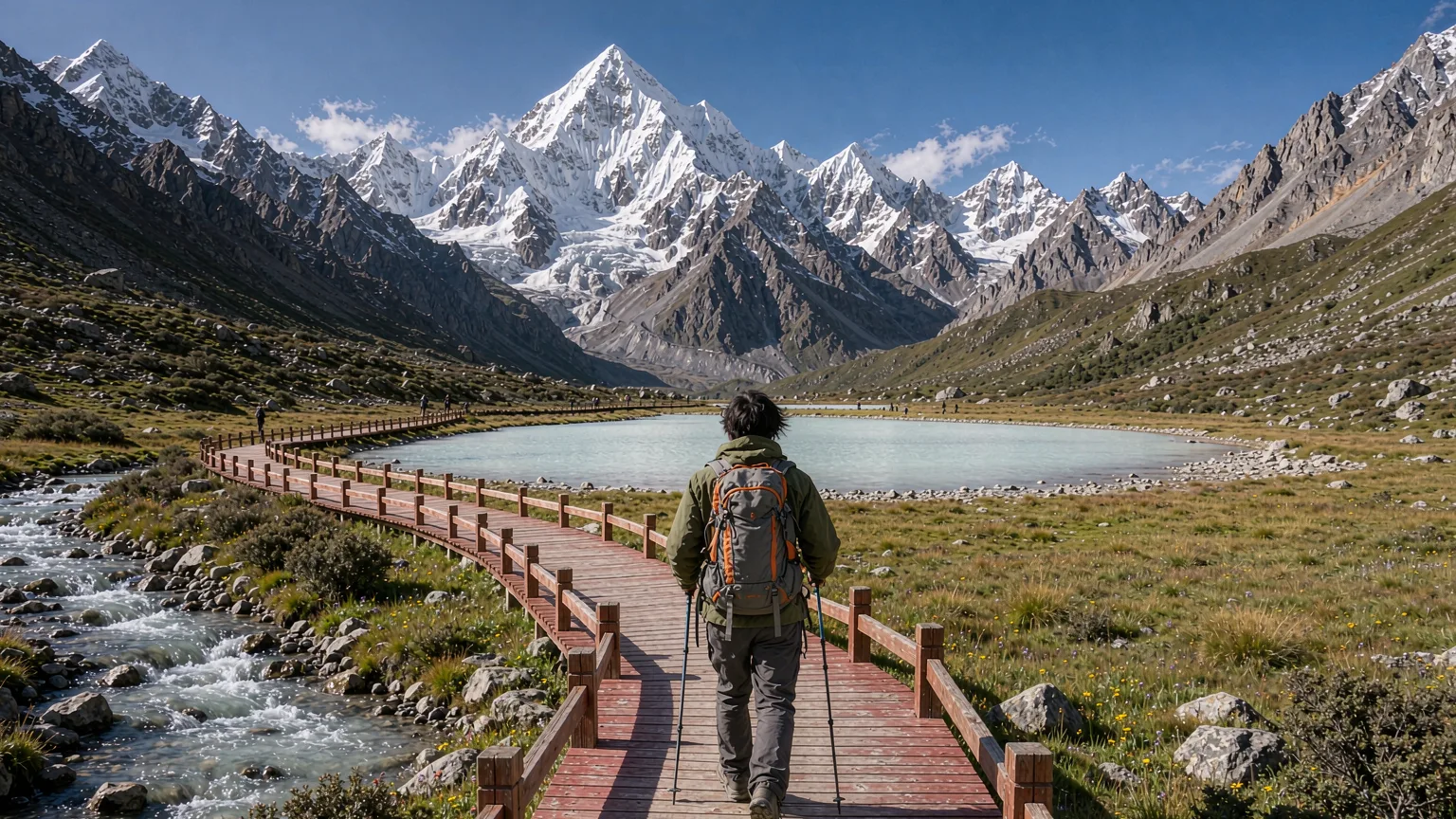
Fly or drive to Daocheng Yading Airport (DCY), then take a private transfer to Yading Village (about 2 hours). From the village, park shuttles run to Zhaguanbeng, where you switch to an electric cart for Luorong Pasture. The hike to Milk Lake takes 3–5 hours round trip. Our guides arrange all tickets and transfers, and can adjust the day based on your acclimatisation.
Yading Nature Reserve entrance: ¥146 (peak season) or ¥120 (off-peak), plus shuttle bus ¥120 and electric cart ¥80 round trip. Milk Lake itself has no separate fee. Park opens 6:00–18:00; last entry around 16:00. Book through official WeChat mini-programs; foreign cards are often not accepted, so bring cash or use Alipay/WeChat Pay linked to an international card.
Visit from May to October, when trails are clear and wildflowers bloom; July–August can bring afternoon rain. September–October offers crisp air and golden larches. Start early—by 7am—to secure shuttle seats and reach the lake before clouds roll in, usually by early afternoon.
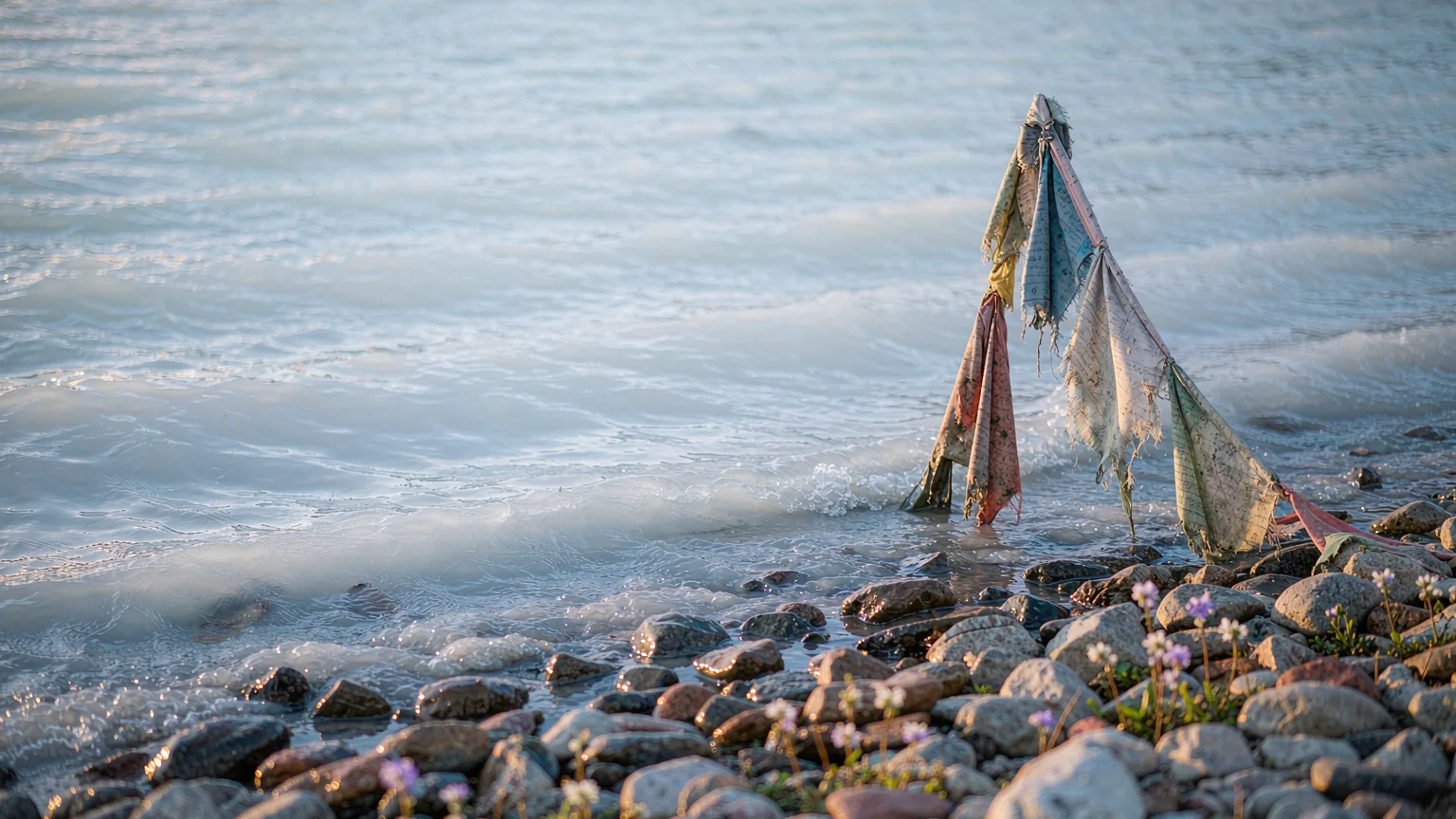
It's a steep 5km climb at high altitude, taking 3–5 hours round trip. Good fitness helps, but pacing and acclimatisation are more important. Our guides set a comfortable rhythm.
No, the final section is foot traffic only. Horses can cover part of the route, but the last stretch is too steep. The reward is worth the effort.
Sturdy shoes, rain jacket, warm layers, sun hat, sunscreen, water and snacks. Our guides provide oxygen and can carry extra supplies if arranged in advance.
Yes, at 4,600m it's a real concern. Spend a night in Daocheng or Yading Village to acclimatise, stay hydrated, and descend immediately if symptoms worsen.
Tell us your dates, group size and preferences — a dedicated consultant will reach out within 24 hours.