
Guest — sign in to save your enquiries.
My account
Carved into a river cliff in the 8th century, the Leshan Giant Buddha is the world's largest stone Buddha at 71 metres tall. It is a UNESCO World Heritage Site and a masterpiece of Tang dynasty engineering. With our private guide, you skip the ticket queues, learn the stories behind the statue, and see it from both land and water.
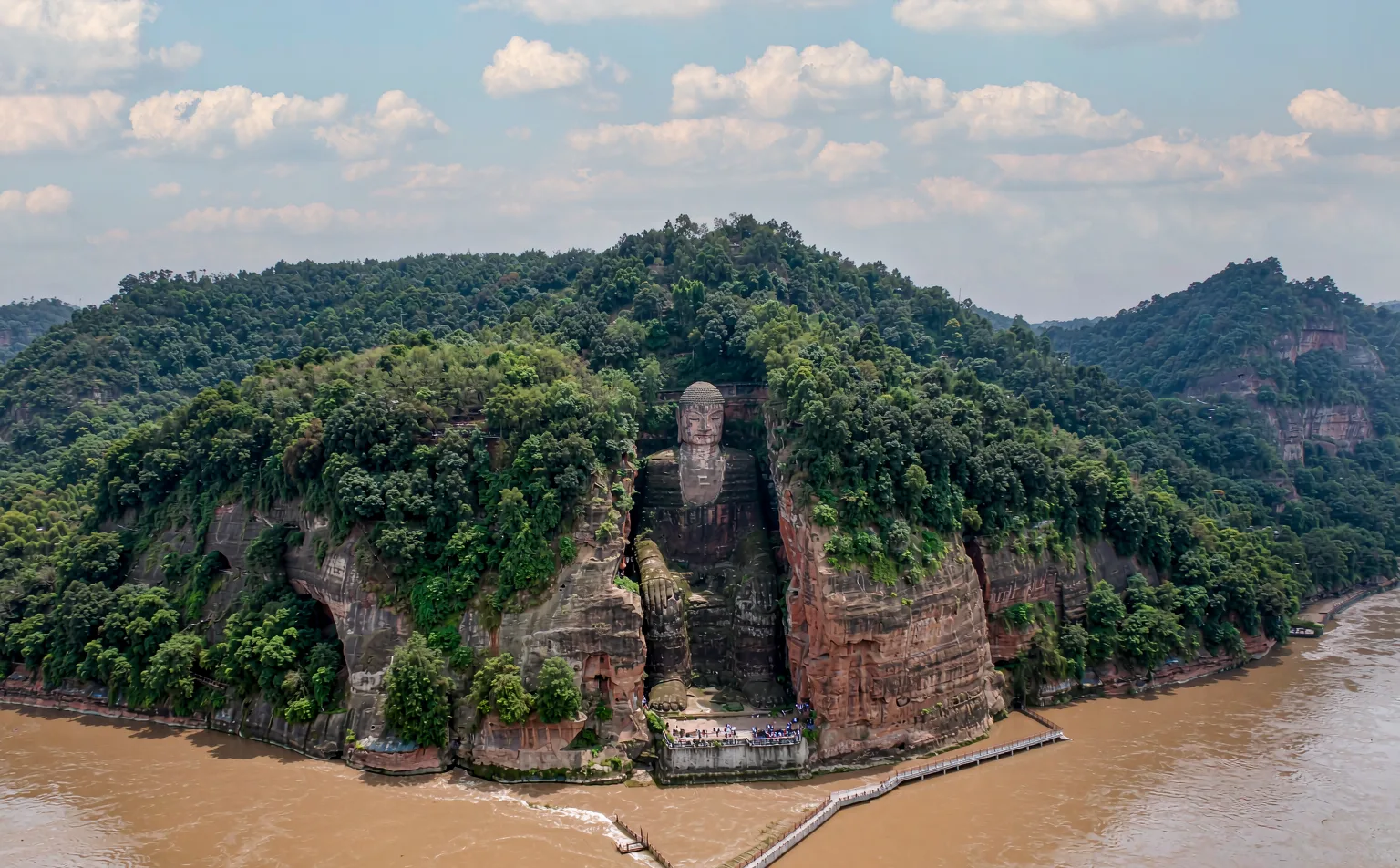
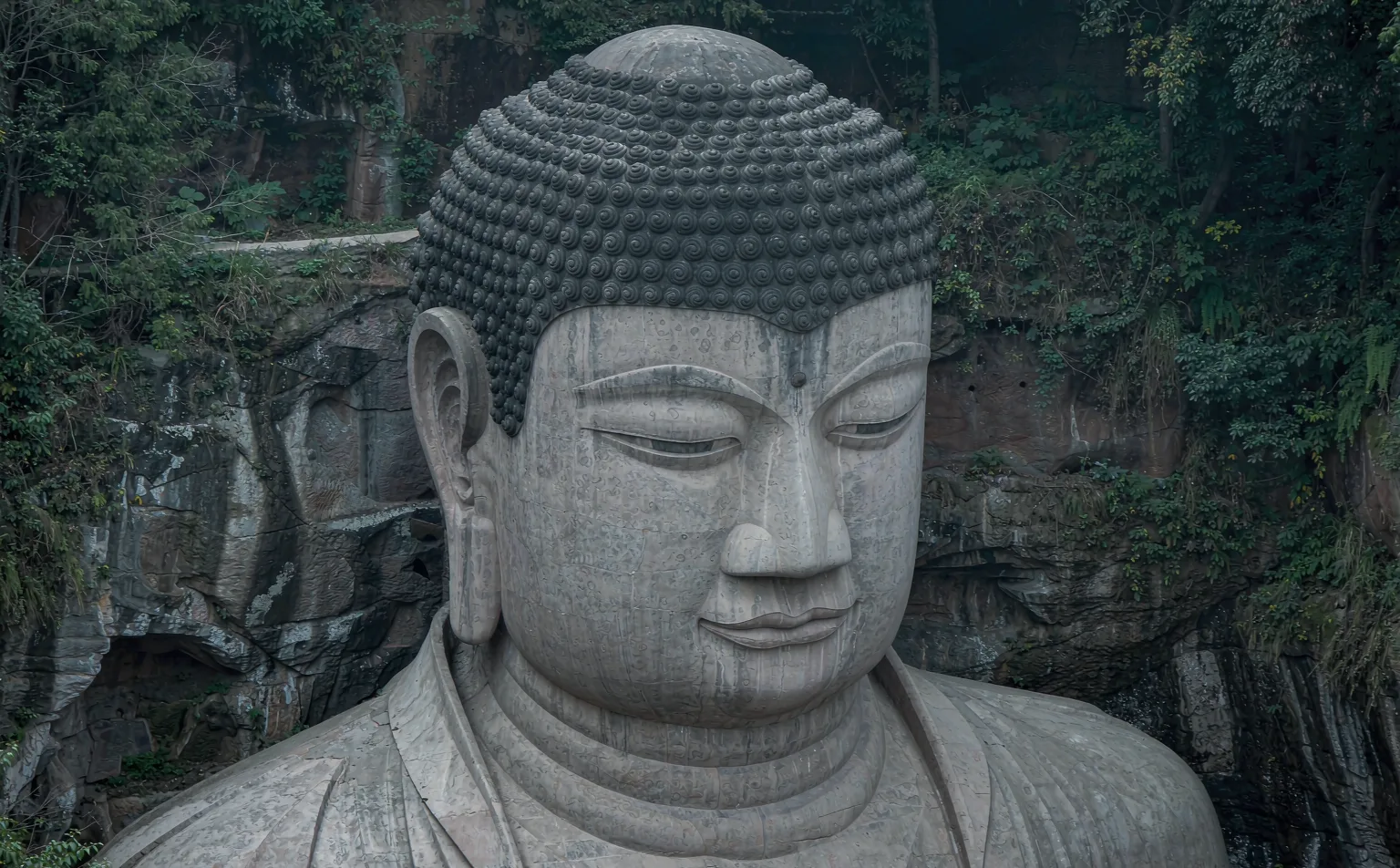
The Leshan Giant Buddha was begun in 713 AD by a monk named Haitong, who hoped the statue would calm the turbulent waters where the Min, Dadu and Qingyi rivers meet. The project took 90 years and was completed in 803 AD. The Buddha is a seated Maitreya, carved from the sandstone cliff, with a height of 71 metres and ears 7 metres long. Its shoulders are 24 metres wide, and its smallest toenail can seat a person. The statue is not just a religious monument but also a feat of hydraulic engineering: a drainage system hidden behind the head and shoulders channels rainwater away, protecting the soft stone from erosion.
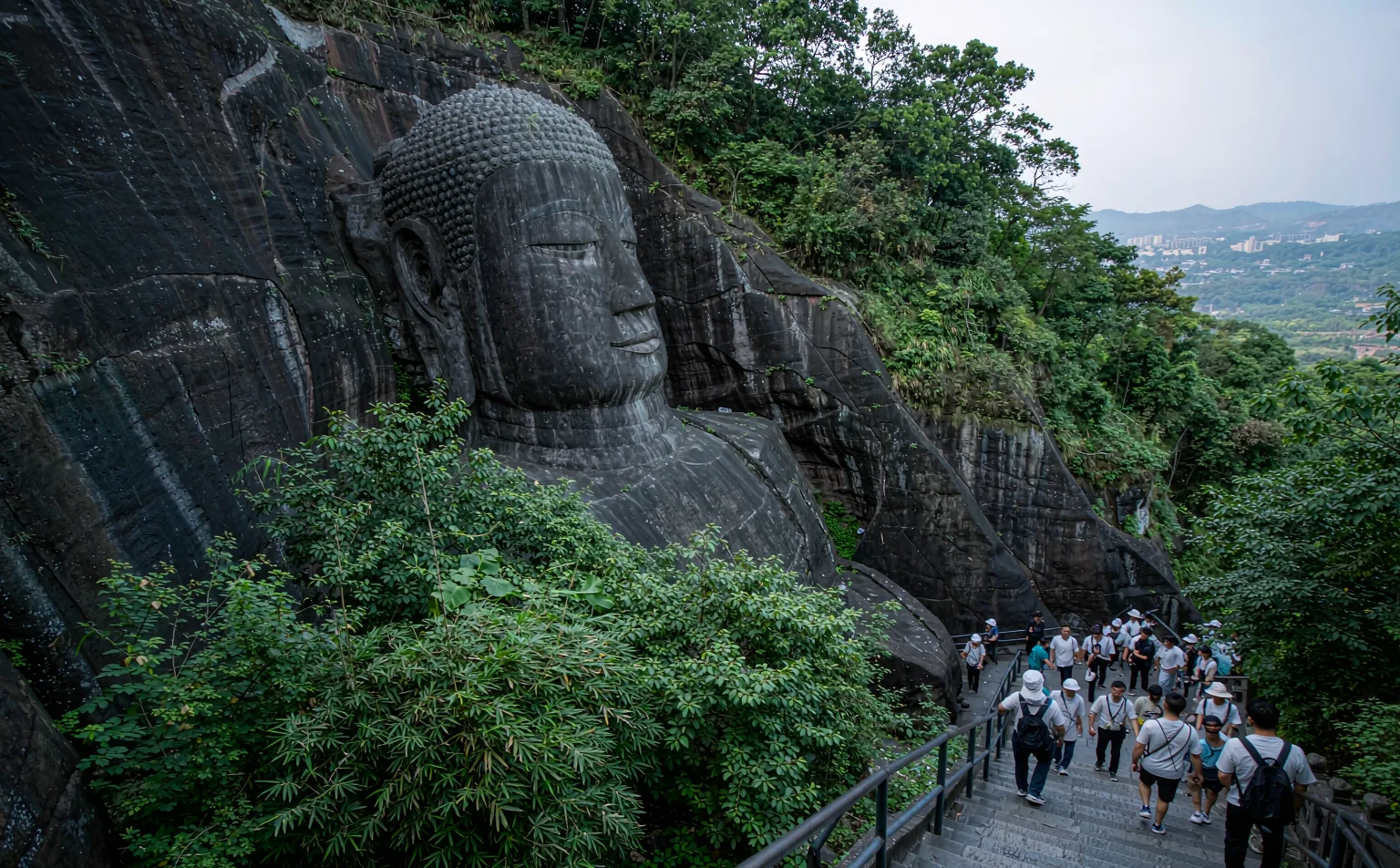
In 1996, the Leshan Giant Buddha was inscribed as a UNESCO World Heritage Site, together with the nearby Emei Mountain. The site includes the Lingyun Temple and the ancient cliff tombs. Visitors can view the Buddha from the top of the cliff, from a steep staircase that descends alongside it, or from a boat on the river. The staircase, known as the Nine Turns Plank Road, is narrow and often crowded, but offers a close-up perspective of the Buddha's face and feet. The boat gives a full frontal view and is ideal for photography. Our guides can arrange both experiences, ensuring you avoid the worst crowds.
From Chengdu, take a high-speed train to Leshan Station (about 1 hour, ¥65), then a taxi or bus 601 to the scenic area (30 minutes, ¥20). Alternatively, our private car can pick you up from your Chengdu hotel and drive directly to the Buddha (2.5 hours). Most travellers combine Leshan with nearby Emei Mountain, staying overnight in Emei Town. We recommend visiting Leshan in the morning, then transferring to Emei for the afternoon, or vice versa.
Admission to the Leshan Giant Buddha scenic area is ¥80 (peak season) or ¥50 (off-peak). The boat ride costs an additional ¥70. Opening hours are 7:30–18:30 (peak) and 8:00–17:30 (off-peak). Book tickets in advance via the official WeChat account or through our guide, as daily visitor numbers are capped. Foreign credit cards are not accepted at the ticket office; use WeChat Pay or Alipay linked to an international card, or bring cash.
The best time to visit is during the shoulder seasons of spring (April–May) and autumn (September–October), when the weather is mild and rainfall is lower. Avoid Chinese public holidays, especially the first week of October, when crowds can mean hours of waiting. Early morning, right at opening, offers the fewest people and softer light for photography. The boat ride is best in the morning before the river gets busy.
Allow 2–3 hours for the cliff staircase and temples, plus 1 hour for the boat ride. With our guide, we streamline the route to avoid backtracking.
Yes, but it is rushed. We suggest a full day for Leshan and a separate day for Emei Mountain, or an overnight stay in Emei Town to enjoy both without fatigue.
Absolutely. It offers the iconic frontal view and a different perspective. The boat departs every 30 minutes and the ride lasts about 30 minutes.
The cliff staircase is not wheelchair-accessible. However, the boat ride and the top viewing platform are accessible. Our guide can help arrange a comfortable visit for those with mobility issues.
Tell us your dates, group size and preferences — a dedicated consultant will reach out within 24 hours.