
Guest — sign in to save your enquiries.
My account
Laojun Mountain is the sacred Taoist peak where legend says Laozi himself retreated to meditate, its 2,217-metre summit crowned by a cluster of golden-roofed temples. The scenery is genuinely dramatic: knife-edge ridges, sea-of-clouds mornings, and a summit sanctuary that feels suspended in the sky. With our private guide handling the cable cars, trails and timing, you can simply absorb the pilgrimage atmosphere and the views.
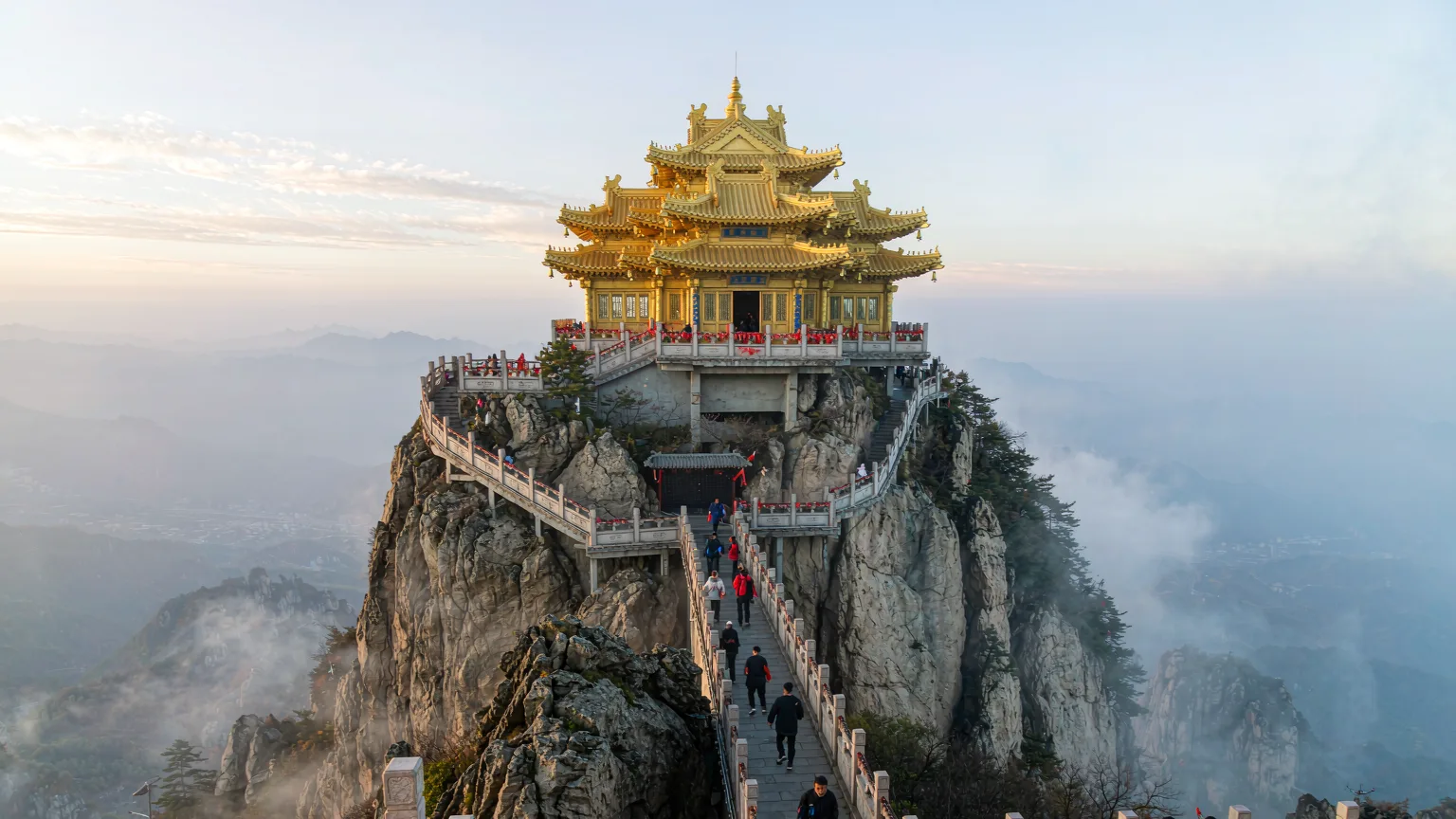
Laojun Mountain (老君山) rises in the Funiu range of western Henan, about two hours south of Luoyang. Its name honours Laozi, the founder of Taoism, who is said to have cultivated himself here before departing westward on his ox. For over two thousand years the mountain has been a place of Taoist retreat, and the temples that cling to its summit ridge are among the highest in China. The present Golden Summit complex, with its gilded halls and bronze statues, was rebuilt and expanded in the 2000s, but the pilgrimage tradition it serves is ancient and still very much alive.
The mountain is a national 5A-level scenic area and part of the Funiu Mountain UNESCO Global Geopark. Its geology is striking: granite peaks and sheer cliffs shaped by faulting and erosion, often wrapped in clouds that roll in below the ridge. Visitors ride two cable cars and then climb a final stretch of stone steps and boardwalks to reach the Golden Summit at 2,217 metres. Along the way are Taoist halls, a towering bronze statue of Laozi, and viewpoints over the 'sea of clouds' that makes the mountain famous on social media.
For foreign travellers, Laojun Mountain pairs naturally with Luoyang's better-known sights — the Longmen Grottoes and the White Horse Temple — and offers a full day in the mountains without the crowds of more famous peaks. Our guides know the cable-car queues, the weather windows, and the quieter trails, so you can focus on the experience rather than the logistics.
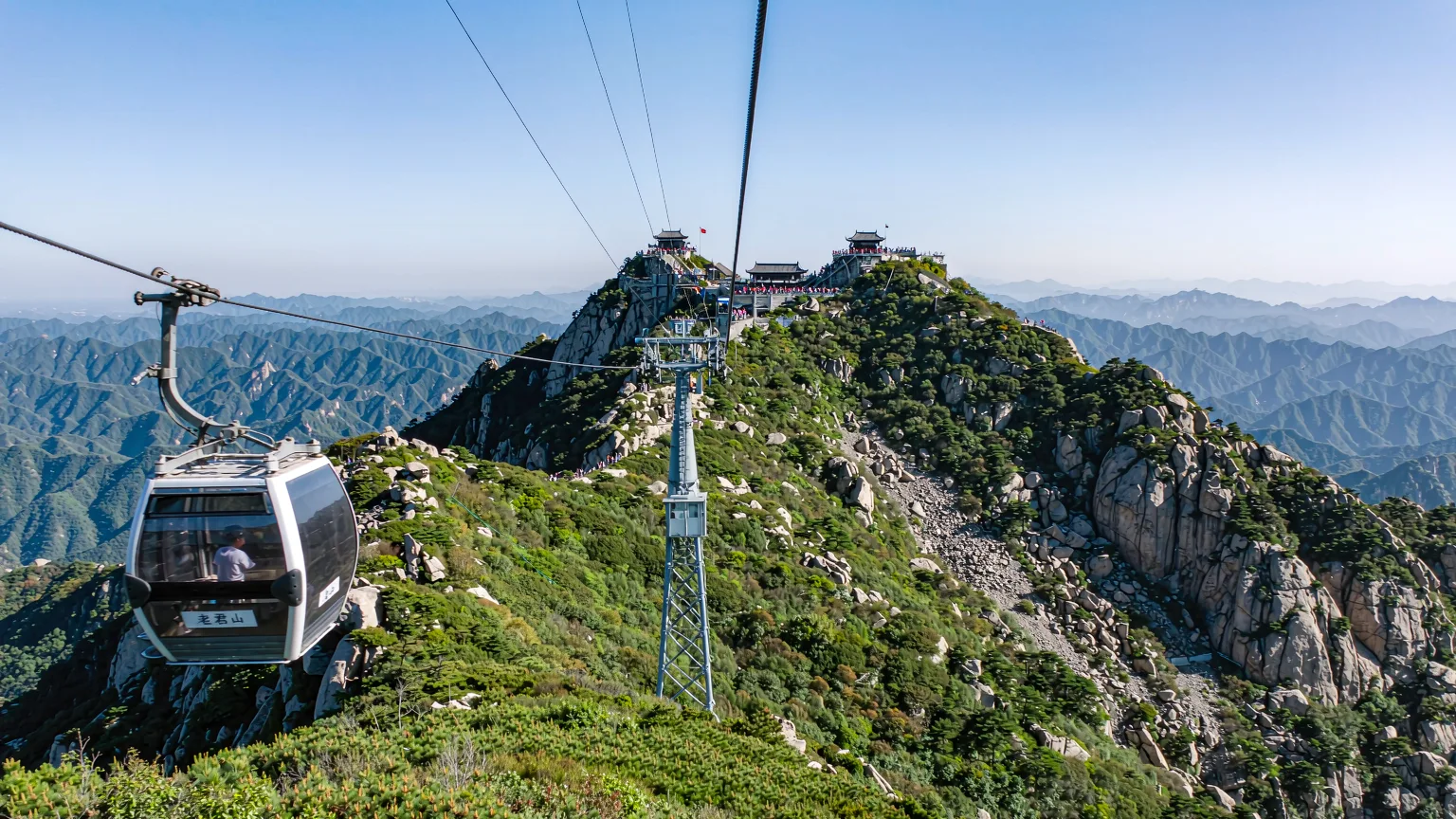
From Luoyang, Laojun Mountain is about 150 km south, roughly 2–2.5 hours by private car or a combination of high-speed train to Luanchuan and a local taxi. Most foreign travellers visit as a day trip from Luoyang with a private driver-guide, leaving early to beat the cable-car queues. It also fits neatly into a two-day Luoyang itinerary alongside the Longmen Grottoes. Public buses exist but are slow and infrequent; we recommend a private transfer for comfort and flexibility.
Entry to the scenic area is around ¥100 in peak season (¥80 low season), with two cable-car segments costing roughly ¥100–¥140 each way depending on the route; a combined ticket is often available. Opening hours are typically 7:00–18:00, shorter in winter. Book through the official WeChat mini-program or Trip.com in advance, especially on weekends and holidays. Foreign cards are not accepted at the gate; use WeChat Pay or Alipay linked to an international card, or carry cash for small vendors.
The best seasons are late spring (April–May) for green slopes and wildflowers, and autumn (September–October) for clear skies and golden foliage. Summer brings lush scenery but also afternoon thunderstorms and crowds; winter offers snow-dusted temples and few visitors, though some trails may close. Arrive at the cable car by 7:30–8:00 to catch the sea of clouds and avoid the tour groups.
A comfortable visit takes 5–7 hours including cable cars, the summit walk and photo stops. If you want sunrise or sunset, plan an overnight stay near the summit.
The cable cars and some cliffside boardwalks may be challenging, but the main summit route is safe with railings. Our guides can adjust the route to avoid the most exposed sections.
Yes, but signage in English is limited and cable-car logistics can be confusing. A private guide ensures smooth transfers, ticket booking and timing for the best views.
Wear comfortable walking shoes and bring a windproof jacket, sun protection, water and snacks. The summit is much cooler and windier than the base, even in summer.
Tell us your dates, group size and preferences — a dedicated consultant will reach out within 24 hours.