
Guest — sign in to save your enquiries.
My account
Kalajun Grassland is a UNESCO World Natural Heritage site in the Ili Valley, where rolling alpine meadows erupt into a riot of wildflowers each summer. Its name means 'black wilderness' in Kazakh, but the landscape is anything but dark: think five-coloured flower fields, snow-capped peaks, and deep river canyons. With our private guide, you'll navigate this vast landscape effortlessly, from the best photo spots to hidden Kazakh yurts.
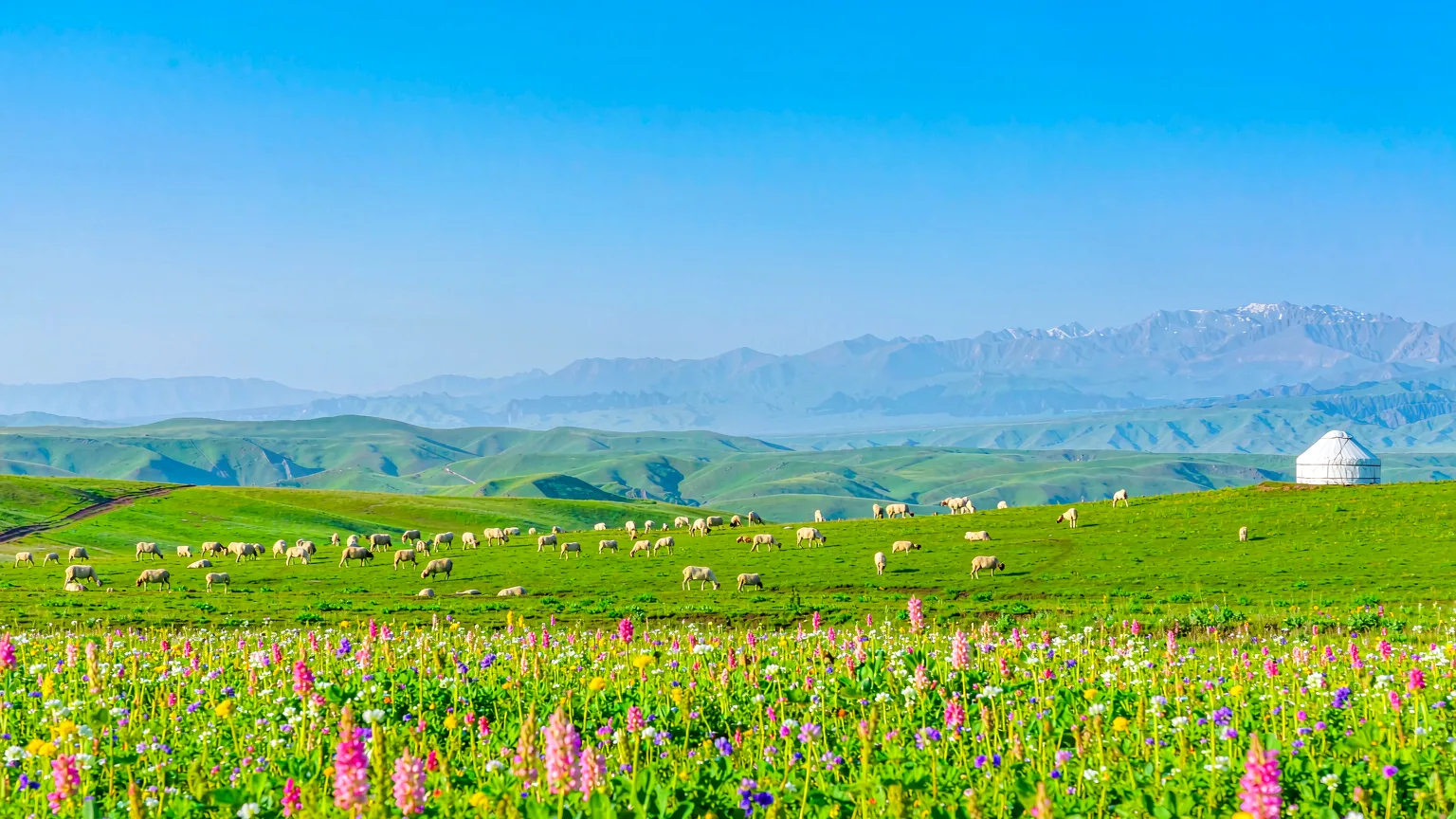
Kalajun Grassland sits in the Tianshan Mountains of Xinjiang, part of the Ili River Valley that receives more rainfall than the surrounding deserts, creating lush meadows. In 2013, it was inscribed as a UNESCO World Natural Heritage site as part of 'Xinjiang Tianshan'. For centuries, it has been summer pasture for Kazakh nomads, who still move here with their herds each June. The grassland spans over 2,800 square kilometres, with elevations from 1,300 to 4,000 metres, offering a mosaic of alpine flowers, spruce forests, and dramatic canyons.
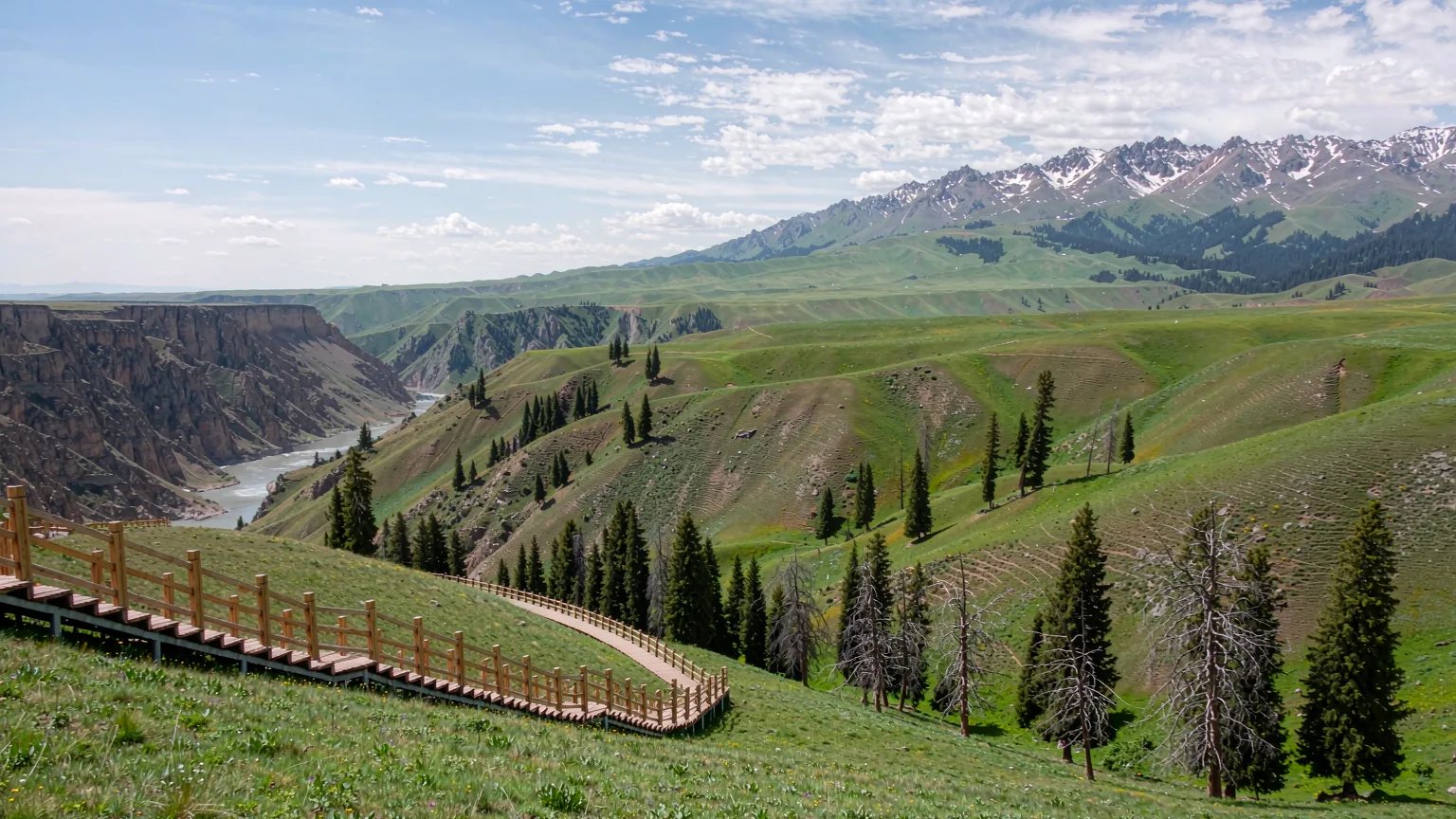
The core scenic area is divided into two main sections: the East Kalajun and West Kalajun, each with its own character. East Kalajun is known for its expansive flower fields and the 'Five Flower Meadow', while West Kalajun features the dramatic 'Human Body Grassland' with its undulating curves. A shuttle bus system connects the main viewpoints, but to truly experience the grassland, we recommend hiking or horseback riding with a local guide. The area is also home to the Kuokesu Grand Canyon, a deep gorge carved by the Kashi River, which offers a striking contrast to the gentle meadows.
Kalajun Grassland is about 130 km from Yining, the capital of Ili Prefecture. Most travellers fly to Yining (YIN) from Urumqi or Xi'an, then take a private car or join a small tour to the grassland; the drive takes around 2.5 hours. Alternatively, high-speed trains connect Urumqi to Yining in about 5 hours. From the entrance, shuttle buses transport you to the main viewpoints. We recommend a full day, or better, an overnight stay in a yurt to catch sunrise and sunset.
Entrance fee: ¥140 per person (includes shuttle bus). Additional activities like horseback riding (¥100–200 per hour) and rafting (¥180) are extra. Opening hours: 8:00–20:00 (May–October). In winter, the area is often inaccessible due to snow.
Book tickets via the official WeChat account or at the gate; foreign cards are not accepted, so bring cash or use WeChat Pay/Alipay linked to an international card. Our guide can assist with bookings.
The best time to visit is from late May to early July, when the wildflowers are in full bloom and the grass is lush. June is ideal, with warm days and cool nights. Avoid July and August if you dislike crowds, though the weather remains pleasant. For photography, early morning and late afternoon offer the best light, with mist often clinging to the valleys at dawn.
Yes, the shuttle bus makes it accessible, but some viewpoints require walking on uneven terrain. The altitude is moderate, but those with heart conditions should consult a doctor first.
Yes, there are basic guesthouses and yurt stays available. Accommodation is simple but comfortable, and staying overnight lets you experience the sunset and sunrise without the day-trippers.
Bring sun protection (hat, sunscreen, sunglasses), a warm layer, rain gear, and comfortable walking shoes. Also carry water and snacks, as options on the grassland are limited.
Kalajun is more varied, with canyons, forests, and flower fields, while others like Nalati are more uniform. It's a UNESCO site, so conservation is stricter, but the scenery is spectacular.
Tell us your dates, group size and preferences — a dedicated consultant will reach out within 24 hours.