
Guest — sign in to save your enquiries.
My account
Kaiyuan Temple is Quanzhou's grandest ancient Buddhist complex, founded in the Tang dynasty and famed for its twin stone pagodas that rise above the old city's tiled roofs. As a key relic of the Maritime Silk Road, it blends Chinese, Indian and Southeast Asian influences in one serene compound. With our private guide, you'll decode its carvings and history without the crowds or confusion.
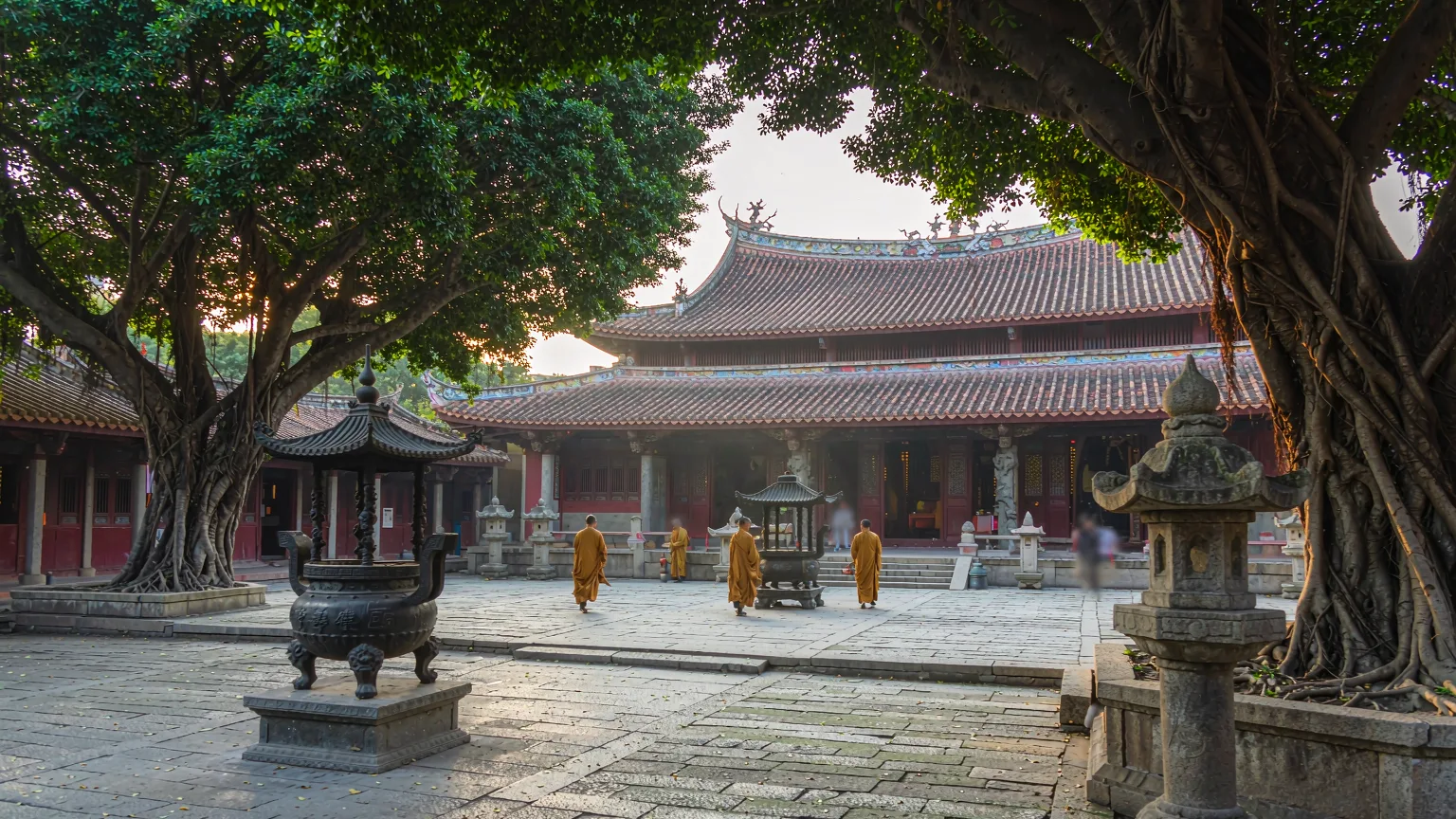
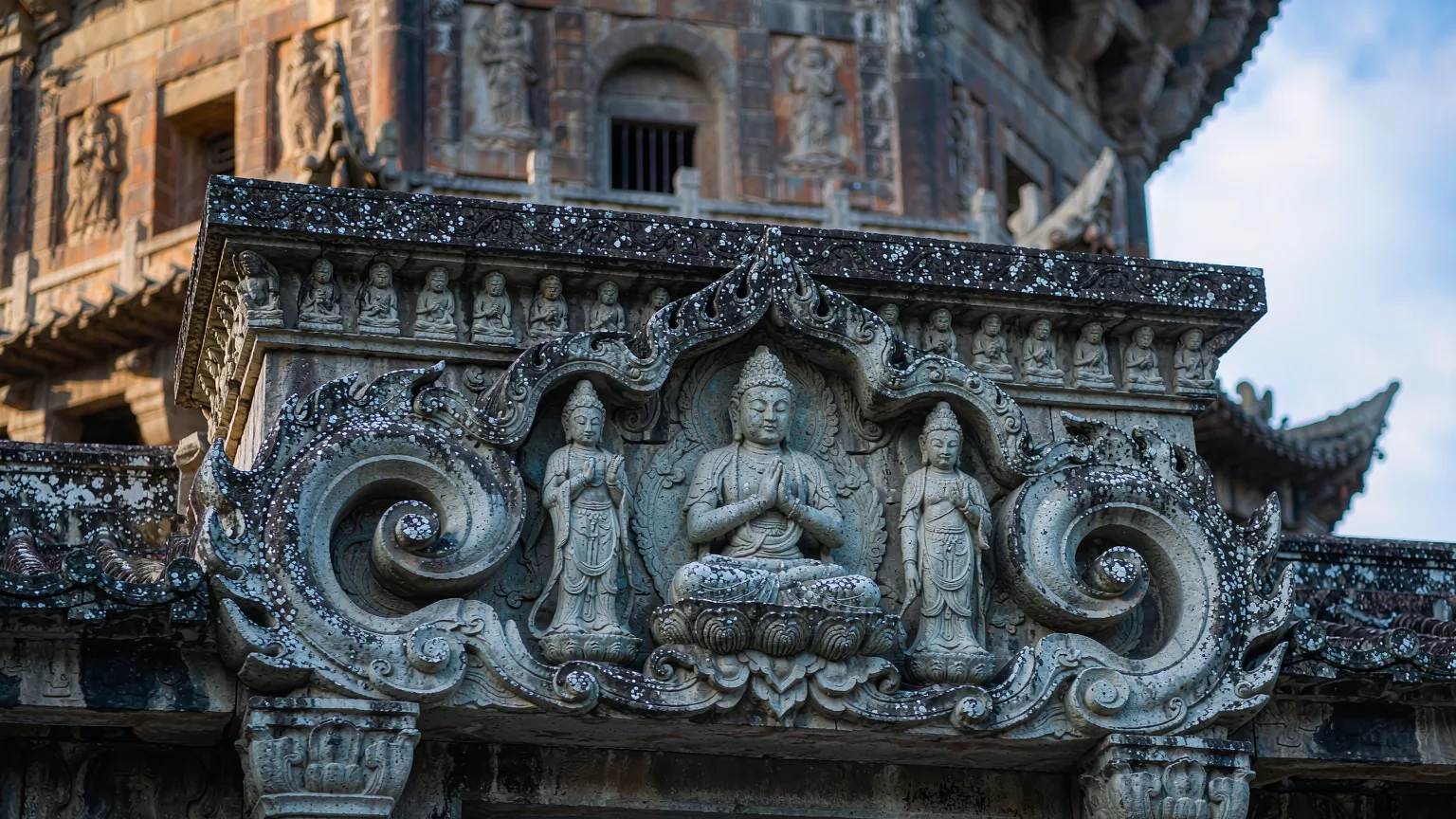
Founded in 686 during the Tang dynasty and later renamed Kaiyuan Temple, this sprawling complex became the spiritual heart of Quanzhou, once the world's busiest port. Its two five-storey stone pagodas, the 48-metre East Pagoda and 44-metre West Pagoda, were built in the 13th century and are among the tallest ancient stone towers in China. Remarkably, they have withstood centuries of earthquakes and typhoons, a testament to Song-era engineering. The temple also preserves rare Hindu stone carvings, evidence of the city's cosmopolitan past.
Within the temple grounds, the Mahavira Hall (Daxiong Baodian) houses five gilded Buddha statues and is supported by 86 pillars, including two ancient Indian-style columns. The courtyard's ancient banyan trees and incense-filled air create a contemplative atmosphere. As part of the UNESCO World Heritage site 'Quanzhou: Emporium of the World in Song-Yuan China', Kaiyuan Temple offers a tangible link to the maritime trade that once connected China to the wider world. Our guides can bring these stories to life.
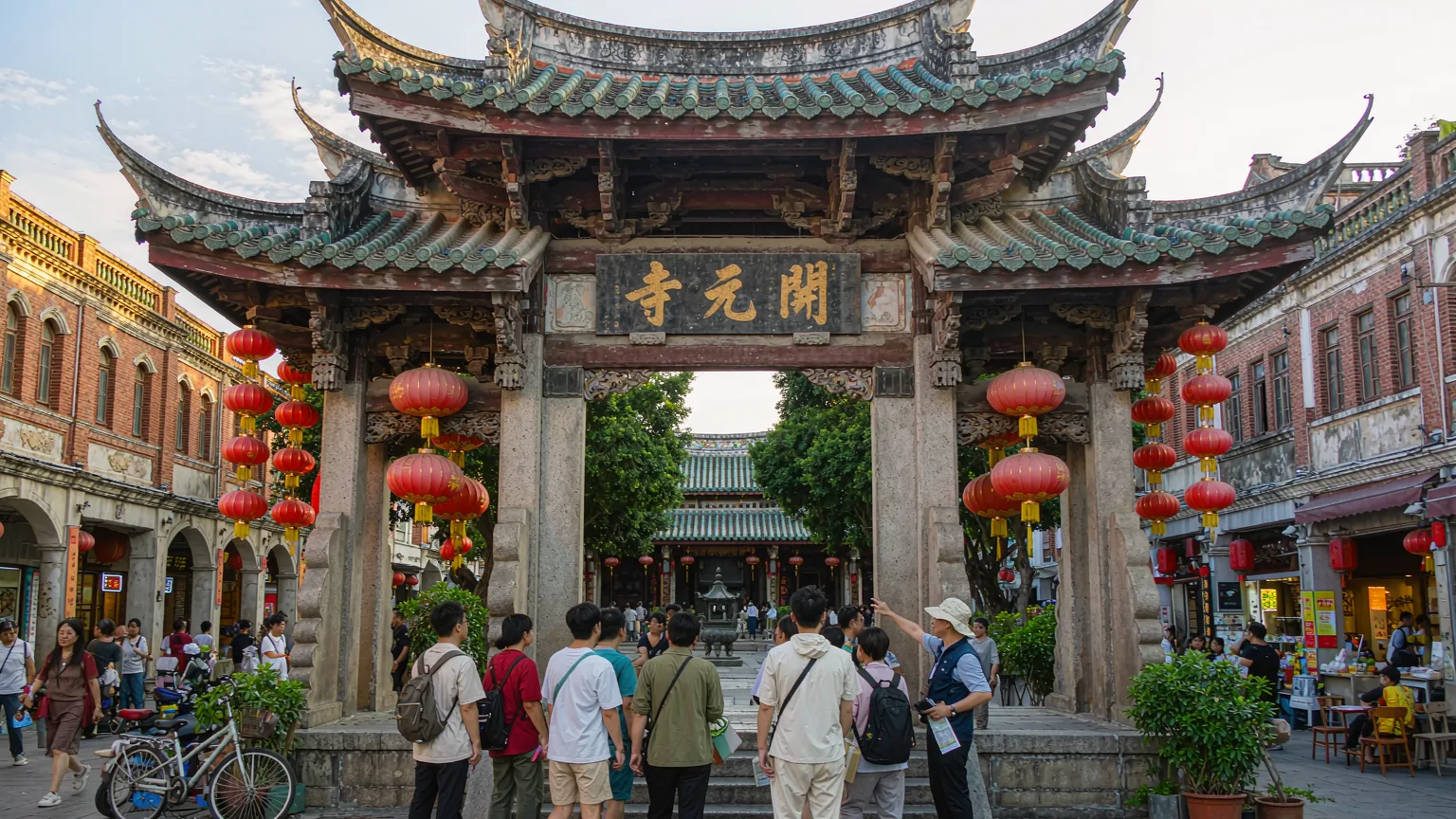
Kaiyuan Temple sits in the heart of Quanzhou's old city, easily reached by taxi or Didi from most hotels (¥10–20). Public buses like 2, 6, and 26 stop nearby. If arriving by high-speed rail, Quanzhou Station is a 20-minute taxi ride away. We recommend pairing it with a stroll through the adjacent West Street food area for a full day of culture and snacks.
Entry is free, but you may need to show your passport for a free ticket. Opening hours are 8:00–17:30 (last entry 17:00). No advance booking is required for individuals, but groups should register. WeChat Pay and Alipay are accepted for donations or incense, and foreign cards can be linked to these apps for cashless payments.
Visit early morning (8:00–9:30) to enjoy peaceful courtyards and soft light for photography, or late afternoon when the pagodas glow golden. Avoid weekends and Chinese holidays. Spring (March–May) and autumn (October–November) offer mild weather, while summer can be hot and humid.
No, entry is free. You may need to show your passport to get a free ticket at the gate. Donations are optional.
The temple is open daily from 8:00 to 17:30, with last entry at 17:00. It's best to arrive early to avoid crowds.
The East Pagoda is sometimes open for climbing, but access can be restricted. Check with our guide on the day of your visit.
Take a taxi or Didi, which takes about 20 minutes and costs around ¥20–30. Public buses are also available but slower.
Tell us your dates, group size and preferences — a dedicated consultant will reach out within 24 hours.