
Guest — sign in to save your enquiries.
My account
The Dazu Rock Carvings are a UNESCO World Heritage site of Tang and Song dynasty cliff sculptures, with Baodingshan holding the most concentrated masterpieces. Unlike isolated grottoes, these carvings blend Buddhist, Daoist and Confucian imagery into vivid narrative scenes. Our private guide navigates the sprawling site, unlocking the stories behind each tableau so you see more than stone.
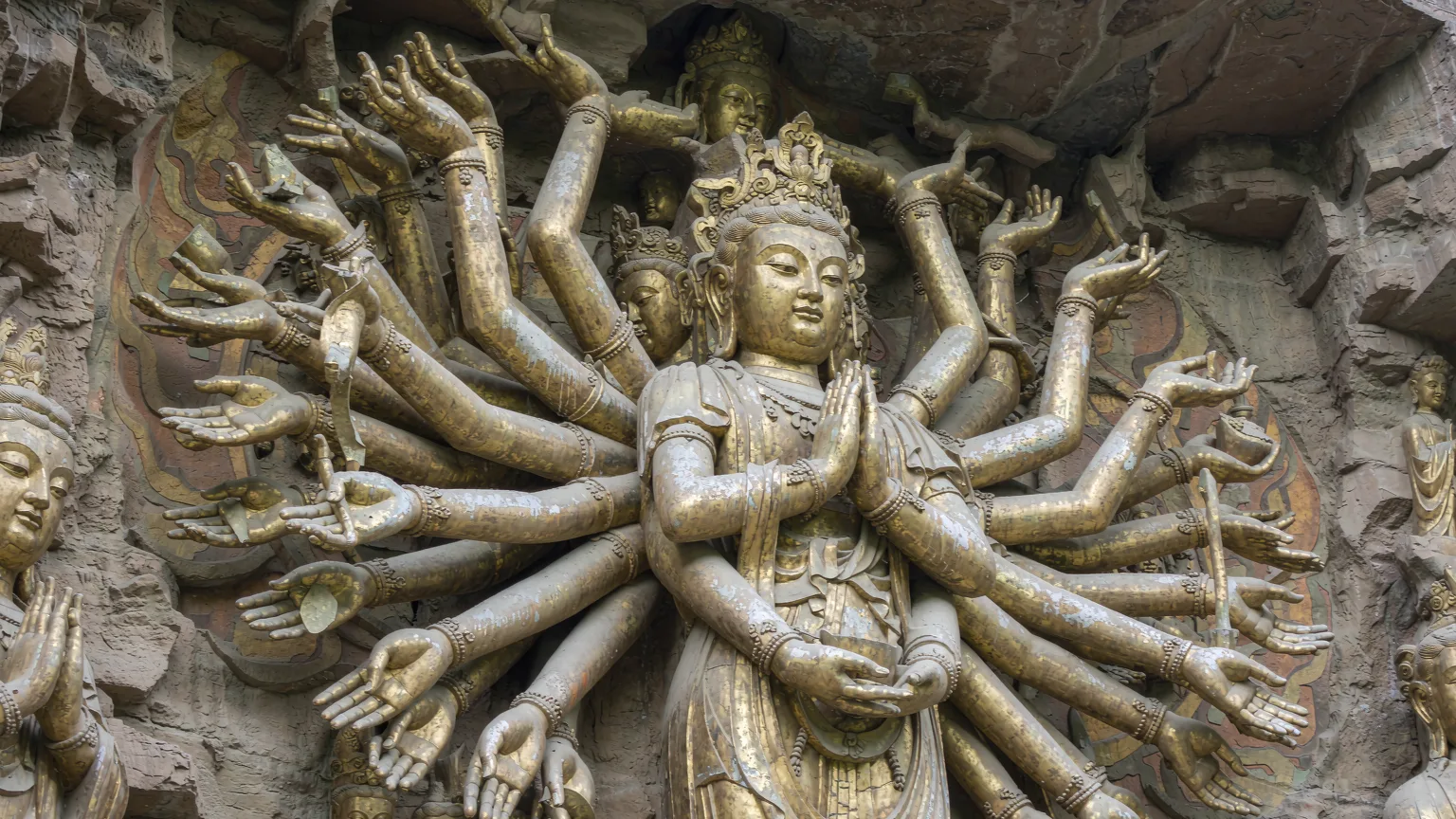
Carved from the 7th to 13th centuries, the Dazu Rock Carvings comprise over 50,000 statues across 75 protected sites. They flourished under local officials and monks during the late Tang and Song dynasties, when artists moved beyond imperial cave-temples to create accessible, moral tales in stone. The Baodingshan and Beishan clusters are the most visited, with Baodingshan's monumental reclining Buddha and intricate Thousand-Hand Guanyin ranking among China's finest sculptural achievements.
Unlike the better-known Mogao Caves, Dazu's carvings are open-air or shallow niches, allowing close inspection of details like the Wheel of Life and the filial piety sutra. The site reflects a uniquely Chinese synthesis of faiths, and its remote location in Chongqing's hills kept it largely intact through centuries. Today, pathways and signage make the main clusters accessible, though some areas require stairs and walking.
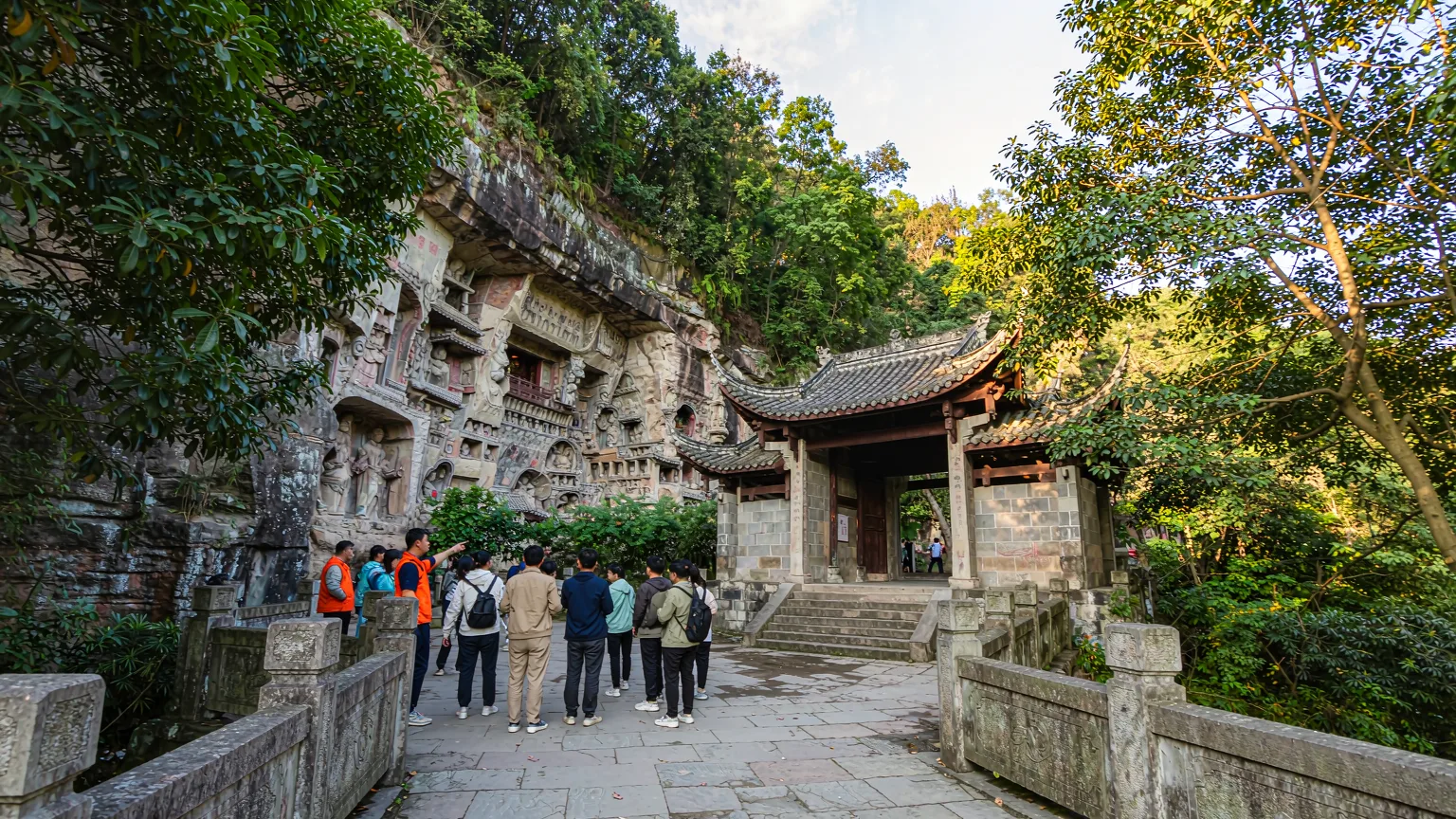
From Chongqing, take a high-speed train to Dazu South Station (about 40 minutes), then a taxi or local bus to Baodingshan (30 minutes). Alternatively, our private car transfer picks you up at your hotel and drives directly (2 hours). Most travellers visit as a day trip, leaving Chongqing by 8am and returning by early evening. We can combine it with a stop at the Beishan site for a fuller picture.
Combined ticket for Baodingshan and Beishan costs ¥140 (peak season) or ¥110 (low season); separate tickets are ¥115 and ¥70. Opening hours are 8:30am–6pm (peak) and 9am–5:30pm (low). Book via WeChat mini-programs or Trip.com; foreign cards work on Trip.com, while WeChat Pay and Alipay now accept international cards for on-site purchases.
Visit in spring (March–May) or autumn (September–November) for mild weather and clear light. Arrive at Baodingshan right at opening to avoid tour groups, which peak from 10am. Afternoon light illuminates the reclining Buddha and Thousand-Hand Guanyin beautifully, but crowds are thicker; late afternoon offers softer light and fewer visitors.
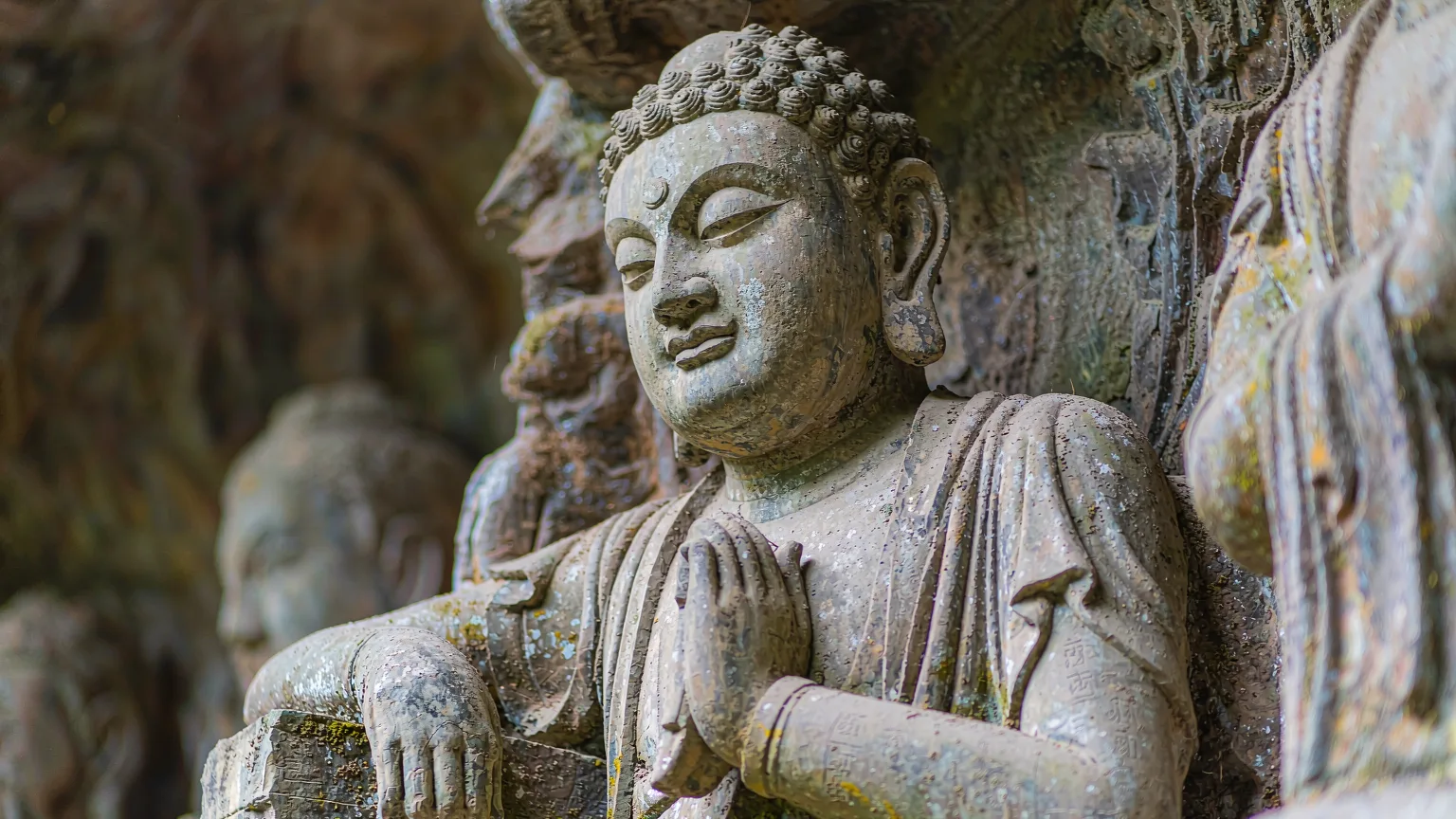
Baodingshan takes about 2–3 hours at a relaxed pace, while Beishan needs 1–1.5 hours. Including travel from Chongqing, plan a full day.
Partially. Baodingshan has some paved paths but many stairs; Beishan is more accessible. Visitors with mobility issues should contact us for a tailored route.
Major international cards are accepted at staffed ticket counters, but it's safer to book online via Trip.com or link your card to Alipay/WeChat Pay in advance.
Absolutely. Dazu is later in date and uniquely secular and narrative, with a blend of faiths not found at the imperial cave-temples. It offers a different, more intimate experience.
Tell us your dates, group size and preferences — a dedicated consultant will reach out within 24 hours.