
Guest — sign in to save your enquiries.
My account
The Chen Clan Ancestral Hall is the finest surviving example of Lingnan architecture, a 19th-century complex where stone, wood, brick, and ceramic art converge. Built by and for the Chen lineage, it now houses the Guangdong Folk Art Museum. With our private guide, you'll decode its dense ornamentation and understand why locals call it the 'Pearl of Lingnan'.
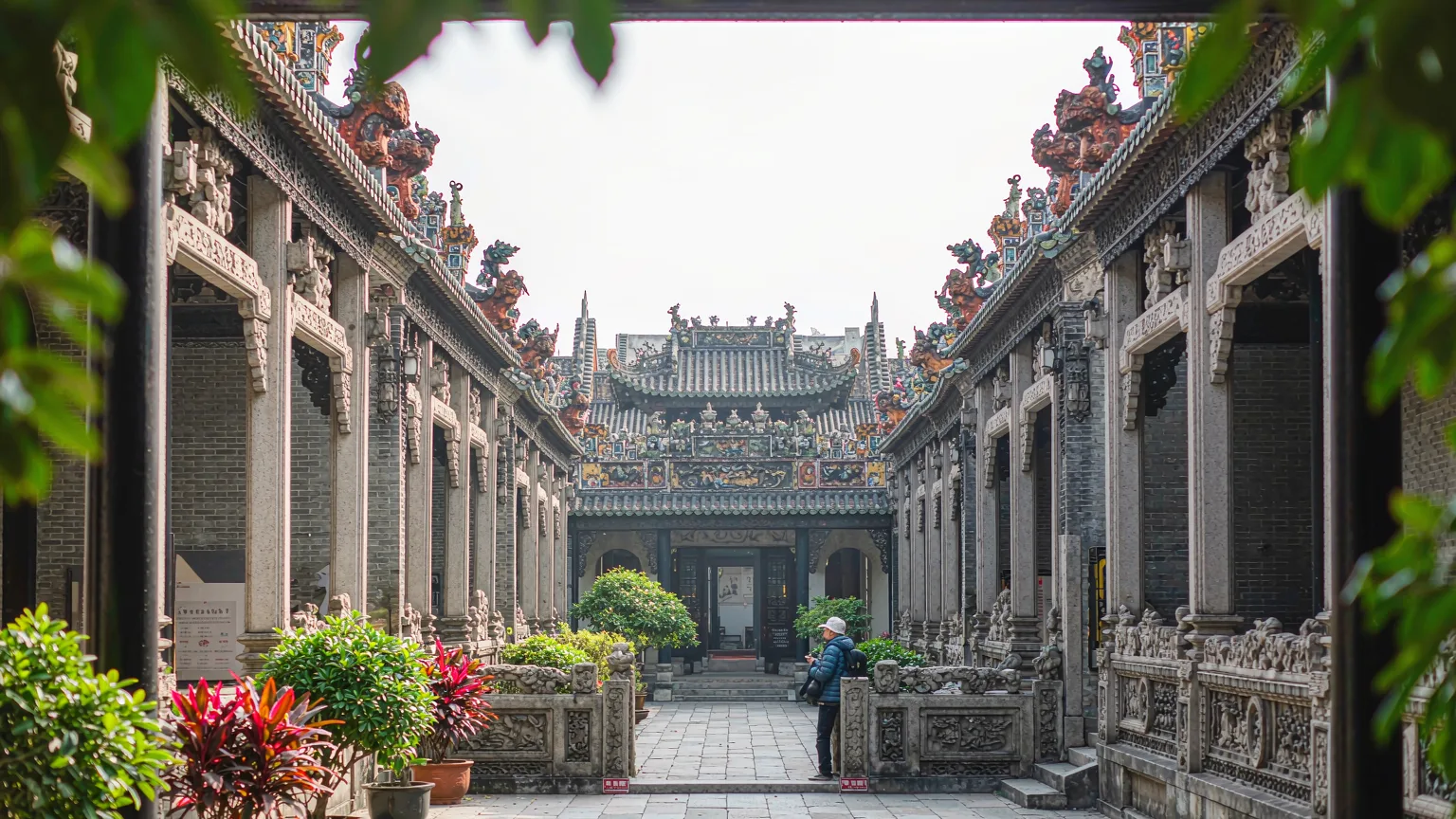
Completed in 1894 during the Guangxu reign of the Qing dynasty, the Chen Clan Ancestral Hall (Chenjiaci) was funded by Chen families across Guangdong to provide lodging for scholars traveling to Guangzhou for imperial exams and to honor ancestors. The complex covers 15,000 square meters and comprises 19 buildings arranged around a central axis, with nine halls and six courtyards. Its architecture exemplifies Lingnan style: deep eaves, polychrome ceramic ridges, and elaborate carvings that serve both decorative and symbolic purposes. Remarkably, it survived the Cultural Revolution largely intact because it was used as a factory, and in 1959 it was converted into the Guangdong Folk Art Museum.
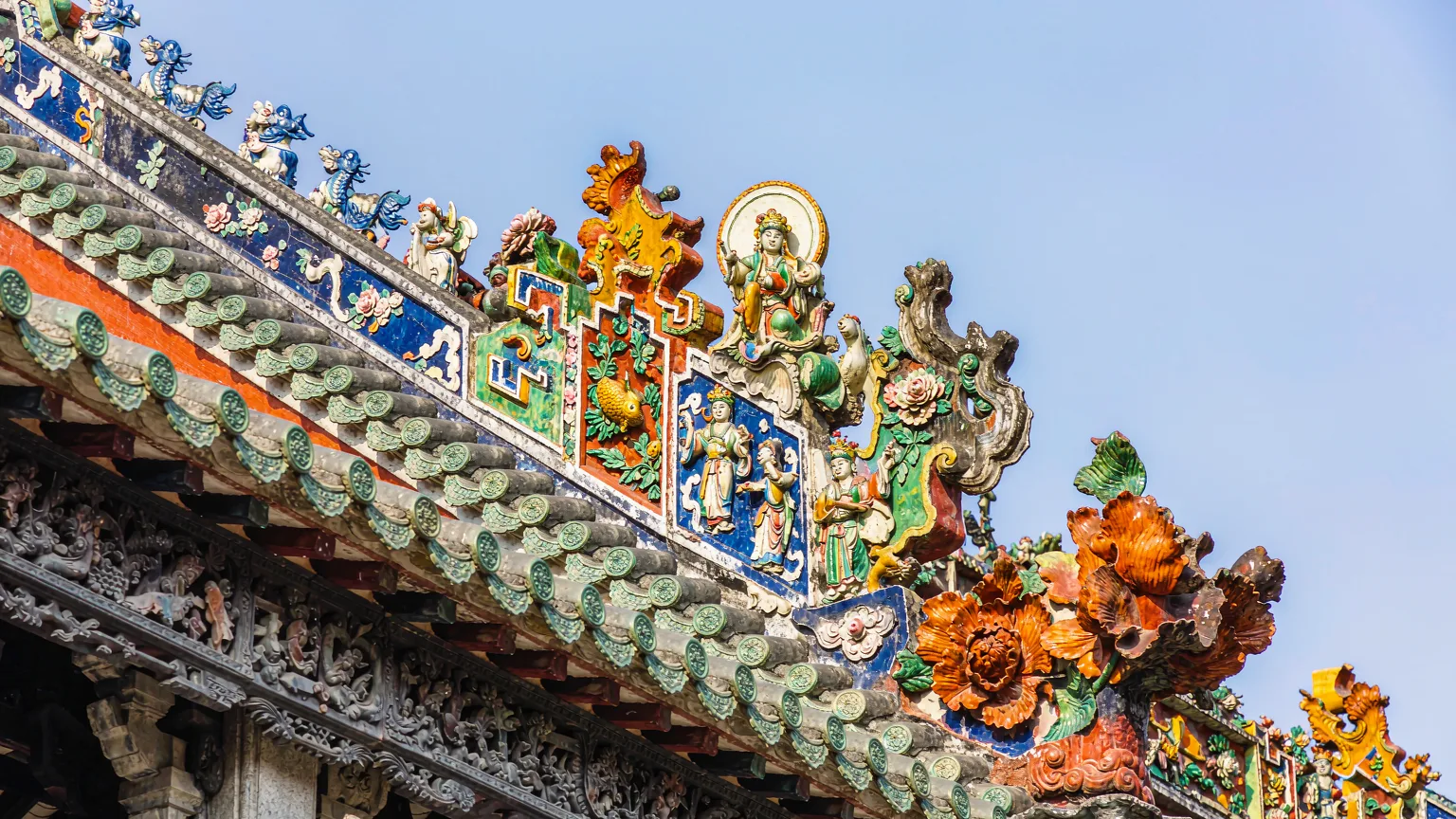
The hall is a masterclass in traditional craftsmanship. Every surface is adorned: stone carvings depict historical scenes, wood carvings fill screens and beams, brick carvings create intricate vignettes, and Shiwan ceramic figurines crown the roofs. The colors and motifs convey auspicious meanings—bats for blessings, peaches for longevity, and magpies for joy. As you wander, note the contrast between the solemn ancestral altar and the playful folk art displays. For a deeper dive into Guangzhou's history, pair this visit with our Shamian Island walk, just a short taxi ride away.
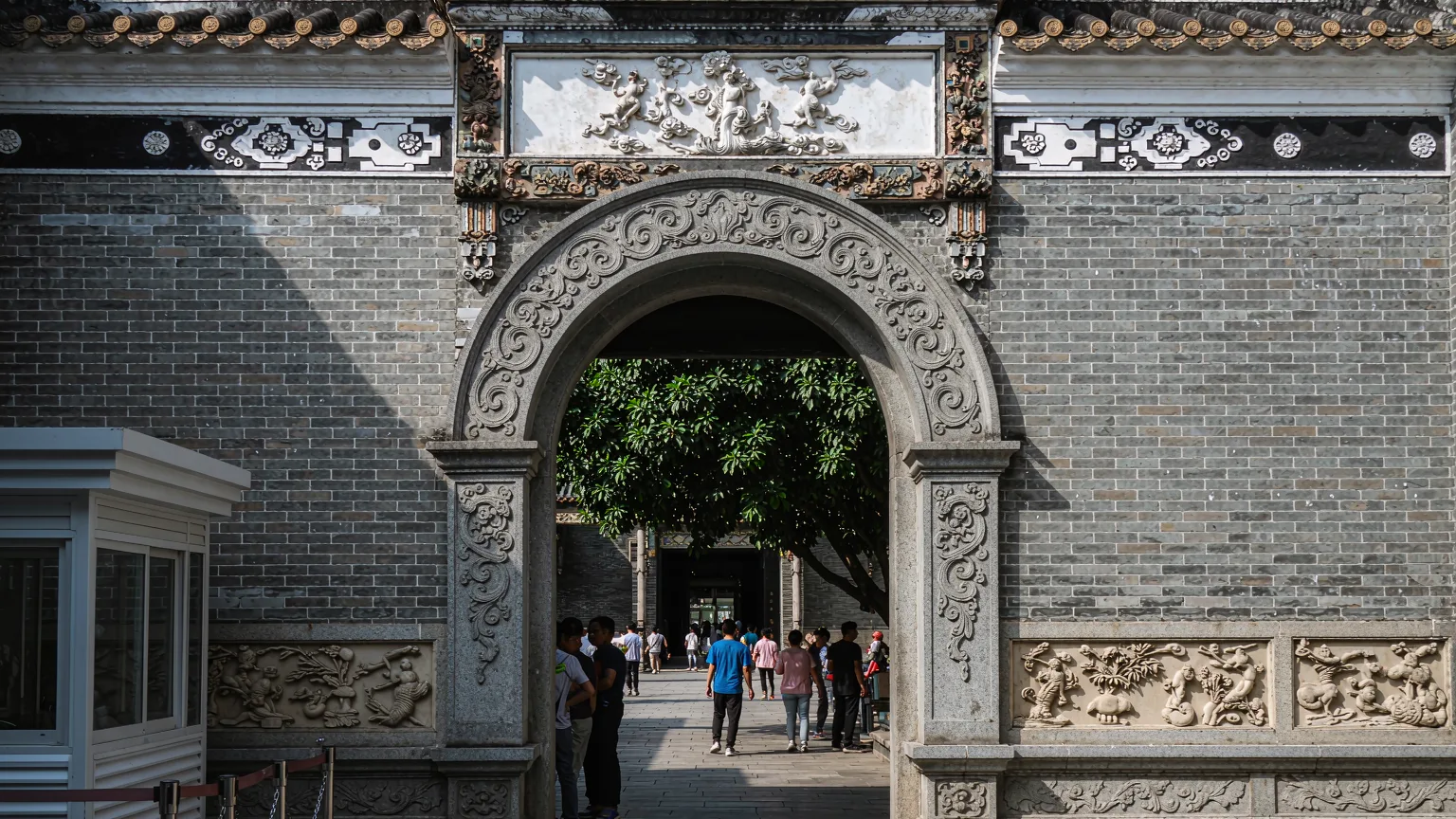
Located on Zhongshan 7th Road in Liwan District, the hall is a 5-minute walk from Chen Clan Academy Station (Line 1, Exit D). A taxi from Tianhe or Yuexiu costs about ¥30–40. We often combine it with a morning visit to Shamian Island or Qingping Market, making a full day of old Guangzhou. Our guide can meet you at your hotel and navigate the metro for a seamless experience.
Admission is ¥10 (peak season) or ¥8 (off-peak), with discounts for students and seniors. Open 8:30–17:30 (last entry 17:00), closed Mondays except holidays. Book via WeChat mini-program 'Guangdong Folk Art Museum' or pay at the gate; foreign cards are accepted at the ticket office, but WeChat Pay/Alipay linked to an international card also works.
Visit on a weekday morning, ideally between 9:00 and 11:00, to avoid tour groups and enjoy softer light for photography. Spring (March–April) and autumn (October–November) offer pleasant weather. Avoid weekends and Chinese public holidays, when the courtyards become crowded.
Yes, the main routes have ramps, but some historic doorways have high thresholds. Staff can assist; ask at the entrance.
Photography is allowed for personal use, but no flash or tripods. Some special exhibitions may prohibit photos; signs are posted.
Most visitors spend 1.5–2 hours. With a guide, you'll uncover details that make 2 hours fly by.
Limited English signage exists, but our guide provides full context and stories behind the art.
Tell us your dates, group size and preferences — a dedicated consultant will reach out within 24 hours.