
Guest — sign in to save your enquiries.
My account
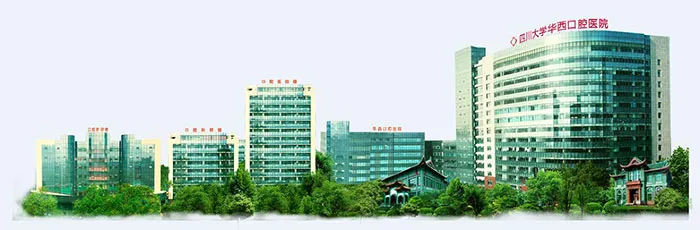
The West China School of Stomatology at Sichuan University traces its origins to the Renji Dental Clinic founded in 1907, and is known as the birthplace and cradle of modern stomatology in China. In 1912 it was expanded into a dental hospital; in 1917 the School of Dentistry of West China Union University was established, the first higher stomatology institution in China; in 1928 the Renji Dental Hospital moved to Huaxiba and was renamed the Stomatological Hospital of West China Union University; in 1951 it was renamed the Stomatological Hospital of West China University; in 1953 it was renamed the Department of Stomatology and Affiliated Stomatological Hospital of Sichuan Medical College; in 1985 it was renamed the School of Stomatology and Affiliated Stomatological Hospital of West China University of Medical Sciences; after the strong merger of West China University of Medical Sciences and Sichuan University in 2000, it was renamed the West China School of Stomatology at Sichuan University in 2001. For more than 100 years, the West China School of Stomatology has always adhered to the talent cultivation philosophy of «selecting outstanding talents, high standards, strict requirements, and an elimination system», upheld the modern management model integrating medical care, teaching, and research, and has developed into an internationally renowned school of stomatology.
West China Stomatological Hospital is the first dental specialty hospital in China, one of the first national Grade 3A dental specialty hospitals, the National Center for Stomatology, the National Clinical Research Center for Oral Diseases, the oral disease diagnosis and treatment center deployed by the state in western China, a national drug clinical trial institution, a national practical skills examination and examiner training base for the National Medical Practitioner Qualification Examination (dental category), a national standardized residency training base, and the Sichuan Oral Medical Quality Control Center. It has 8 national key clinical specialties, achieving full coverage of national key clinical specialties in its main clinical departments. The hospital adheres to the service philosophy of «enthusiasm and care», upholds the service purpose of «everything centered on patients», adheres to the public welfare nature of the hospital, actively carries out new clinical treatment technologies, and at the same time, through measures such as improving the medical environment, optimizing medical procedures, and enhancing medical quality, strives to improve the people's experience of seeking medical care, has received widespread praise from patients and society, and has become an important window for opening up and a city calling card. It has successively won titles such as the National May 1 Labor Certificate, National Benchmark Department in Party Building, National Civilized Unit, National Advanced Collective in the Health System, and National Advanced Collective in Poverty Alleviation, and has been rated the most popular stomatological hospital in China for many consecutive years.
The West China School of Stomatology adheres to the educational policy of «comprehensive quality as the foundation, professional skills as the center, and innovation ability cultivation as the core», takes talent cultivation, scientific research, social service, and cultural inheritance and innovation as its mission, and aims to cultivate high-level stomatological talents. The school enrolls students in four-year, five-year, and eight-year programs, master's students, doctoral students, and international students, and has built and improved a stomatological discipline cluster consisting of 6 disciplinary departments—the Department of Basic Stomatology, Department of Oral Medicine, Department of Oral and Maxillofacial Surgery, Department of Prosthodontics, Department of Orthodontics, and Department of Interdisciplinary Studies—and 36 specialized teaching and research offices, as well as a national-level quality course cluster covering clinical stomatology and basic stomatology. It has the national key first-level discipline of stomatology and the national key second-level disciplines of clinical stomatology and basic stomatology. It has a national-level teaching team, a national-level experimental teaching demonstration center, and a national-level virtual simulation experimental teaching center. It has fully launched a new model of innovative talent cultivation, building an international platform for students' innovation ability cultivation and humanistic quality education, and striving to cultivate high-level stomatological talents with profound humanistic foundations, solid professional knowledge, strong innovative awareness, and a broad international perspective. Five doctoral dissertations have won the National Top 100 Excellent Doctoral Dissertations. In the Ministry of Education's national first-level discipline evaluation, it ranked first in stomatology and received A+; in the first national professional degree level evaluation for stomatology, it received A+; it has twice been selected for the Ministry of Education's «Double First-Class Construction» list of first-class disciplines, and has repeatedly won titles such as National Advanced Collective in the Education System and Ministry of Education Innovation Team, and is the chair unit of the Stomatology Professional Teaching Guidance Committee of higher education institutions under the Ministry of Education.
Stomatological research at West China began with the Medical and Dental Research Office of West China Union University established in 1936, was expanded into the Oral Disease Research Office in 1949, established the Institute of Stomatology in 1958, established the Central Laboratory of Stomatology in 1983, established the Ministry of Health Key Laboratory of Stomatology in 1989, and established the Key Laboratory of the Ministry of Education and Sichuan Province in 2002. In 2007, the Ministry of Science and Technology approved the construction of the State Key Laboratory of Oral Diseases, which was reorganized and renamed in 2023 as the National Key Laboratory of Oral Disease Prevention and Treatment; in 2012, the National Development and Reform Commission approved the construction of the National-Local Joint Engineering Laboratory for Oral Regenerative Medicine; in 2012, the Ministry of Science and Technology recognized it as an International Joint Research Center; in 2013, the Ministry of Education approved the construction of the Engineering Research Center for Translational Stomatology, forming a high-level research platform from basic exploration to translational application; in 2013, the Ministry of Education approved the construction of a Discipline Innovation and Intelligence Introduction Base for Higher Education Institutions; in 2016, the Ministry of Science and Technology, the National Health and Family Planning Commission, the Logistics Support Department of the Central Military Commission, and the State Food and Drug Administration approved the construction of the National Clinical Research Center for Oral Diseases. In 2009, the English-language journal International Journal of Oral Science was founded, and in 2010 it was indexed by the Science Citation Index Expanded (SCIE) database and PubMed (MEDLINE), becoming the first English-language stomatology journal in China indexed by SCI, with an impact factor in the Q1 zone of global stomatology SCI journals. In 2013, the English-language journal Bone Research was founded, and in 2014 it was indexed by the SCI database, leading the development of China's bone science research field. At the same time, both journals are Nature series partner journals and both were selected for the «China Science and Technology Journal Excellence Action Plan English Leading Journals». In the ShanghaiRanking Best Chinese Subjects Ranking, it ranks first nationwide in stomatology; in the QS World University Rankings by Subject, it ranks tenth globally in stomatology and first in mainland China; in the ShanghaiRanking Global Ranking of Academic Subjects, it ranks fifth in the world in stomatology and first in China.
International Medical Department (Chinese-English bilingual, appointment window extendable to 14 days), independent international ward, VIP rooms, English medical records, direct billing supported, Japanese and Korean appointment system + professional interpreters
Beyond the hospital, MyGuideTrip handles everything around your care so you can focus on getting better.
We match your records and needs to the right department and specialist through the hospital's official international channel, cutting waiting time.
A mother-tongue-matched interpreter and companion stays with you through consultations, tests and treatment — zero language barriers.
We help prepare medical visas and entry documents, and align your trip with the 240-hour visa-free transit where it applies.
Flights, transfers, accommodation, recovery-friendly meals and light city itineraries — all arranged so you can focus on getting better.
Tell us a little about your trip and we'll get back to you within 24 hours.
We'll reply within 24 hours.
Save your enquiries, revisit quotes and skip re-typing your details.
Your next enquiry will be pre-filled with your account.