
Guest — sign in to save your enquiries.
My account
Yangguan Pass marks the western edge of Han-dynasty China, where the Silk Road left the empire and the poet Wang Wei wrote his famous farewell, 'west of Yangguan, no old friends.' Today the site is a haunting stretch of desert rampart, beacon towers and a small museum. With our private guide, you'll hear the history behind the ruins and stand where caravans once vanished into the sands.
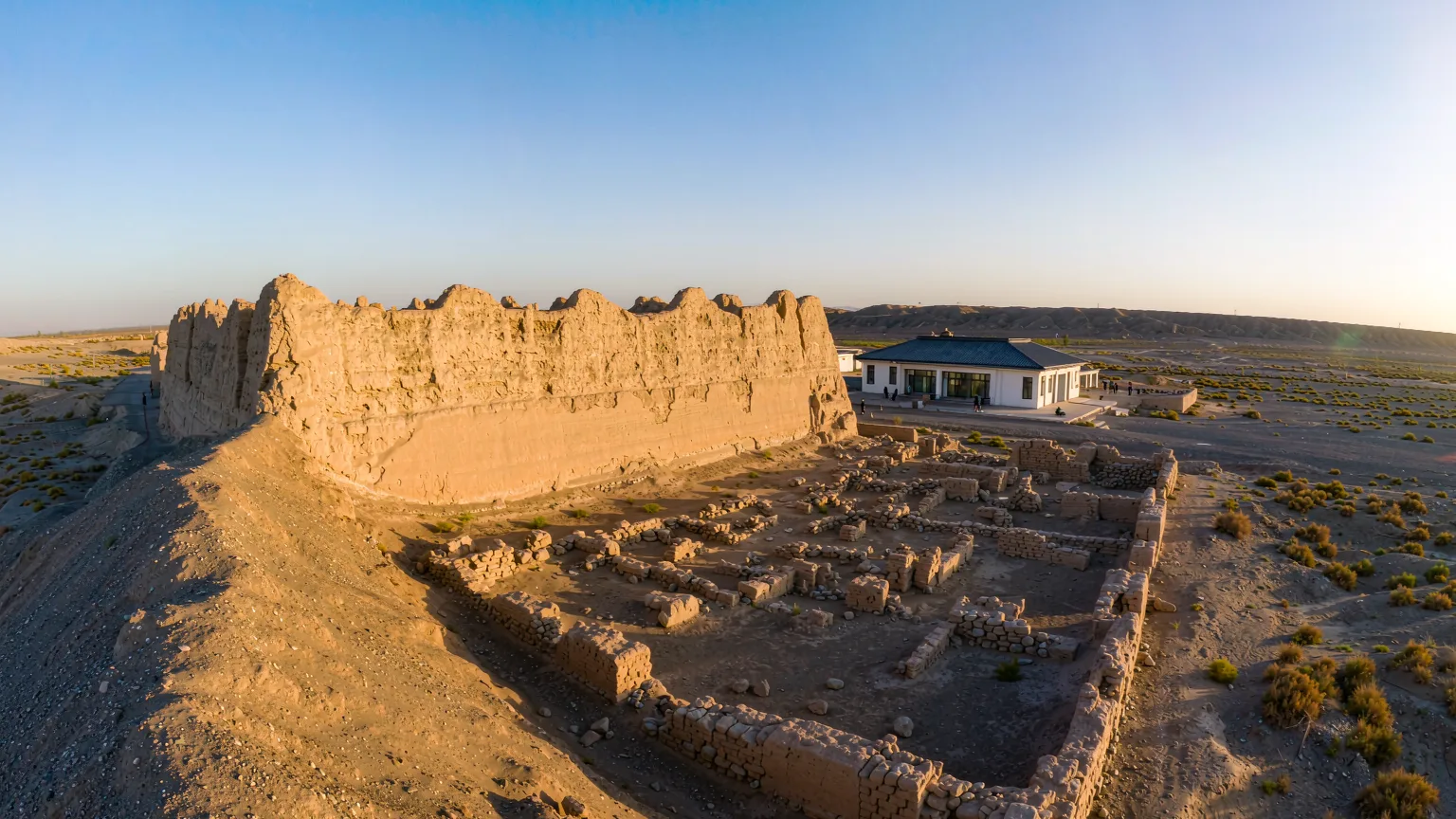
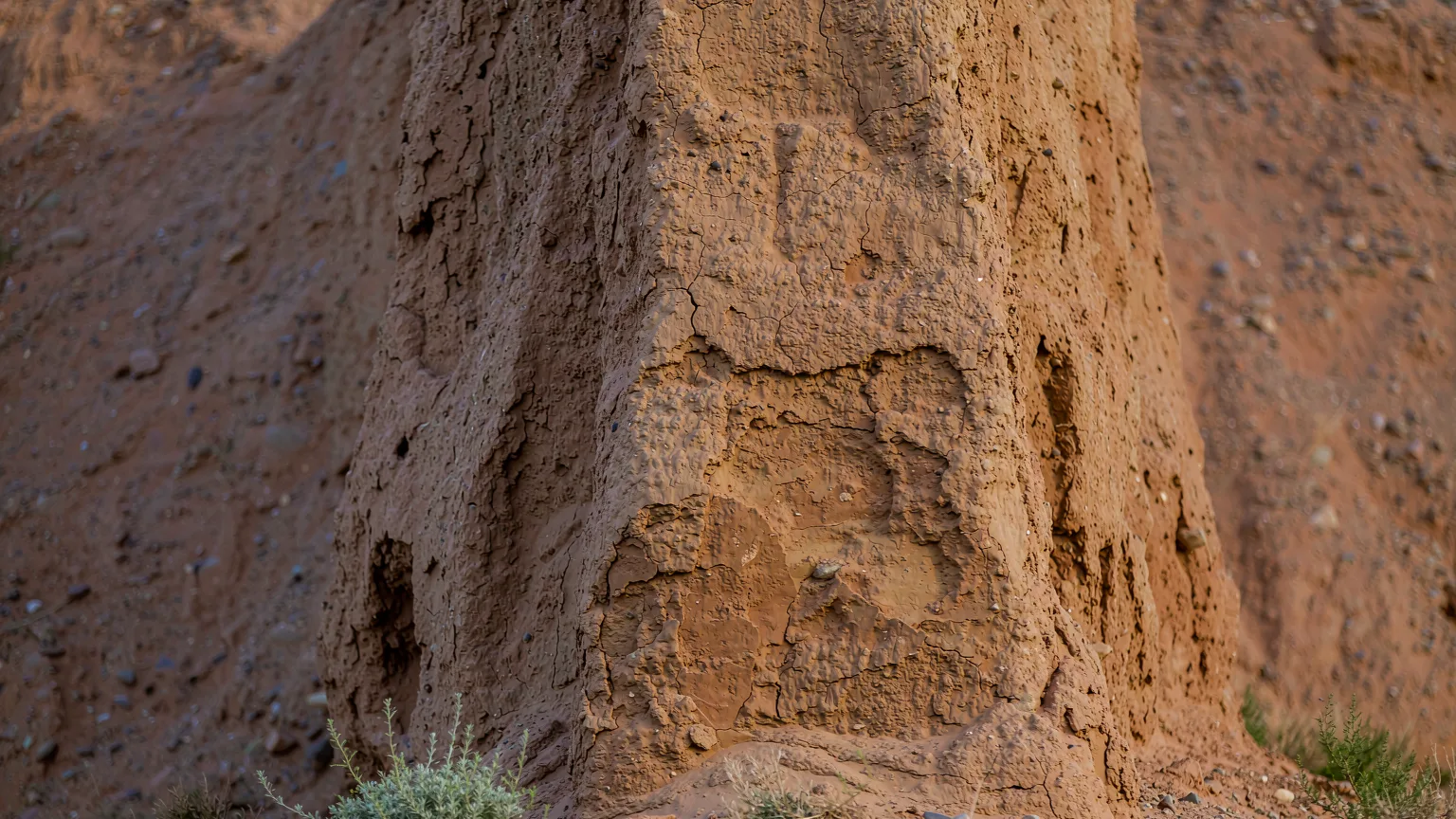
Yangguan was established in 121 BC by Emperor Wu of the Han as one of the two great passes guarding the Hexi Corridor, the narrow land bridge between China and Central Asia. Along with Yumen Pass to the north, it controlled the southern Silk Road route, and every merchant, monk and soldier heading west passed through its gates. The pass remained strategically important through the Tang dynasty, when it became a symbol of exile and separation in Chinese poetry. Over the centuries, shifting sands and the decline of the Silk Road reduced it to ruins, but the earthen walls and beacon towers still convey its former scale.
The site today consists of a reconstructed gate and museum, plus the original Han-era rammed-earth wall stretching into the desert. A small exhibition displays artefacts unearthed nearby, from coins to arrowheads, and explains the daily life of the garrison. The surrounding landscape is pure Gobi: dunes, gravel and distant mountains. Because the ruins are spread out and exposed, visiting with a guide who knows the terrain and history makes the experience far richer. Our guides bring the place to life with stories of envoys, poets and the harsh realities of frontier duty.
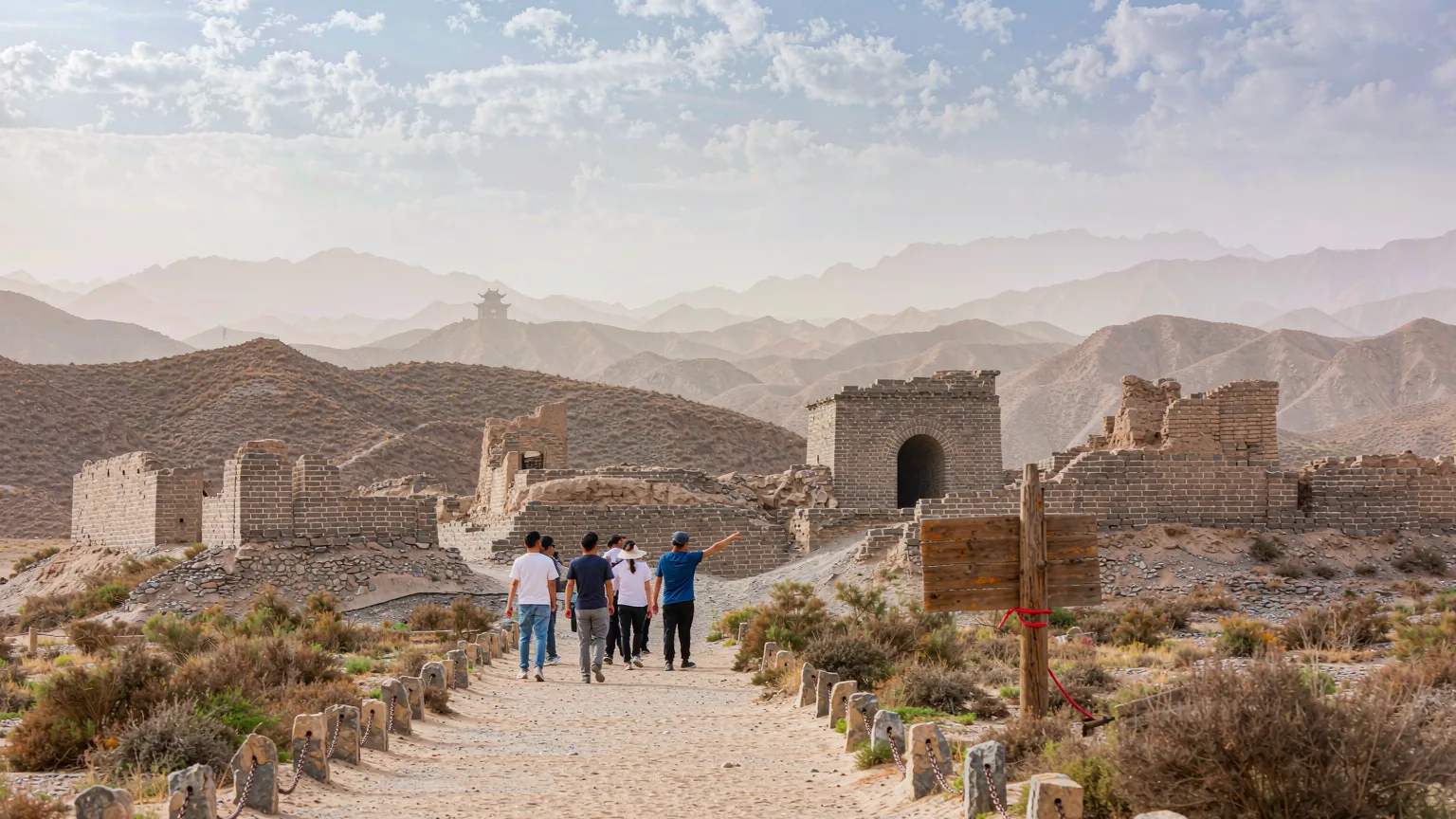
Yangguan is about 70 km southwest of Dunhuang city. The easiest way is by private car or taxi, roughly 1.5 hours each way; our tours include hotel pickup and a driver-guide. Public transport is limited, so we recommend combining it with Yumen Pass and the Yardang National Geopark on a full-day loop. Alternatively, join a small-group tour from Dunhuang. The drive itself offers stark desert views, so keep your camera ready.
Admission: ¥50 (includes museum). Opening hours: 8:00–18:00 (last entry 17:30). Book via WeChat mini-program or at the gate; foreign cards are not accepted, so bring cash or use Alipay/WeChat Pay linked to an international card.
Visit from May to October, when temperatures are mild and the desert is at its most photogenic. Early morning (right at opening) or late afternoon (after 16:00) offers the best light and fewer crowds. Avoid midday in summer, when the sun is intense and shade is scarce. Winter can be bitterly cold and windy, but the solitude is rewarding for hardy travellers.
Yes, if you have a half-day free. It pairs well with Yumen Pass, and the desert scenery is striking. If you only have one day in Dunhuang, prioritise Mogao Caves and the Singing Sand Dunes.
Public buses are infrequent and drop you on the main road, still a few kilometres from the entrance. A private car or tour is far more convenient and allows you to combine sites.
The museum has some English labels, but the ruins themselves have limited signage. A guide is invaluable for understanding the historical context and layout.
Water, sun protection, comfortable walking shoes and cash for tickets or snacks. The wind can pick up, so a light windbreaker is useful even in summer.
Tell us your dates, group size and preferences — a dedicated consultant will reach out within 24 hours.