
Guest — sign in to save your enquiries.
My account
Tiger Leaping Gorge is one of the deepest canyons on Earth, where the Jinsha River thunders between the 5,596-metre Jade Dragon Snow Mountain and the 5,396-metre Haba Snow Mountain. The Lijiang section offers heart-stopping views from the Upper Gorge and the legendary High Trail. With our private guide, you skip the logistics and focus on the drama of the landscape.
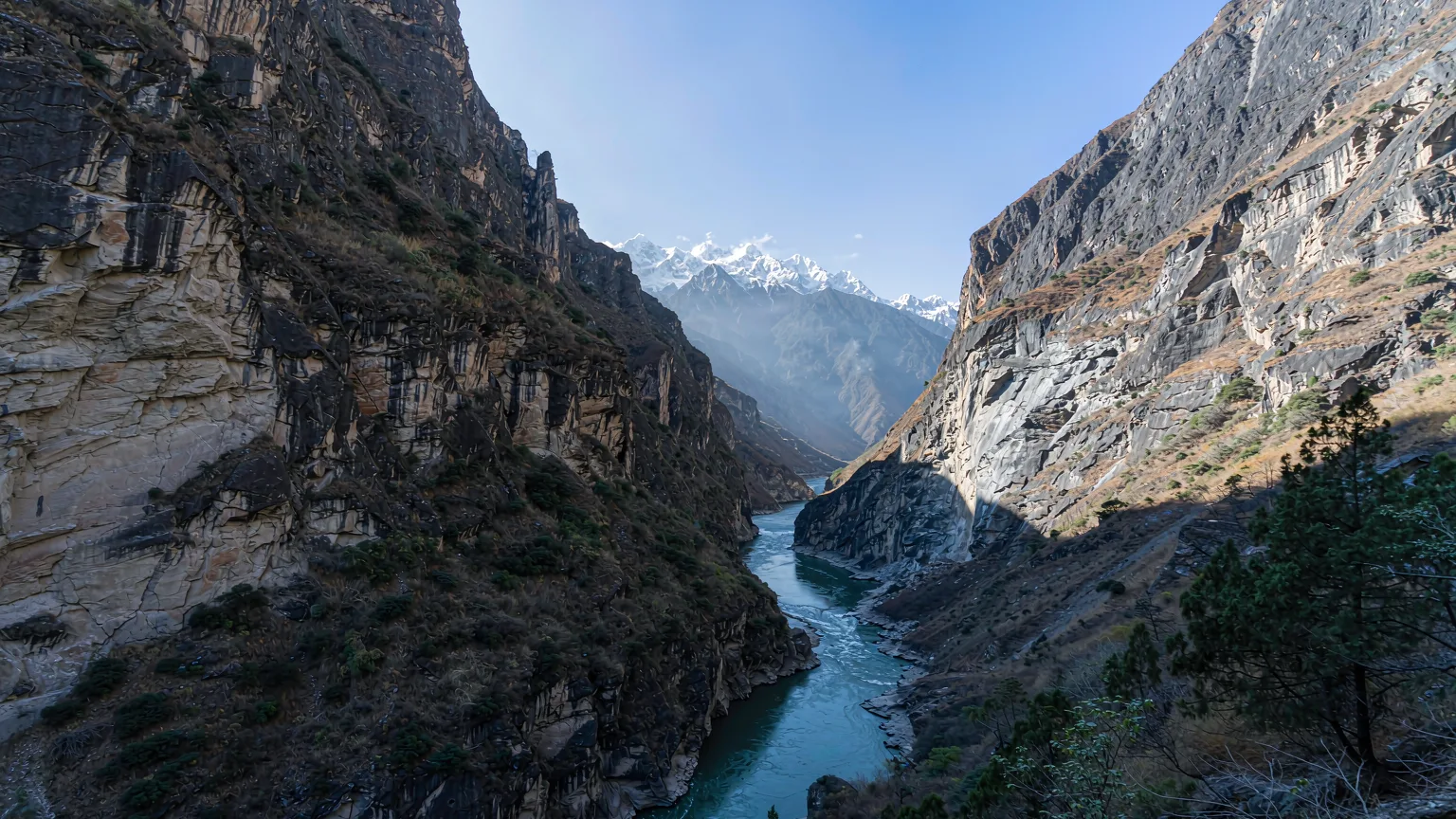
Tiger Leaping Gorge (虎跳峡) lies about 100 kilometres north of Lijiang in Yunnan Province, carved by the upper Yangtze River, known locally as the Jinsha. The gorge stretches for roughly 15 kilometres and plunges to a maximum depth of about 3,900 metres, making it one of the deepest canyons in the world. Its name comes from a legend that a tiger once leapt across the narrowest point—just 25 metres wide—to escape a hunter. The area is home to Naxi, Tibetan, and Bai communities, and the dramatic scenery has inspired travellers for centuries.
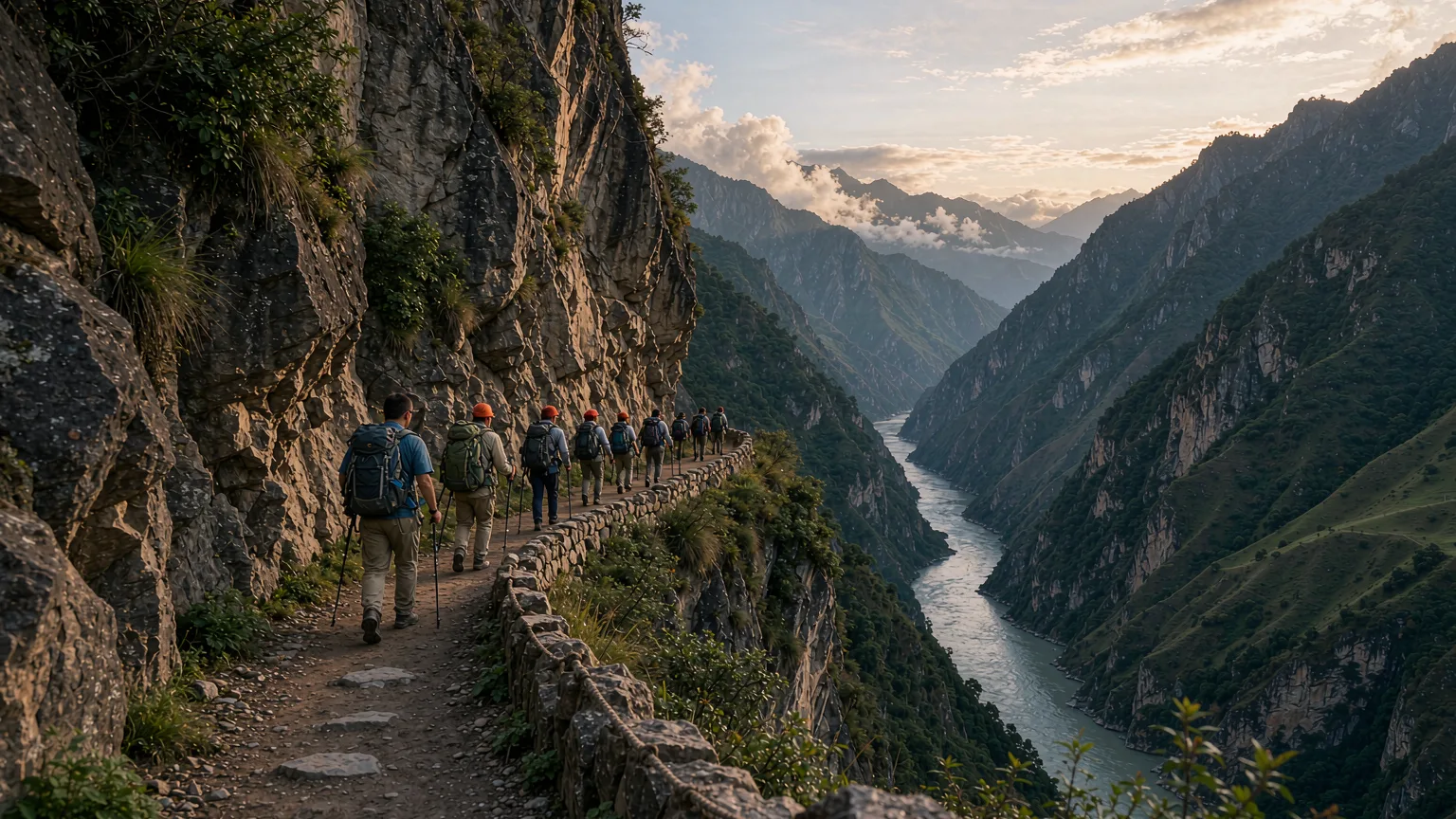
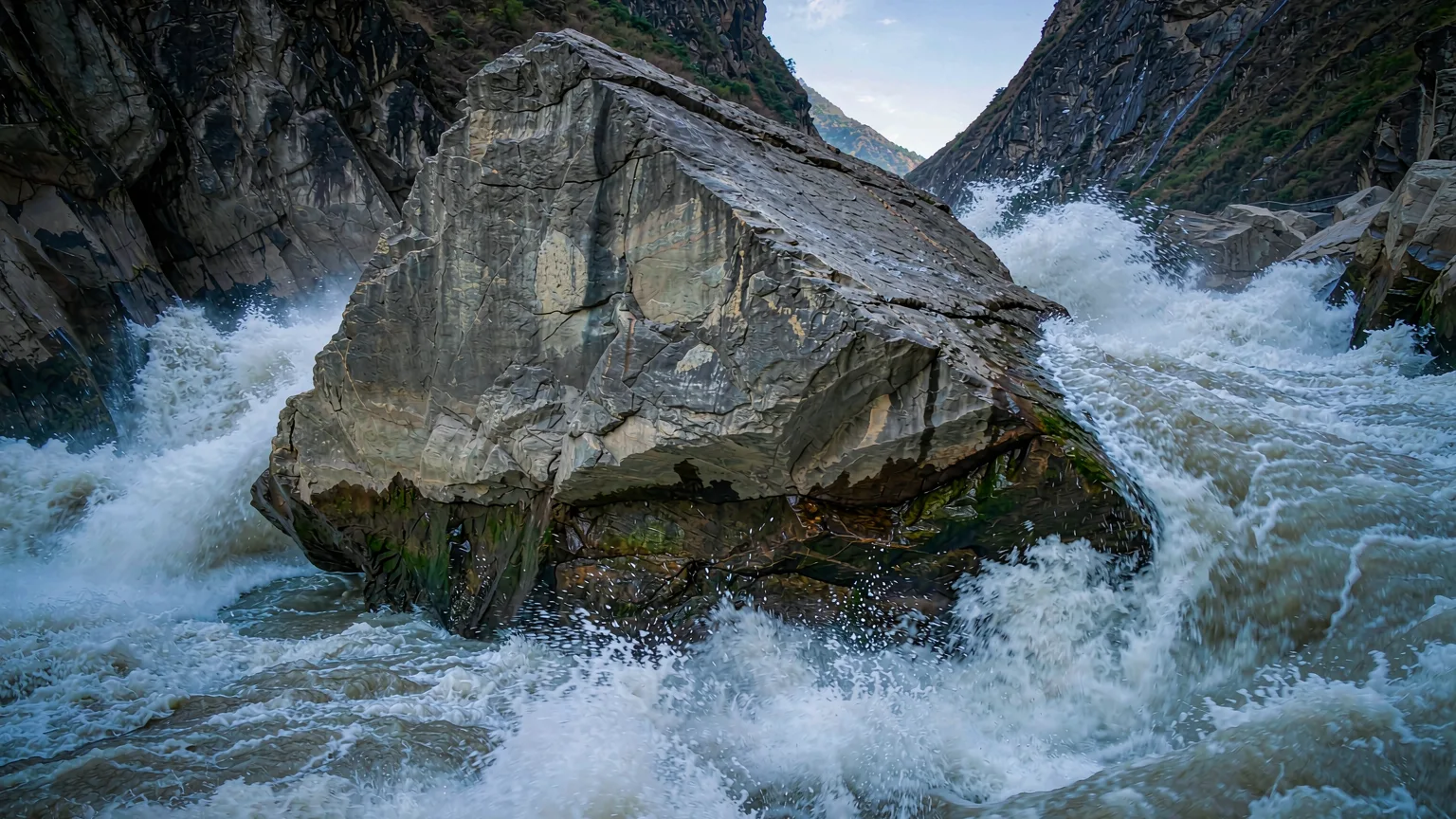
The gorge is divided into three sections: Upper, Middle, and Lower. The Upper Gorge, closest to Lijiang, is the most accessible and features a wooden walkway with viewing platforms above the roaring rapids. The Middle Gorge is wilder, with the famous Tiger Leaping Stone and the daunting 28 bends on the High Trail. The Lower Gorge, near Daju, offers a quieter experience. Most visitors come for a day trip from Lijiang, but serious hikers tackle the two-day High Trail, staying overnight in guesthouses with panoramic views.
From Lijiang, the gorge is about a 2-hour drive (100 km) via the G214 highway. We arrange a private car with a driver-guide who knows the best stops and can tailor the day to your pace. Most travellers visit the Upper Gorge as a day trip, leaving Lijiang around 8am and returning by late afternoon. For the High Trail, we can organise an overnight stay and luggage transfer, so you hike with just a daypack. Public buses also run from Lijiang to Qiaotou (the gorge entrance), but a private transfer is far more comfortable and flexible.
Entrance fee: ¥45 per person for the main gorge area (Upper Gorge). Additional fees apply for the Middle Gorge (¥65) and Lower Gorge (¥50), payable separately at each checkpoint. Opening hours: 8:00–18:00 (last entry 17:00). Book through our guide to avoid queues; tickets can be paid in cash or via WeChat/Alipay, but foreign cards are not accepted at the gate. We recommend bringing enough cash (¥100–200) for incidentals.
The best time to visit is during the dry season from October to May, when skies are clear and the trails are safe. Spring (April–May) brings blooming rhododendrons, while autumn (September–October) offers crisp air and stable weather. Avoid the rainy season (June–August) due to landslide risks and muddy paths. For the Upper Gorge, arrive early (before 9am) to beat tour groups and catch the morning light on the snow peaks.
The High Trail is moderately challenging, with steep sections like the 28 Bends. It typically takes two days with an overnight stay. A reasonable level of fitness is required, but our guides can arrange porters or a shorter itinerary.
Yes, the Upper Gorge is easily done as a day trip. We depart Lijiang around 8am, spend 2–3 hours at the gorge, and return by late afternoon. It's a full but rewarding day.
The main viewing areas are safe, but stay behind railings and avoid venturing onto wet rocks. During the rainy season, landslides can occur; we monitor conditions and adjust plans accordingly.
Bring sturdy shoes, a daypack with water and snacks, a rain jacket, sun hat, and cash. For overnight hikes, pack light—guesthouses provide basic bedding and meals.
Tell us your dates, group size and preferences — a dedicated consultant will reach out within 24 hours.