
Guest — sign in to save your enquiries.
My account
Rising against the Cangshan mountains and mirrored in a reflecting pool, the Three Pagodas of Chongsheng Temple are Dali's most enduring symbol. The central Qianxun Pagoda dates to the Tang dynasty, making it one of China's oldest surviving Buddhist towers. With our private guide, you skip the guesswork and hear the stories behind every brick, then stroll the temple grounds at your own pace.
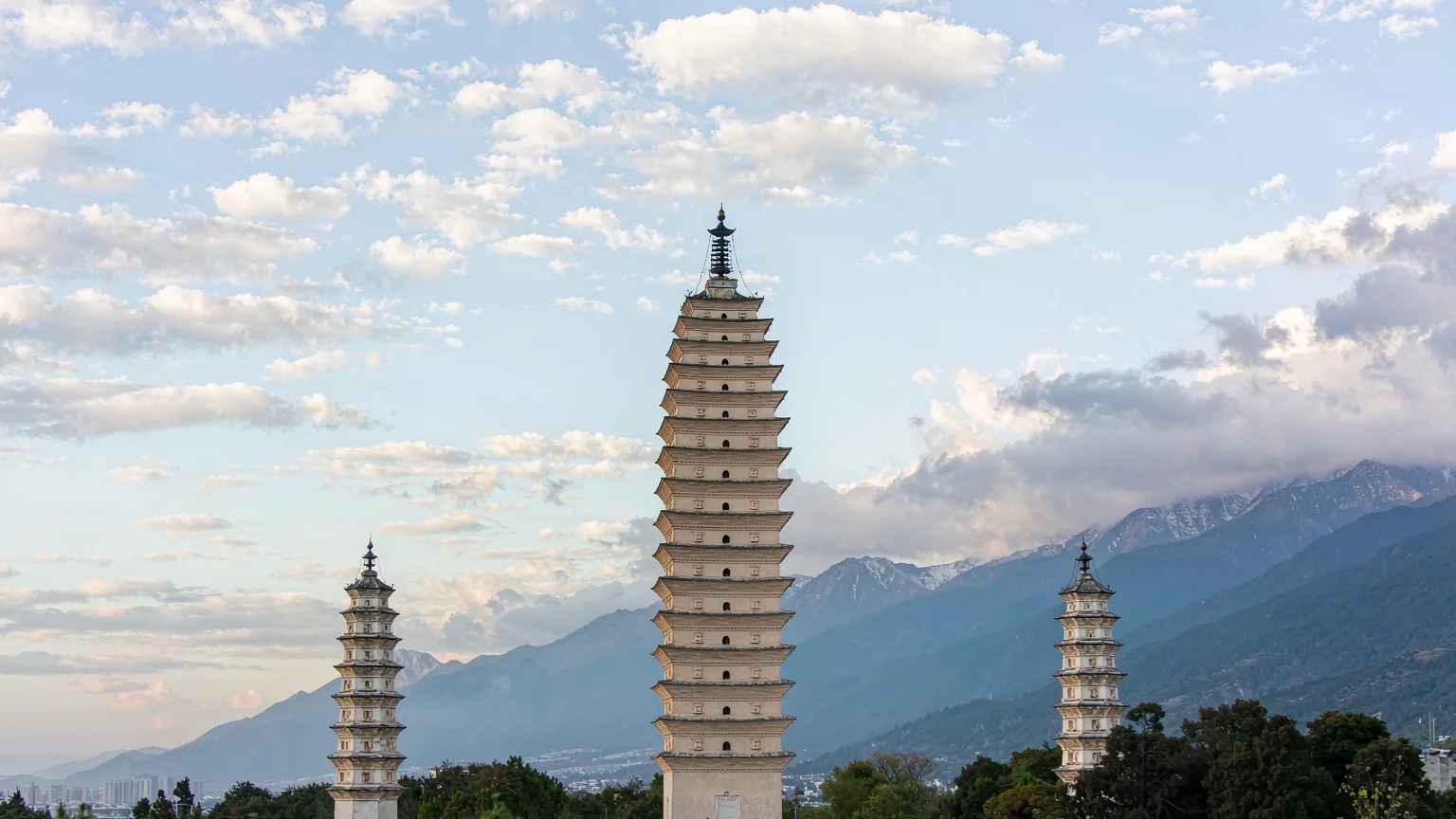
The Three Pagodas were built between the 9th and 10th centuries during the Nanzhao and Dali kingdoms, when this region was a powerful Buddhist realm. The main tower, Qianxun Pagoda, stands 69.13 metres tall and is a rare surviving example of a Tang-style square brick pagoda. The two smaller octagonal pagodas, each 42.19 metres, were added later and lean slightly inward, a design that has helped them withstand centuries of earthquakes. The site was once the royal temple of the Dali Kingdom, and its spiritual importance predates the more famous Chongsheng Temple that now surrounds it.
In 1978, restoration work uncovered a trove of Buddhist relics inside Qianxun Pagoda, including gold and crystal figures, sutras, and a large bronze bell. Today the pagodas anchor a sprawling complex rebuilt in the 2000s, with halls, gardens, and a reflecting pool that draws photographers at dawn. The site is a 5A-rated attraction, so expect well-maintained paths and English signage. For a deeper look at Dali's Buddhist heritage, pair this with a visit to the nearby Chongsheng Temple or the old town's markets.
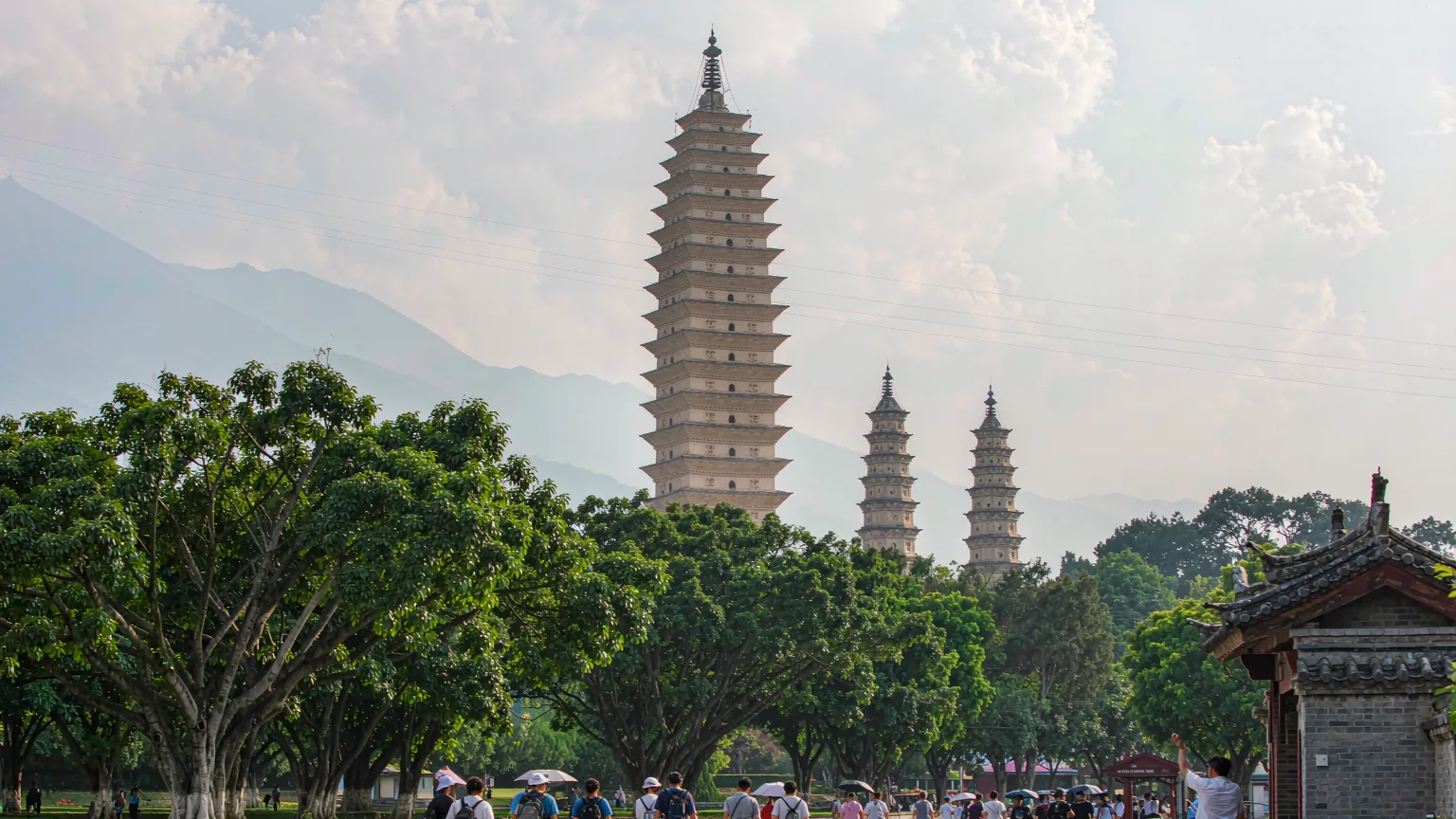
The Three Pagodas are about 1.5 km north of Dali Old Town, easily reached by taxi (¥10–15) or a 20-minute walk along the main road. From Dali Railway Station, take a taxi (¥40–50, 30 minutes) or bus 8 to the old town, then transfer. Many travellers visit as part of a half-day trip from the old town, combining it with a stroll through the ancient streets or a boat ride on Erhai Lake. Our driver-guide can pick you up directly from your hotel.
Admission is ¥75 per person (including the temple complex). Opening hours are 7:00–18:30 (may vary slightly by season). Tickets can be booked on-site or via WeChat mini-programs; foreign cards are often not accepted at the gate, so bring cash or use Alipay/WeChat Pay linked to an international card. Our guide can pre-book to skip the queue.
Visit at sunrise (7:00–9:00) for the best light on the pagodas and fewer crowds, or late afternoon (16:00–18:00) when the sun lights the towers from the west. Spring (March–May) and autumn (September–November) offer clear skies and mild temperatures. Avoid Chinese public holidays, when the site is packed.
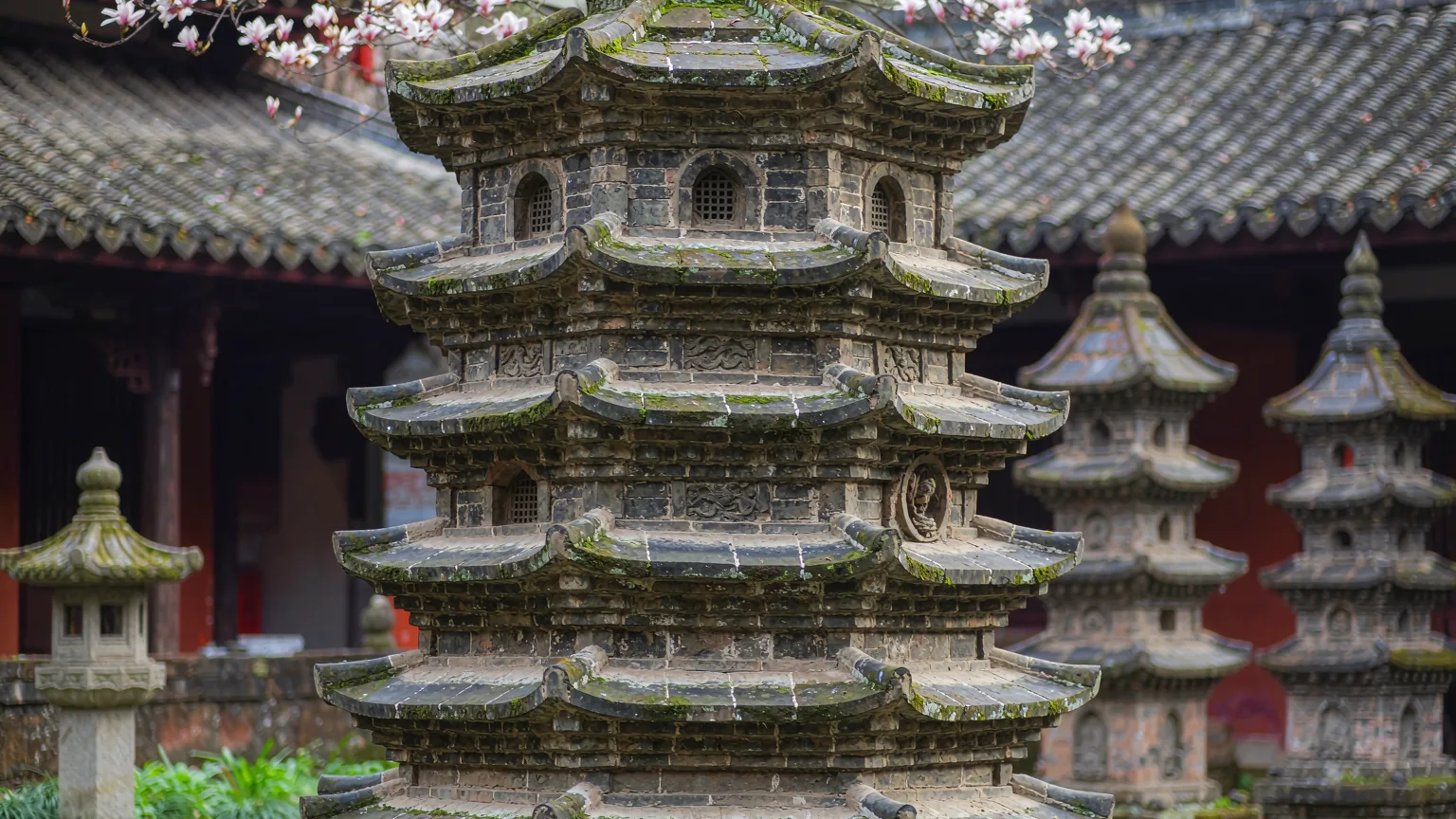
Most visitors spend 1.5 to 2 hours exploring the pagodas, temple halls, and reflecting pool. If you linger for photos or visit the relic hall, allow up to 3 hours.
The main paths are paved and relatively flat, but some areas have steps. A wheelchair can access the primary viewing spots, though assistance may be needed for the temple halls.
Yes, they are only 1.5 km apart. A morning at the pagodas followed by an afternoon in the old town makes a comfortable, unhurried day.
English signage is limited. Our private guides provide full context and can explain the history and symbolism, making the visit far more meaningful.
Tell us your dates, group size and preferences — a dedicated consultant will reach out within 24 hours.