
Guest — sign in to save your enquiries.
My account
The Temple of Heaven is where Ming and Qing emperors prayed for good harvests, and its triple-gabled Hall of Prayer for Good Harvests remains Beijing's most elegant landmark. More than a monument, it's a vast park where locals practise tai chi and sing opera among ancient cypresses. With our private guide, you'll decode its cosmic symbolism and skip the confusing queues effortlessly.
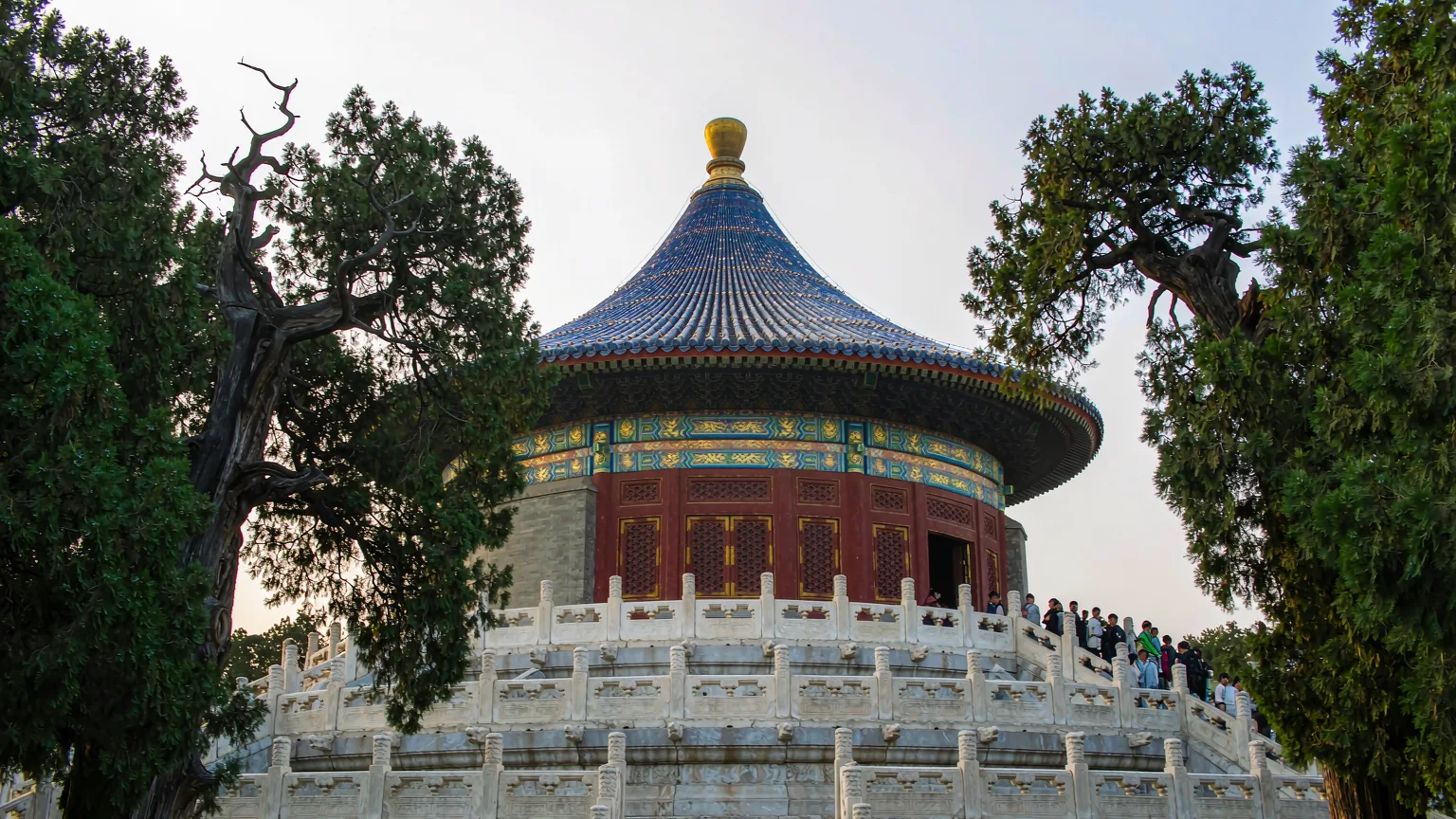
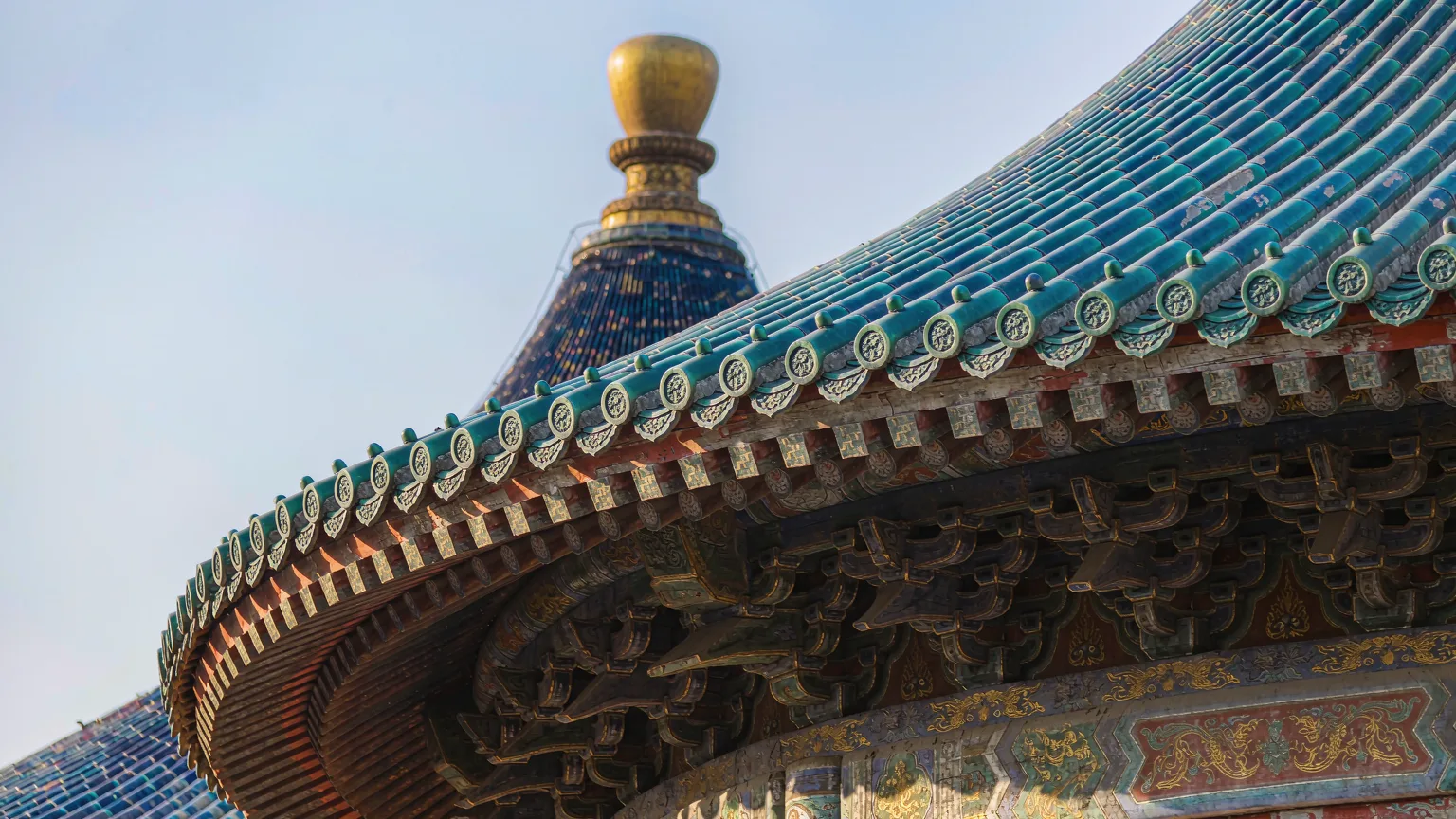
Built between 1406 and 1420 under the Yongle Emperor, the Temple of Heaven served as the sacred stage for imperial rituals for nearly five centuries. Each winter solstice, the emperor—styled the Son of Heaven—fasted and sacrificed here to secure favourable weather and bountiful crops. The complex is a masterpiece of Chinese cosmology: its circular halls and square bases represent heaven and earth, while the numbers four, nine and twelve echo the seasons, months and traditional hours. The Hall of Prayer for Good Harvests, rebuilt in 1890 after a lightning fire, stands 38 metres tall and is entirely wooden, held together by interlocking brackets without a single nail.
The temple was inscribed as a UNESCO World Heritage Site in 1998, recognised for its harmonious integration of architecture and landscape. Today the 273-hectare park is a living cultural space. Mornings belong to retirees who gather for tai chi, sword dancing, calligraphy and impromptu opera; the long corridor (Changlang) buzzes with card games and music. For visitors, the main axis runs from the Circular Mound Altar in the south to the Hall of Prayer for Good Harvests in the north, linked by the raised Sacred Way. Allow two to three hours to walk the full route, and consider pairing it with a nearby hutong lunch.
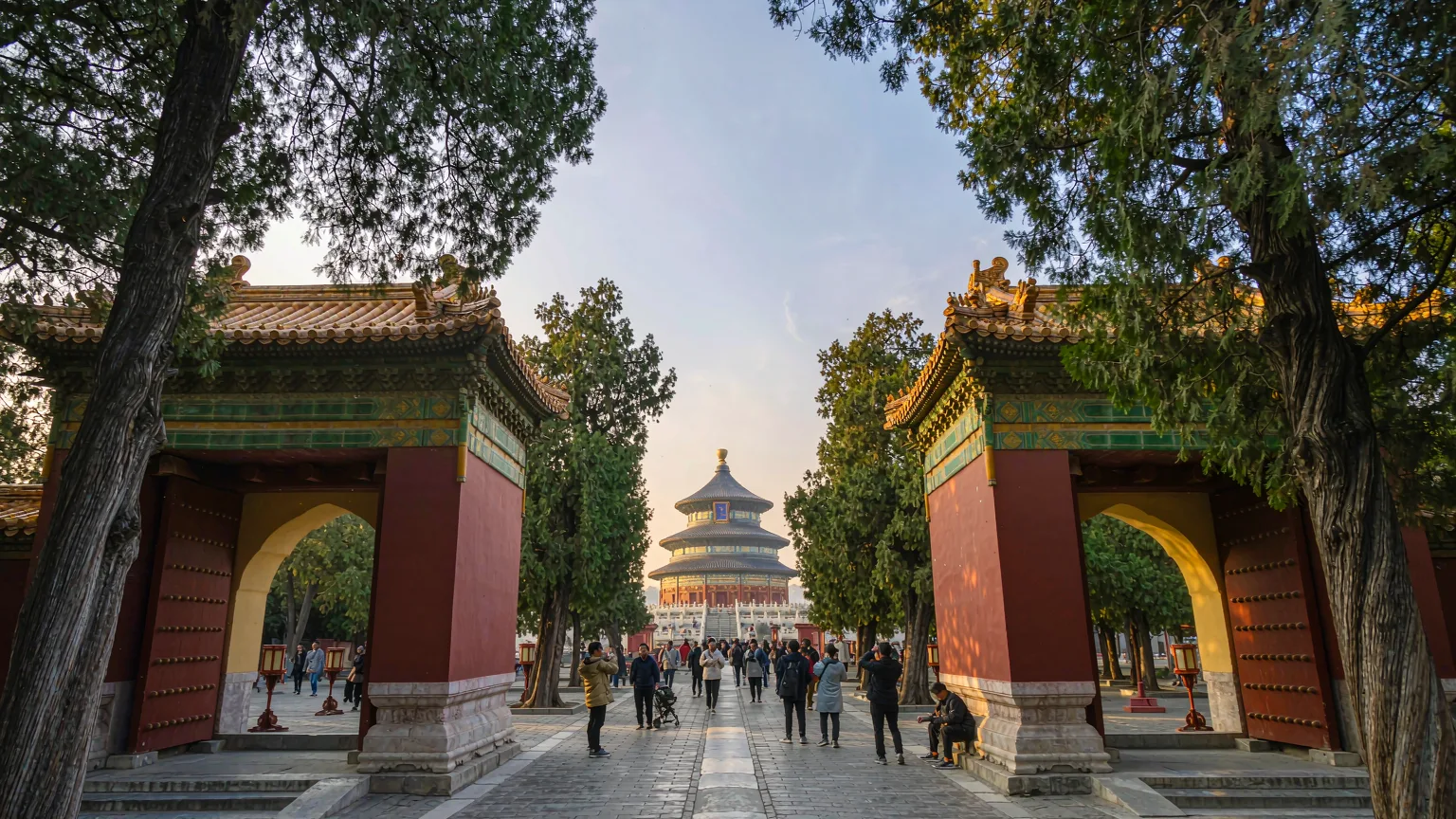
The Temple of Heaven is easily reached by subway: take Line 5 to Tiantandongmen (Exit A) for the east gate, or Line 8 to Tianqiaonan for the west gate. A taxi from central Beijing costs about ¥30–50 and takes 20–30 minutes depending on traffic. We often combine it with a morning visit to the Pearl Market or a hutong walk, then continue to the Summer Palace by car. Your guide will handle tickets and navigate the park's vast layout.
Through tickets cost ¥34 in peak season (Apr–Oct) and ¥28 in low season (Nov–Mar), covering all major halls; park-only entry is ¥15/¥10. Opening hours are 6:00–22:00 for the park, with halls open 8:00–17:30 (peak) or 8:00–17:00 (low). Book online via the official WeChat account at least a day ahead; foreign credit cards work on WeChat Pay and Alipay, but cash is accepted at ticket windows.
Visit in spring (April–May) or autumn (September–October) for mild weather and clear skies. Early morning (6:00–8:00) is ideal to watch locals exercise and avoid tour groups; late afternoon light on the Hall of Prayer is superb for photography. Avoid weekends and Chinese public holidays if you prefer tranquillity.
Yes, especially in peak season. Book online via the Temple of Heaven's official WeChat account up to 7 days ahead. Bring your passport, as it's required for entry.
Allow 2–3 hours to walk the main axis and explore the surrounding park. If you linger for morning activities, plan for half a day.
The main paths are paved and mostly flat, but some halls have steps. Wheelchairs can be borrowed at the gates with a deposit; our guides can assist with routing.
Ticket windows prefer cash or Chinese mobile payments. Foreign cards can be linked to WeChat Pay or Alipay, which are widely accepted; otherwise bring small notes.
Tell us your dates, group size and preferences — a dedicated consultant will reach out within 24 hours.