
Guest — sign in to save your enquiries.
My account
Shantang Street is Suzhou's seven-li water lane, a Tang-dynasty thoroughfare where whitewashed houses lean over a canal and stone bridges stitch the two banks together. It is the most atmospheric place to feel Jiangnan's water-town rhythm without leaving the city. With our private guide, you skip the guesswork and slip straight into its quiet corners, teahouses and evening lantern light.
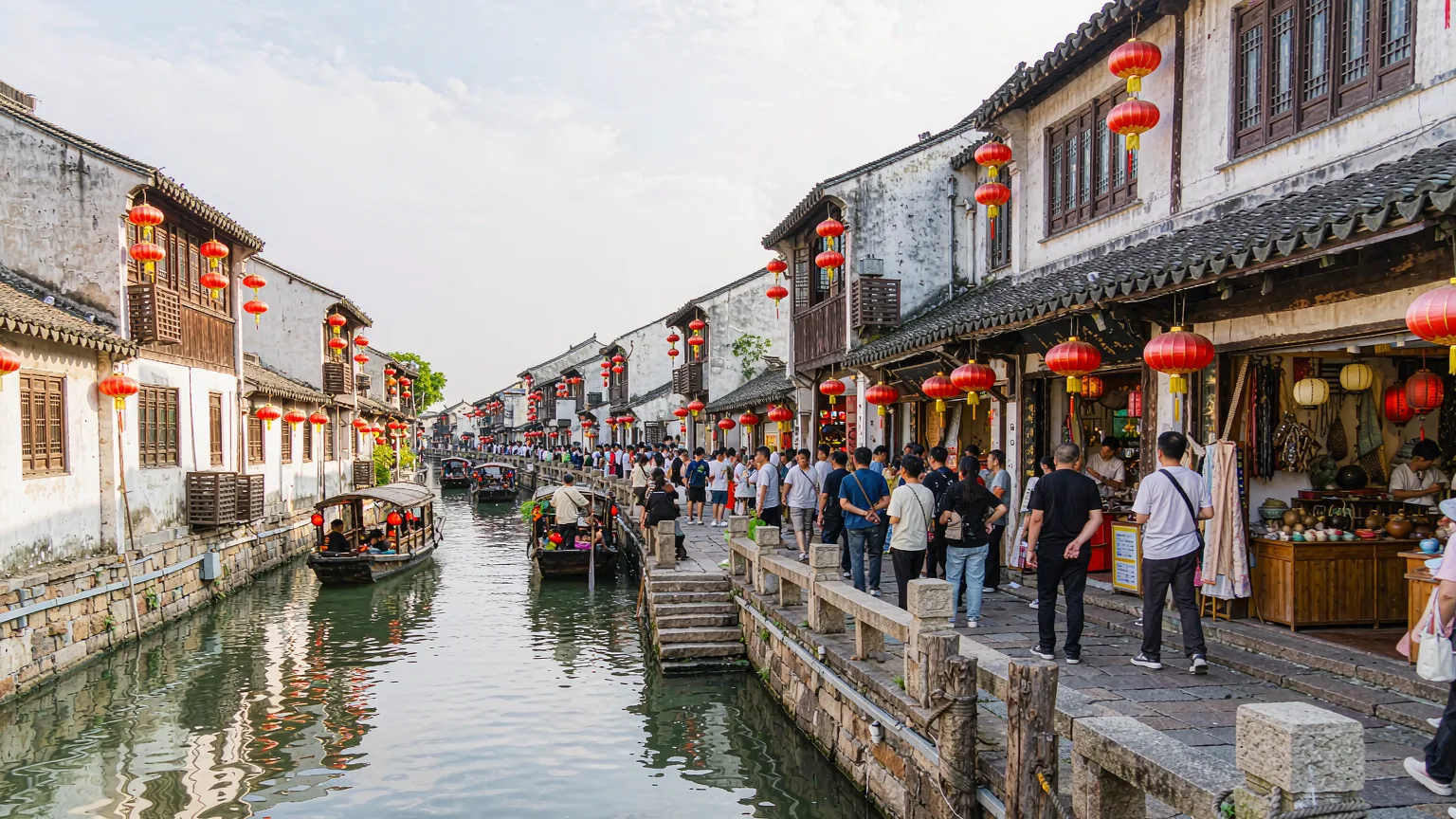
Shantang Street was built in 825 AD by the Tang poet-governor Bai Juyi, who dug the Shantang River and laid the road beside it to connect Suzhou's Changmen Gate with Huqiu (Tiger Hill). Its name means 'Seven-Li Shantang' — seven li being roughly 3.5 kilometres, the original length of the lane. For centuries it was the city's busiest commercial artery, lined with guild halls, pawnshops, temples and teahouses, and it remains one of the best-preserved stretches of Ming- and Qing-era riverside architecture in Suzhou.
Today the street is split in character: the eastern half near Changmen is polished, busy and full of snack stalls and souvenir shops, while the western stretch toward Huqiu stays residential and hushed, with laundry strung over the water and locals sipping tea on their doorsteps. This contrast is exactly why we like it. A slow walk here pairs naturally with a visit to the Suzhou Museum or the classical gardens, and it offers an easy, authentic counterpoint to the more staged water towns outside the city.
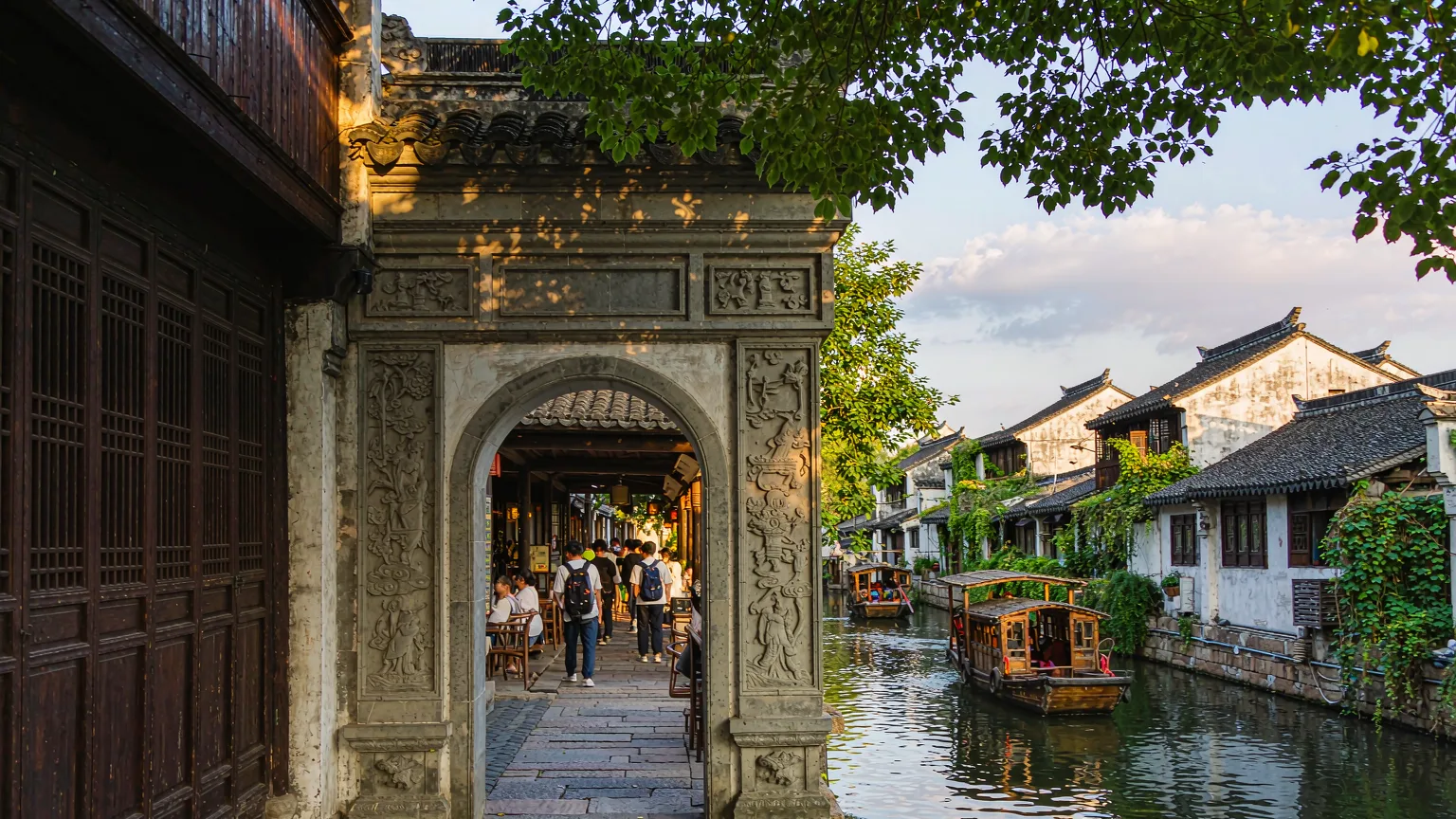
Shantang Street starts at Changmen Gate, a short taxi or DiDi ride from Suzhou's old town hotels and about 10 minutes on foot from Shantangjie Metro Station (Line 2, Exit 4). From Shanghai, high-speed trains reach Suzhou in 25–30 minutes; from Suzhou Railway Station, take Metro Line 2 or a 15-minute taxi. We usually slot it into a half-day loop with the Suzhou Museum and Humble Administrator's Garden, or as an evening stroll after dinner.
The street itself is free and open 24 hours, though shops and teahouses typically run from 9am to 9pm. Boat rides along the canal cost about ¥45–¥80 per person depending on route and duration; some small halls charge ¥10–¥20. Book boat tickets on the spot or via WeChat mini-programs, and carry your passport for any ticketed sites. WeChat Pay and Alipay linked to foreign cards work widely, but a little cash is handy for tiny stalls.
Visit between March and May or September and November for mild weather and clear light. Late afternoon into early evening is ideal: you catch the golden hour on the bridges, watch lanterns flicker on, and avoid the midday tour groups. Weekday mornings are quietest if you want the residential western stretch to yourself.
Yes, walking the street costs nothing and it's open all day. You only pay for optional extras like canal boat rides (¥45–¥80) or entry to small halls and museums.
Allow 1.5 to 2 hours for a leisurely walk, or half a day if you add a boat ride, a teahouse stop and the western stretch toward Huqiu.
Most shops and teahouses accept WeChat Pay and Alipay linked to international cards. Small stalls may prefer cash, so carry some ¥10 and ¥20 notes.
Absolutely. The lantern-lit canal is at its most romantic after dark, crowds thin out, and many teahouses stay open until around 9pm.
Tell us your dates, group size and preferences — a dedicated consultant will reach out within 24 hours.