
Guest — sign in to save your enquiries.
My account
Senado Square is the living heart of Macau's historic centre, a wave-patterned mosaic of Portuguese stone framed by pastel colonial buildings. It's where UNESCO World Heritage begins, and where our private guide turns a busy plaza into a story of Sino-Portuguese trade, faith and everyday life. With us, you skip the guesswork and see the layers.
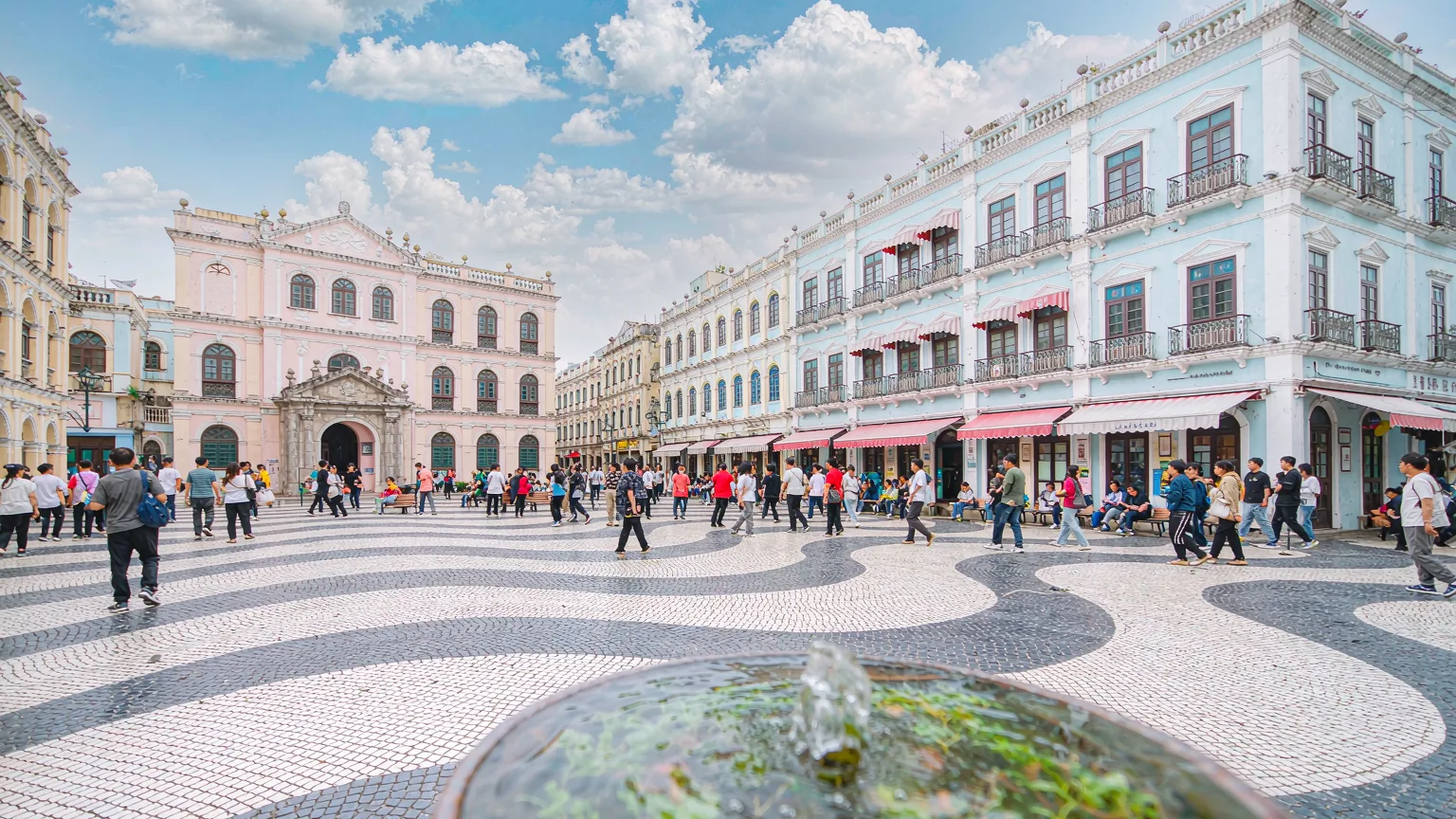
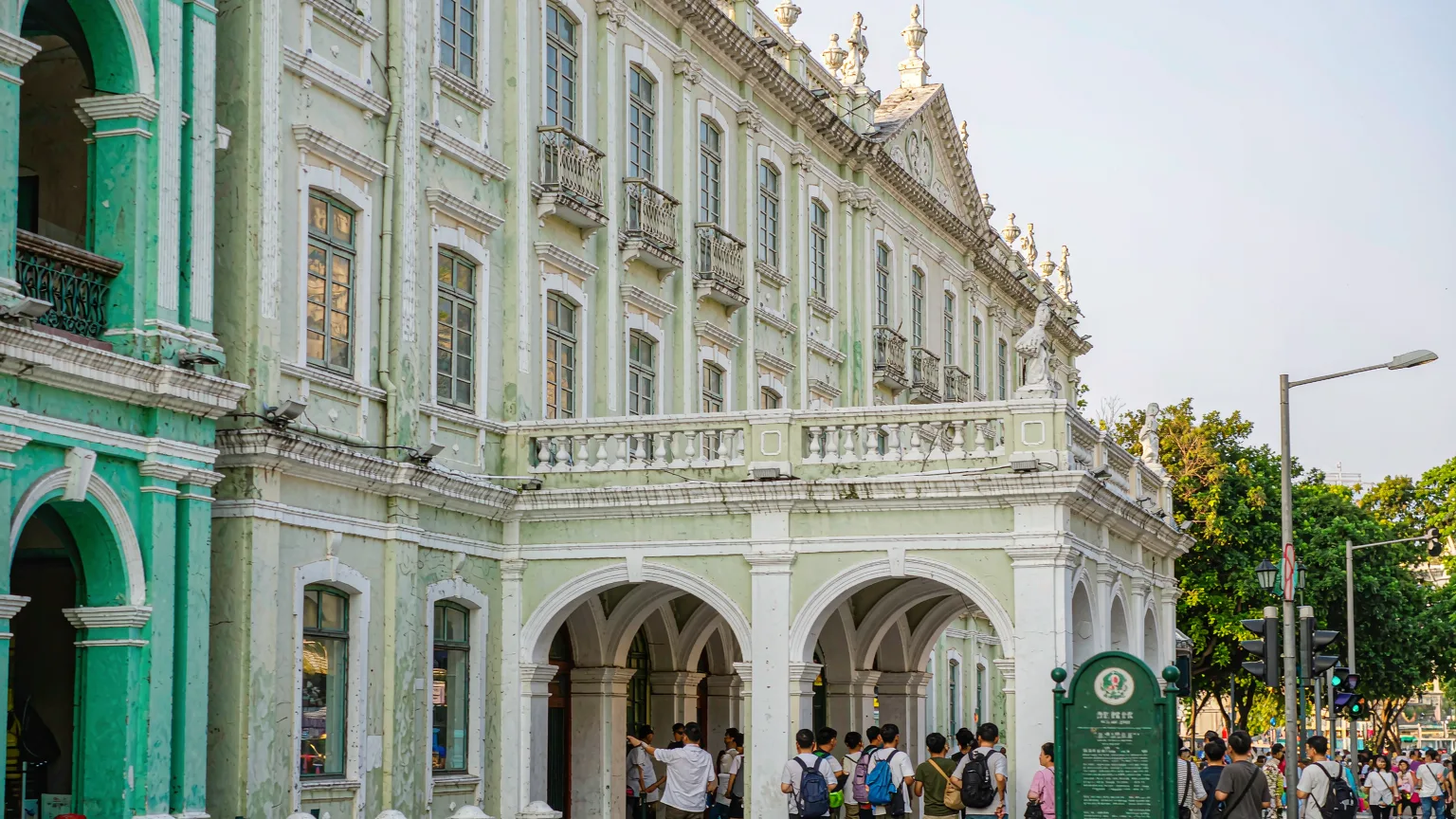
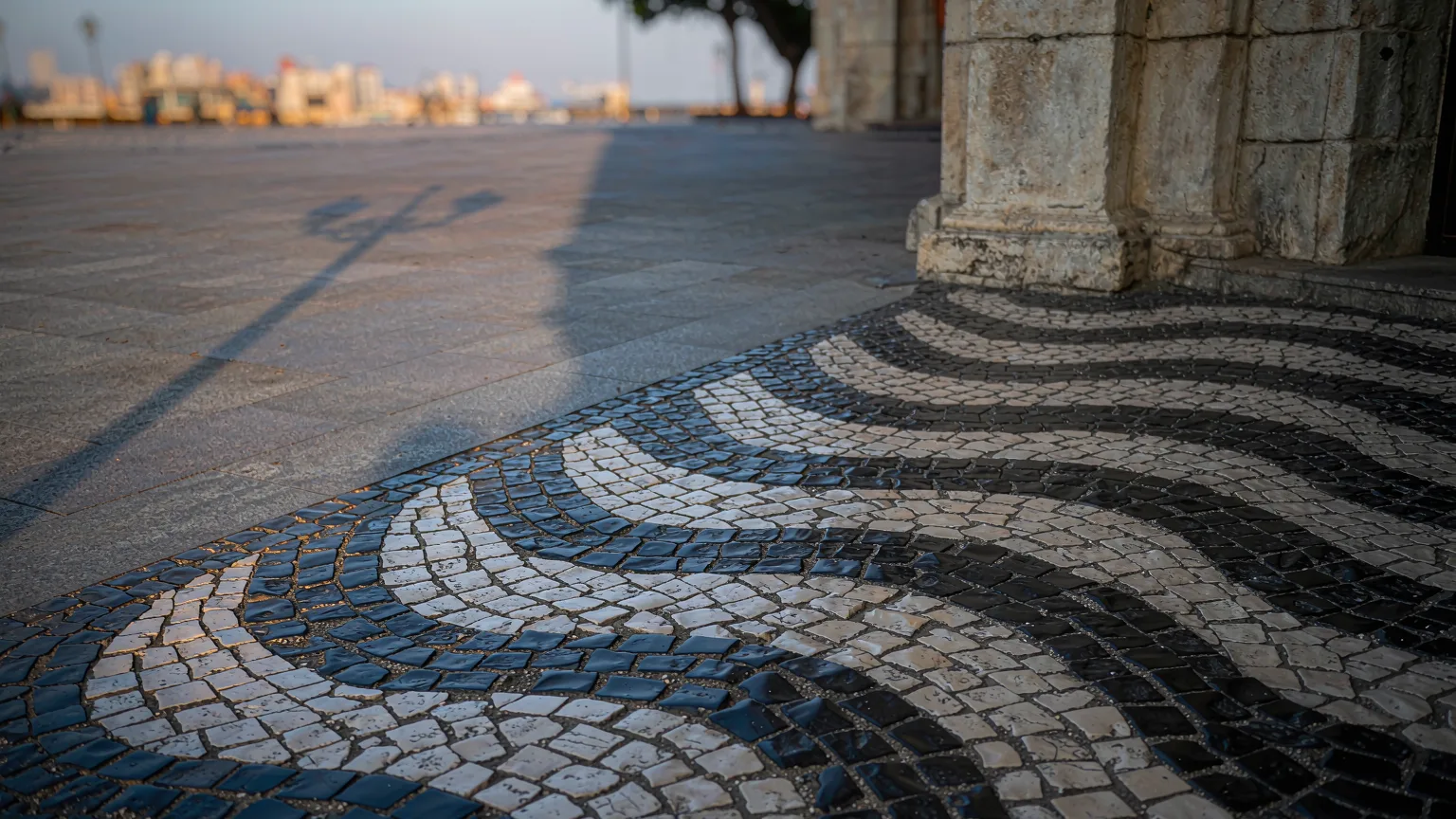
Senado Square, known locally as Largo do Senado, has been Macau's civic and social hub since the 16th century, when Portuguese traders settled this stretch of the Pearl River Delta. The square takes its name from the Leal Senado (Loyal Senate), the municipal chamber that still faces it. Its distinctive black-and-white calçada portuguesa waves were laid in the early 1990s, echoing the mosaic pavements of Lisbon and Rio de Janeiro. Around the plaza stand neoclassical and Mediterranean buildings painted in soft yellows, greens and pinks, including the Santa Casa da Misericórdia and the Holy House of Mercy, a charitable institution founded in 1569.
As the central node of the Macau Historic Centre, a UNESCO World Heritage Site since 2005, the square links key monuments such as the Ruins of St. Paul's, St. Dominic's Church and the A-Ma Temple. It remains a pedestrian zone where locals and visitors mingle, especially during Chinese New Year and Macau's annual Lusofonia Festival. The architecture reflects Macau's unique role as a meeting point of Chinese and Portuguese cultures, and the square is a natural starting point for exploring the wider historic district on foot.
Senado Square sits in Macau's peninsula, a 5-minute walk from the Ruins of St. Paul's and 10 minutes from the A-Ma Temple. From the Border Gate (Gongbei), take bus 3, 3X or 10 to 'Almeida Ribeiro' stop, then walk 2 minutes. From the Outer Harbour Ferry Terminal, buses 3 and 10 also stop nearby. Taxis from the Cotai Strip take 20–30 minutes. We usually slot it into a half-day walking tour of the historic centre, starting here before the crowds build.
Free and open 24 hours; individual buildings like the Holy House of Mercy museum charge ¥5–¥10 (about MOP 5–10) and typically open 10:00–17:00, closed Mondays. No advance booking is needed for the square itself, but for guided tours we recommend reserving at least a day ahead. Foreign cards are widely accepted in nearby shops, and WeChat Pay/Alipay are useful for small purchases; keep some cash for older stalls.
Visit early morning (before 9am) for soft light and near-empty pavements, or late afternoon when the buildings glow golden and the square fills with locals. Weekdays are calmer than weekends. Avoid midday heat in summer; autumn (October–December) offers the most comfortable temperatures and clear skies for photography.
Yes, the square is a public space open 24 hours and free to enter. Only some surrounding museums and churches charge a small fee, typically ¥5–¥10.
Take a taxi (20–30 minutes, about ¥80–¥100) or bus 3 or 10 from Cotai; the ride takes 30–40 minutes depending on traffic. Many hotels also offer free shuttles to the peninsula.
Weekday mornings before 9am are quietest. Avoid weekends and Chinese New Year, when the square is packed with visitors and performances.
Yes, major buildings have English information panels, and our private guides provide deeper context. Many staff in nearby shops speak basic English.
Tell us your dates, group size and preferences — a dedicated consultant will reach out within 24 hours.