
Guest — sign in to save your enquiries.
My account
Sanxingdui is the discovery that rewrote Chinese history — a 3,000-year-old Shu civilisation whose bronze trees, gold masks and giant eyes look like nothing else in the ancient world. Our private guide decodes the strangeness for you, turning a hall of riddles into a gripping story, and handles the 40-minute transfer from Chengdu so you simply arrive and wonder.
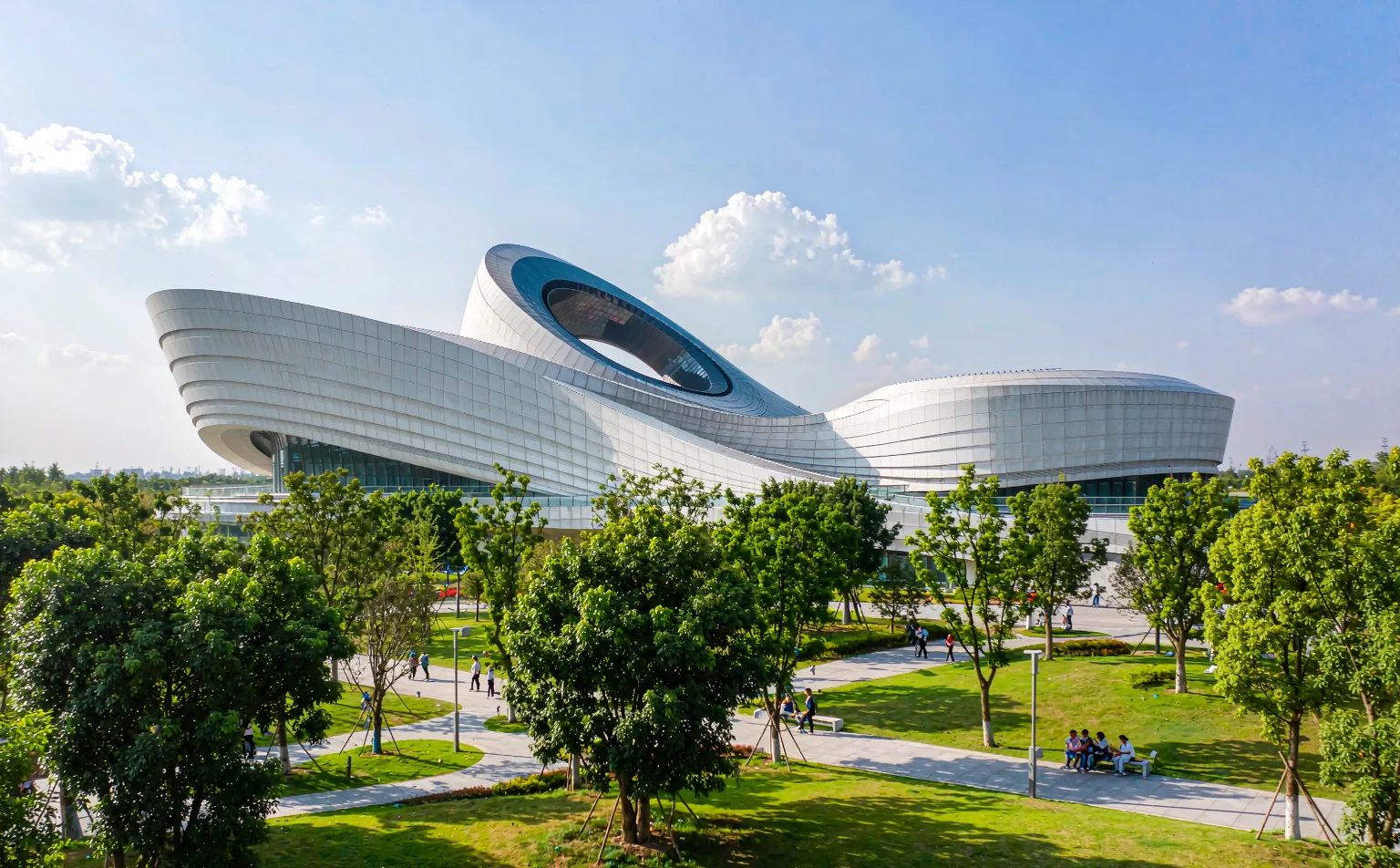
Sanxingdui was unknown until 1929, when a farmer digging an irrigation ditch struck a cache of jade. Serious excavation began in 1986, when two sacrificial pits yielded hundreds of bronze figures, gold wares and elephant tusks — objects unlike anything found in the Yellow River heartland. A further six pits opened after 2020 revealed even more, including a complete gold mask and fragments of a bronze tree. The finds forced archaeologists to accept that a sophisticated, independent Bronze Age culture flourished in the Sichuan Basin more than 3,000 years ago, contemporary with the Shang dynasty yet artistically its own world.
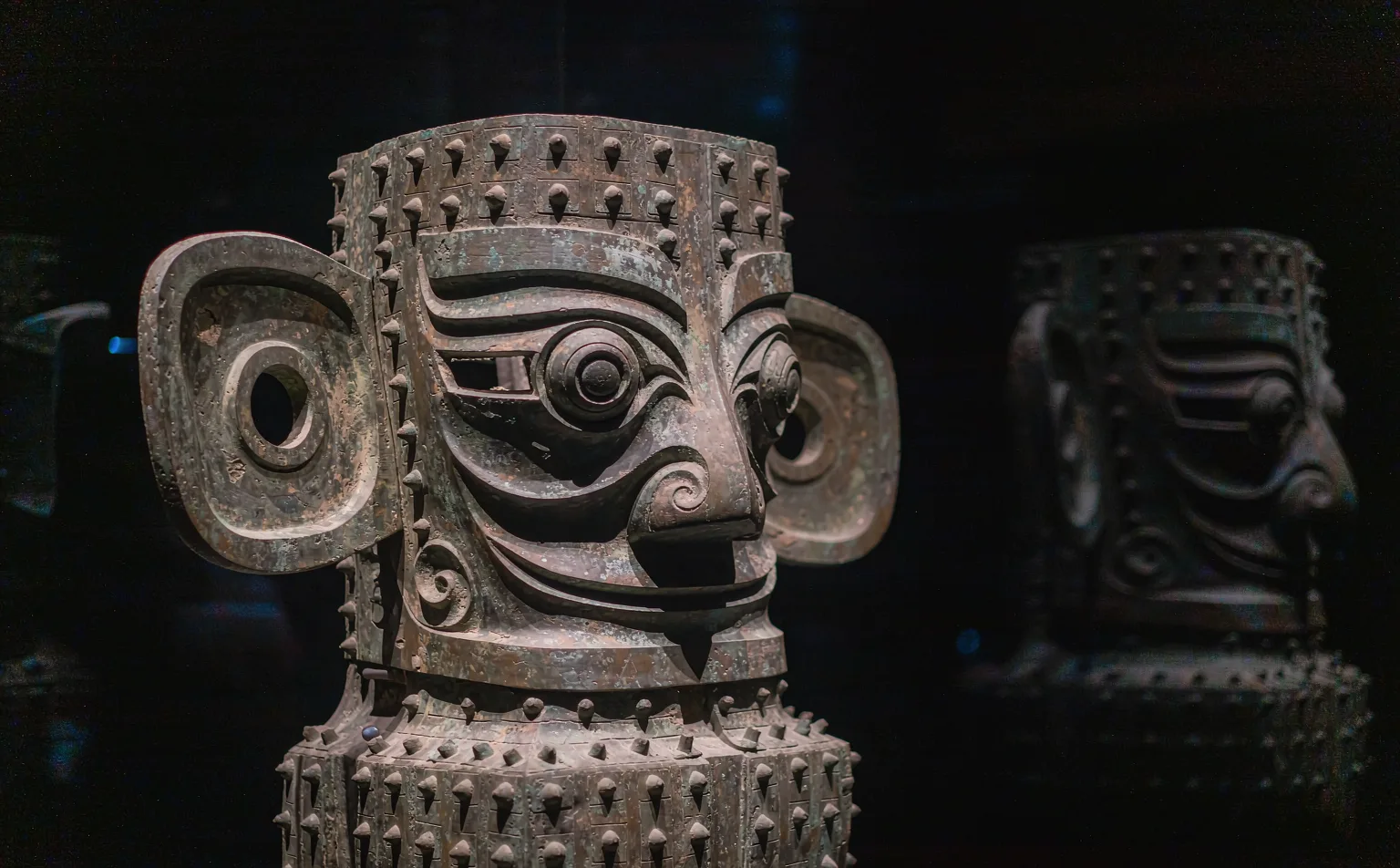
The site is identified with the ancient kingdom of Shu, mentioned in later Chinese texts as a rival power in the west. Its people cast bronze with a technical skill equal to Anyang, yet chose subjects — towering figures with protruding eyes, sun wheels, sacred trees — that suggest a distinct cosmology. Whether Sanxingdui was a capital, a ritual centre or a necropolis is still debated; no writing has been found. What is certain is that around 1000 BC the pits were deliberately filled and the city abandoned, leaving one of archaeology's great unsolved puzzles. The museum displays the finest pieces in a striking new building opened in 2023.
For visitors, the experience is part art gallery, part detective story. The sheer scale of the bronze standing figure (2.62 m) and the intricacy of the gold mask reward slow looking, and our guides are trained to point out the details — the painted eyebrows, the jade blades, the traces of silk — that most visitors miss. We also explain how the site fits with nearby Jinsha, the later Shu capital in Chengdu, so you leave with a coherent picture of a lost civilisation rather than a jumble of spectacular objects.
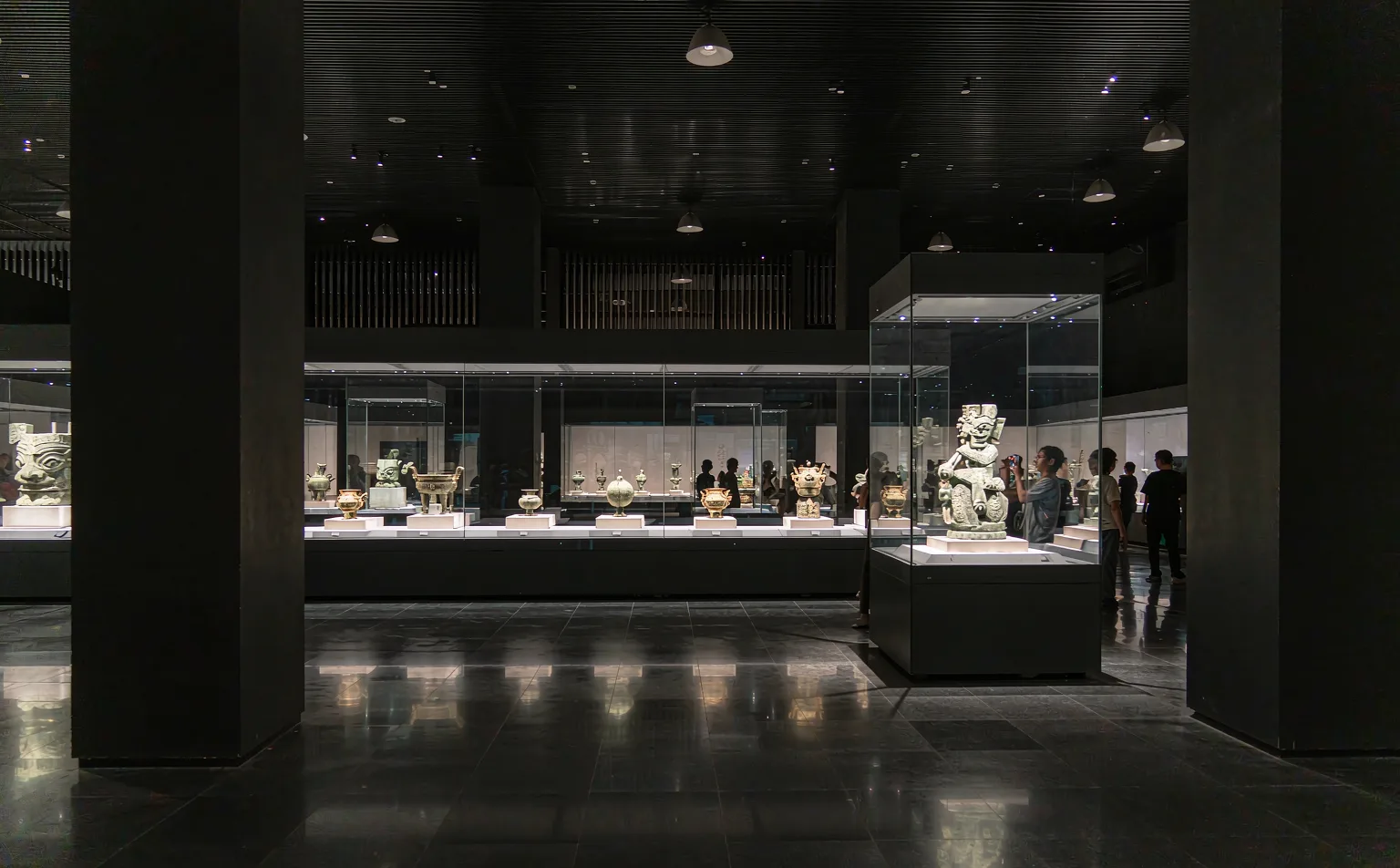
Sanxingdui lies in Guanghan, about 40 km north of Chengdu. The easiest way is a private car or taxi (¥150–200 each way, 50–70 minutes), which we arrange with a driver who waits. Alternatively, take the high-speed train from Chengdu East to Guanghan North (18 minutes, ¥18–25), then a 15-minute taxi (¥20). Many travellers combine it with a Chengdu city morning or an evening hotpot; we build the timing so you avoid the 10:00–14:00 tour-bus peak.
Admission is ¥72 for the main museum (includes both halls); the new building may require a separate timed-entry reservation, currently ¥60–80. Opening hours are 08:30–18:00 (last entry 17:00), daily; closed rarely, but check for maintenance. Book online in advance via the official WeChat account — tickets often sell out on weekends and holidays. Foreign cards are not accepted at the gate; use WeChat Pay or Alipay linked to an international card, or bring cash (¥) as backup.
Visit on a weekday morning, arriving at opening (08:30) to see the star pieces before tour groups. Spring (March–May) and autumn (September–November) offer mild weather and clearer skies. Avoid Chinese public holidays and the first week of October, when queues can exceed an hour. If you come in summer, start early; the museum is air-conditioned but the walk between halls is hot.
Absolutely. It's one of China's most astonishing archaeological sites, with bronzes unlike anything elsewhere. The 50-minute drive is easy, and a half-day visit fits neatly into a Chengdu itinerary.
Rarely. Tickets are timed and often sell out online, especially weekends. Book in advance via the official WeChat account or let us secure them for you.
Allow 2.5–3 hours for the main halls and the new building. With a guide, you'll cover the highlights in 2 hours without feeling rushed.
Yes, the new building is fully accessible with ramps and lifts. The older hall has some steps but staff can assist. Wheelchairs are available on loan at the entrance.
Tell us your dates, group size and preferences — a dedicated consultant will reach out within 24 hours.