
Guest — sign in to save your enquiries.
My account
The Ruins of St. Paul's is Macau's most recognisable landmark — the surviving stone facade of a 17th-century Jesuit church, rising above a broad flight of steps in the heart of the old city. It is a masterpiece of Baroque architecture with Chinese and Japanese motifs, and a UNESCO World Heritage site. With our private guide, you skip the guesswork and read every carving like a story.
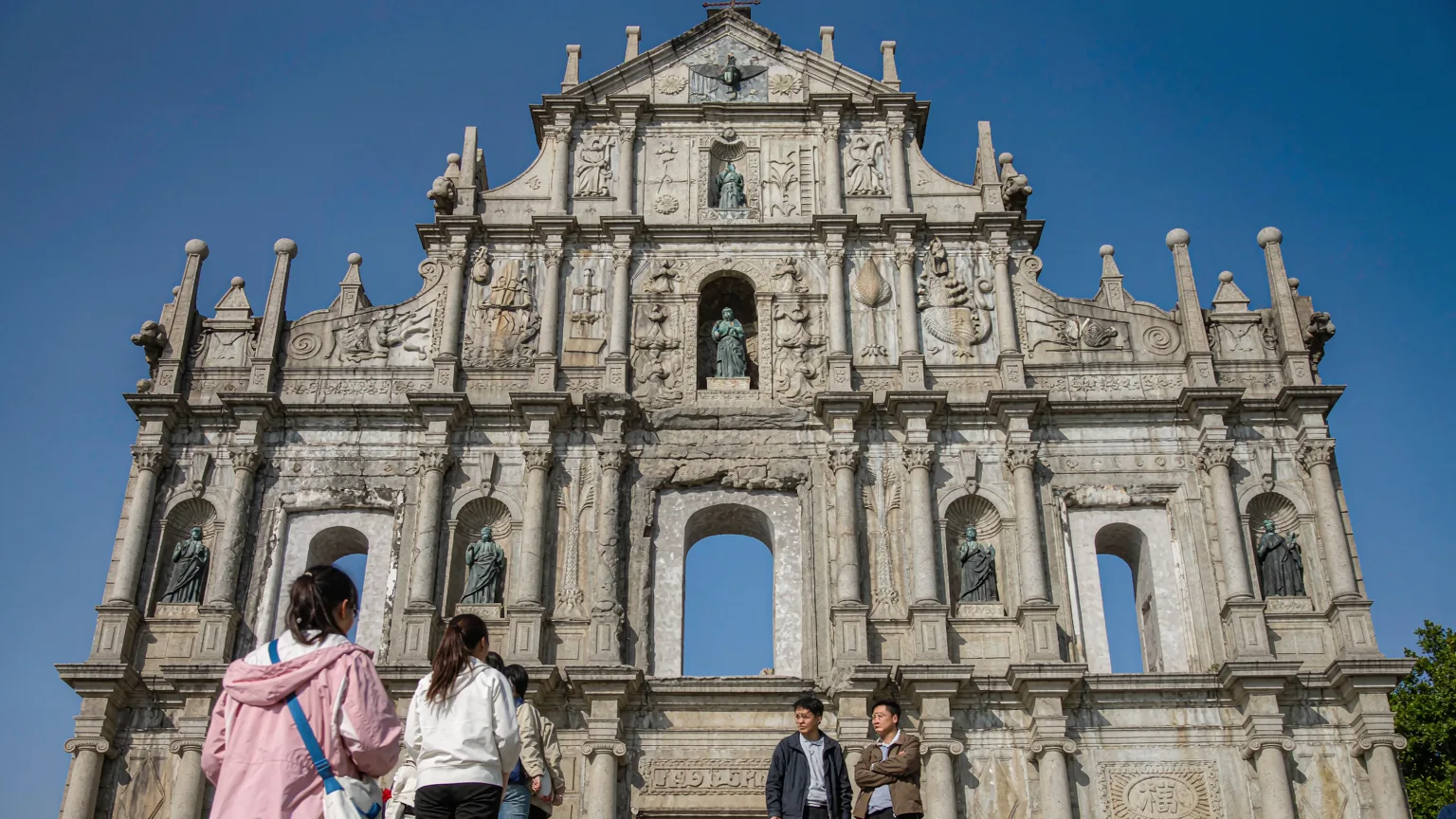
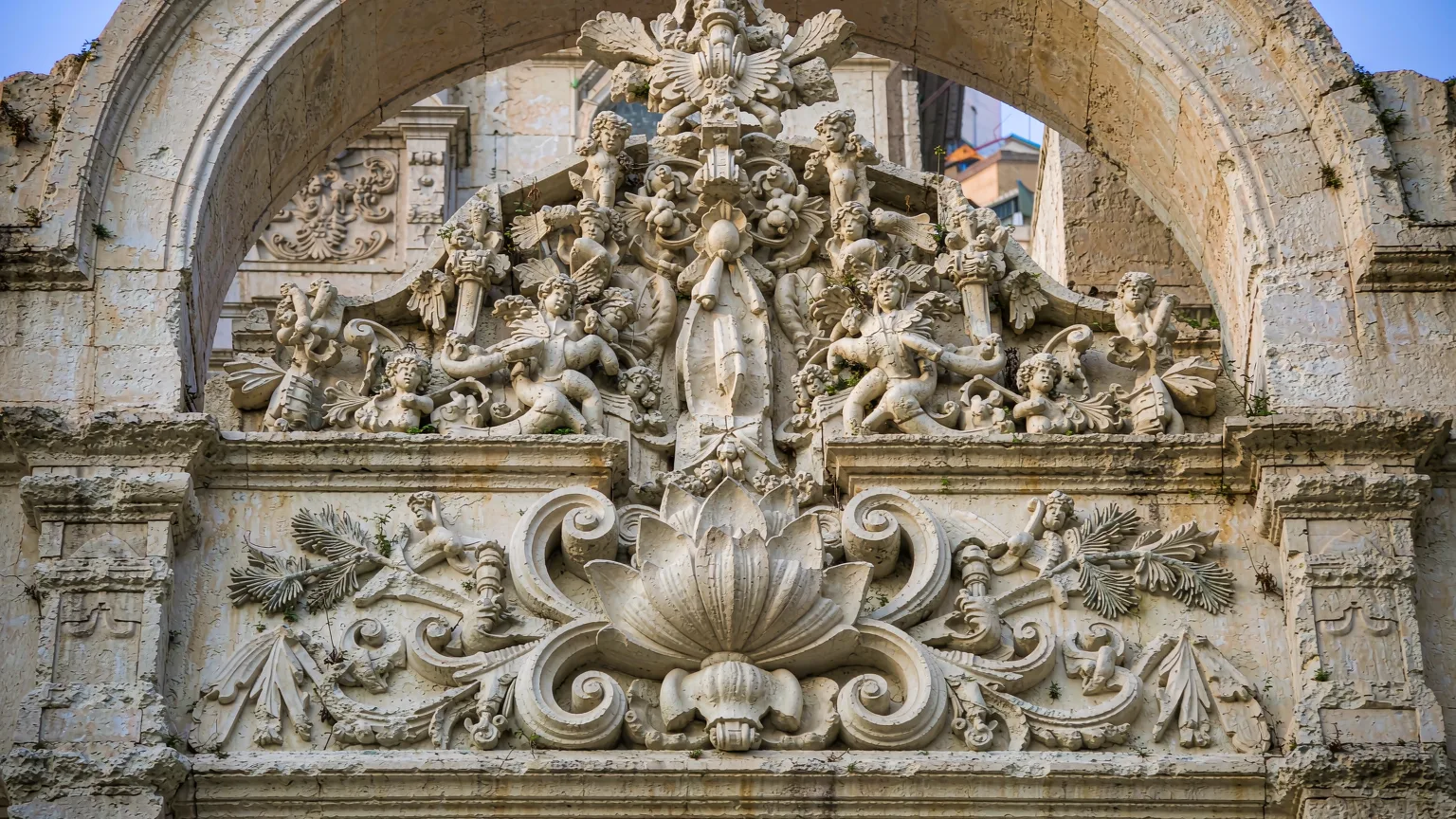
Built between 1602 and 1640 by Jesuit priests, the Church of St. Paul was once the largest Catholic church in Asia, attached to a college that trained missionaries for China and Japan. A fire in 1835 destroyed the church and college, leaving only the granite facade and the grand staircase. The facade is divided into five tiers, blending Baroque forms with Asian details: a lotus flower, a Chinese lion, and Japanese chrysanthemums sit alongside saints and angels. It remains the finest surviving example of Macau's Portuguese-Chinese architectural fusion.
Today the Ruins sit at the top of a pedestrianised square, with the Museum of Sacred Art and the crypt of the old church behind the facade. The site is part of the Historic Centre of Macau, inscribed by UNESCO in 2005. It is free to visit and open all day, though the small museum has its own hours. Expect crowds from mid-morning onward, especially on weekends and public holidays. Our guides know the quiet angles and the best times to photograph the facade without a hundred strangers in the frame.
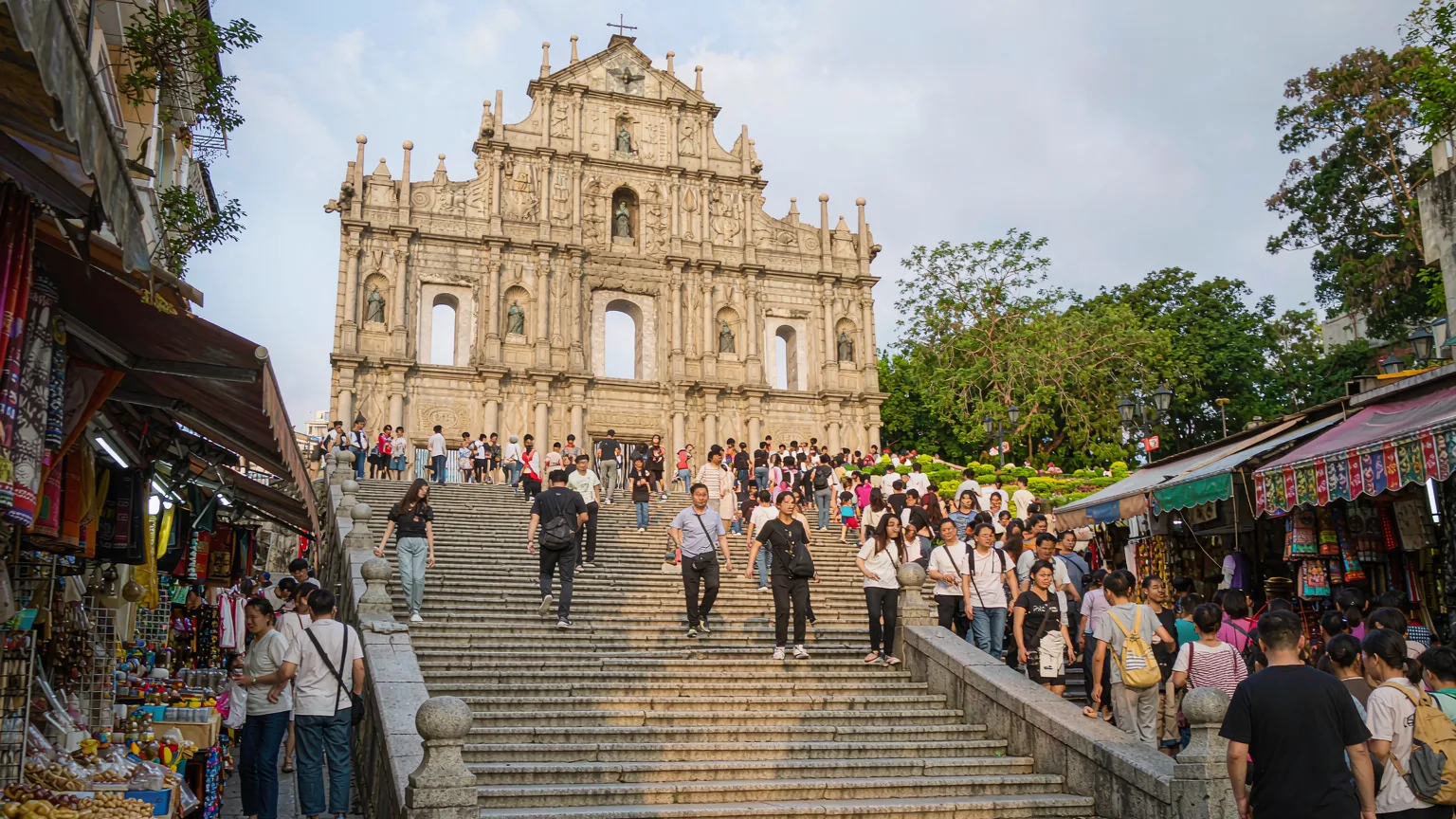
The Ruins are in Macau's historic centre, a 10-minute walk from Senado Square. From the Outer Harbour Ferry Terminal, take bus 3, 3X, or 10A to Avenida de Almeida Ribeiro, then walk. From the Border Gate, bus 3 or 3X. Taxis from the Cotai Strip take 20–30 minutes and cost around ¥80–100. We usually pair it with a walking tour of Senado Square, St. Dominic's Church, and Monte Fort, all within 15 minutes on foot.
The Ruins of St. Paul's is free and open 24 hours. The Museum of Sacred Art and crypt are open 9:00–18:00 (last entry 17:30), closed on Tuesdays. No booking is needed for the facade, but the museum may require a free timed ticket during peak periods. Bring cash in ¥ for nearby snacks; most shops accept WeChat Pay and Alipay, but foreign cards are not always linked — our guide can help you set up mobile payment.
Visit early in the morning, ideally before 9:00, to have the facade almost to yourself and catch soft light on the stone. Late afternoon also works, but the steps fill up quickly. Avoid weekends and Chinese public holidays if you can. October to December offers the most comfortable weather, with lower humidity and clear skies.
Yes, the facade and square are free and open 24 hours. The small museum and crypt behind it are also free but have limited hours, typically 9:00–18:00, closed Tuesdays.
Most visitors spend 30–45 minutes at the facade and museum. With a guide, allow an hour to appreciate the carvings and history, plus time for photos.
Early morning before 9:00 is quietest. Weekdays are better than weekends. The site is especially crowded during Chinese New Year and Golden Week holidays.
Many shops and cafes prefer cash or mobile payment like WeChat Pay and Alipay. Foreign cards are accepted at some larger stores, but it's wise to carry small amounts of cash in ¥.
Tell us your dates, group size and preferences — a dedicated consultant will reach out within 24 hours.