
Guest — sign in to save your enquiries.
My account
Just 29 kilometres south of Guiyang, Qingyan Ancient Town is one of Guizhou's four great historic towns — a Ming-dynasty military garrison turned labyrinth of stone lanes, ancestral halls and temple spires. Its grey slate walls and honey-coloured wooden shopfronts feel a world away from the provincial capital. With our private guide, you skip the guesswork and slip straight into its stories.
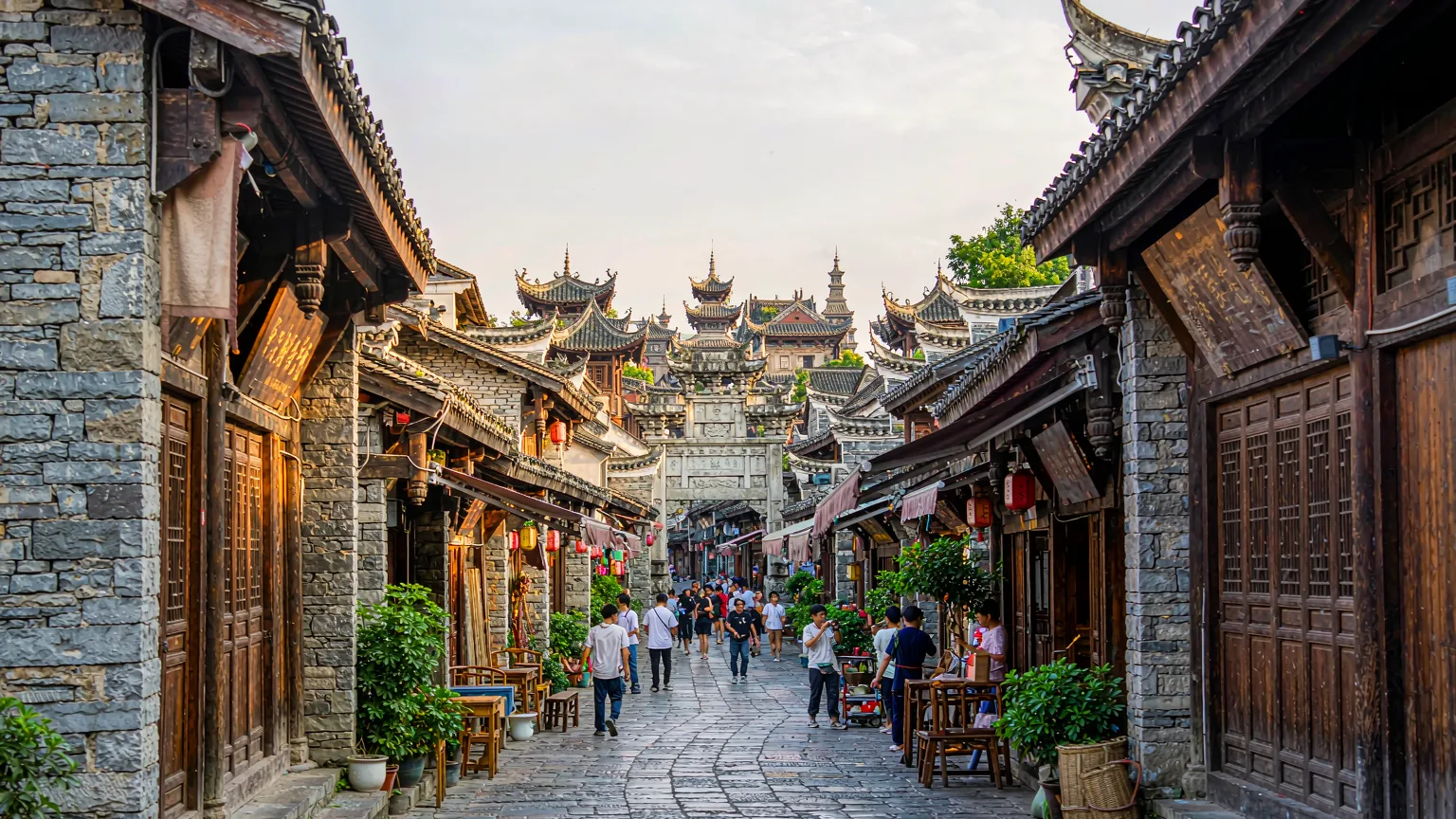
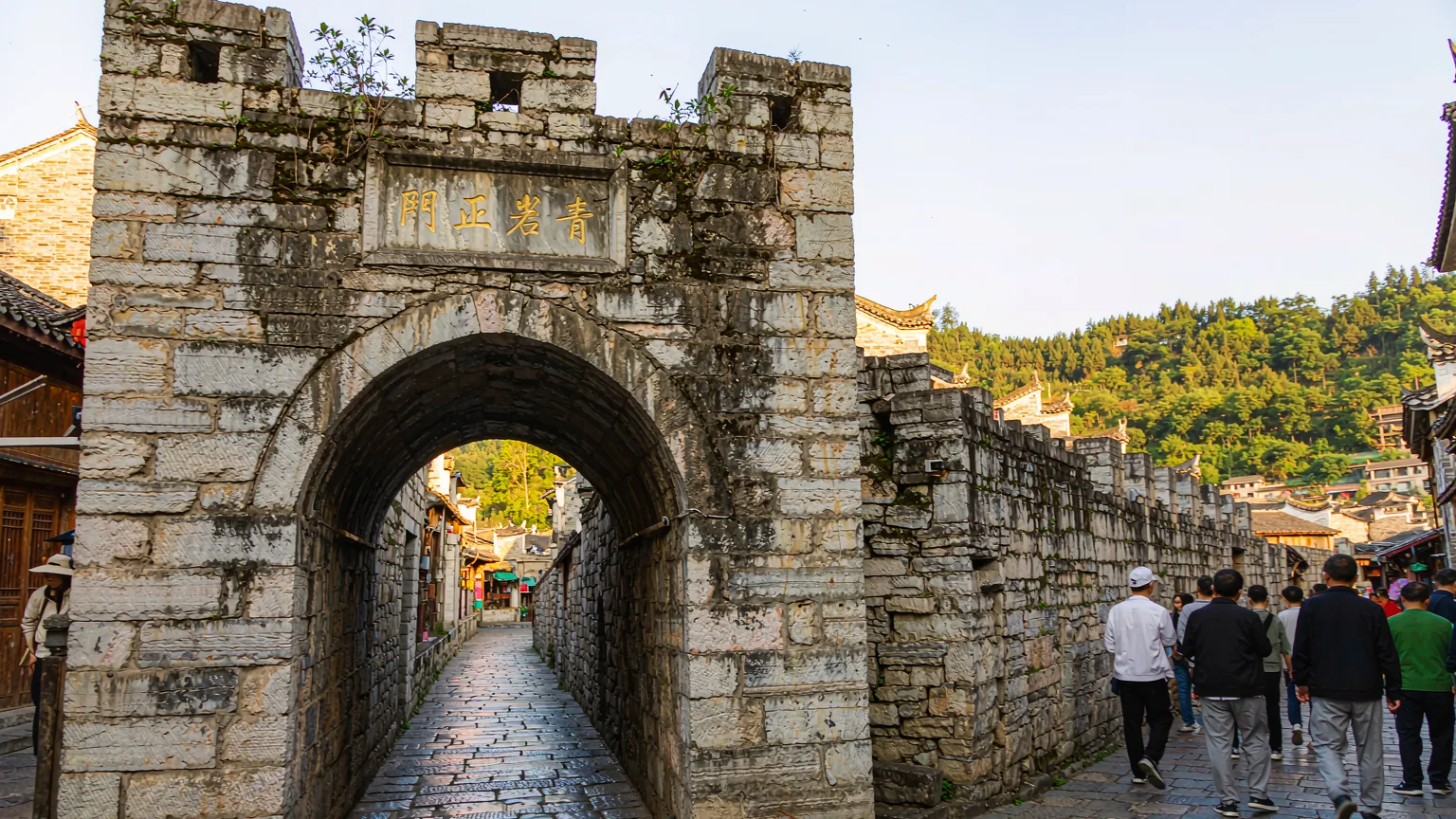
Founded in 1378 as a garrison town for Ming troops pacifying the southwest, Qingyan grew into a walled settlement where Han soldiers, Miao and Bouyei villagers, and later merchants and missionaries all left their mark. Its name — 'Black Rock' — comes from the dark limestone used to build everything from the four city gates to the flagstone streets. Within the 0.3-square-kilometre core, you'll find nine temples, eight ancestral halls, five pavilions and three caves, a density of historic architecture rare in rural China. The town's layout follows a cross of four main streets, each with its own character and gate.
Qingyan's most famous son is Zhao Yijiong, the first scholar from Guizhou to win the imperial examination's highest honour in 1886; his former residence is now a small museum. The town also played a role in the Long March, when Red Army units passed through in 1935. Today it's a living community of around 10,000 residents, many of whom run shops selling rose-flavoured pastries, rice tofu and hand-woven textiles. For a deeper look at the region's ethnic heritage, pair your visit with our guide to Guizhou's minority villages.
From central Guiyang, take a taxi or ride-hailing car (about 40–50 minutes, ¥80–120) or the frequent bus from Guiyang Railway Station (¥10, 1 hour). High-speed trains from Guangzhou, Chengdu and Kunming arrive at Guiyang North; from there, we arrange a private transfer. Most travellers visit as a half-day trip, pairing it with the nearby Huaxi Wetland Park or a Miao village. Our driver-guide handles the winding final approach and parking, so you start exploring the moment you arrive.
Entry to the town is free, but a combined ticket (¥80) covers the South Gate, city wall, Zhao Yijiong's Residence, Wanshou Palace and other key sights; individual sites cost ¥10–20 each. Opening hours are roughly 8:30–17:30, with streets accessible later. Book via WeChat mini-programs or at the gate; foreign cards are rarely accepted, so use WeChat Pay or Alipay linked to an international card, or carry cash.
Visit on a weekday morning, ideally between 8:30 and 10:00, when the town is quiet and the light soft. Spring (March–May) and autumn (September–November) offer mild weather and fewer crowds; summer weekends are hot and packed. Avoid Chinese public holidays, when the lanes become a slow-moving river of visitors.
Yes — it's the most accessible historic town from Guiyang, with well-preserved Ming architecture and a lively local culture. A half-day trip fits easily into any Guizhou itinerary.
Three to four hours is enough to walk the main streets and key sights. Add an hour if you want to climb the wall, visit museums and linger over snacks.
Most vendors only accept WeChat Pay, Alipay or cash. Link your international card to Alipay or WeChat before your trip, and carry small notes for stalls.
Don't miss rose-flavoured pastries, rice tofu (mǐdòufu), sweet rice wine and braised pig trotters. Our guide can recommend clean, reliable stalls.
Tell us your dates, group size and preferences — a dedicated consultant will reach out within 24 hours.