
Guest — sign in to save your enquiries.
My account
Pingjiang Road is Suzhou's best-preserved ancient street, an 800-year-old lane that follows the Pingjiang Canal through the heart of the old city. Whitewashed houses, stone bridges and weeping willows create the classic Jiangnan water-town scene, yet it remains a living neighbourhood. With our private guide, you skip the guesswork and slip straight into its quiet corners, teahouses and hidden gardens.
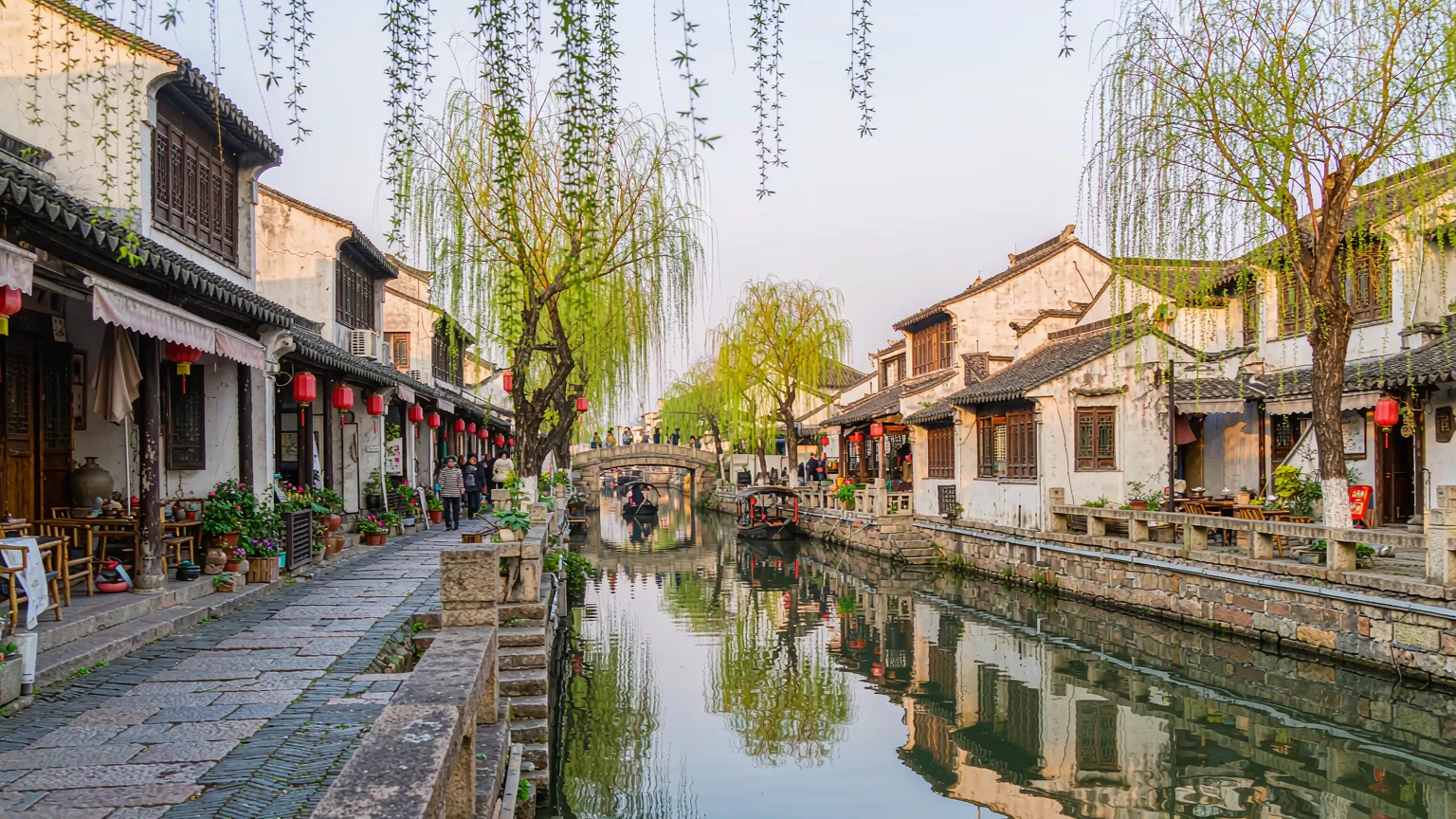
Pingjiang Road (平江路) traces its layout to the Song Dynasty, when Suzhou's grid of canals and lanes was already established. The street runs parallel to the Pingjiang River, a section of the ancient Grand Canal network, and its name comes from the old prefecture of Pingjiang. For centuries it was a residential quarter of scholars, merchants and officials, and the surviving architecture — whitewashed walls, grey tiles, carved wooden windows — reflects that prosperous, water-bound life. In 2009 the street was restored as a historic district, but unlike many rebuilt 'old streets', much of the fabric here is original.
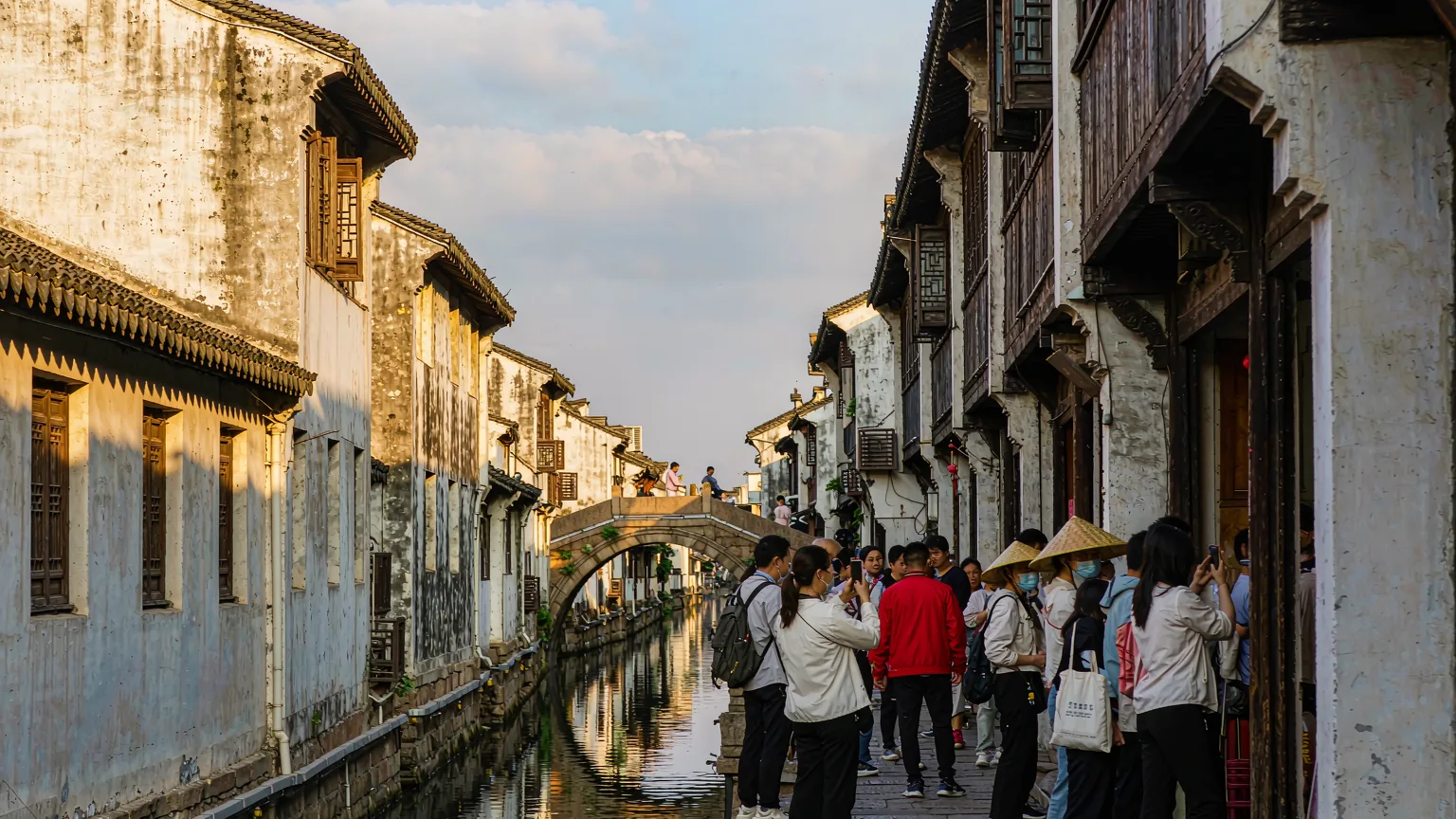
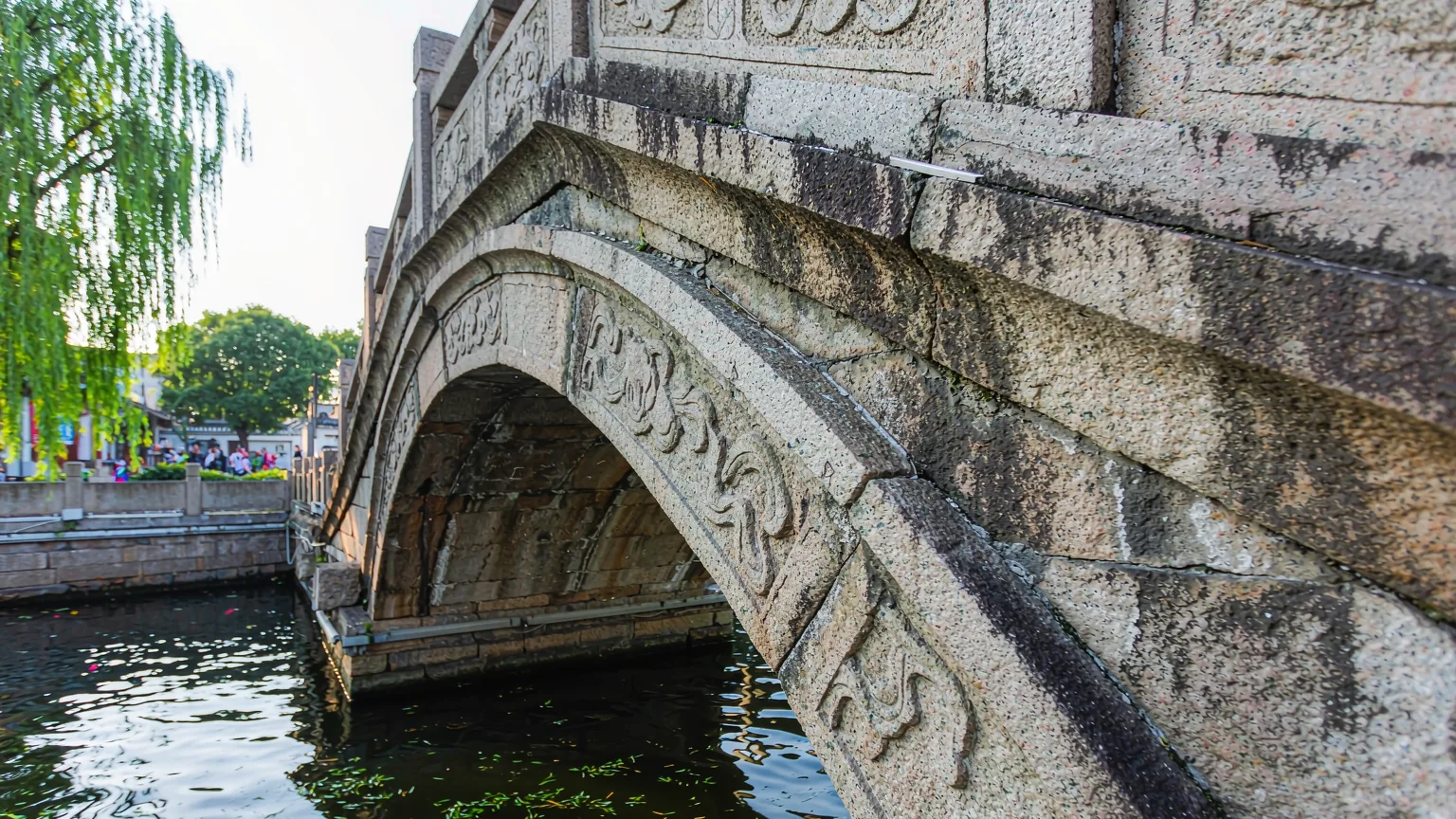
The street stretches about 1.6 kilometres from the Humble Administrator's Garden area in the north to the Ganjiang Road in the south. Along the way you pass stone bridges, narrow side alleys (known as 'lane and well' in local dialect), and small museums such as the Kunqu Opera Museum and the Pingtan Museum. It is also a lived-in community: residents still hang laundry, cycle home and chat on doorsteps. This blend of heritage and everyday life is what makes Pingjiang Road feel authentic rather than staged, and it pairs naturally with a visit to the nearby Humble Administrator's Garden.
Pingjiang Road is in the old city, about 10 minutes' walk from the Humble Administrator's Garden and a 15-minute walk from the Suzhou Museum. The nearest metro station is Lindun Road (Line 1), exit 3, then a 5-minute walk east. Taxis and ride-hailing are easy, but traffic in the old city can be slow. From Shanghai, high-speed trains reach Suzhou in 25–30 minutes; we usually arrange a private transfer from Suzhou Station or Suzhou North. It slots perfectly into a half-day with the gardens.
The street itself is free and open 24 hours. Individual attractions along it, such as the Kunqu Opera Museum, charge ¥10–¥30. Boat rides on the canal cost around ¥100–¥150 per boat (up to 6 people). No advance booking is needed for the street, but for boat rides it's best to book through your guide, especially on weekends. Vendors accept WeChat Pay and Alipay, which can be linked to foreign cards; some smaller shops still prefer cash, so carry a few ¥10 notes.
Visit early morning (7–9am) to see the street at its most peaceful, with locals exercising and mist rising off the canal. Late afternoon (4–6pm) offers warm light for photography and a lively atmosphere. Avoid weekends and Chinese public holidays if you can. Spring (March–May) and autumn (September–November) are ideal, with mild temperatures and blooming or golden foliage.
Yes, the street is free and open all day. Some small museums and boat rides charge a fee, typically ¥10–¥150. Your guide can help with tickets if needed.
Most visitors spend 1.5–2 hours strolling, plus extra time for a teahouse or museum. We recommend a half-day to combine it with the Humble Administrator's Garden.
Major attractions have English signage, but many small shops and teahouses do not. Our guides translate and help you order, making the experience smoother.
Yes, small wooden boats operate along the Pingjiang Canal. Rides last about 20–30 minutes and cost around ¥100–¥150 per boat. Book through your guide to avoid queues.
Tell us your dates, group size and preferences — a dedicated consultant will reach out within 24 hours.