
Guest — sign in to save your enquiries.
My account
Nanshan Cultural Tourism Zone is a vast Buddhist-themed park on Hainan's south coast, home to the 108-metre Guanyin statue rising from the sea. It blends Tang-dynasty architecture, tropical gardens and ocean views into a serene half-day escape from Sanya's beaches. With our private guide, you skip the ticket queues, learn the stories behind each hall, and move at your own pace.
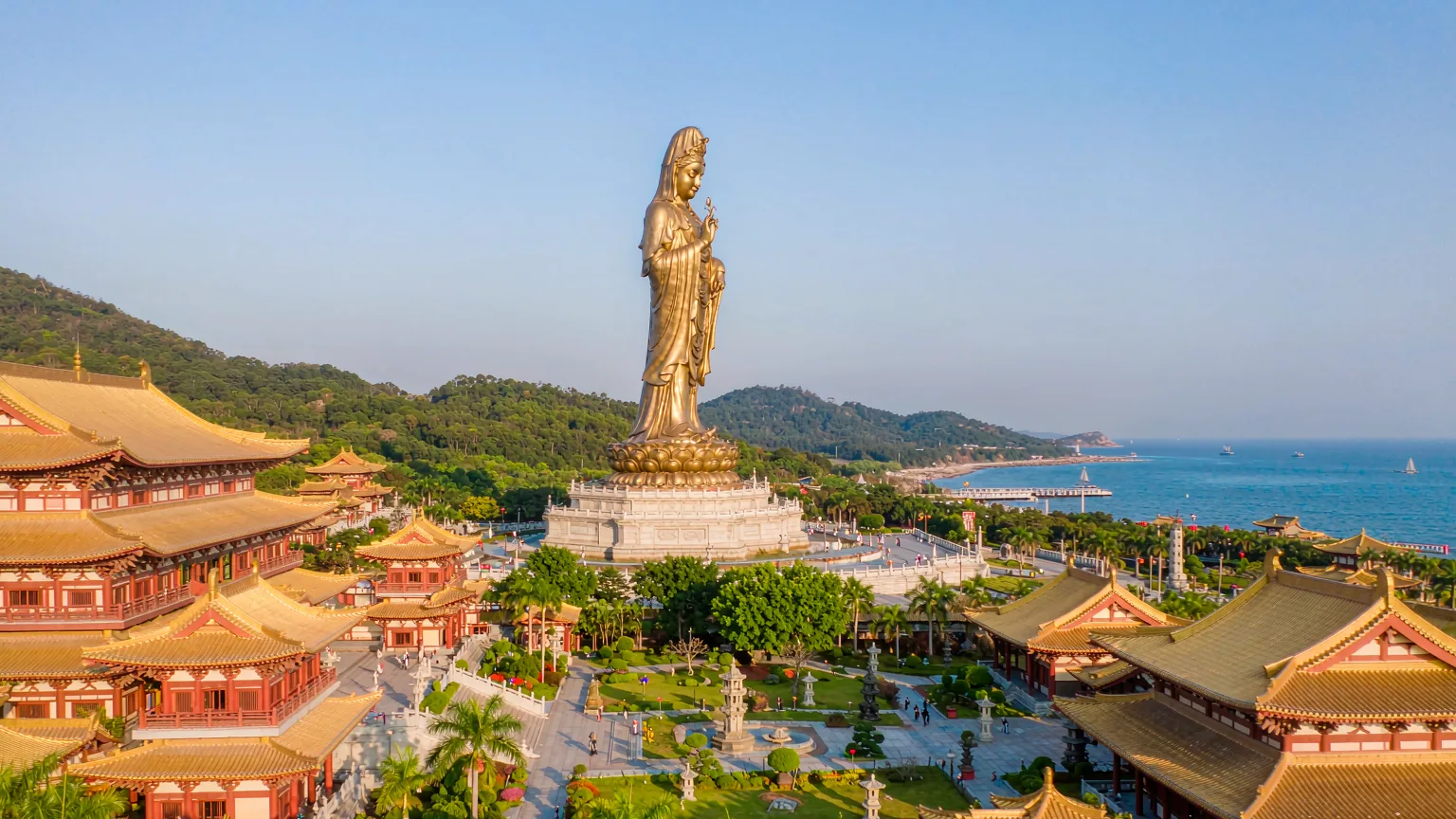
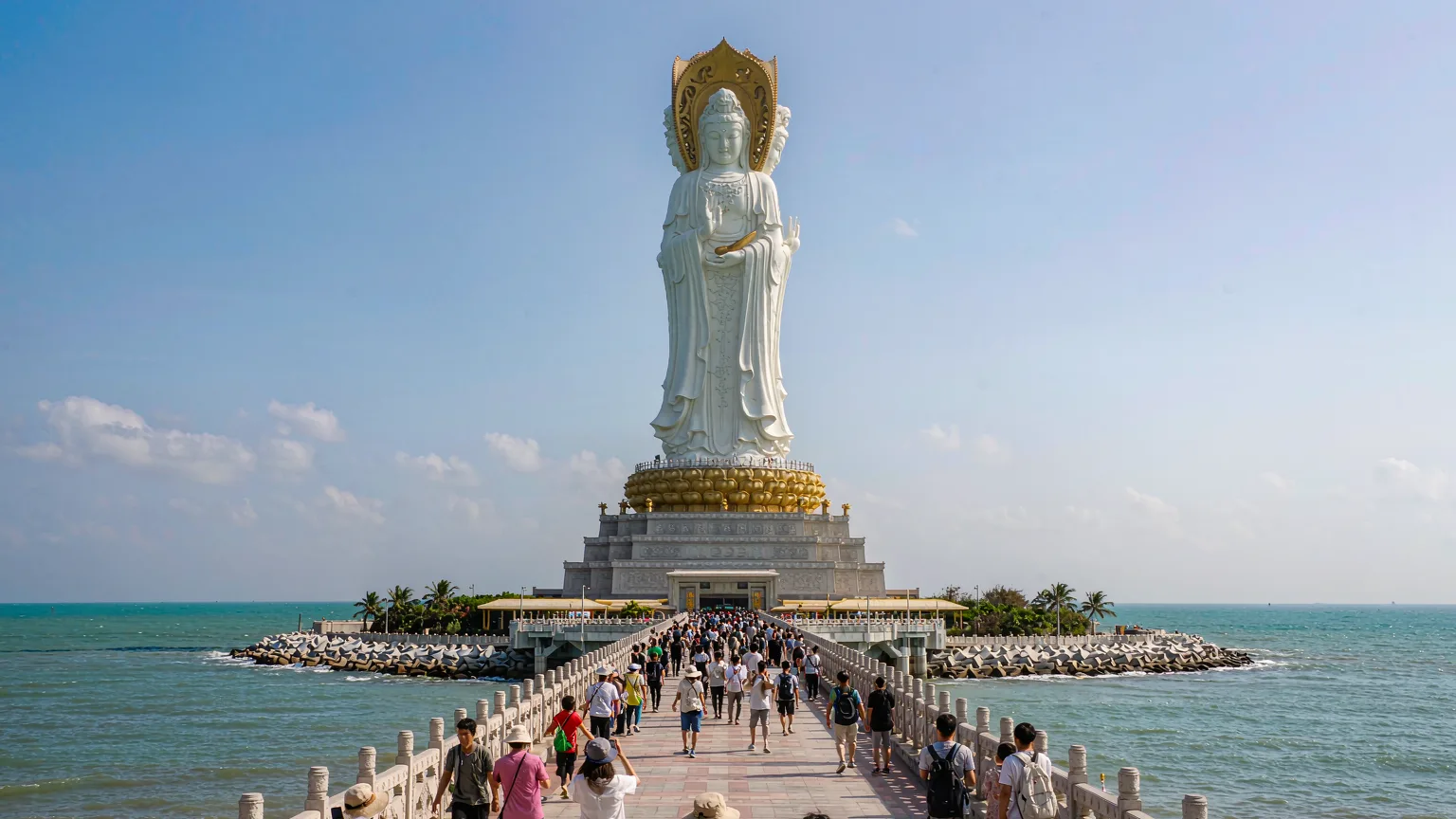
Opened in 1998, Nanshan is dedicated to Guanyin, the Bodhisattva of Compassion, and is one of China's largest Buddhist cultural parks. The centrepiece is the 108-metre Nanshan Guanyin, a three-faced statue completed in 2005 and set on an artificial island connected by a bridge. The number 108 holds sacred meaning in Buddhism, and the statue's faces look toward mainland China, Taiwan and the South China Sea. The site also includes temples, a Buddhist academy and landscaped gardens that reflect Tang-dynasty aesthetics.
Beyond the statue, the zone spreads over 50 square kilometres, though visitors typically explore the core area on foot or by shuttle. Highlights include the Temple of the Three Noble Ones, the Nanshan Temple with its giant bell, and the Longevity Valley. The park is a national 5A-rated attraction, meaning high standards of facilities and signage. It's a popular stop for both pilgrims and tourists, so expect crowds during holidays. Our guides know the quiet corners and the best photo angles away from the masses.
Nanshan is about 40 km west of Sanya city centre, a 50-minute drive. Taxis or ride-hailing (DiDi) cost roughly ¥100–150 one way. Public buses (e.g., Route 16, 25, 29) run from Sanya Railway Station and Yalong Bay, taking 1–1.5 hours. Many travellers combine it with a morning visit to nearby Tianya Haijiao. Our private transfer lets you arrive before the tour buses and leave when you're ready.
Admission: ¥129 (peak season) or ¥108 (off-peak), with discounts for students and seniors. Opening hours: 8:00–17:30. Book via official WeChat mini-program or Trip.com; foreign cards are accepted on Trip.com, but for on-site payments, link a card to WeChat Pay or Alipay in advance.
Optional shuttle within the park: ¥15 for unlimited rides. The electric cart saves 30–40 minutes of walking, especially in the heat. Tickets are valid for one day only; keep your passport for verification at entry.
Visit between November and March, when Sanya's weather is dry and comfortable (20–28°C). Avoid Chinese public holidays like Golden Week (early October) and Spring Festival. Early morning (8:00–10:00) offers cooler temperatures, fewer crowds, and softer light for photographing the statue. Late afternoon also works, but check the last entry time.
Most visitors spend 3–4 hours exploring the core area, including the statue, temple and gardens. With a guide, you can cover the highlights in 2.5 hours, or linger longer for a deeper experience.
Yes, but be prepared for walking. The shuttle cart helps, and there are plenty of rest spots. The bridge to the statue is flat and wheelchair-accessible, though crowded at times.
Absolutely. Signage is in English, and audio guides are available. However, a guide adds context to the Buddhist symbolism and helps navigate crowds and logistics efficiently.
WeChat Pay and Alipay are widely used, but they require a Chinese bank account or a linked international card. Cash is accepted at ticket counters, and Trip.com accepts foreign cards for online bookings.
Tell us your dates, group size and preferences — a dedicated consultant will reach out within 24 hours.