
Guest — sign in to save your enquiries.
My account
Rising abruptly from the desert outside Dunhuang, the Mingsha sand dunes cradle Crescent Lake, a spring-fed oasis that has survived for millennia without drying up. It is one of the Silk Road's most surreal sights: golden ridges against a perfect blue sky, with a sliver of water and a pagoda below. Our private guides handle tickets, camel rides and timing so you can simply climb, watch and wonder.
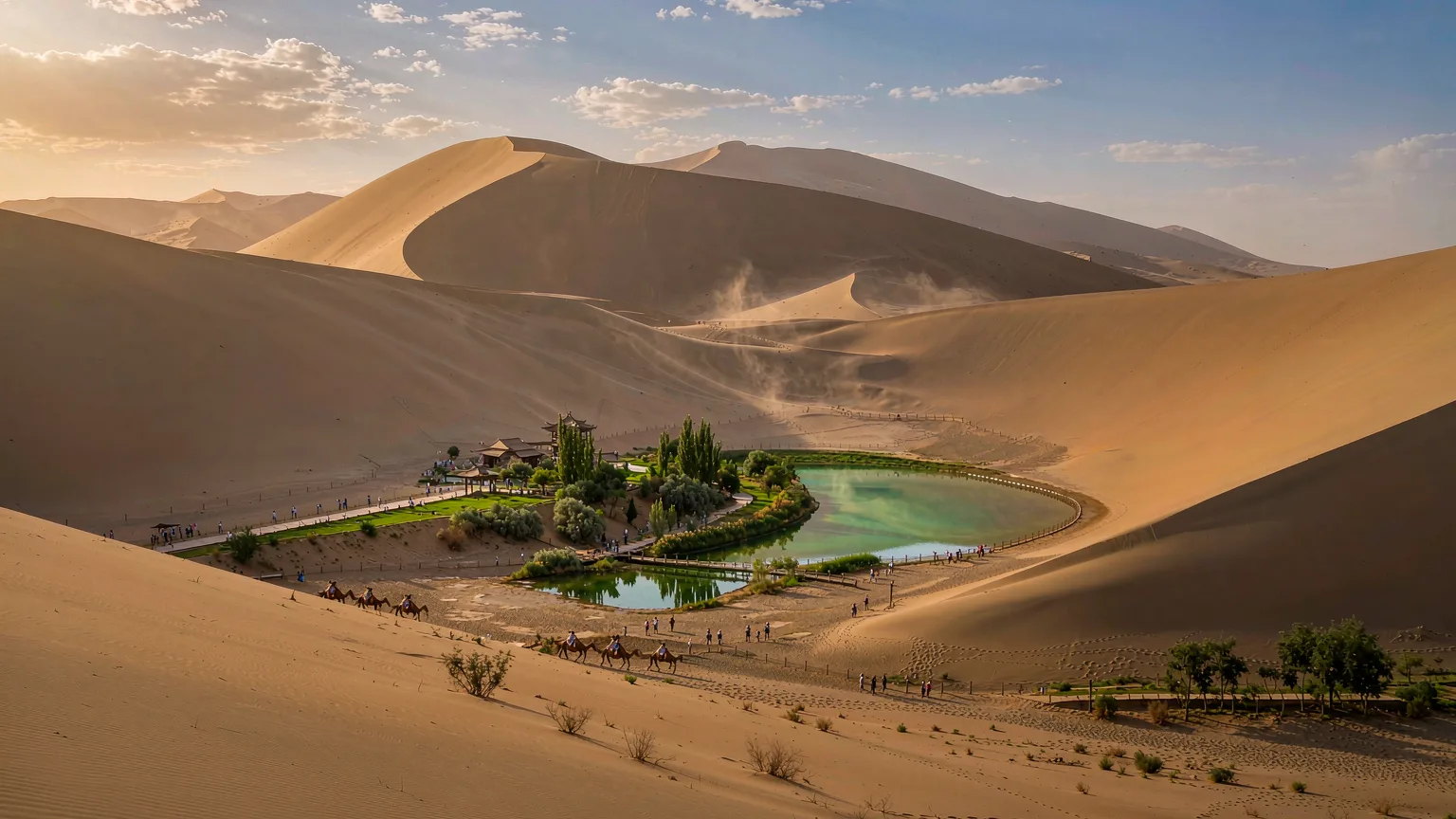
The name Mingsha means 'Singing Sand', a reference to the low hum the dunes are said to produce when wind or footsteps shift the dry grains. For centuries travellers on the Silk Road used this landmark as a waypoint before entering Dunhuang, and the lake's distinctive crescent shape gave it the name Yueya Quan. Despite sitting in one of China's driest regions, the lake is fed by underground springs from the nearby Dang River, and its water level has been carefully managed in recent decades to keep it from disappearing.
Today the site is a 5A-rated scenic area that combines raw desert scenery with easy infrastructure: wooden boardwalks, a small pagoda complex, and a viewing platform on the ridge above the lake. Visitors can walk, take a camel caravan, or ride a dune buggy to the top. The surrounding dunes stretch for kilometres, and at sunset the sand turns deep orange, making it one of the most photographed spots in Gansu. It is a natural companion to the nearby Mogao Caves, and most travellers visit both in a single Dunhuang stay.
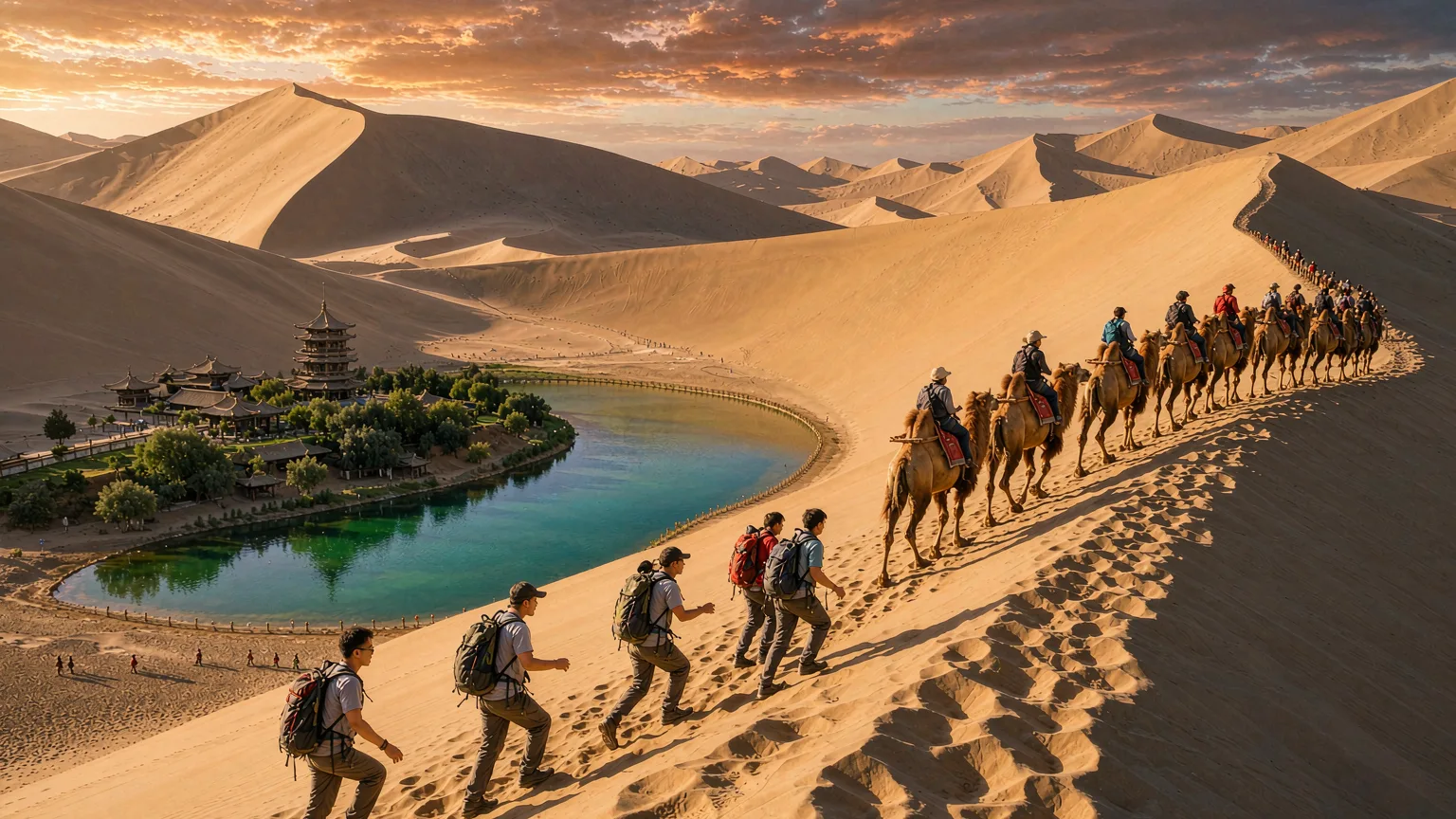
Mingsha Sand Dunes are about 5 km south of Dunhuang city centre, a 10–15 minute taxi ride (¥15–25). Most travellers base themselves in Dunhuang, arrive by high-speed rail from Lanzhou or Jiayuguan, or fly into Dunhuang Airport. From the city, you can also take bus no. 3. We usually pair this with a morning at the Mogao Caves, then visit the dunes in the late afternoon for sunset, returning to town for dinner.
Admission is ¥110 per person (peak season), which includes entry to the scenic area; camel rides cost extra (around ¥100), as do sandboards and dune buggies. Opening hours are roughly 05:00–21:00 in summer and 07:30–19:30 in winter, with last entry about an hour before closing.
Book tickets in advance via the official WeChat mini-program or a travel platform; foreign passports are accepted at the gate, but bring your passport. WeChat Pay and Alipay now accept international cards, so you can pay for extras on site without cash.
Visit from May to October, when the weather is mild and the lake is at its fullest. Late afternoon is ideal: arrive around 16:00, climb the dunes, and stay for sunset around 19:00–20:00 in summer. Avoid midday heat in July and August, and note that winter can be cold and windy, though the dunes are quieter and still beautiful.
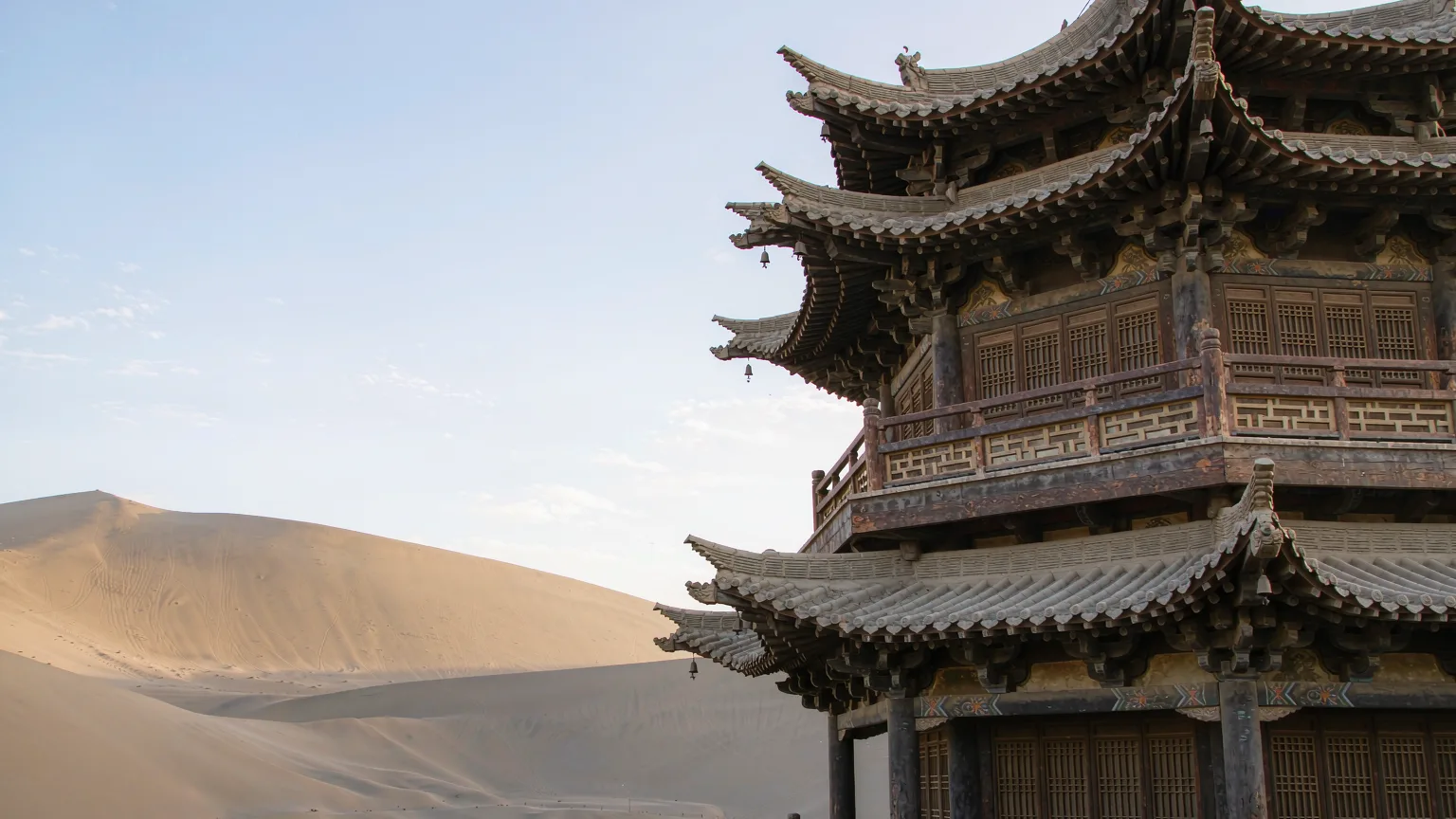
The lake is fed by underground springs and has been maintained with artificial water replenishment since the 2000s. It has never completely dried up in recorded history, though its level fluctuates.
Allow 2–3 hours to climb the dunes, visit the lake and pagoda, and take a camel ride. Add an extra hour if you stay for sunset.
Yes, the site is easy to navigate on your own. However, a guide helps with timing, tickets, and combining the visit with Mogao Caves and other Dunhuang sights.
Yes, there are small lockers near the entrance and at the camel ride station. They are limited, so travel light and avoid bringing large luggage.
Tell us your dates, group size and preferences — a dedicated consultant will reach out within 24 hours.