
Guest — sign in to save your enquiries.
My account
May Fourth Square is Qingdao's landmark waterfront plaza, famous for its spiralling red "May Wind" sculpture and sweeping views over Fushan Bay. It marks the city's modern civic heart and the historic May Fourth Movement that shaped modern China. With our private guide, you'll catch the best light, skip the guesswork, and pair it seamlessly with Qingdao's old town and coastline.
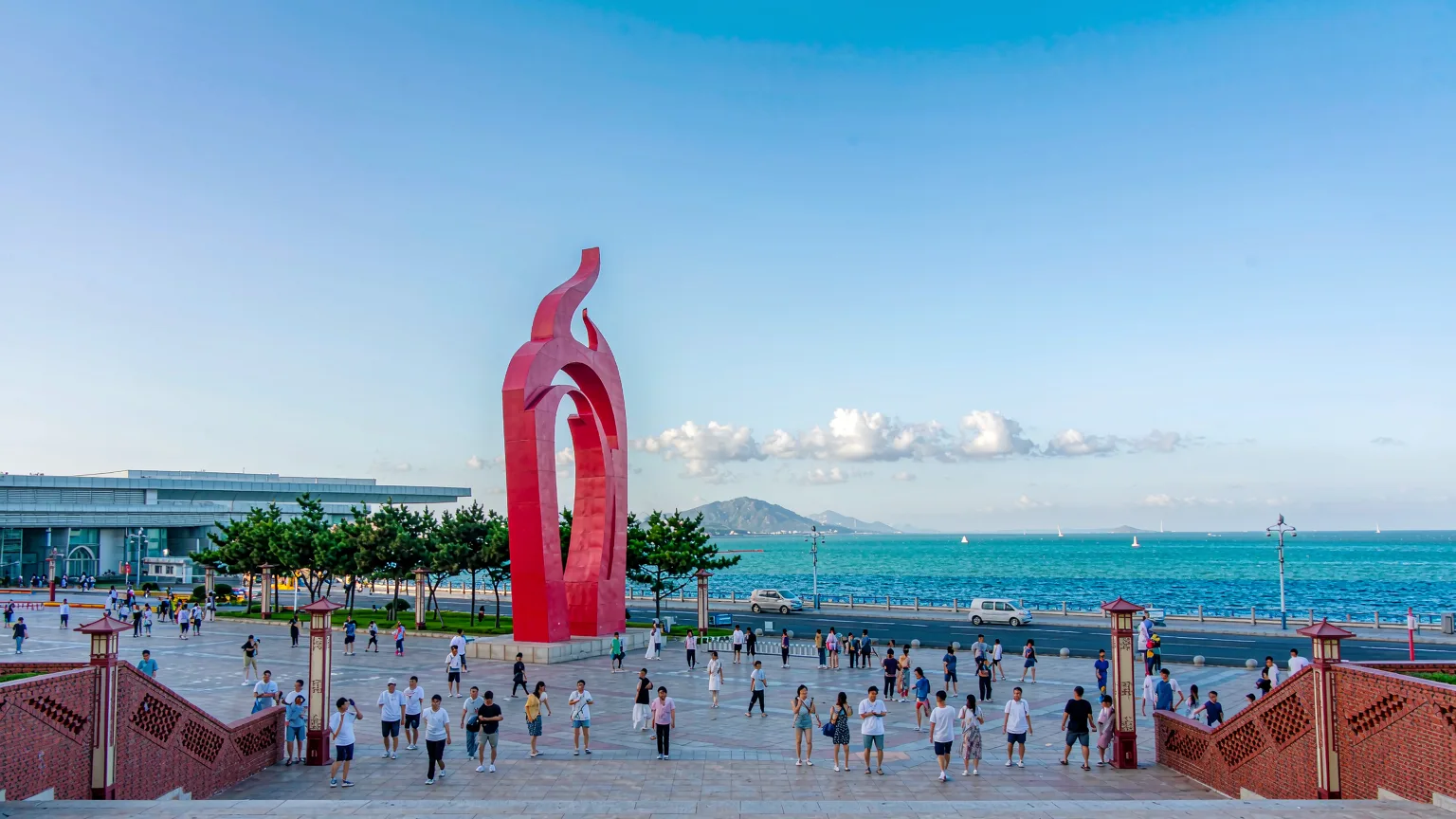
May Fourth Square (Wusi Guangchang) takes its name from the May Fourth Movement of 1919, a pivotal student-led protest that began after the Treaty of Versailles handed former German concessions in Shandong to Japan rather than returning them to China. Qingdao, then under German and later Japanese influence, became a symbol of that struggle for sovereignty. The square was completed in 1997 as part of the city's eastern coastal redevelopment, transforming reclaimed shoreline into a broad public promenade that faces Fushan Bay and the modern skyline of the new city centre.
At its centre stands "May Wind" (Wuyue de Feng), a 30-metre red steel sculpture by artist Huang Zhen, whose interlocking spiral evokes both a rising wind and the number five, a nod to the movement's date. The plaza stretches roughly 700 metres along the sea, with lawns, paved walkways, and a musical fountain. It sits within a cluster of civic and cultural venues, including the Qingdao Olympic Sailing Center and the nearby coastal boardwalk, making it a natural anchor for exploring Qingdao's eastern seaboard.
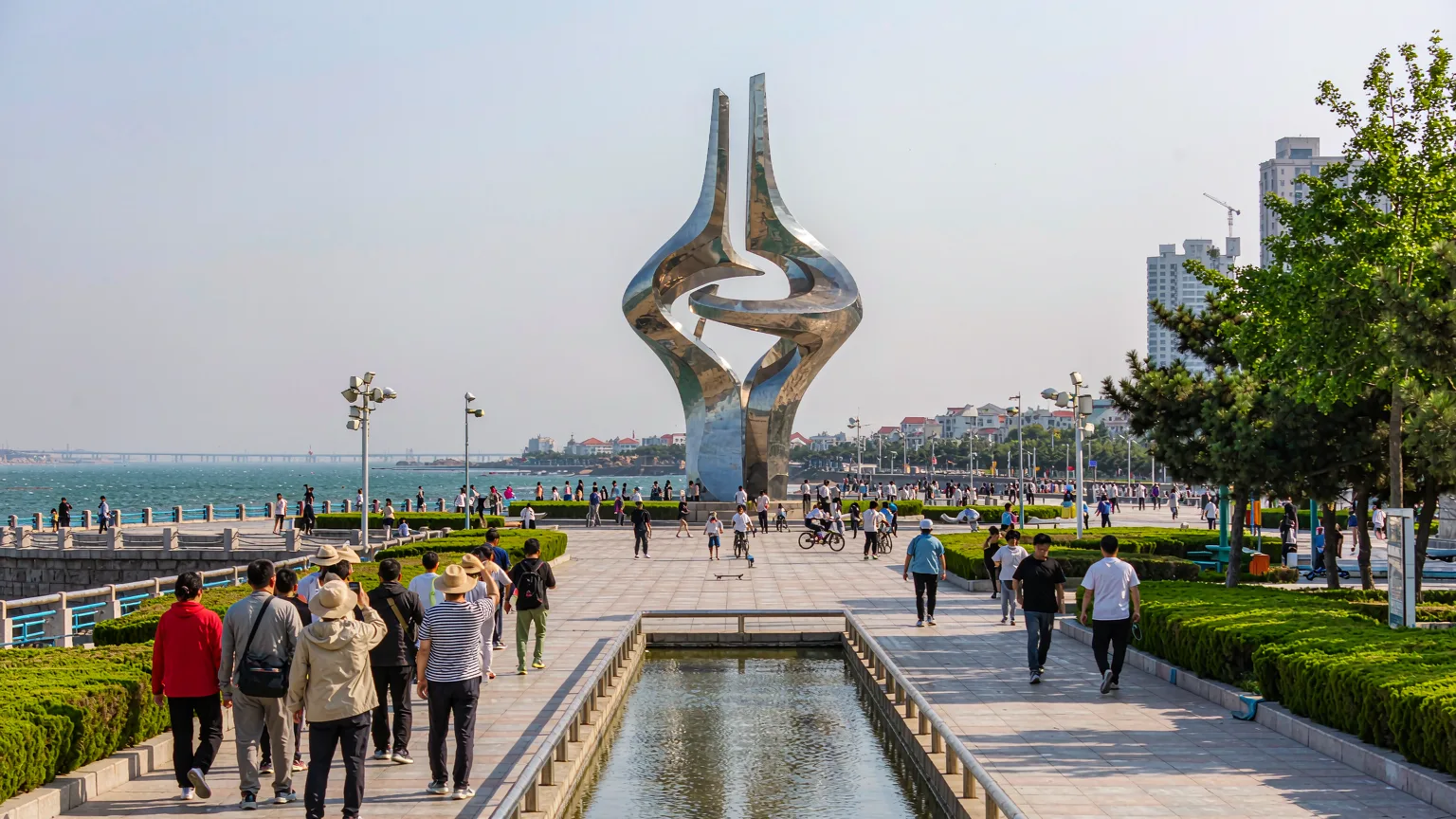
May Fourth Square sits in Qingdao's eastern new town, easily reached by Metro Line 2 or 3 to May Fourth Square Station (Wusi Guangchang), with exits opening directly onto the plaza. Taxis and ride-hailing from the old town or railway station take 20–30 minutes depending on traffic. Many travellers combine it with a coastal walk to the Olympic Sailing Center or a drive along the seaside road. Our guide can arrange a private car and time your visit to catch the late-afternoon light or the evening fountain.
Admission is free and the square is open 24 hours; the musical fountain typically operates in the evenings, often around 7:30–8:30 pm, though schedules vary by season. No booking is required for the plaza itself. Bring your passport for any nearby paid attractions. WeChat Pay and Alipay are widely accepted at surrounding shops and cafes, and both now support foreign cards; keep a little cash for small vendors.
Late afternoon to early evening is ideal: arrive around 4–5 pm for soft daylight on the sculpture, stay for sunset over Fushan Bay, then watch the illuminated fountain after dark. Summer and early autumn offer the mildest sea breezes and clearest skies, while winter can be windy and cold. Avoid national holiday peaks if you prefer space.
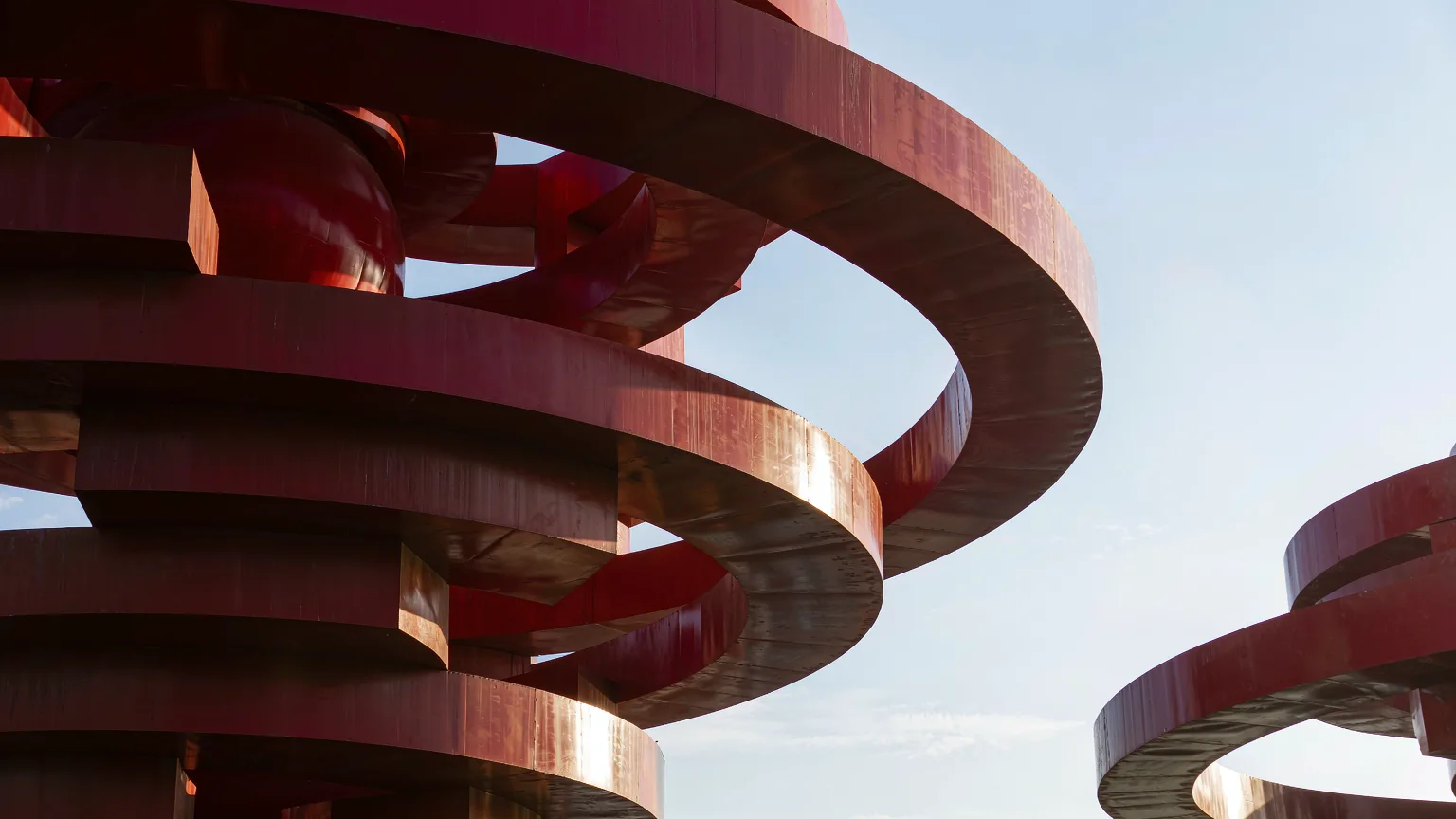
Yes, especially if you want a sense of modern Qingdao. The red May Wind sculpture, bay views, and easy metro access make it a worthwhile 1–2 hour stop, best combined with nearby coastal sights.
Take Metro Line 2 or 3 to May Fourth Square Station; exits lead straight to the plaza. Taxis from the old town take about 20–30 minutes, depending on traffic.
No tickets are needed; the square is open 24 hours. The musical fountain usually runs in the evening, but times vary by season, so check locally or ask our guide.
Walk the coastal promenade to the Olympic Sailing Center, visit nearby beaches, or continue to Qingdao's old town for German-era architecture and seafood streets.
Tell us your dates, group size and preferences — a dedicated consultant will reach out within 24 hours.