
Guest — sign in to save your enquiries.
My account
Lion Grove Garden is Suzhou's most playful classical garden, a Yuan-dynasty maze of limestone rockeries that Emperor Qianlong visited so often he had it copied in Beijing. Its labyrinth of caves, peaks and hidden paths delights children and adults alike. With our private guide, you skip the confusion and uncover the garden's Buddhist symbolism and ingenious design.
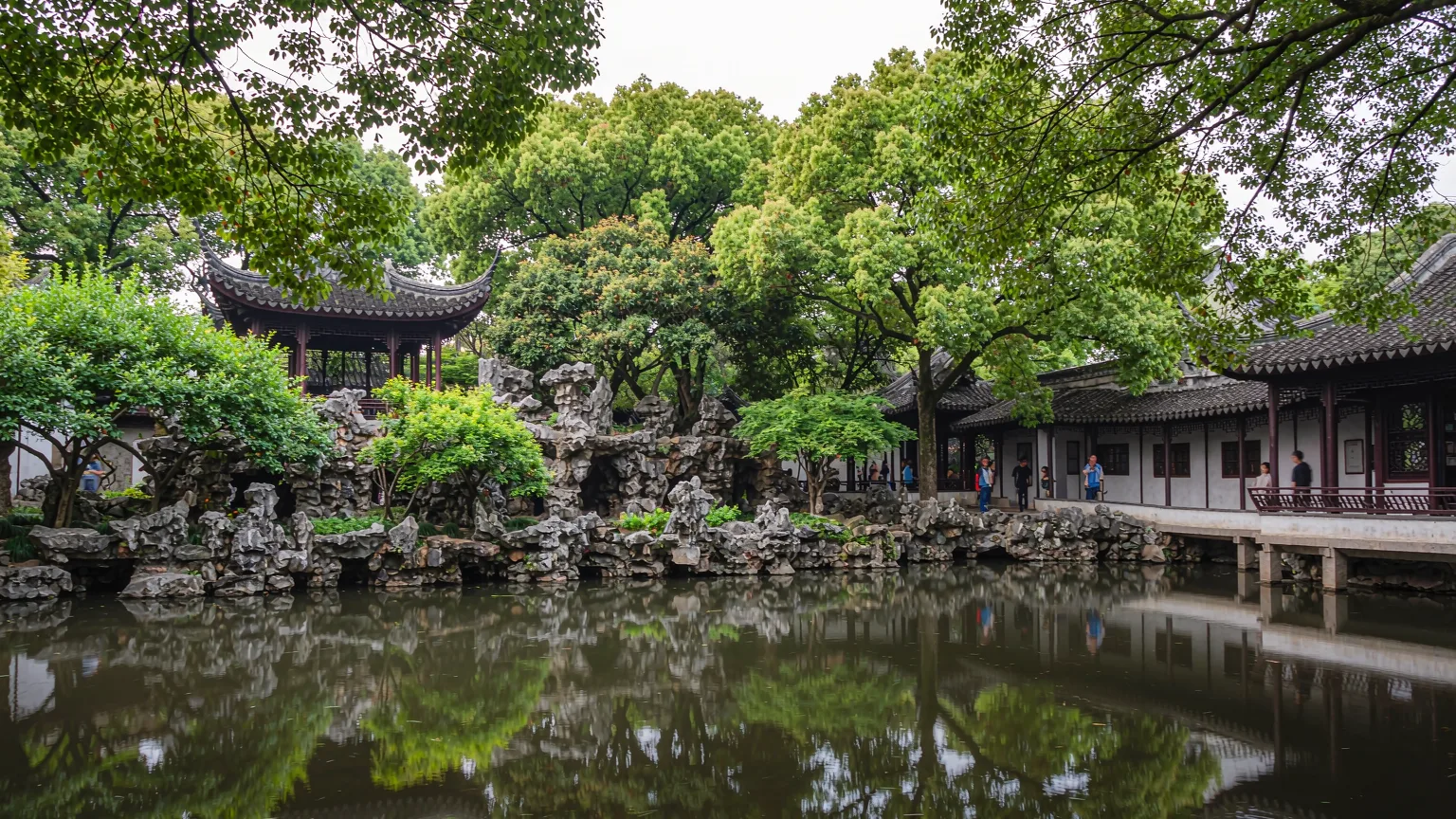
Founded in 1342 by the Zen monk Tianru and his disciples, Lion Grove Garden was named for the lion-shaped rocks of its famous rockery, which also symbolise the lion's roar of Buddhist teaching. The garden changed hands over centuries, becoming part of a temple and later a private residence. In 1703, Emperor Kangxi visited and bestowed a plaque; his grandson Qianlong returned six times, eventually commissioning replicas in the Summer Palace and Chengde Mountain Resort. The garden's current layout largely dates from the Qing dynasty, when it was restored and expanded by the Huang family.
Covering just 1.1 hectares, Lion Grove is the smallest of Suzhou's four great gardens, yet its rockery labyrinth is the most intricate. The limestone taihu rocks were piled to create a miniature mountain range with 21 caves and nine peaks, best appreciated from the pavilions that frame them. The garden is divided into two main sections: the rockery kingdom in the east and the water-and-pavilion area in the west. A visit here pairs naturally with the nearby Humble Administrator's Garden, just a ten-minute walk away.
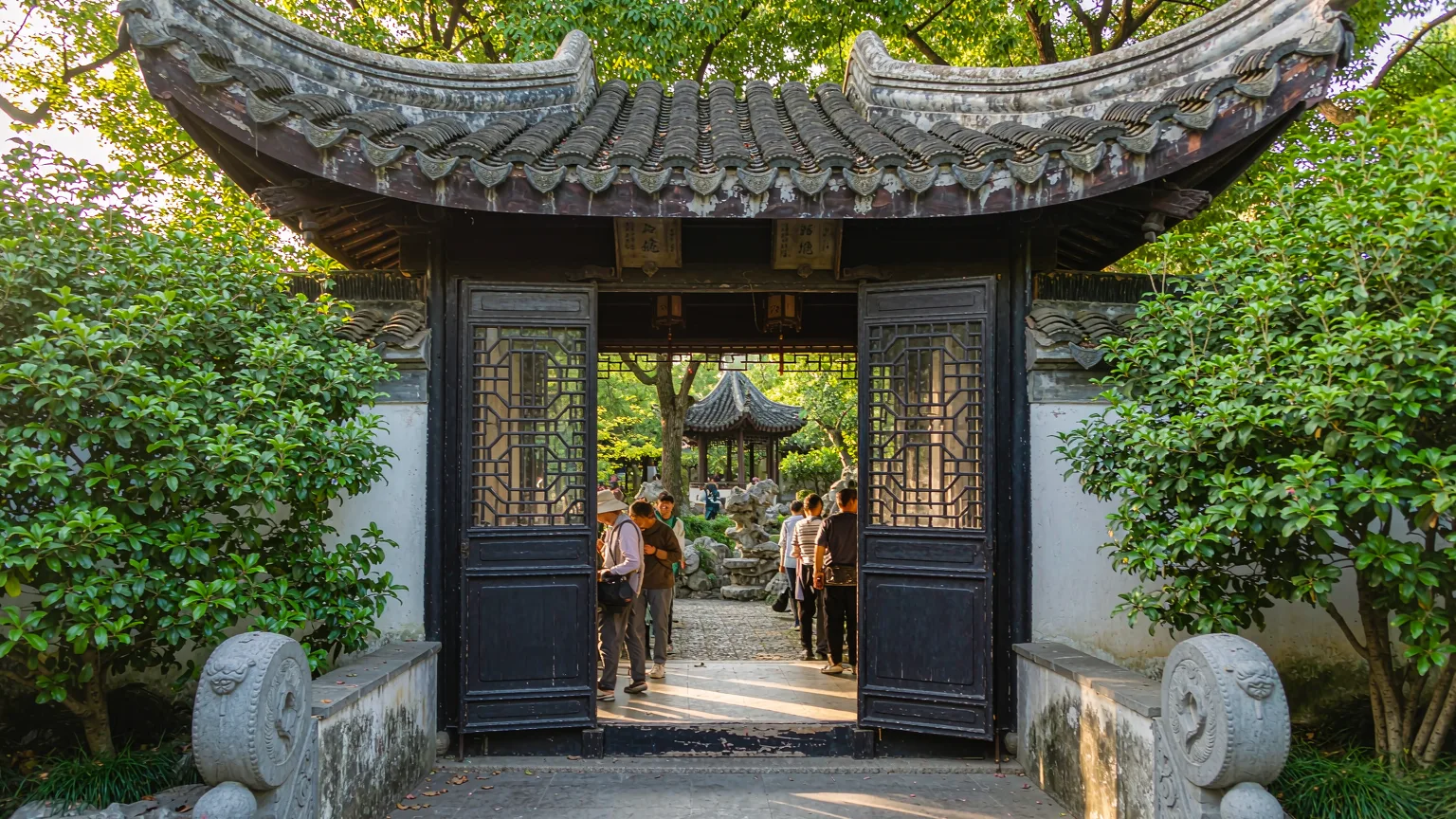
Lion Grove Garden sits in the heart of Suzhou's old town, a 10-minute walk from the Humble Administrator's Garden and a 15-minute taxi ride from Suzhou Railway Station (high-speed trains from Shanghai take 25 minutes). The nearest metro is Line 4 to Beisita, then a 10-minute walk. We usually combine it with the Humble Administrator's Garden and Suzhou Museum for a full day of classical gardens and culture, with private transfers throughout.
Admission is ¥40 during peak season (April–October) and ¥30 in low season (November–March). Opening hours are 7:30–17:30 (last entry 16:30). Book online via the official WeChat account or Trip.com to skip queues; foreign credit cards are accepted on Trip.com, while on-site ticket windows may only take WeChat Pay or Alipay, so link a card in advance.
Visit in spring (April–May) or autumn (September–November) for mild weather and lush or golden foliage. Early morning right at opening (7:30) offers the fewest crowds and soft light for photography. Avoid weekends and Chinese holidays, when the narrow rockery paths become congested and the experience is less serene.
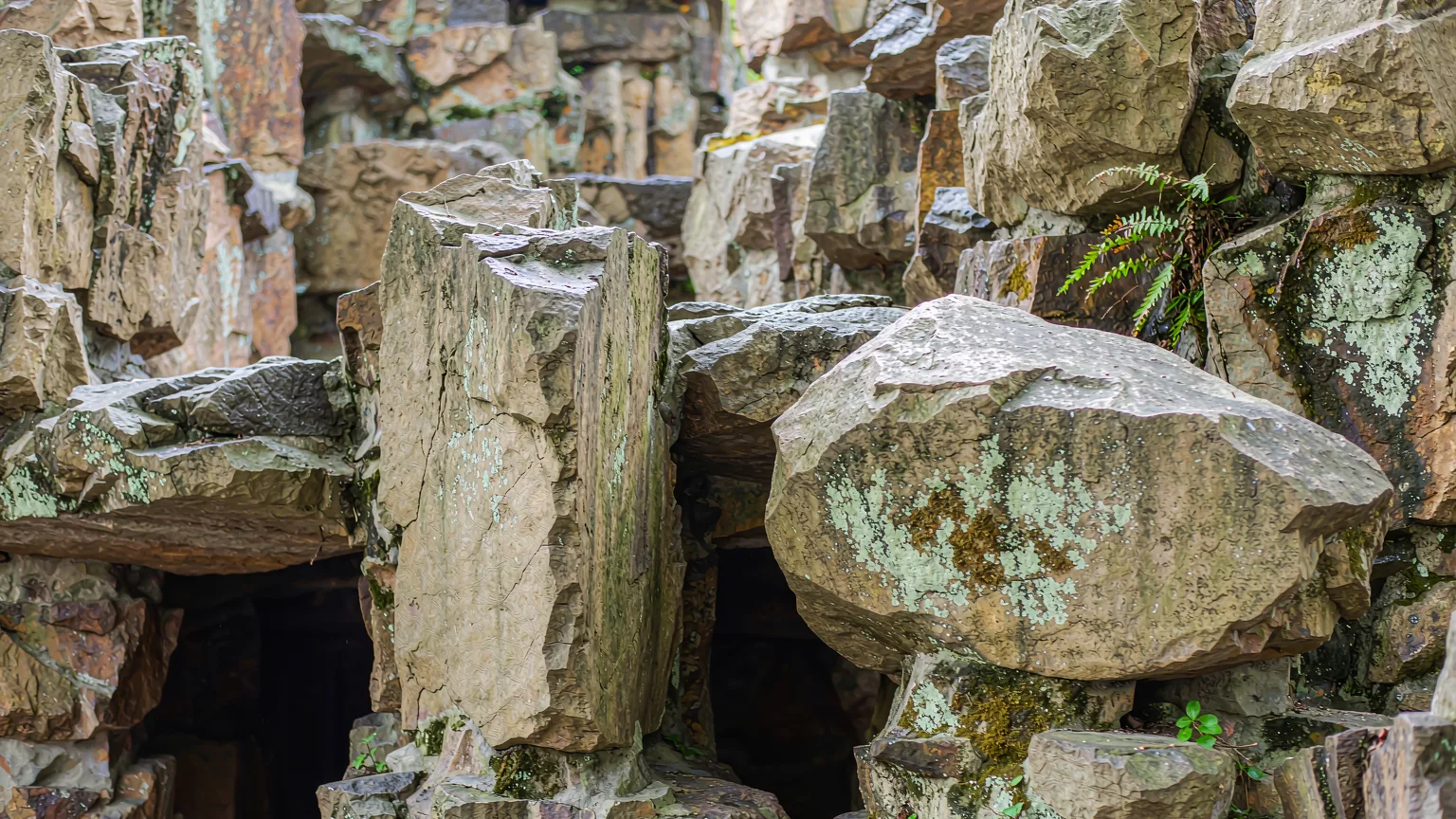
Most visitors spend 1 to 1.5 hours exploring the garden, including the rockery maze and pavilions. If you linger for photos or a tea break, allow up to 2 hours.
Yes, children love the rockery labyrinth, but parents should supervise closely as the caves and steps can be tricky. It's best for kids aged 5 and above.
On-site ticket windows often only accept WeChat Pay or Alipay. We recommend booking through Trip.com or the official WeChat account in advance using a foreign card.
Take a high-speed train from Shanghai to Suzhou (25–30 minutes), then a 15-minute taxi or metro Line 4 to Beisita. We can arrange private transfers for a seamless day trip.
Tell us your dates, group size and preferences — a dedicated consultant will reach out within 24 hours.