
Guest — sign in to save your enquiries.
My account
Lingyin Temple, or the Temple of the Soul's Retreat, is one of China's ten great Chan Buddhist monasteries, founded in 328 AD and tucked into a wooded valley west of West Lake. Its weathered halls, ancient camphor trees, and the nearby Feilai Feng grottoes make it a place of real spiritual weight, not just a photo stop. With our private guide, you skip the ticket queues, learn the stories behind the carvings, and experience the temple at its most peaceful.
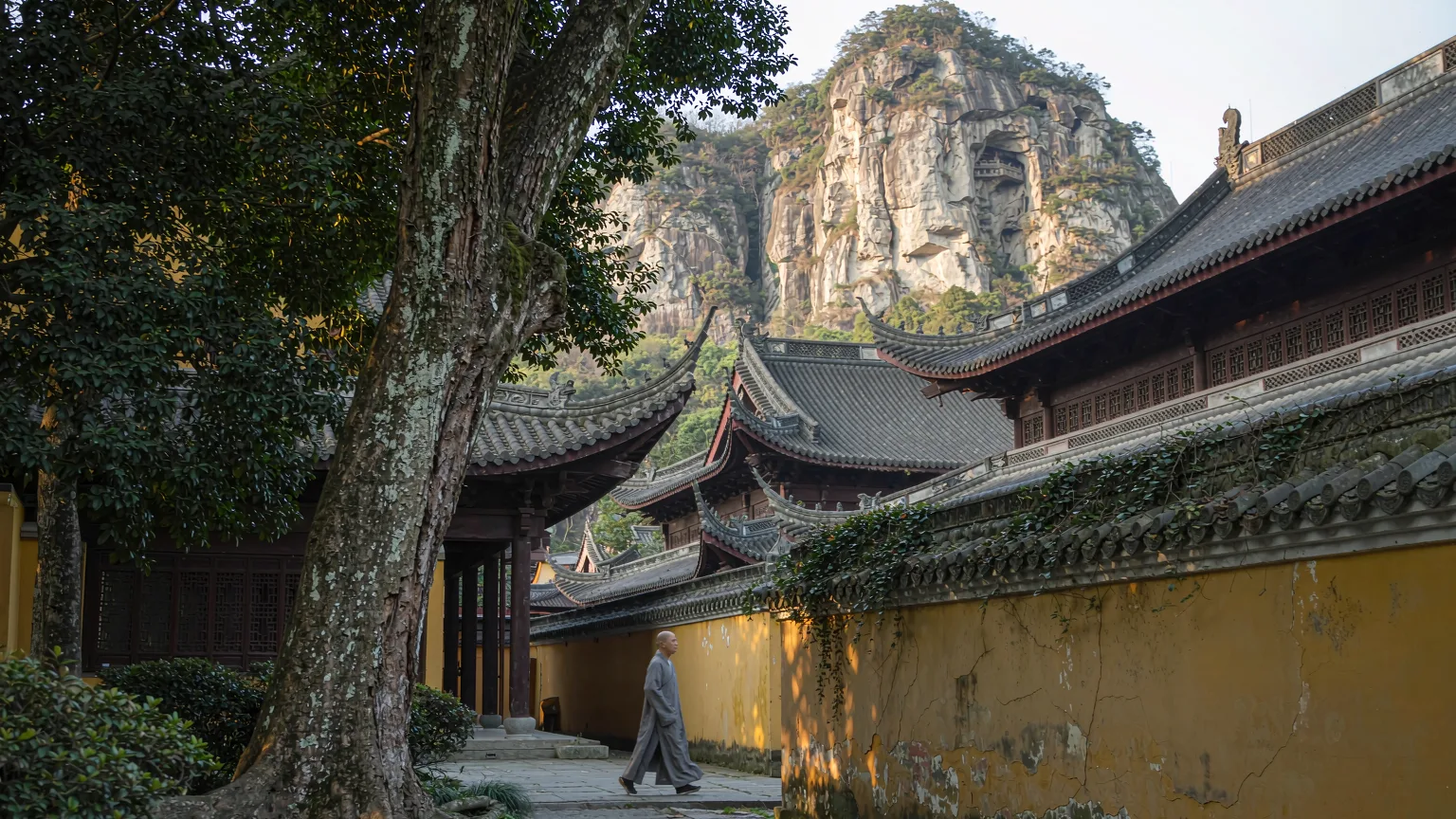
Lingyin Temple was established in 328 AD by the Indian monk Huili, who is said to have been struck by the resemblance of the surrounding peak to a vulture peak in India, naming the site 'Lingjiu' (Vulture Peak) and the temple 'Lingyin' (Soul's Retreat). Over its 1,600-year history it has been destroyed and rebuilt more than a dozen times, surviving fires, wars, and the Taiping Rebellion. It flourished especially during the Tang and Song dynasties, when it became a major center of Chan Buddhism. The present buildings date mainly from the Qing dynasty and later restorations, but the spiritual lineage remains unbroken.
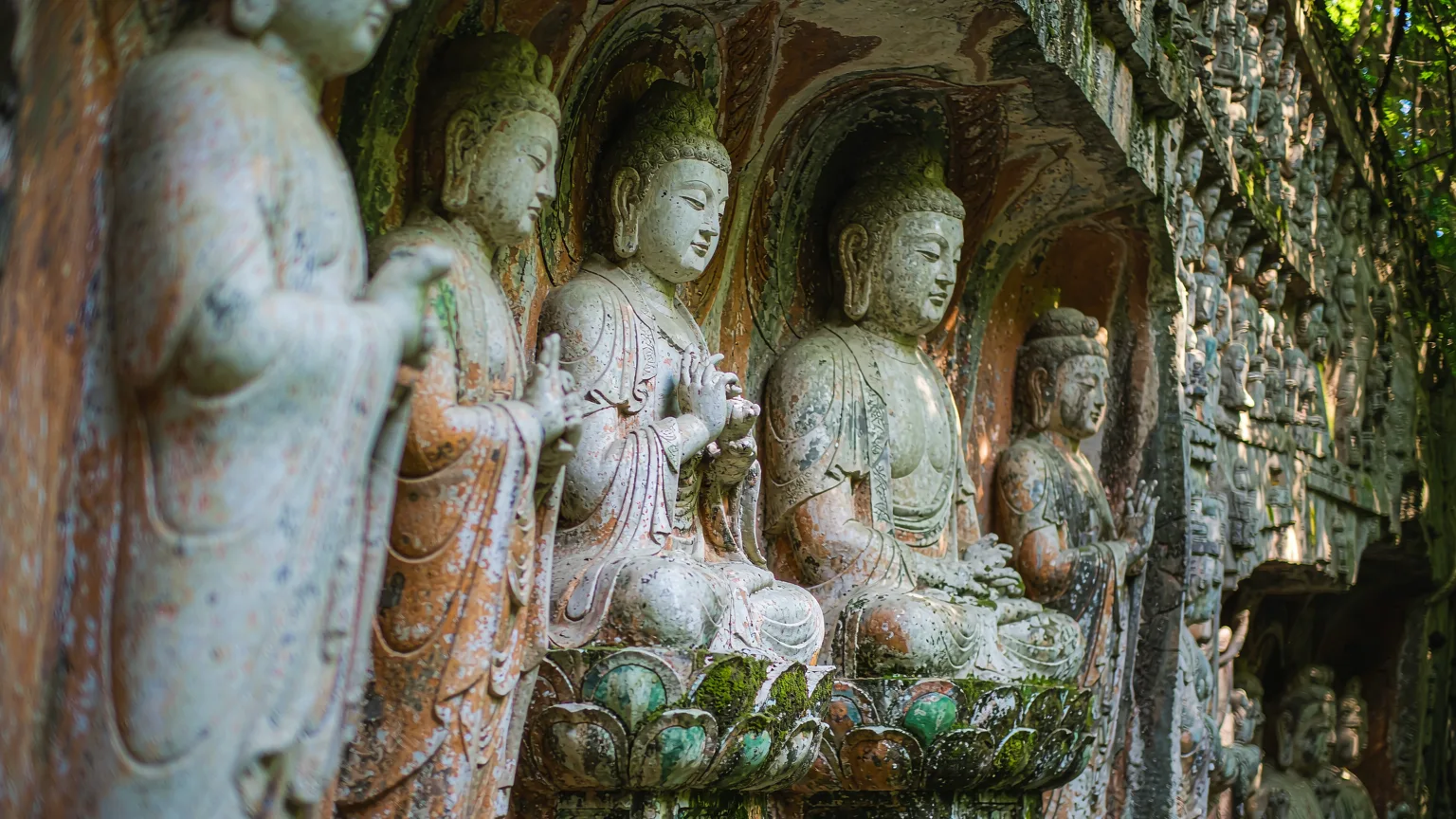
The temple complex is approached through the Feilai Feng (Peak Flying from Afar) scenic area, where hundreds of Buddhist carvings from the 10th to 14th centuries are etched into limestone cliffs. Inside the temple, the Hall of the Great Hero houses a 24.8-meter-tall camphor-wood Sakyamuni Buddha, one of the largest wooden statues in China. Lingyin is also famous as the place where the legendary monk Jigong (Daoji) took his vows, adding a layer of folkloric charm. For foreign visitors, the site offers a rare blend of natural beauty, religious art, and living worship.
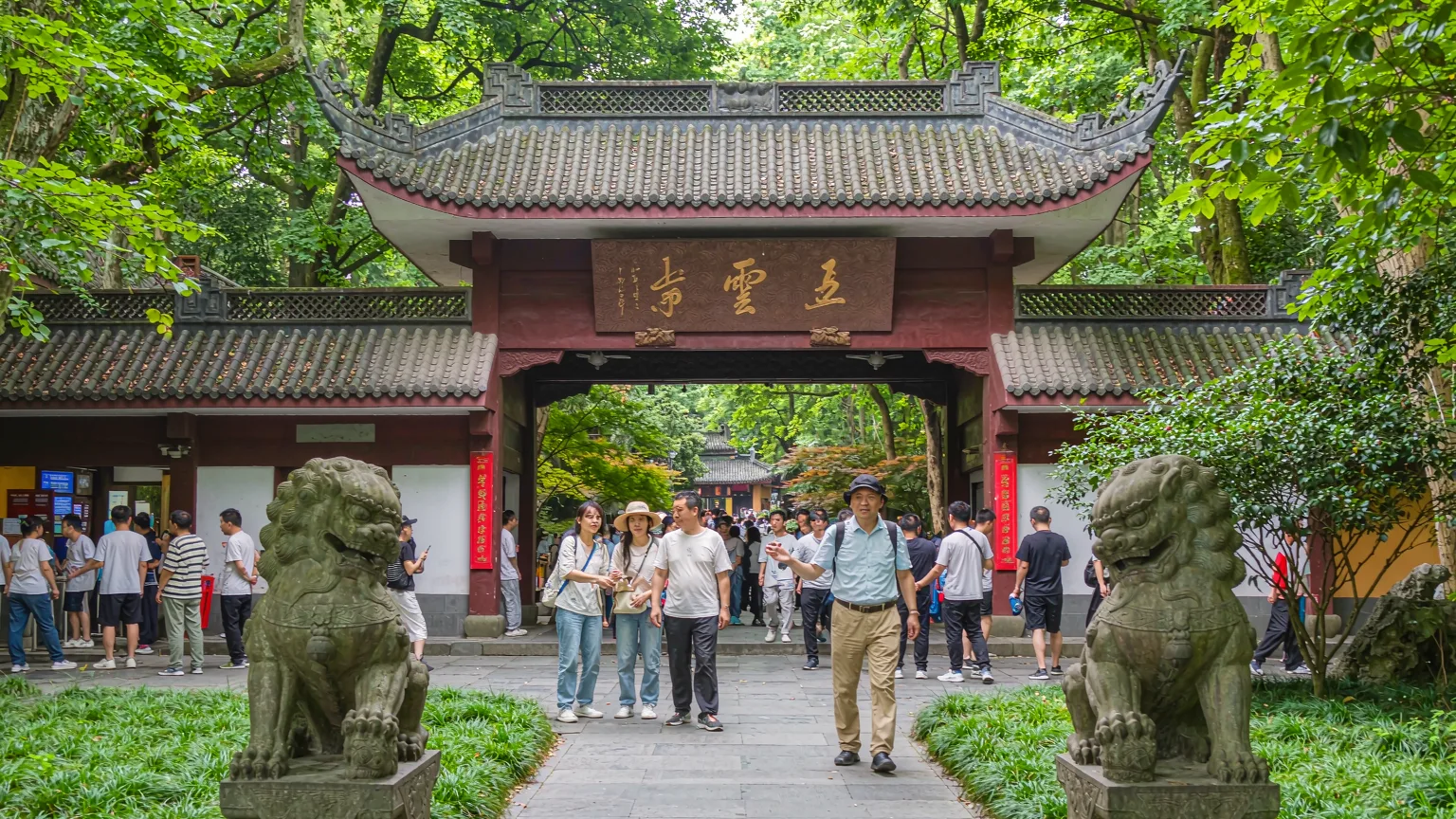
Lingyin Temple is about 30 minutes by taxi (¥30–40) from West Lake's Broken Bridge, or you can take bus 7 or Y1 from the lake area. The nearest metro is Line 1 to Longxiangqiao, then transfer to bus 7. We usually combine it with a morning at West Lake and a stop at Meijiawu Tea Village, making a full day. Our guide handles the ticket and shuttle logistics so you can focus on the experience.
Admission to Feilai Feng Scenic Area is ¥45, and Lingyin Temple itself requires a separate ¥30 donation ticket (total ¥75). Opening hours are roughly 7:00–18:00, with last entry around 17:30. We recommend booking through our guide to skip the lines; foreign credit cards are not accepted at the gate, but WeChat Pay and Alipay work if linked to an international card.
The best time to visit is early morning on a weekday, ideally right at 7:00 opening, to avoid tour groups and enjoy the misty, contemplative atmosphere. Spring (March–May) and autumn (September–November) offer comfortable temperatures and lush or golden foliage. Avoid weekends and Chinese public holidays, when the narrow paths become congested.
Yes, you first buy the Feilai Feng Scenic Area ticket (¥45), then the temple ticket (¥30) at the temple entrance. Our guide can purchase both in advance to save time.
Partially. The main approach and some halls have ramps, but many areas have steps. We can arrange a route that avoids the steepest sections if needed.
Yes, morning chanting usually happens around 6:30–7:30 AM. Visitors are welcome to observe quietly from the back. Our guide can advise on etiquette.
Allow 2–3 hours to explore Feilai Feng, the main temple halls, and Yongfu Temple. With our guide, you'll see the highlights efficiently without feeling rushed.
Tell us your dates, group size and preferences — a dedicated consultant will reach out within 24 hours.