
Guest — sign in to save your enquiries.
My account
Leifeng Pagoda crowns a hill on the southern shore of West Lake, its silhouette immortalised in the legend of the White Snake and the classic view 'Leifeng Pagoda in Evening Glow'. The original 10th-century tower collapsed in 1924, but the modern reconstruction preserves the ruined base beneath glass and offers sweeping lake views. With our private guide, you skip the queues and hear the stories that bring the stones to life.
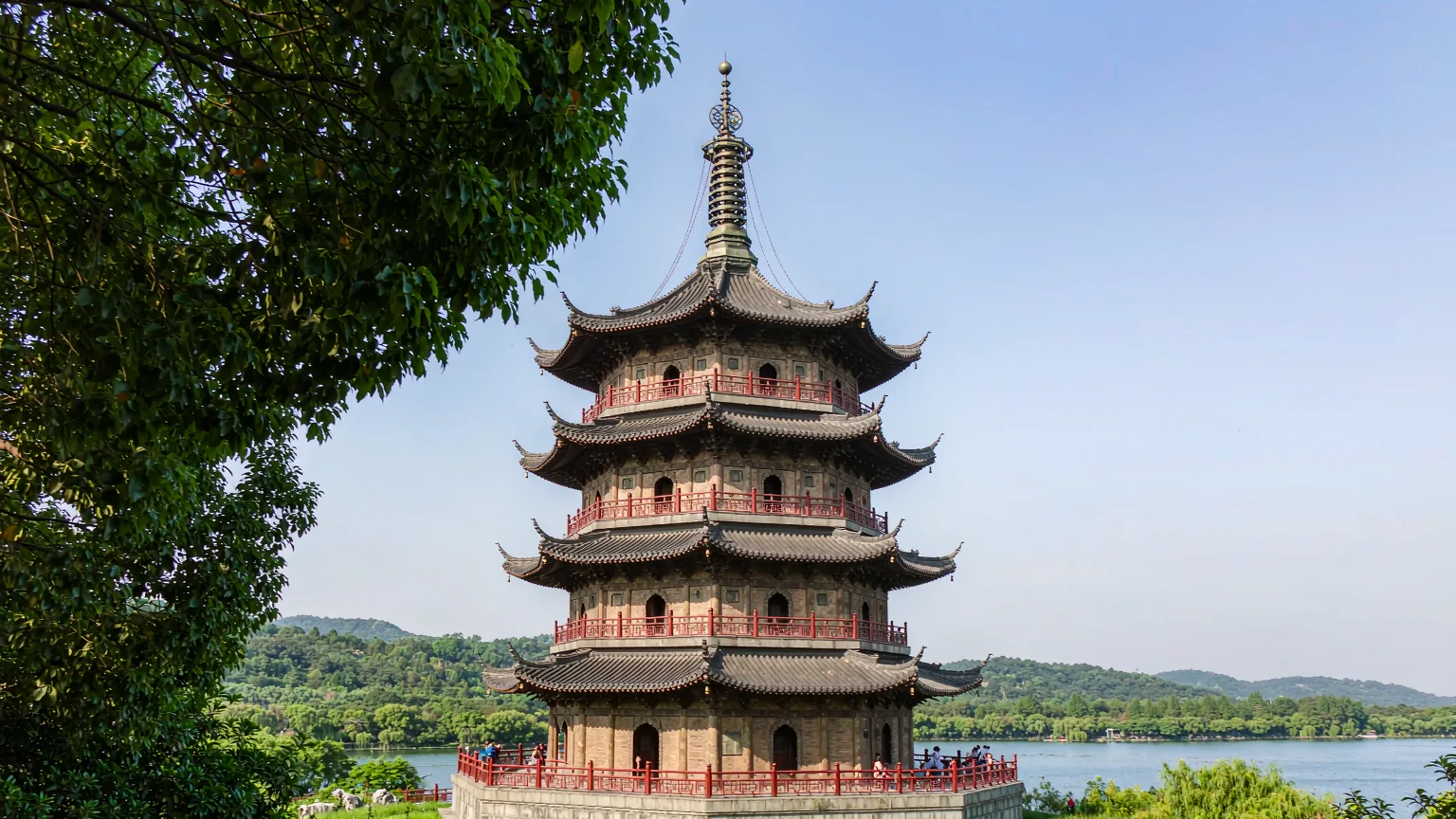
Leifeng Pagoda was first built in 975 AD by King Qian Chu of Wuyue to celebrate the birth of his son, and over the centuries it became a beloved landmark of Hangzhou. According to the famous legend, the monk Fahai imprisoned the White Snake spirit Bai Suzhen beneath the pagoda, a tale that has been retold in opera, novels, and films across China. The original structure, made of brick and wood, suffered from fires and neglect; it finally collapsed in 1924, leaving only a mound of ruins. In 2002, a new pagoda was erected on the site, incorporating the ancient base into its design. Today, visitors can see the original foundation and relics in a museum at the bottom, then ascend the modern tower for panoramic views of West Lake and the city.
The pagoda stands on Xizhao Hill (Sunset Hill) on the south bank of West Lake, a short walk from the Su Causeway. Its name 'Leifeng' comes from the hill where it was built, and the evening glow over the lake has been celebrated by poets for a thousand years. The reconstruction, while modern, faithfully recreates the Song-dynasty style with five stories and eight sides, reaching 71 meters. Inside, escalators and an elevator make access easy for all visitors. The site also includes a small park and a teahouse, perfect for a leisurely afternoon. As one of the Ten Scenes of West Lake, it draws crowds at sunset, but our guides know the quieter corners and the best times to capture the golden light without the throngs.
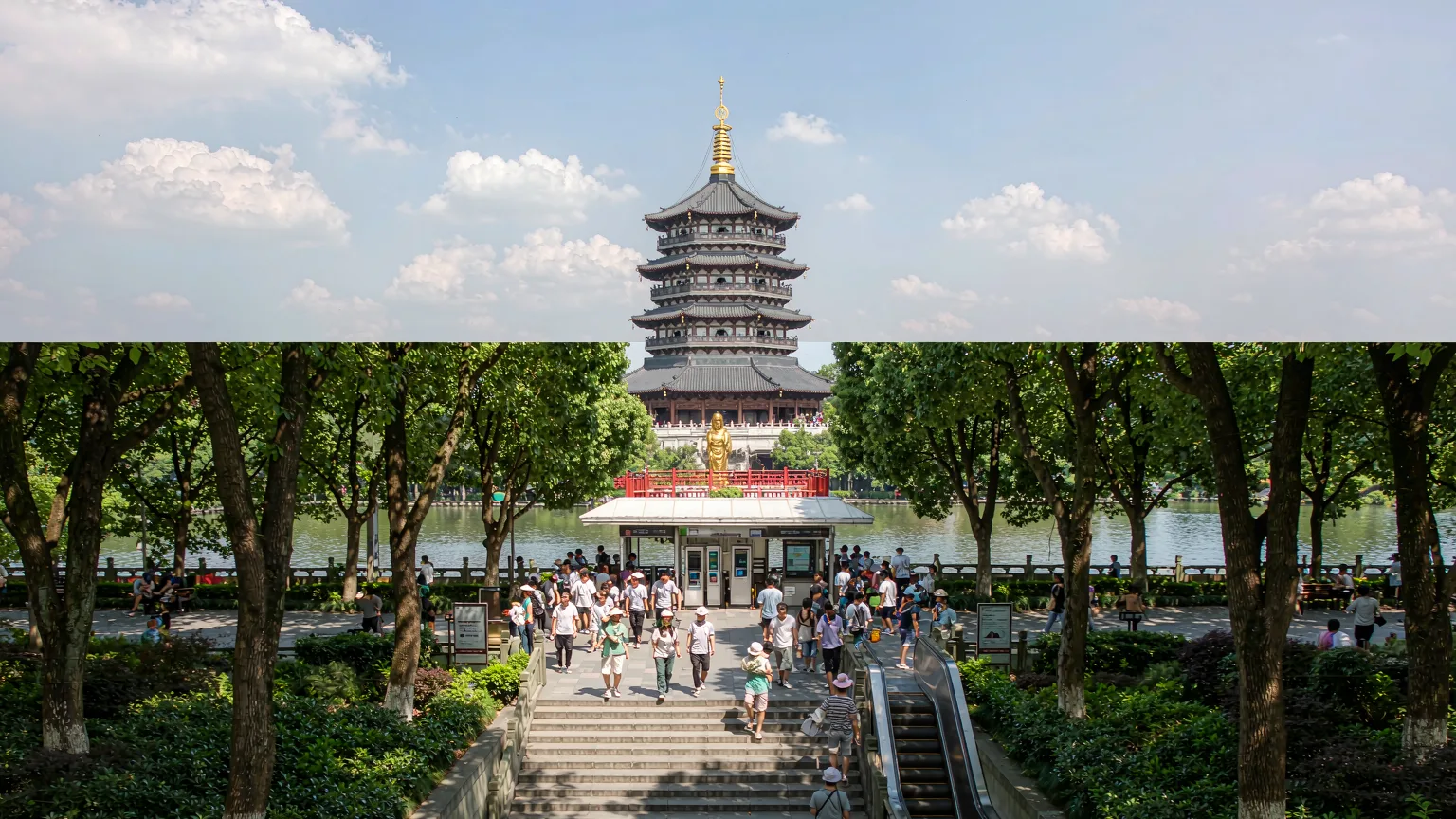
Leifeng Pagoda is on the south shore of West Lake, about 4 km from Hangzhou's city centre. The easiest way is by taxi or ride-hailing app (around ¥20–30 from West Lake's east side). Alternatively, take metro Line 4 to Shuichengqiao Station and walk 15 minutes, or join a West Lake cruise that stops nearby. We often combine it with a visit to the Su Causeway and Nanping Hill, making a half-day loop. Our private car can drop you at the entrance and pick you up after sunset, avoiding the scramble for taxis.
Admission is ¥40 per adult (children under 1.2m free). Opening hours are 8:00–20:30 (last entry 20:00) from March to November, and 8:00–17:30 in winter. Book via the official WeChat account or Trip.com to skip the ticket line; foreign credit cards are accepted on Trip.com, but at the gate you'll need WeChat Pay or Alipay linked to an international card, or cash in CNY.
The best time to visit is late afternoon, arriving around 4pm to explore the ruins museum and climb the pagoda before sunset. The evening glow over West Lake is the highlight, especially in spring (April–May) and autumn (September–October) when skies are clear and temperatures mild. Avoid weekends and Chinese holidays, when crowds peak at sunset.
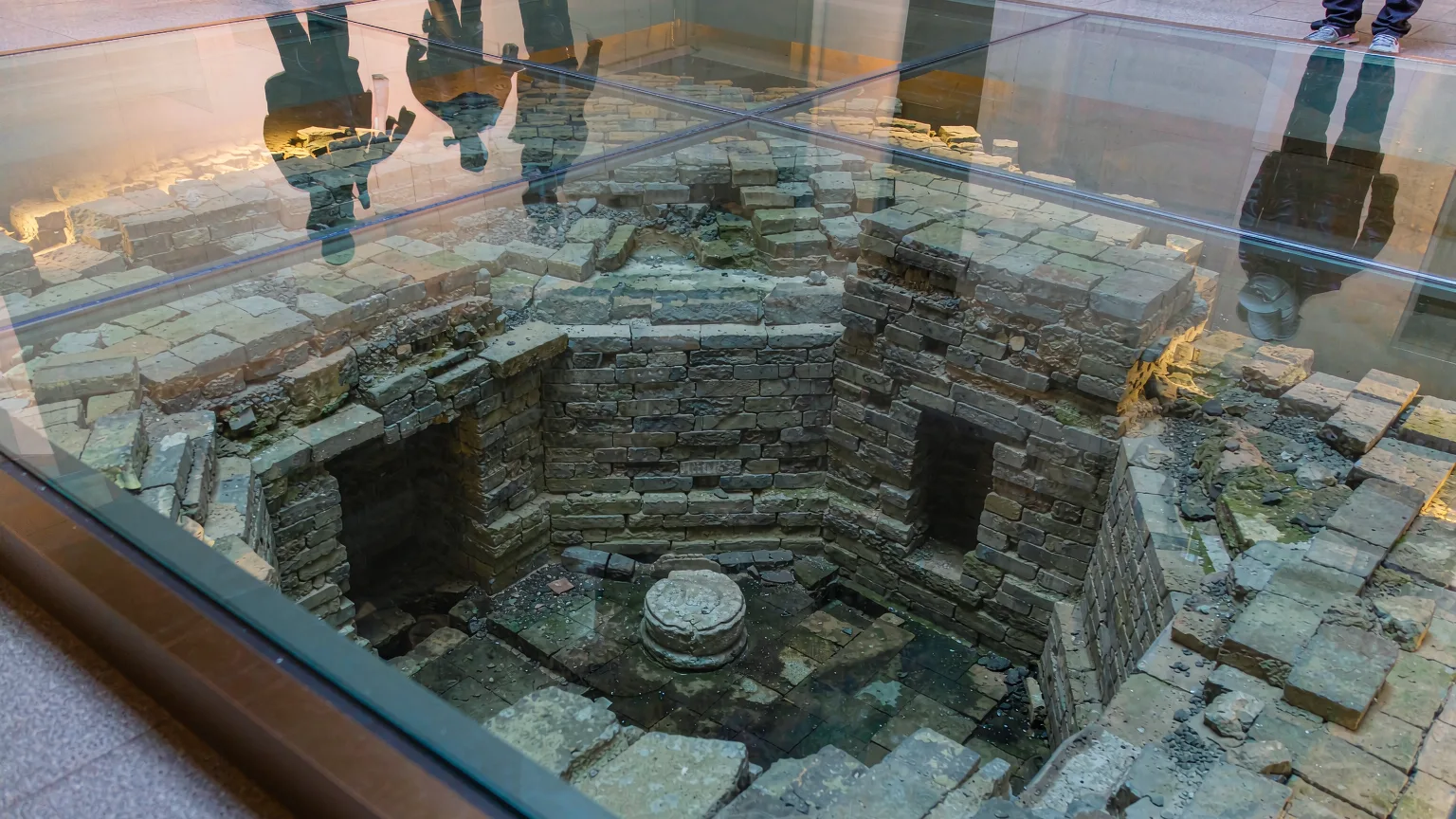
No, the original pagoda collapsed in 1924. The current tower was rebuilt in 2002 on the same site, incorporating the ancient ruins at its base, which are visible through glass floors.
Most visitors spend 1–1.5 hours, including the ruins museum, the climb to the top, and the views. Allow extra time if you linger for sunset photography.
Yes, on Trip.com or the official WeChat page, but at the gate only WeChat Pay, Alipay, or cash (CNY) are accepted. Our guide can help with booking if needed.
Yes, there are escalators and an elevator to the pagoda base and top floors, making it accessible for wheelchairs and strollers, though some paths are uneven.
Tell us your dates, group size and preferences — a dedicated consultant will reach out within 24 hours.