
Guest — sign in to save your enquiries.
My account
The Jokhang Temple is the spiritual heart of Tibetan Buddhism, home to the revered Jowo Shakyamuni statue and a UNESCO World Heritage Site. Pilgrims from across the plateau prostrate themselves at its gates, while our private guides help you navigate the crowds, understand the rituals, and experience the temple's profound serenity with ease.
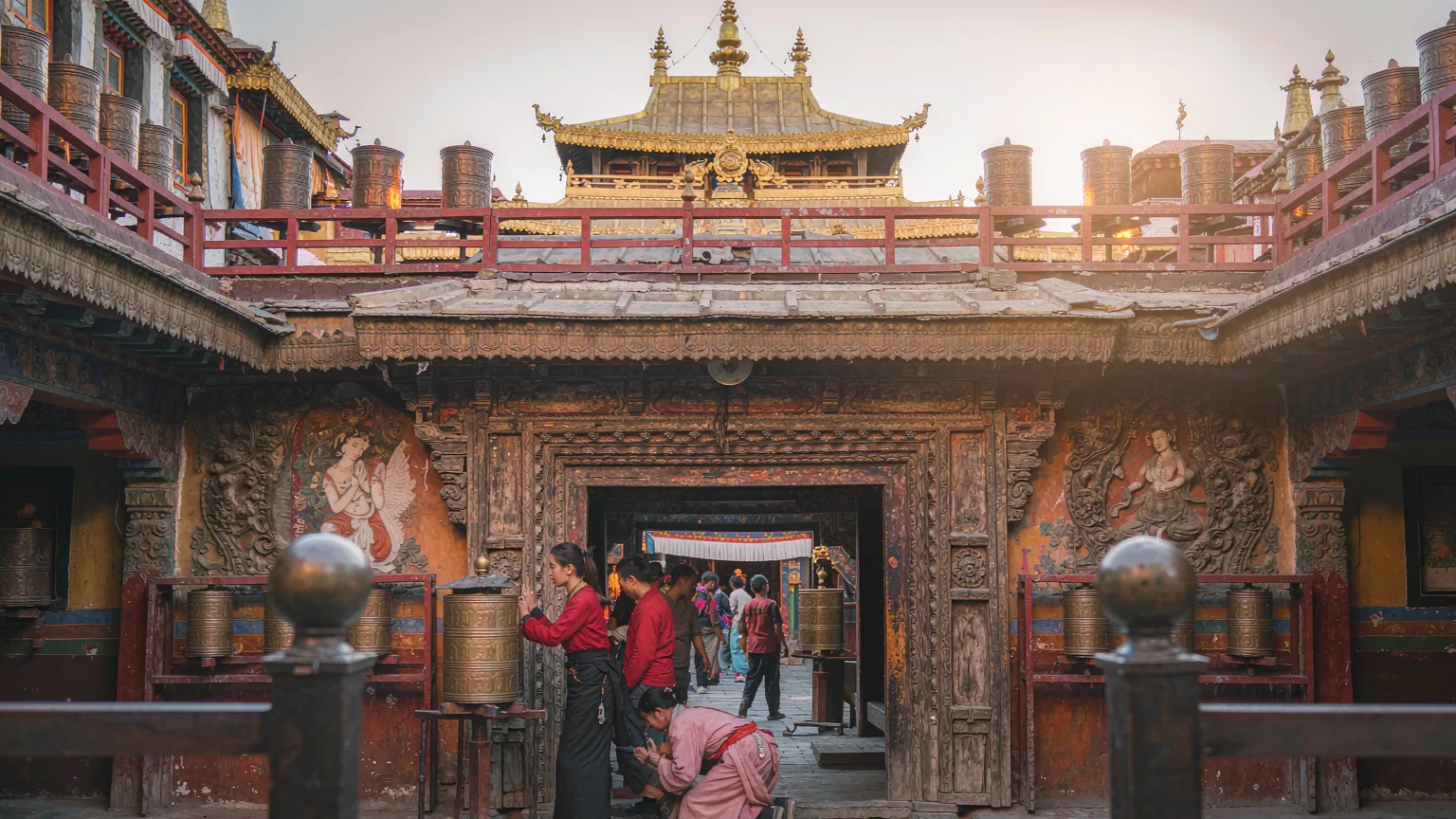
Founded in the 7th century by King Songtsen Gampo, the Jokhang Temple was built to house the sacred Jowo Shakyamuni statue, a 12-year-old likeness of the Buddha brought to Tibet by Princess Wencheng of the Tang dynasty. Over centuries, it has expanded into a vast complex blending Tibetan, Chinese, and Nepalese architectural styles, with golden roofs, intricate murals, and countless chapels. As the most revered shrine in Tibetan Buddhism, it draws pilgrims who circumambulate the Barkhor circuit daily, spinning prayer wheels and chanting mantras.
The temple's spiritual significance is matched by its historical depth. It survived the Cultural Revolution largely intact and was designated a UNESCO World Heritage Site in 2000 as part of the Historic Ensemble of the Potala Palace, Lhasa. Visitors can explore the main hall, the Jowo chapel, and the rooftop with panoramic views of Lhasa. Our guides provide context on the temple's role in Tibetan identity and help you respectfully observe the living rituals that continue to this day.
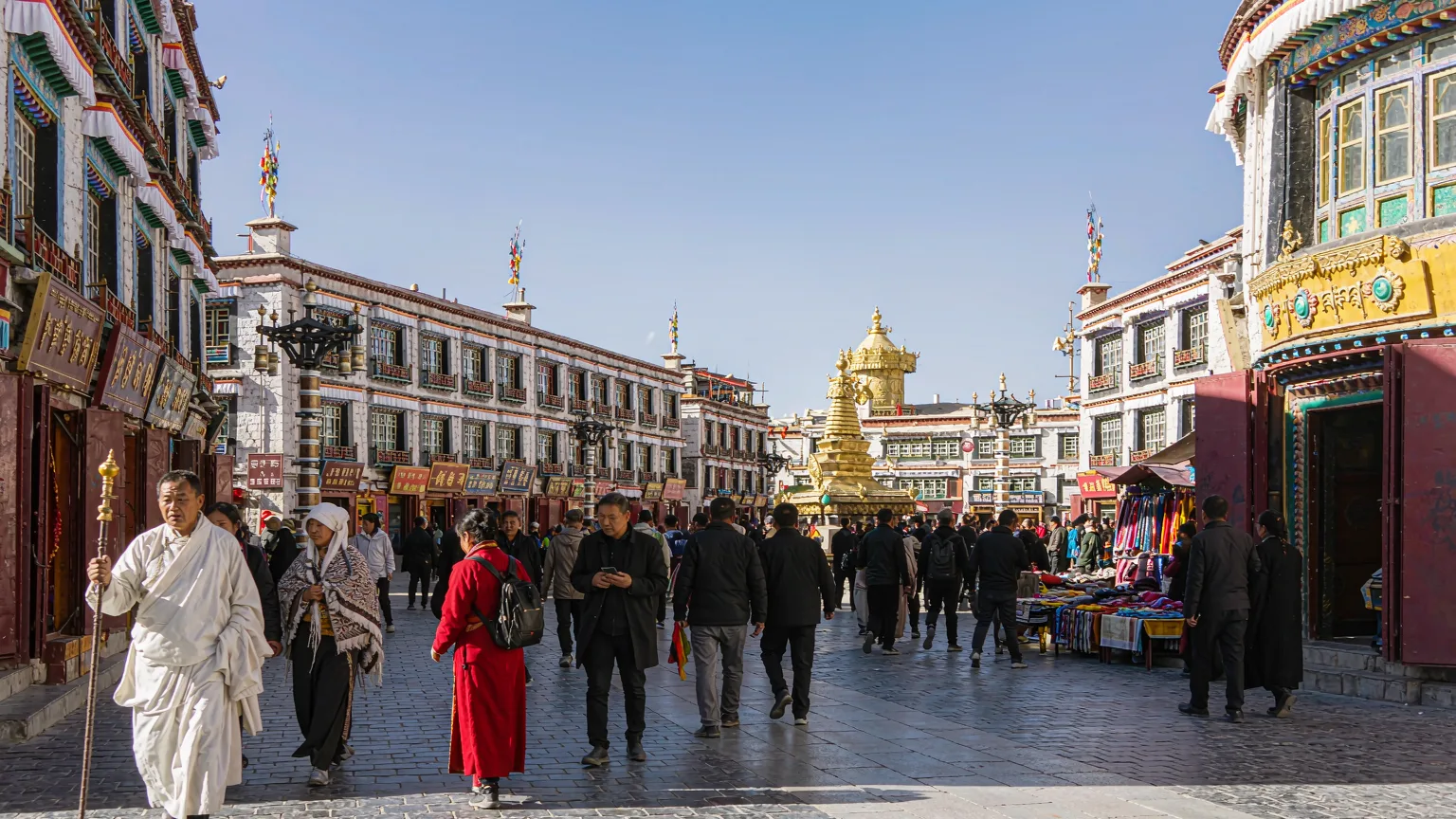
The Jokhang Temple is in the heart of Lhasa's old town, easily reached on foot from most central hotels. Taxis or ride-hailing apps can drop you near the Barkhor area, but vehicles cannot enter the pedestrian zone. Many travellers visit as part of a guided day tour that includes the Potala Palace and Barkhor Street. Our private transfers ensure a smooth arrival, with guides handling tickets and timing to avoid peak crowds.
Admission costs ¥85 per person; opening hours are typically 9:00–17:30, with morning hours reserved for pilgrims. Book through your guide or a licensed tour operator in advance, especially during peak season (May–October).
Payment is usually in cash (CNY) or via WeChat Pay/Alipay; foreign cards are not accepted directly, so bring enough cash or set up mobile payment with your guide's help.
The best time to visit is during the shoulder seasons of April–May or September–October, when the weather is mild and crowds are manageable. Early morning (before 9:00) offers a chance to see pilgrims in full devotion, while late afternoon light enhances the temple's golden roofs. Avoid major Tibetan holidays like Losar, when it's extremely crowded.
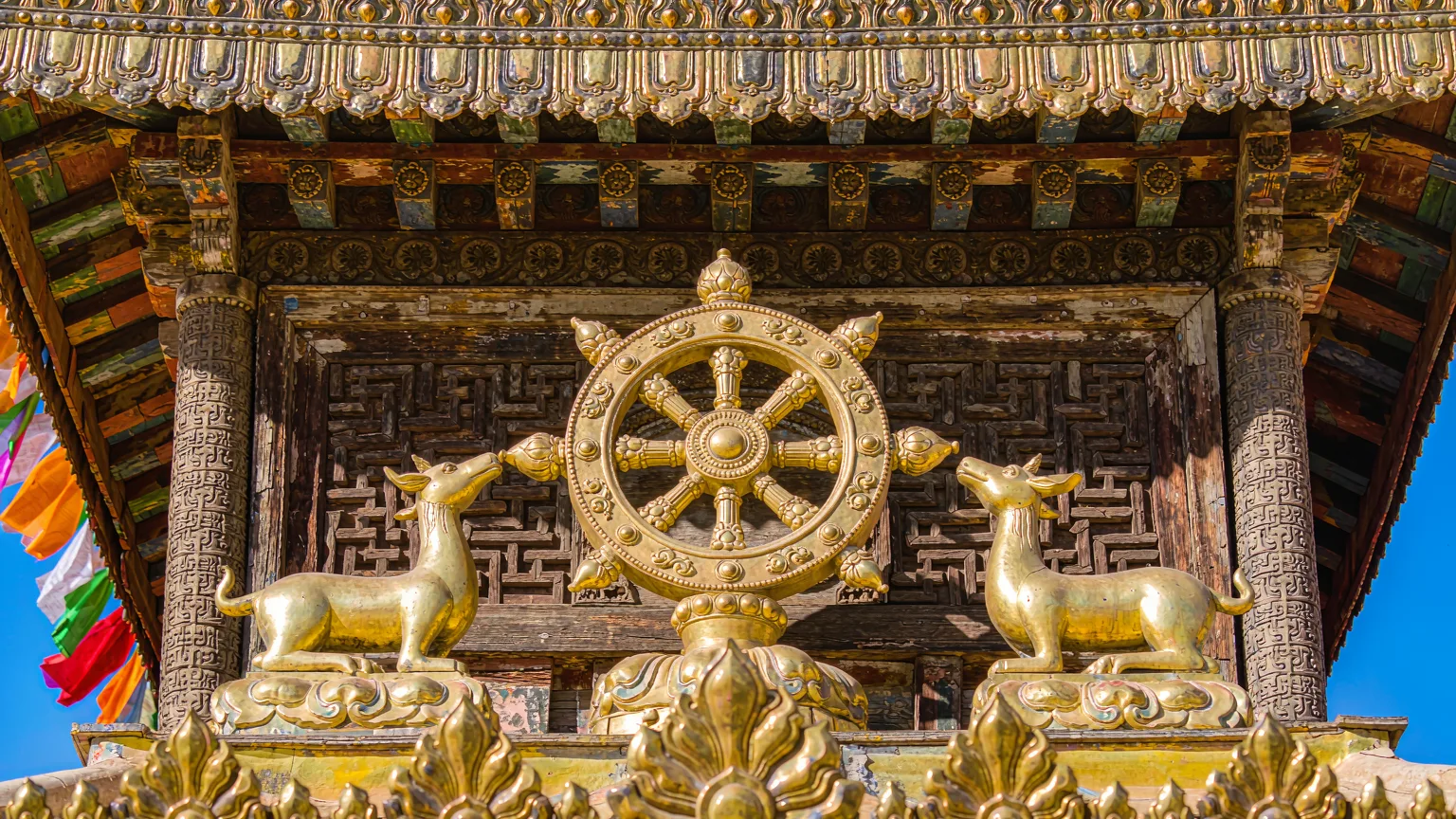
Yes, foreign visitors are welcome, but you must be part of a guided tour or have a permit arranged through a travel agency. Our team handles all permits and logistics for you.
Modest attire is required: cover shoulders and knees, and remove hats inside chapels. Avoid shorts, sleeveless tops, and revealing clothing to show respect for this sacred site.
Photography is generally not allowed inside the main assembly hall and chapels. You may take photos on the rooftop and in the courtyard, but always look for signs and respect local rules.
Plan for 1.5 to 2 hours to explore the chapels, rooftop, and Barkhor circuit. With a guide, you'll gain deeper context and can adjust timing based on your interest.
Tell us your dates, group size and preferences — a dedicated consultant will reach out within 24 hours.