
Guest — sign in to save your enquiries.
My account
Jinli Ancient Street is Chengdu's most atmospheric lane of Ming- and Qing-style architecture, tucked beside the Wuhou Shrine and steeped in Three Kingdoms lore. It's a sensory feast of Sichuan snacks, teahouses, and red lanterns, but the crowds can overwhelm. With our private guide, you'll slip past the queues, taste the right stalls, and hear the stories behind the facades.
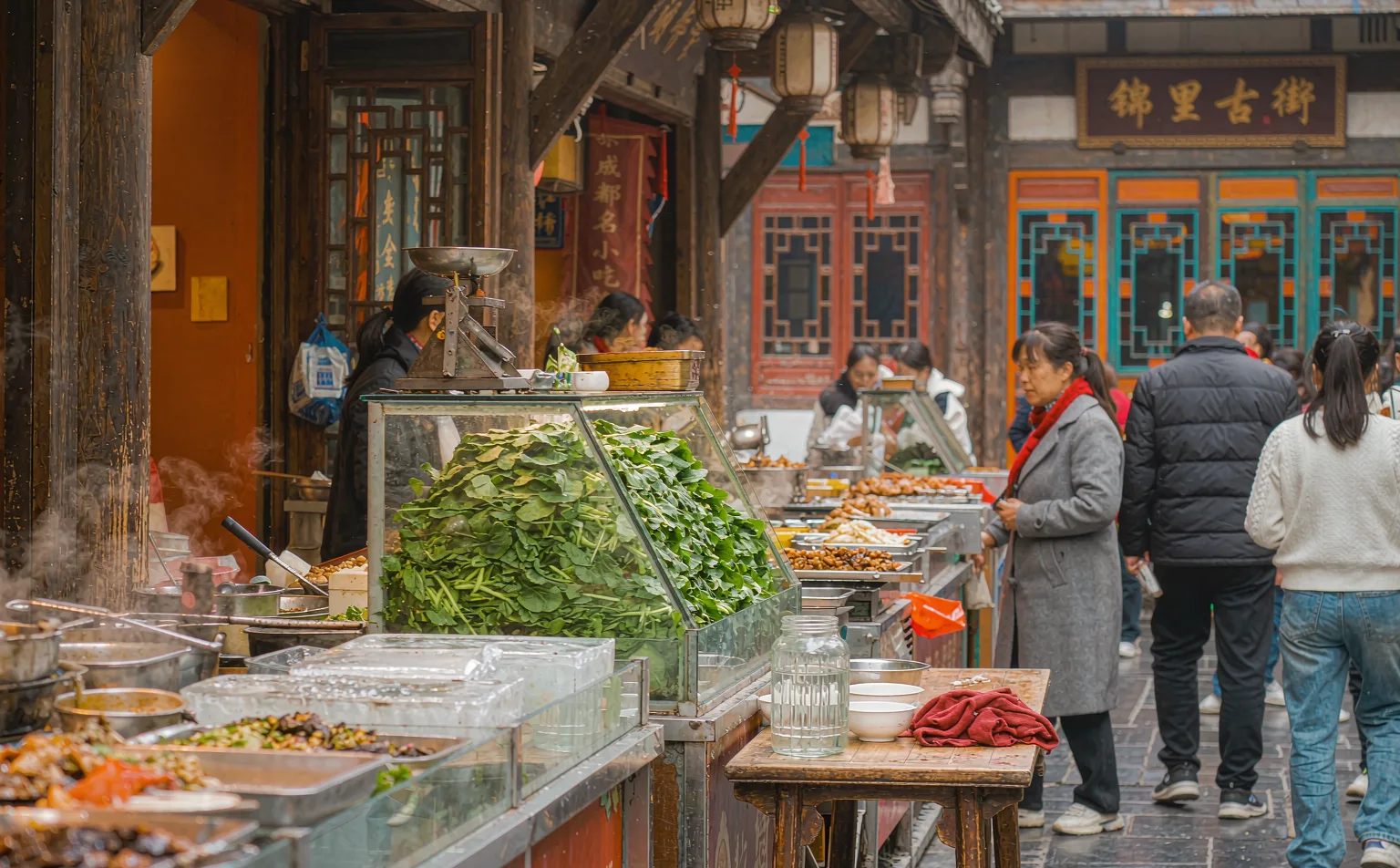
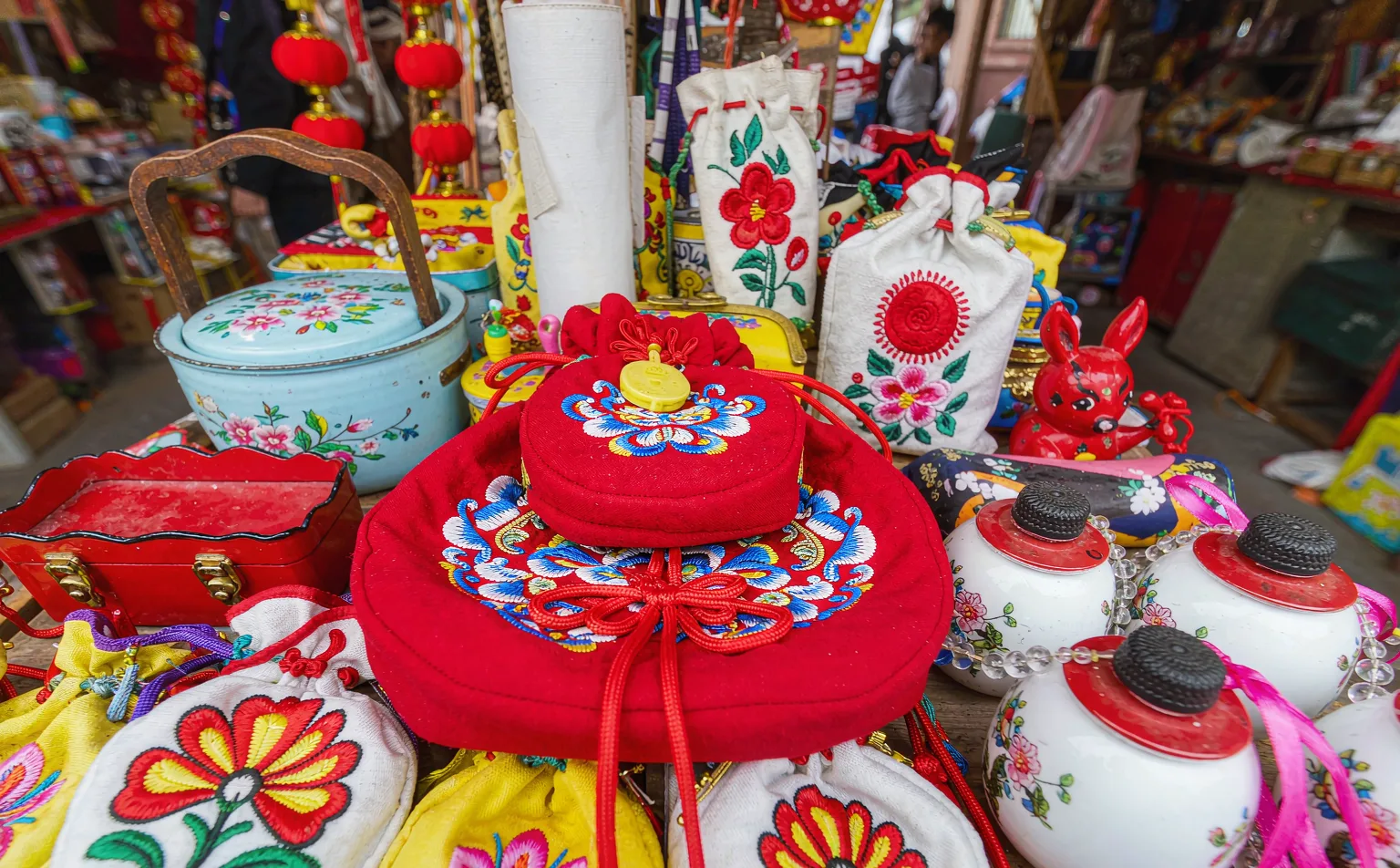
Jinli Ancient Street sits directly beside Wuhou Shrine and recreates a market street in the style of old Shu, themed on Three Kingdoms culture and Sichuan folk life. By day it is a dense line of snack stalls — try the 'three cannons' glutinous rice balls and sugar-oil fruits — plus candy painting, shadow puppetry and craft shops selling souvenirs. The street is free and always open, but it is at its best after dark, when red lanterns light up the wooden facades and street performers draw crowds. Expect heavy foot traffic and a commercialized feel; locals call it a tourist street, yet it remains the most convenient one-stop taste of Chengdu snacks. Come at dusk, combine it with the shrine, and spend about two hours. Vendors rarely speak English, so point-and-order works fine.

Jinli, meaning 'Brocade Lane', harks back to the Shu Kingdom when Chengdu was a brocade-producing capital. The street you see today is a reconstruction opened in 2004, but it faithfully recreates the commercial vibe of the Qing dynasty, with wooden shopfronts, stone bridges, and a canal. It sits immediately east of the Wuhou Shrine, a temple complex dedicated to Zhuge Liang and Liu Bei of the Three Kingdoms. Together they form a cultural quarter that draws millions of visitors each year. The name 'Jinli' itself references the ancient Brocade Office that once managed silk production here.
Beyond its photogenic looks, Jinli is a living showcase of Sichuan folk culture. You'll find artisans blowing sugar figurines, shadow puppeteers, and vendors selling everything from spicy rabbit heads to three-pao tea. The street is divided into two sections: the upper part focuses on snacks and crafts, while the lower part along the canal is quieter, with bars and teahouses. It's a great place to pick up souvenirs like Shu embroidery or bamboo weaving. Because it's a 4A-rated attraction, expect tight security and heavy foot traffic, especially on weekends. Our guides know the back entrances and the best times to avoid the crush.
Jinli is at 231 Wuhouci Street, about 3 km south of Tianfu Square. Take Metro Line 3 to Gaoshengqiao Station (Exit D) and walk 10 minutes, or Line 1 to Huaxiba and transfer to a short taxi. A taxi from downtown costs ¥15–25. We usually combine it with the Wuhou Shrine in the morning, then let you loose for snacks and shopping before an evening Sichuan opera nearby.
Entry to Jinli is free; the adjacent Wuhou Shrine charges ¥50 (peak) or ¥40 (off-peak). Jinli is open all day, but stalls typically run from 9am to 10pm. No booking needed for the street, but Wuhou Shrine tickets can be reserved via WeChat mini-programs. Foreign cards are rarely accepted at stalls, so link a card to WeChat Pay or Alipay before you go.
Visit on a weekday morning (before 11am) for fewer crowds and soft light, or after 7pm when lanterns glow and the atmosphere is magical. Avoid Chinese public holidays and weekends, when the narrow lanes become shoulder-to-shoulder. Spring (March–May) and autumn (September–November) offer the most pleasant weather for strolling.
Yes, because of its Three Kingdoms connection and proximity to Wuhou Shrine. It's more compact and historically themed than many commercial streets, and our guide can bring the stories to life.
Allow 1.5–2 hours for the street itself, plus another 1.5–2 hours for Wuhou Shrine. With a guide, you can cover both comfortably in half a day.
Most stalls only accept WeChat Pay, Alipay, or cash. Set up Alipay or WeChat Pay with your international card before your trip, or bring small yuan notes.
Yes, though limited. Look for sweet water noodles, dan dan noodles without meat, or fried dough. Our guides can point you to stalls that cater to dietary needs.
Tell us your dates, group size and preferences — a dedicated consultant will reach out within 24 hours.