
Guest — sign in to save your enquiries.
My account
The Jinjiang Grand Canyon is a 70-kilometre volcanic gorge carved through layers of ash and lava, its walls lined with eerie rock pillars that look like a petrified forest. It is the wild, less-trodden counterpart to Changbai Mountain's crater lake, and our private guides know exactly when to bring you here for the best light and quiet.
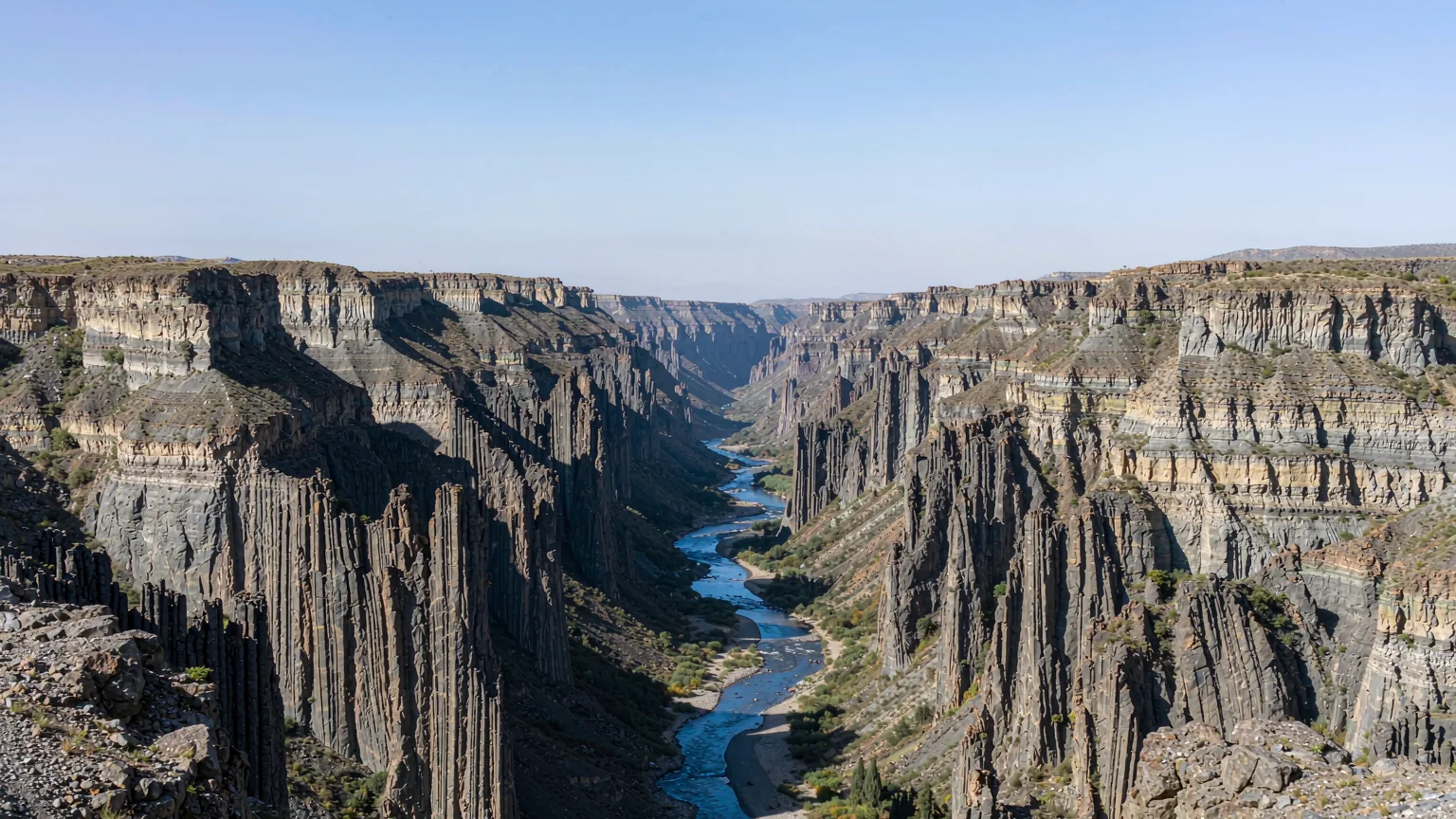
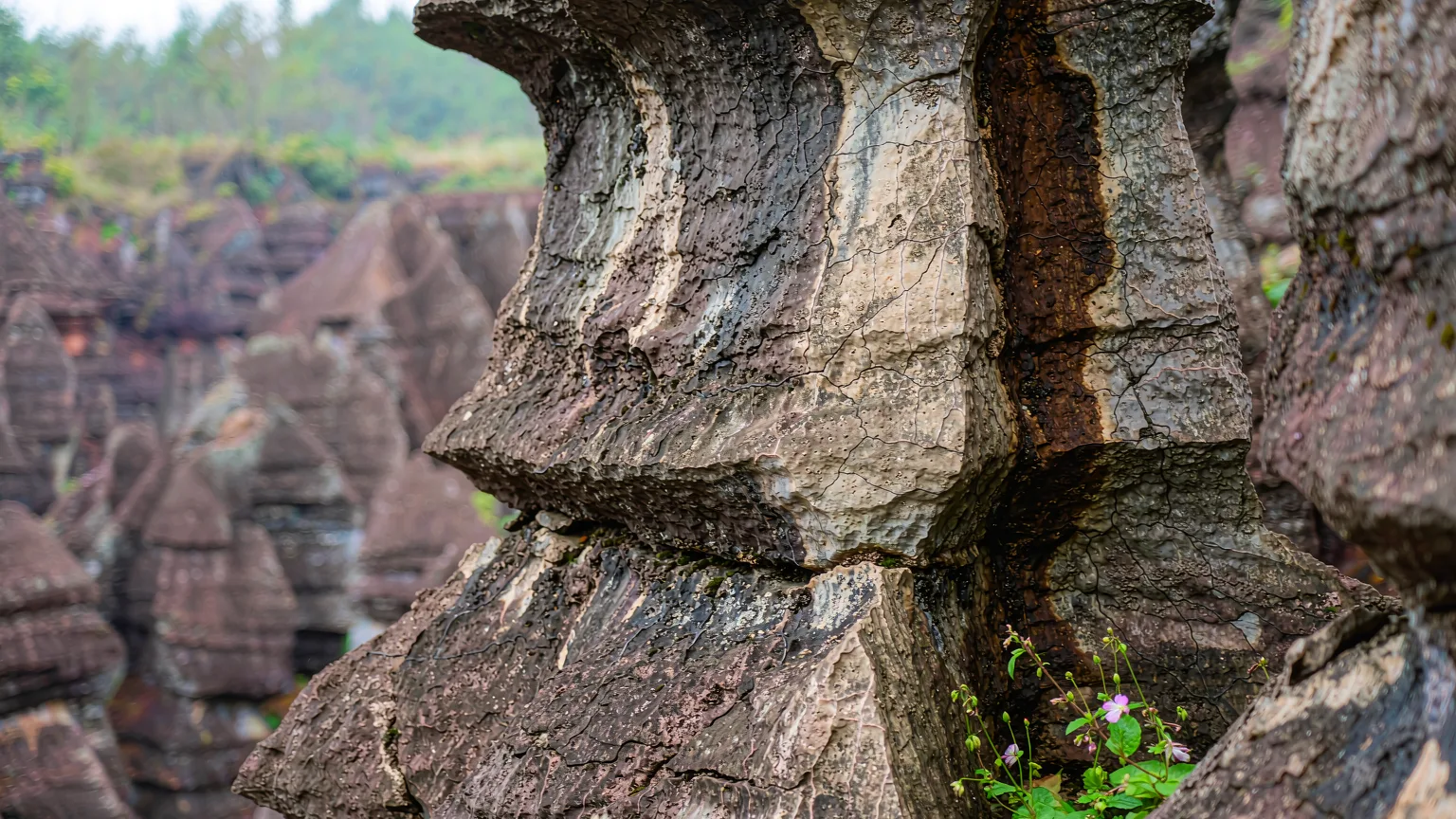
The Jinjiang Grand Canyon began forming roughly 10,000 years ago, when volcanic eruptions from Changbai Mountain blanketed the area in thick layers of ash and pumice. Over millennia, the Jinjiang River and seasonal meltwater cut through this soft volcanic deposit, exposing harder basalt and welded tuff that now stand as vertical spires, towers and walls. The canyon runs about 70 kilometres in total, with a developed viewing section of roughly 3 kilometres that reveals the most dramatic formations. Because the rock is volcanic rather than sedimentary, the shapes are unusually sharp and porous, often compared to a forest turned to stone.
Geologically, the canyon offers a rare window into the post-eruption landscape of Northeast Asia. The alternating bands of ash, lava and breccia record multiple eruptive phases of the Changbai volcano, and the ongoing erosion shows how quickly volcanic terrain can change. For visitors, the experience is both scenic and scientific: boardwalks and viewing platforms let you peer down into the gorge without disturbing the fragile slopes. The surrounding forest is part of the Changbai Mountain Biosphere Reserve, so the canyon is also a habitat for deer, wild boar and dozens of bird species. Our guides can explain the volcanic story as you walk, turning a simple hike into a lesson in earth history.
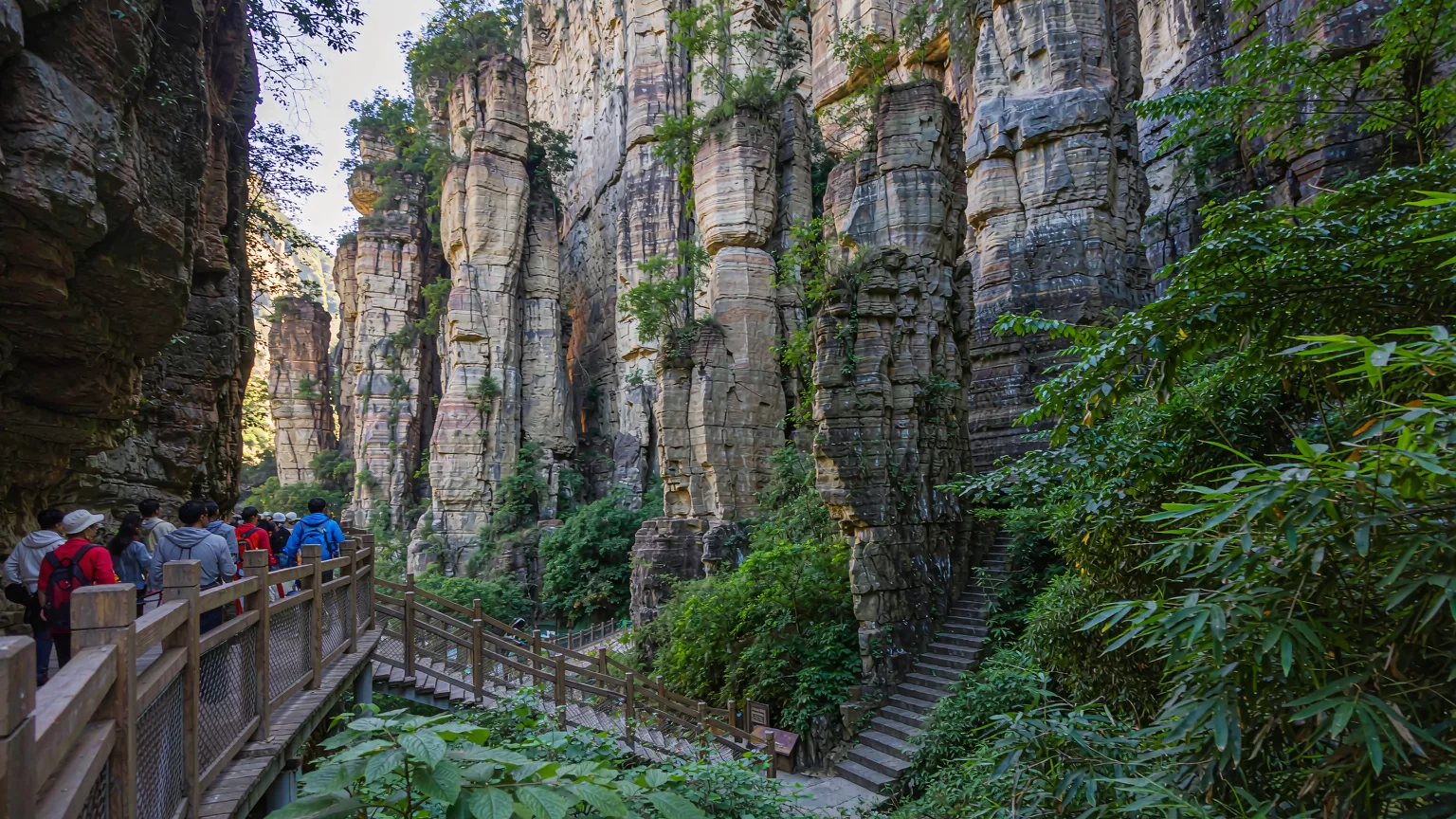
The canyon sits in the Changbai Mountain North Scenic Area, about 30 kilometres from the town of Erdaobaihe. Most foreign travellers arrive by high-speed rail to Dunhua or Antu, then take a private transfer or scenic-area shuttle to the north gate. From the gate, a combination of eco-bus and short boardwalk leads to the canyon. We usually pair it with the crater lake in one full day, starting early to avoid tour groups. A private car with driver is the most comfortable option, and our guides handle all shuttle tickets and timing.
Entry to the Changbai Mountain North Scenic Area costs ¥105 per person in peak season (¥85 in low season), plus a mandatory eco-bus fee of ¥85. The canyon itself is included in the scenic-area ticket. Opening hours are roughly 7:00–17:00, with last entry around 15:00. Book online in advance via the official WeChat mini-program; foreign cards are not always accepted, so bring cash or use Alipay/WeChat Pay linked to an international card.
The best time to visit is late June to early October, when the boardwalks are clear and the forest is lush. September offers crisp air and early autumn colours. Avoid July and August weekends if you dislike crowds, and note that the canyon may close after heavy rain due to slippery paths. Morning light is best for photography, as the sun reaches into the gorge from the east.
Yes, the developed section is mostly boardwalk with gentle slopes and railings. It is stroller-friendly in parts, but there are some steps. Our guides can adjust the pace and route to suit your group.
Most visitors spend 1.5 to 2 hours walking the boardwalk and viewpoints. Including shuttle transfers from the north gate, allow 3 hours. We often combine it with the crater lake for a full day.
Yes, but signage in English is limited and shuttle logistics can be confusing. A private guide ensures you catch the right buses, avoid queues, and understand the geology and ecology.
Light rain is fine, but heavy rain may close the boardwalk for safety. Check the weather forecast and have a backup plan, such as the Changbai Mountain Museum or a hot spring in Erdaobaihe.
Tell us your dates, group size and preferences — a dedicated consultant will reach out within 24 hours.