
Guest — sign in to save your enquiries.
My account
The Jingjiang Princes' Palace is a remarkably preserved Ming dynasty princely residence, tucked beneath the dramatic peak of Solitary Beauty Peak in the heart of Guilin. For over 250 years it served as the seat of the Zhu family, relatives of the emperors, and today its halls, gardens, and ancient stone carvings offer a rare window into imperial China. With our private guide, you'll bypass the crowds and uncover the stories etched into every corner of this historic complex.
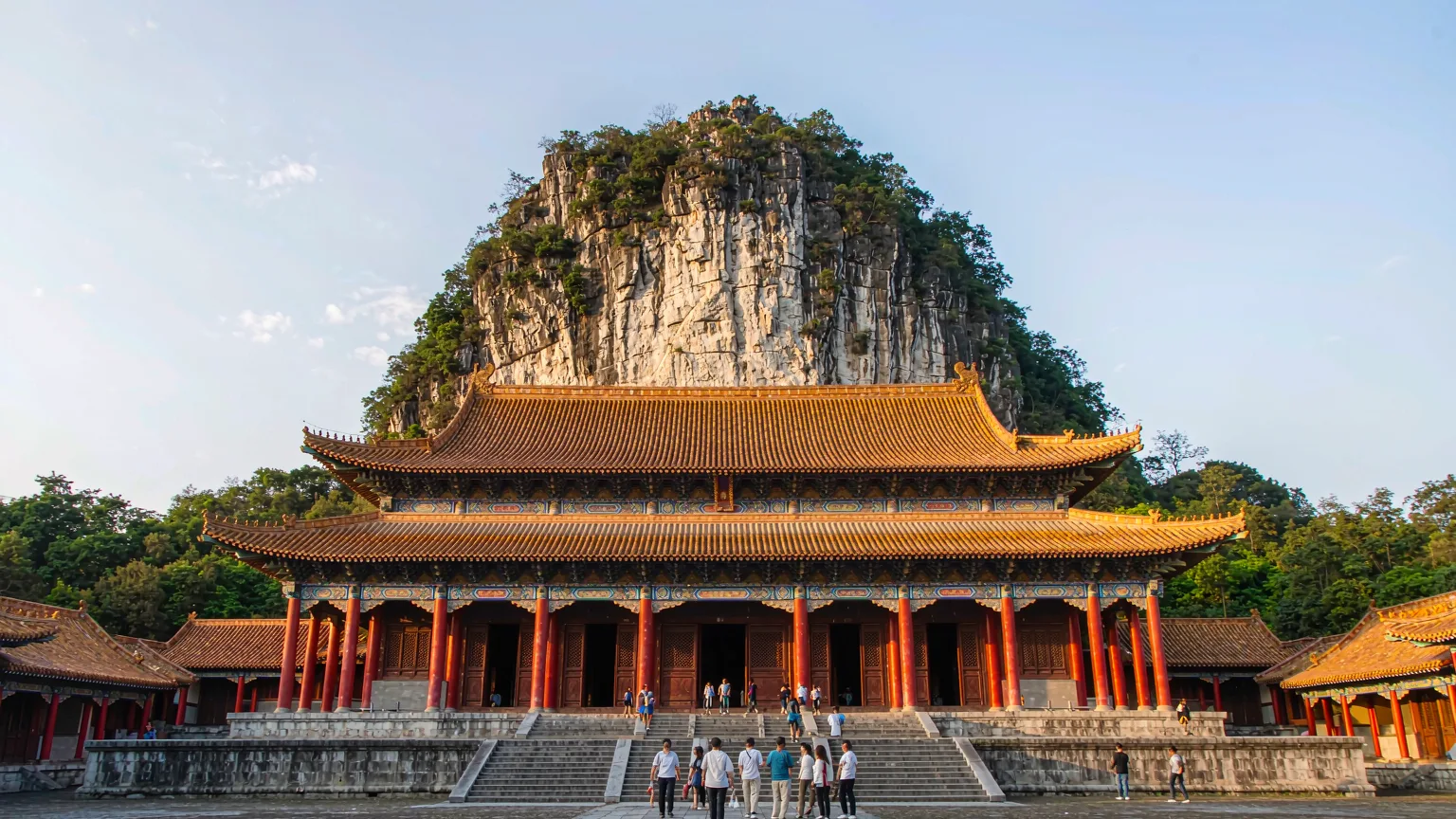
Built in 1372 during the reign of the Hongwu Emperor, the Jingjiang Princes' Palace was the official residence of the Jingjiang princes, descendants of Zhu Yuanzhang, the founding emperor of the Ming dynasty. The palace complex was designed as a miniature Forbidden City, with a central axis, ceremonial halls, and a private garden. Over 14 generations of princes lived here until the dynasty's fall in 1644. Remarkably, the site has survived centuries of war and change, and its layout still reflects the strict hierarchical principles of Ming architecture. In 1996, it was designated a National Key Cultural Relic Protection Unit.
The palace is dominated by Solitary Beauty Peak (Duxiu Feng), a 66-meter limestone pinnacle that rises abruptly from the grounds. The peak is famous for its ancient inscriptions, including the celebrated 'Guilin's Scenery is the Best Under Heaven' carved by the Song dynasty poet Wang Zhenggong. Visitors can climb the 306 stone steps to the summit for a panoramic view of Guilin's cityscape and the Li River. The palace also houses the Guangxi Normal University's Wangcheng campus, blending modern academic life with ancient history. Our guides will help you navigate the site's layered past, from imperial court to scholarly retreat.
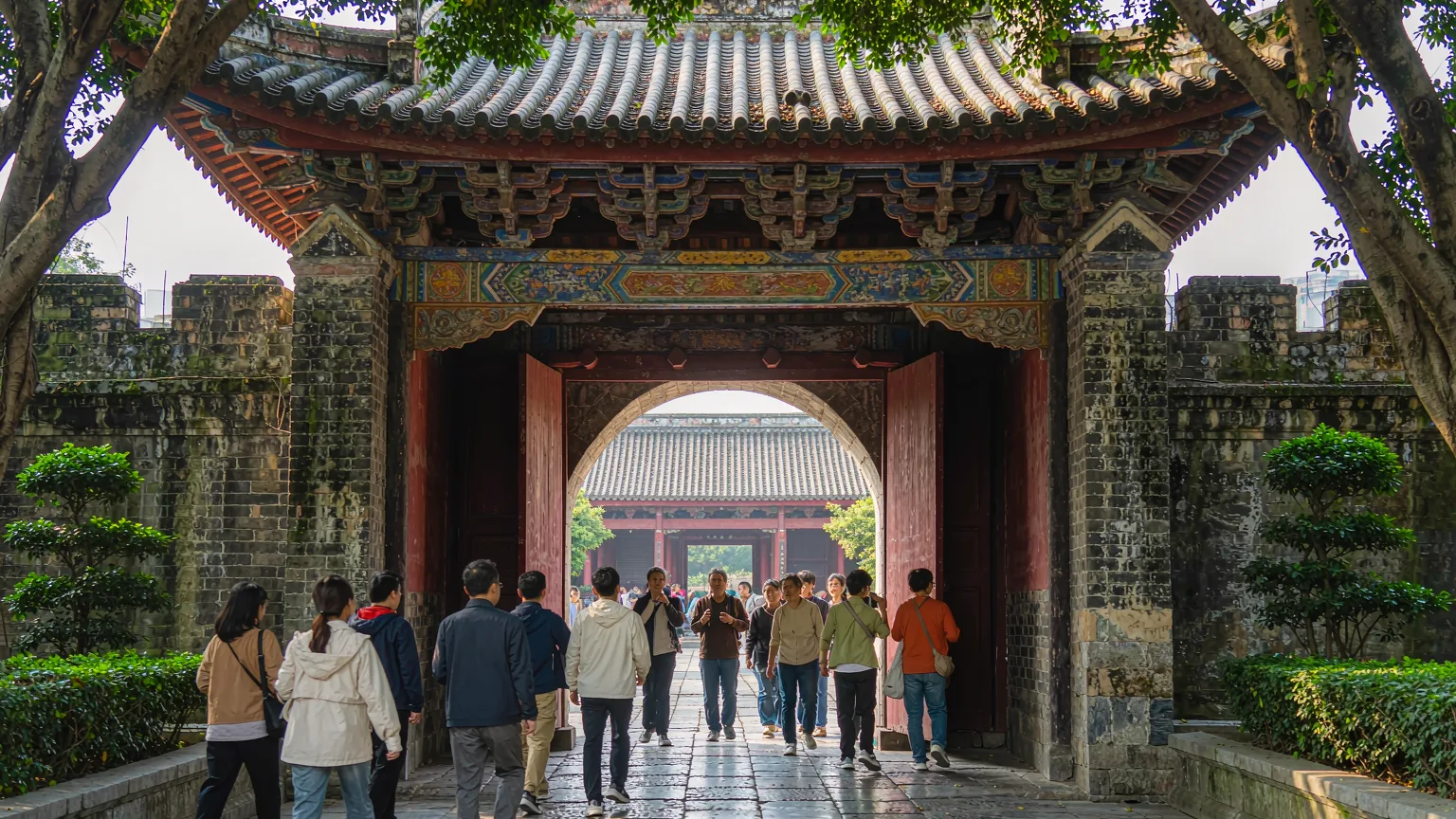
The palace is located at 1 Wangcheng Road in central Guilin, easily reached by taxi (about ¥15 from the railway station) or bus (routes 1, 2, 10, 11, 99, 100). It's a 15-minute walk from the Li River waterfront and pairs well with a visit to the nearby Sun and Moon Pagodas. Our private guide can arrange a seamless transfer from your hotel and tailor the visit to your schedule.
Admission is ¥120 for adults, ¥60 for students and seniors, and free for children under 1.2 meters. Opening hours are 7:30 AM to 6:30 PM (last entry at 6:00 PM). We recommend booking through our guide to skip the ticket line; foreign credit cards are accepted at the ticket office, and WeChat Pay/Alipay are widely used.
The best time to visit is during the spring (April to May) or autumn (September to November) when the weather is mild and the crowds are thinner. Early morning (before 9 AM) offers cooler temperatures and softer light for photography, while late afternoon (after 4 PM) provides golden hour views from Solitary Beauty Peak. Avoid weekends and Chinese public holidays if possible.
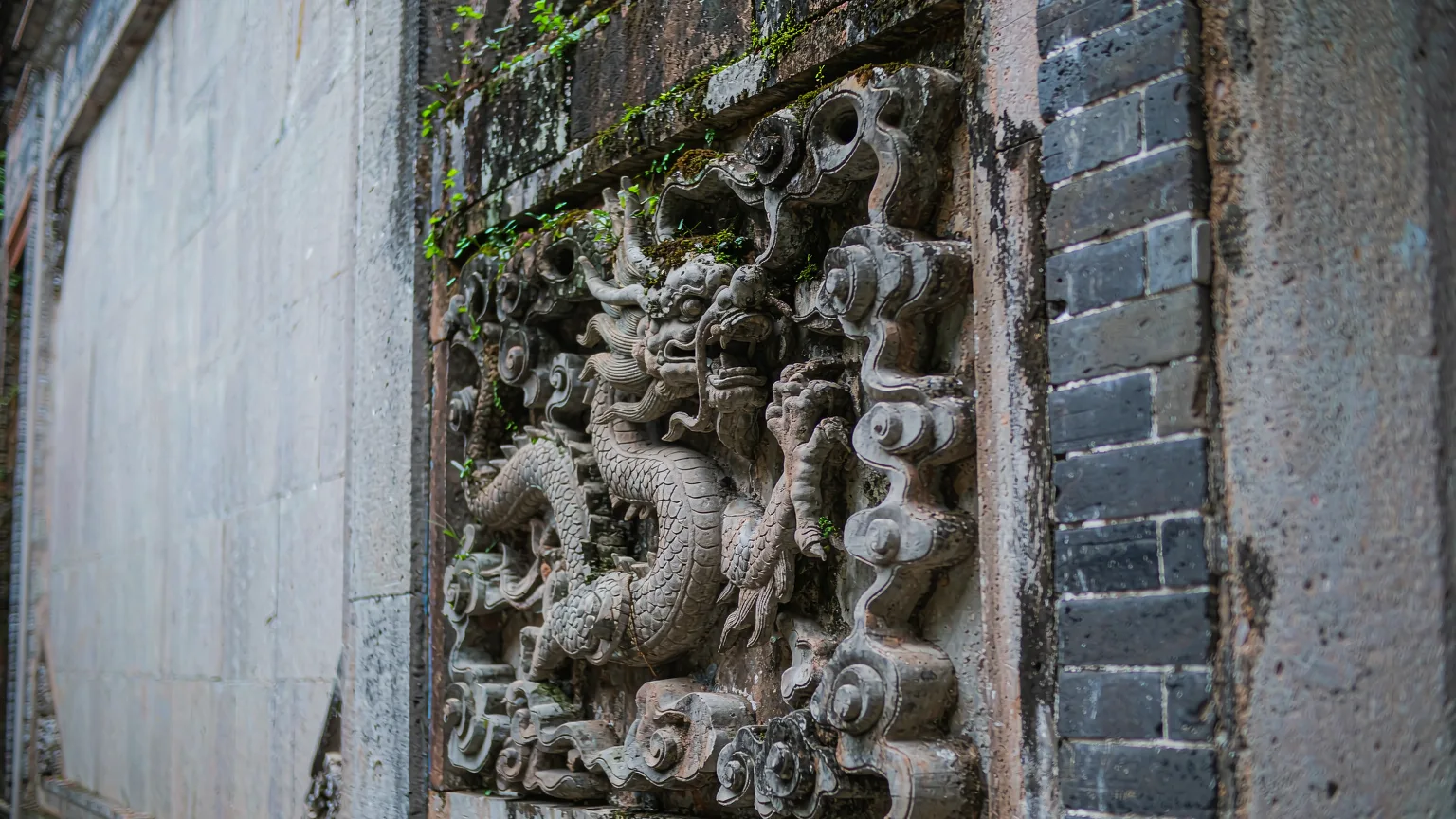
Most visitors spend 1.5 to 2 hours exploring the palace and climbing Solitary Beauty Peak. If you're a history enthusiast, allow 3 hours to fully absorb the exhibitions and inscriptions.
The climb involves 306 steps and takes about 20-30 minutes. It's moderately challenging but doable for most fitness levels. The path is narrow in places, so take your time and wear sturdy shoes.
Yes, major signs are in English and Chinese, and English audio guides are available for rent. Our private guides provide in-depth commentary and can answer all your questions.
Yes, the ticket office accepts international credit cards, but it's always wise to carry some cash (¥) as a backup. Mobile payments like WeChat Pay and Alipay are also accepted if you have them set up.
Tell us your dates, group size and preferences — a dedicated consultant will reach out within 24 hours.