
Guest — sign in to save your enquiries.
My account
Huaqing Palace, nestled at the foot of Mount Li near Xi'an, is a Tang-dynasty imperial hot spring resort where Emperor Xuanzong and his beloved Yang Guifei spent their winters. Beyond the legendary romance, it offers ancient bathing pools, scenic gardens, and the dramatic backdrop of the Li Mountains. With our private guide, you'll skip the crowds and uncover the stories behind this 5A-rated site.
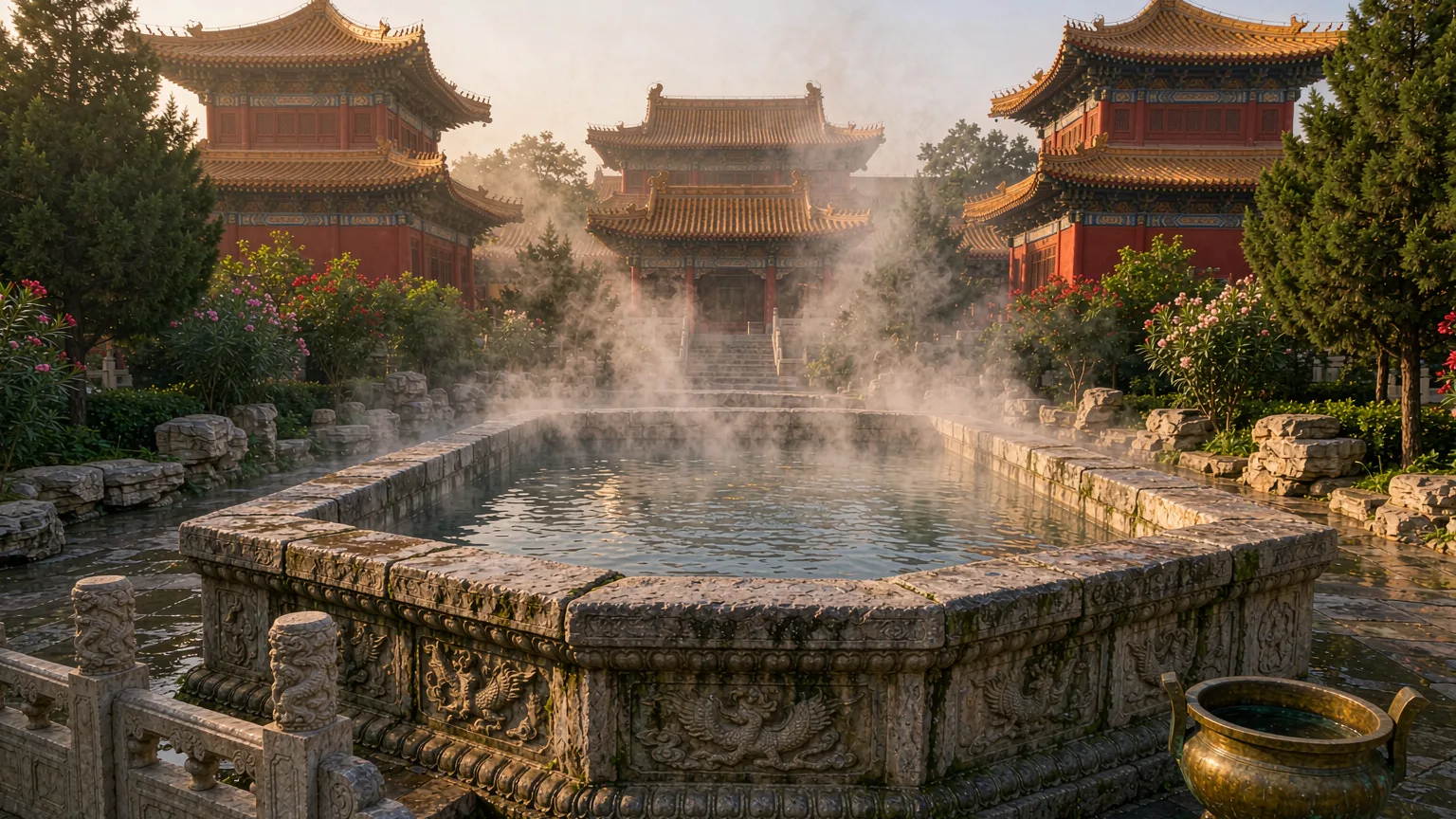
Huaqing Palace has a history spanning over 3,000 years, but it rose to fame during the Tang Dynasty (618–907) when Emperor Xuanzong expanded it into a lavish imperial retreat. The emperor and his consort Yang Guifei bathed in the natural hot springs, and their love story became one of China's most enduring tales, later romanticized in Bai Juyi's poem 'Song of Everlasting Sorrow.' The site also witnessed the An Lushan Rebellion, which forced the emperor to flee and marked the beginning of the Tang decline. Today, the reconstructed halls and excavated pools offer a glimpse into imperial leisure and court intrigue.
The palace complex is divided into several areas: the Tang Huaqing Palace Ruins Museum, where you can see the original stone bathing pools; the Five-Room Hall, a Qing-era building where Chiang Kai-shek stayed and was captured during the Xi'an Incident in 1936; and the scenic Li Mountain, with its cable car and hiking trails. The hot springs still flow at around 43°C and are rich in minerals. A visit here pairs well with the Terracotta Warriors, as both are on the same route east of Xi'an.
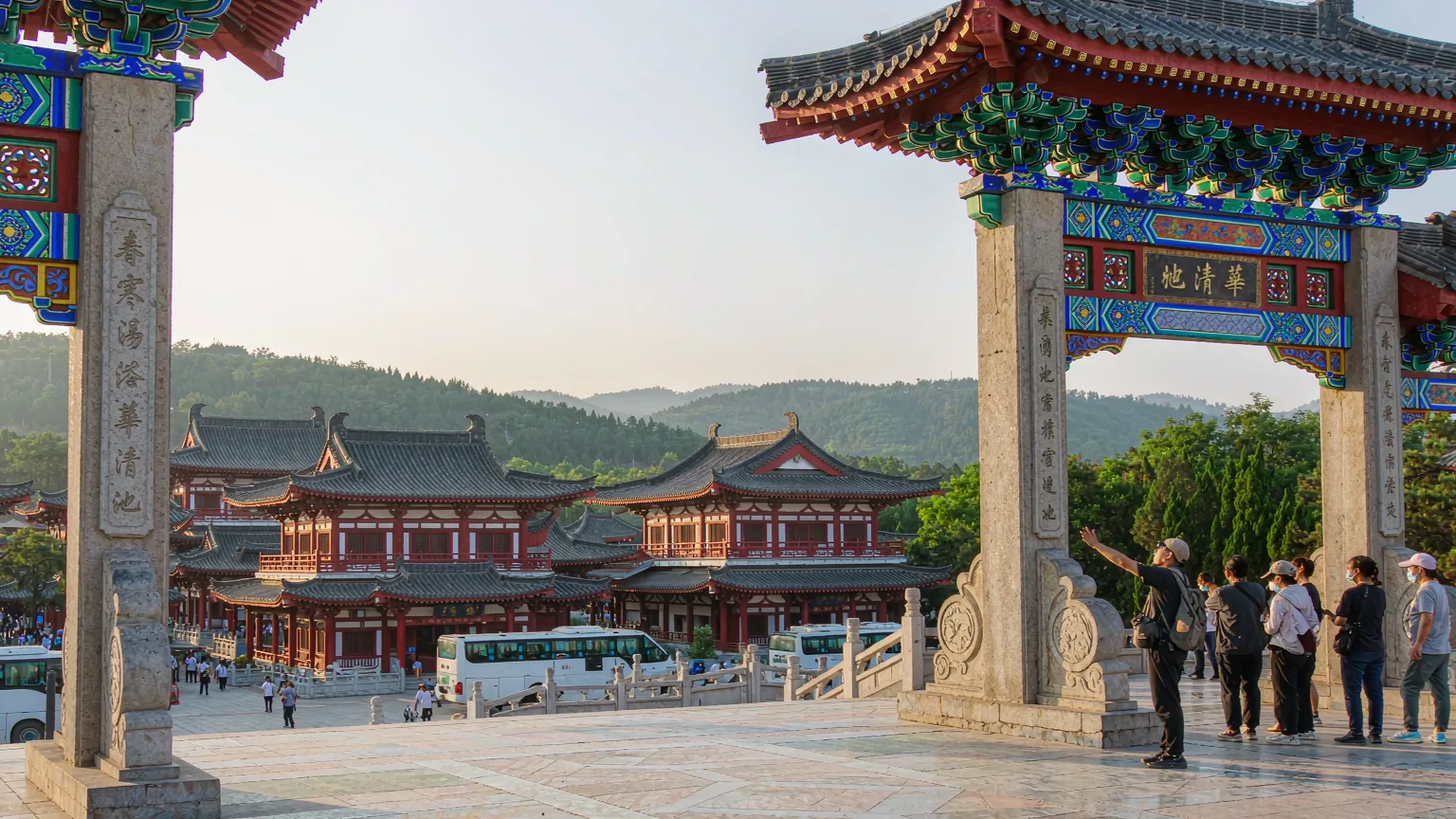
Huaqing Palace is about 30 km east of Xi'an, easily reached by metro plus bus or taxi. Take Metro Line 9 to Huaqingchi Station, then walk 10 minutes. Alternatively, a taxi from downtown costs around ¥100–150 and takes 40–50 minutes. Many travelers combine it with a visit to the Terracotta Warriors, which is 6 km further east; our private guide can arrange a seamless day trip covering both sites, with hotel pickup and drop-off.
Admission is ¥120 (March–November) and ¥90 (December–February), including the palace and Li Mountain. Opening hours are 7:00–19:00 (peak) and 7:30–18:00 (off-peak). Book in advance via WeChat or Trip.com; foreign credit cards are accepted on Trip.com, but for on-site purchases, use WeChat Pay or Alipay linked to an international card. The evening show requires a separate ticket (¥298–988).
The best time to visit is during spring (April–May) or autumn (September–October), when the weather is mild and the gardens are lush. Avoid weekends and Chinese public holidays. Early morning is ideal to beat tour groups; alternatively, arrive after 15:00 for softer light and fewer crowds. The evening show is best in summer and early autumn when the weather is warm.
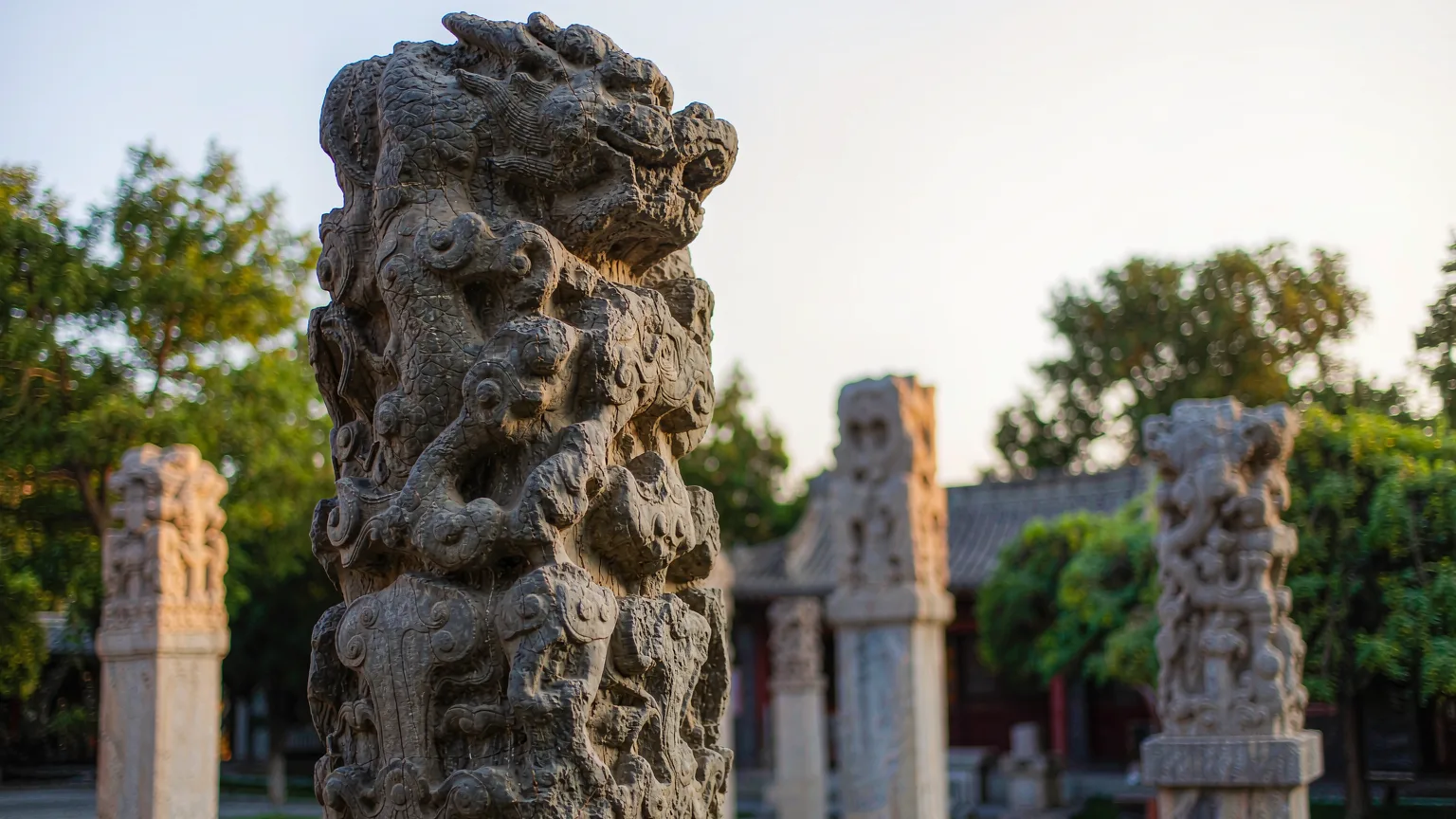
Plan for 2–3 hours to explore the main palace area and pools. Add an extra hour if you take the cable car up Li Mountain or watch the evening show.
Yes, especially if you're interested in Tang history or the Yang Guifei legend. The combination of archaeology, hot springs, and mountain scenery makes it a worthwhile half-day trip.
Absolutely. They are only 6 km apart. Visit the Terracotta Warriors first in the morning, then Huaqing Palace in the afternoon to avoid the largest crowds.
Some signs have English, but they are limited. We recommend hiring a guide or using a translation app to fully understand the historical significance.
Tell us your dates, group size and preferences — a dedicated consultant will reach out within 24 hours.