
Guest — sign in to save your enquiries.
My account
Harbin Ice and Snow World is the planet's largest ice-and-snow theme park, a temporary city of illuminated ice palaces, snow sculptures and frozen slides built each winter on the Songhua River's floodplain. It exists for roughly ten weeks a year, and no photograph quite prepares you for walking inside it. Our private guides handle the tickets, the layers, the timing and the transfers, so you simply step into the glow.
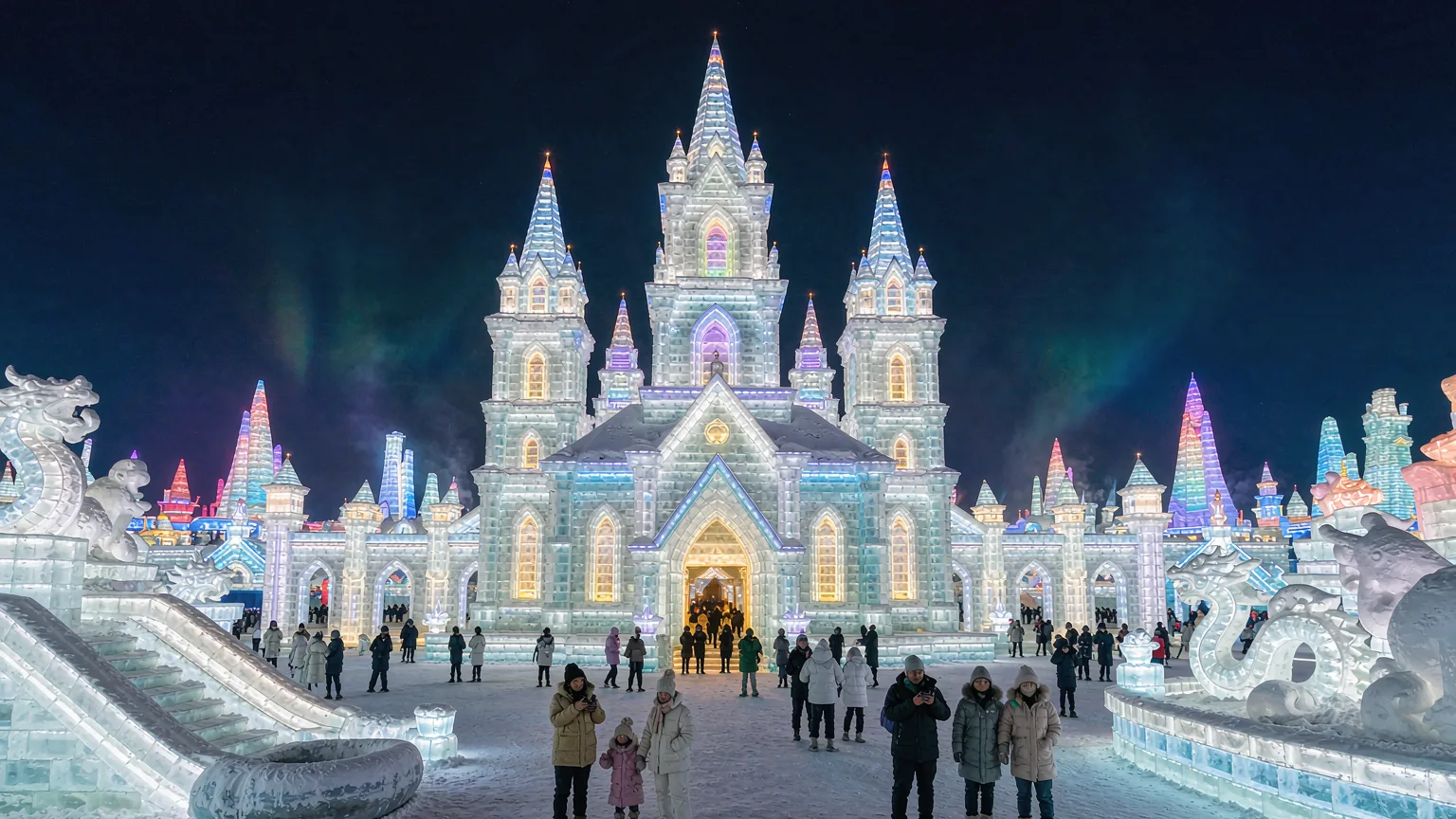
First staged in 1999 as a millennium celebration, Harbin Ice and Snow World grew out of the city's older ice-lantern traditions, which date back to the Qing dynasty and were formalised as a winter festival in 1985. Each November, crews cut blocks from the frozen Songhua River and assemble them into full-scale palaces, cathedrals and towers, lit from within by thousands of LED fixtures. The park is rebuilt from scratch every season, so no two years look alike, and its scale has made it the anchor of the wider Harbin International Ice and Snow Festival.
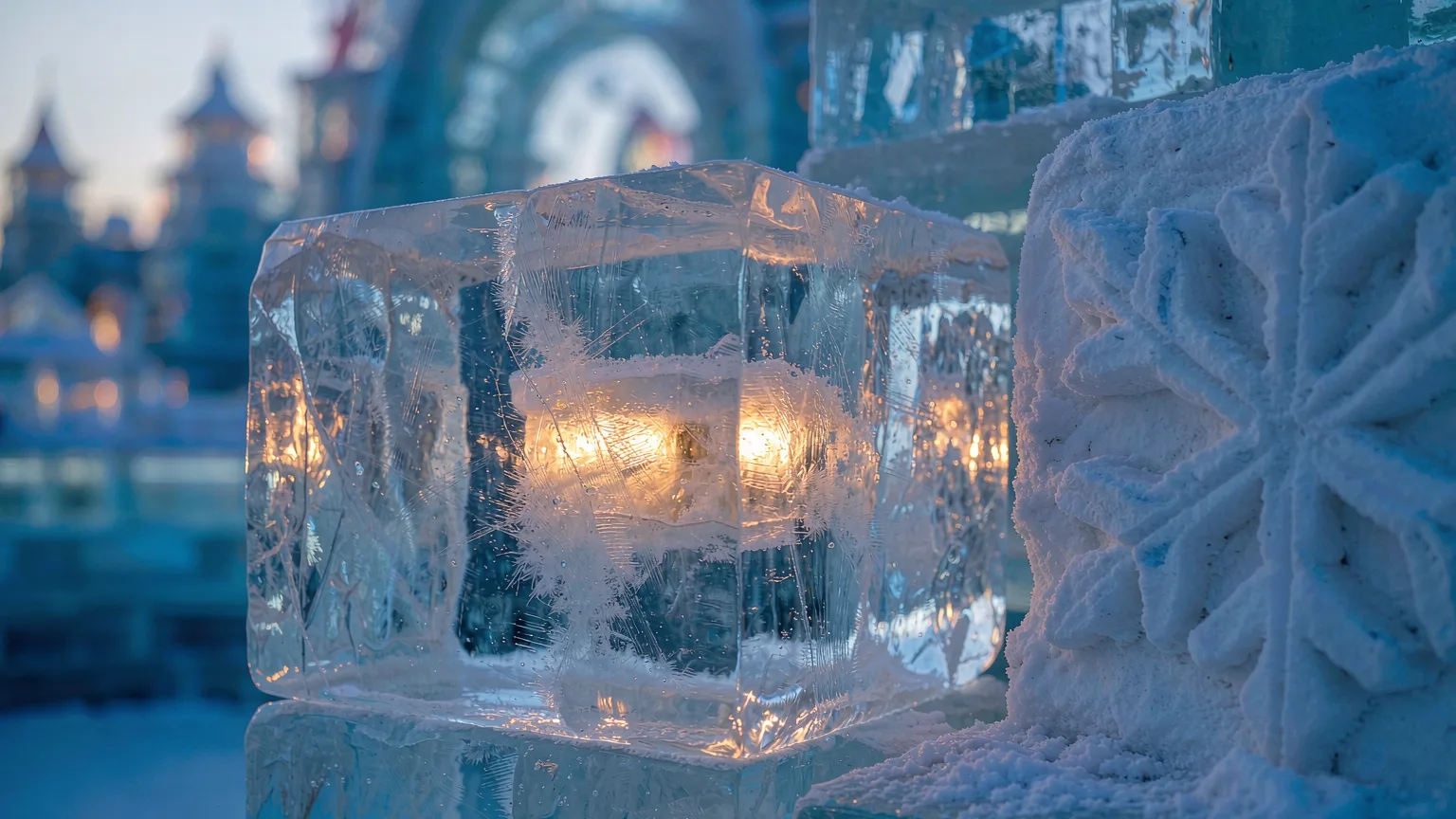
The site sits in the Songbei district, across the river from the historic centre, and typically opens in late December, running into late February or early March depending on temperatures. Structures are engineered rather than merely carved: ice blocks are fused with water and reinforced with steel where needed, and the largest buildings can exceed 30 metres. Expect to walk several kilometres on ice and packed snow, with indoor warming halls scattered through the grounds. For a broader look at the region, see our Heilongjiang attraction guides.
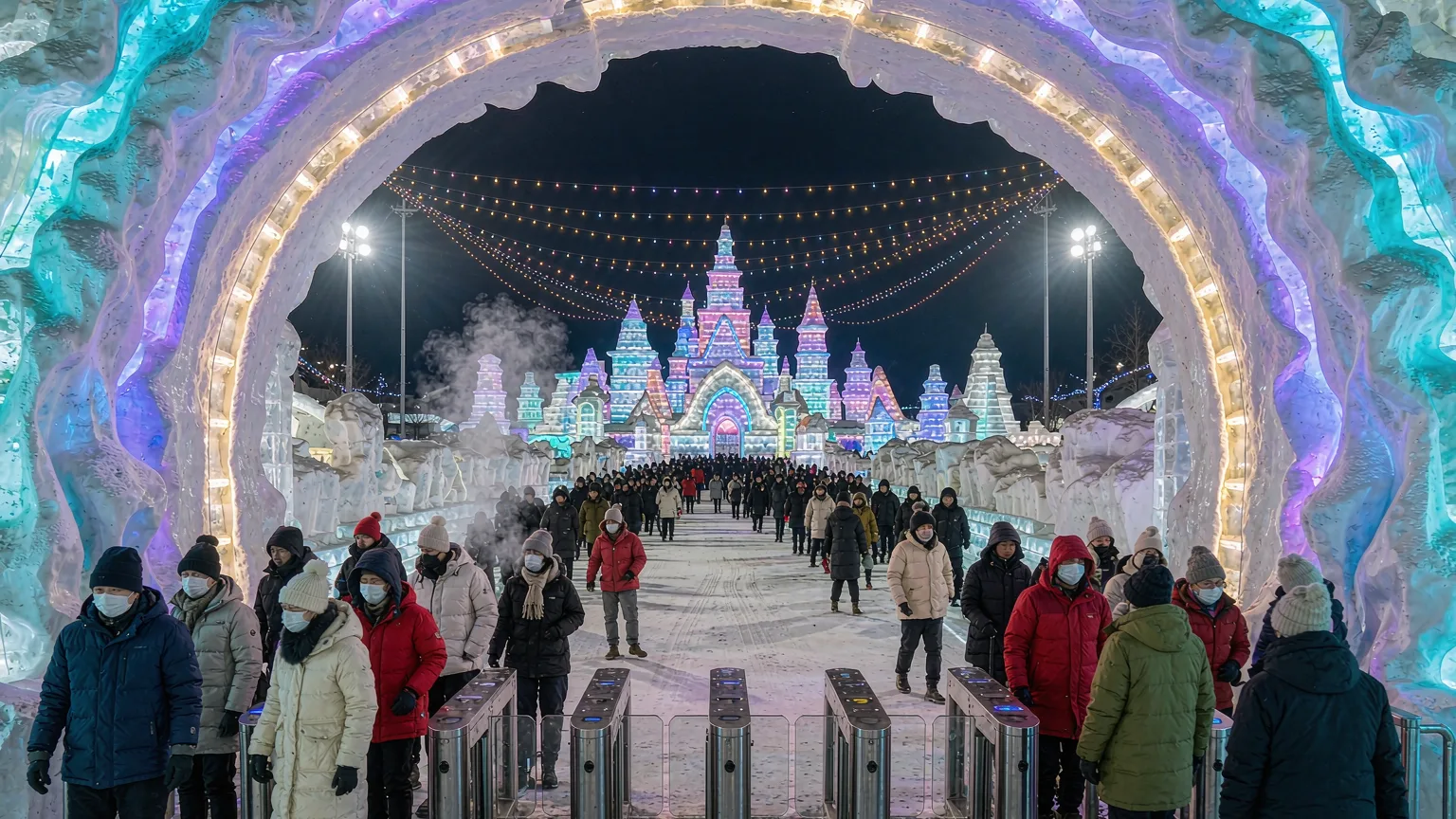
From Harbin's city centre, take a taxi or ride-hailing car across the Songhua River to Songbei; the trip takes 20–40 minutes depending on traffic and costs roughly ¥30–60. In peak season, shuttle buses run from major hotels and from the Ice and Snow World metro stop on Line 2. Most travellers pair it with a daytime visit to Sun Island or the Siberian Tiger Park, then stay for the lights. We arrange private transfers so you arrive before the worst crowds and leave without a frozen wait.
Adult tickets are typically ¥328–¥390 depending on date and whether you enter before or after 13:00; children, students and seniors usually receive discounts with valid ID. Opening hours are generally 11:00–21:30, with lights coming on around 16:00. Book online in advance through the official WeChat mini-program or a ticketing platform, as peak dates sell out; foreign cards are often rejected, so link WeChat Pay or Alipay with an international card before you travel.
Visit between late December and mid-February, when the ice is thickest and the park is fully built. Arrive around 15:00–16:00: you see the sculptures in daylight, watch the lights switch on, and catch the evening atmosphere without the late-night cold. Avoid Chinese New Year week if you dislike crowds, and check the forecast, since extreme cold below -30°C can close attractions.
It usually opens in the last week of December and closes in late February or early March, depending on weather. The park is dismantled each spring, so there is no off-season access.
Temperatures often range from -15°C to -30°C. Wear thermal base layers, fleece or down mid-layers, a windproof coat, insulated boots, two pairs of gloves and a hat that covers your ears.
Rarely. Most vendors and ticket counters prefer WeChat Pay or Alipay. Set up one of these apps with an international card before arrival, and carry some cash as a backup.
Yes, with preparation. The park is flat and walkable, but cold exposure is the main challenge. Plan shorter visits, use warming halls often, and consider a private guide to manage pace and transfers.
Tell us your dates, group size and preferences — a dedicated consultant will reach out within 24 hours.