
Guest — sign in to save your enquiries.
My account
The Guangxi Museum of Nationalities is the definitive introduction to the twelve ethnic groups who call this subtropical province home, and its bronze-drum collection is the largest and finest in the world. Housed in a striking modern building shaped like a bronze drum on the banks of the Yong River, it turns a complex subject into an absorbing half-day. With our private guide handling tickets, translation and context, you get the stories behind the objects, not just the labels.
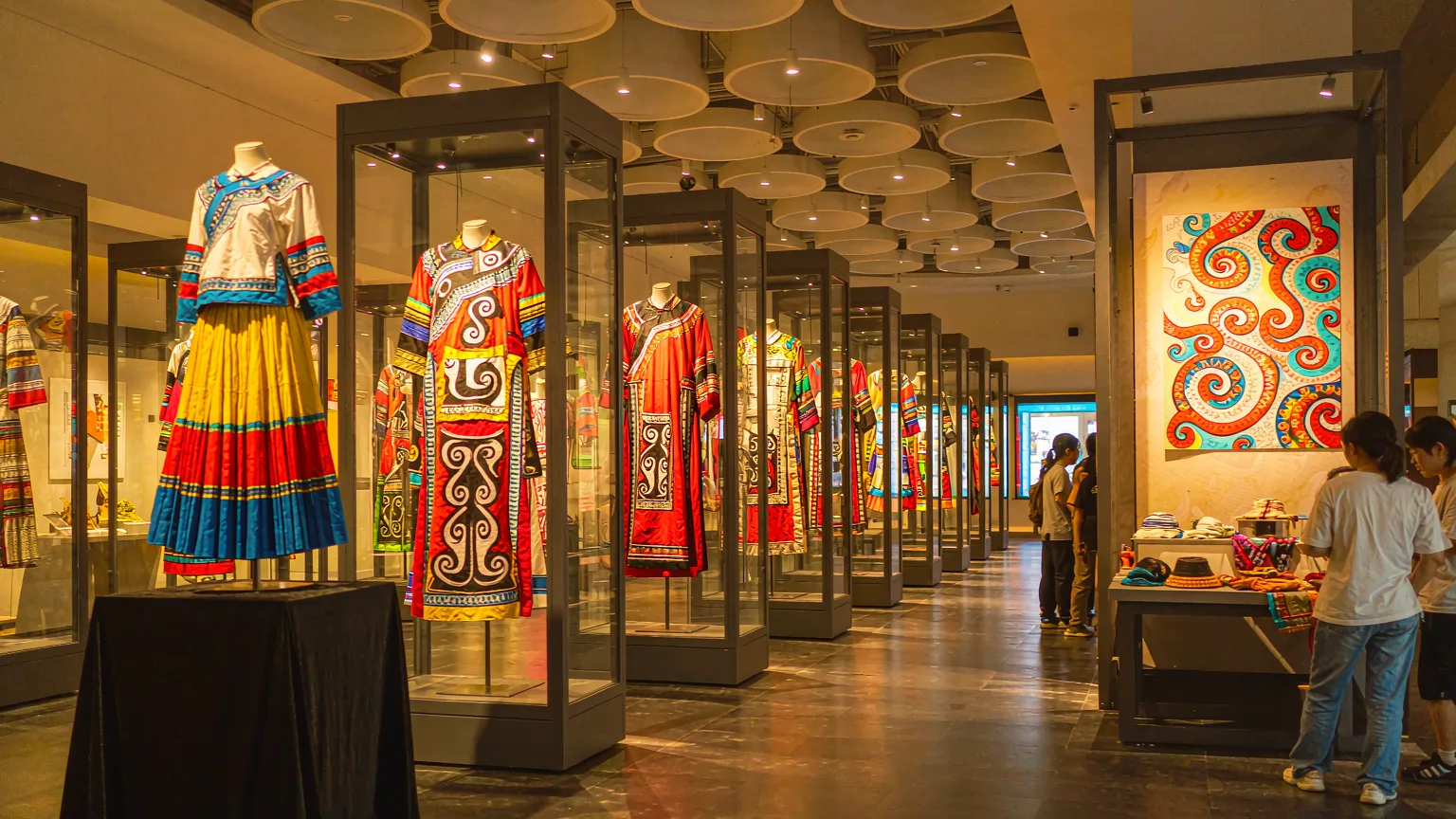
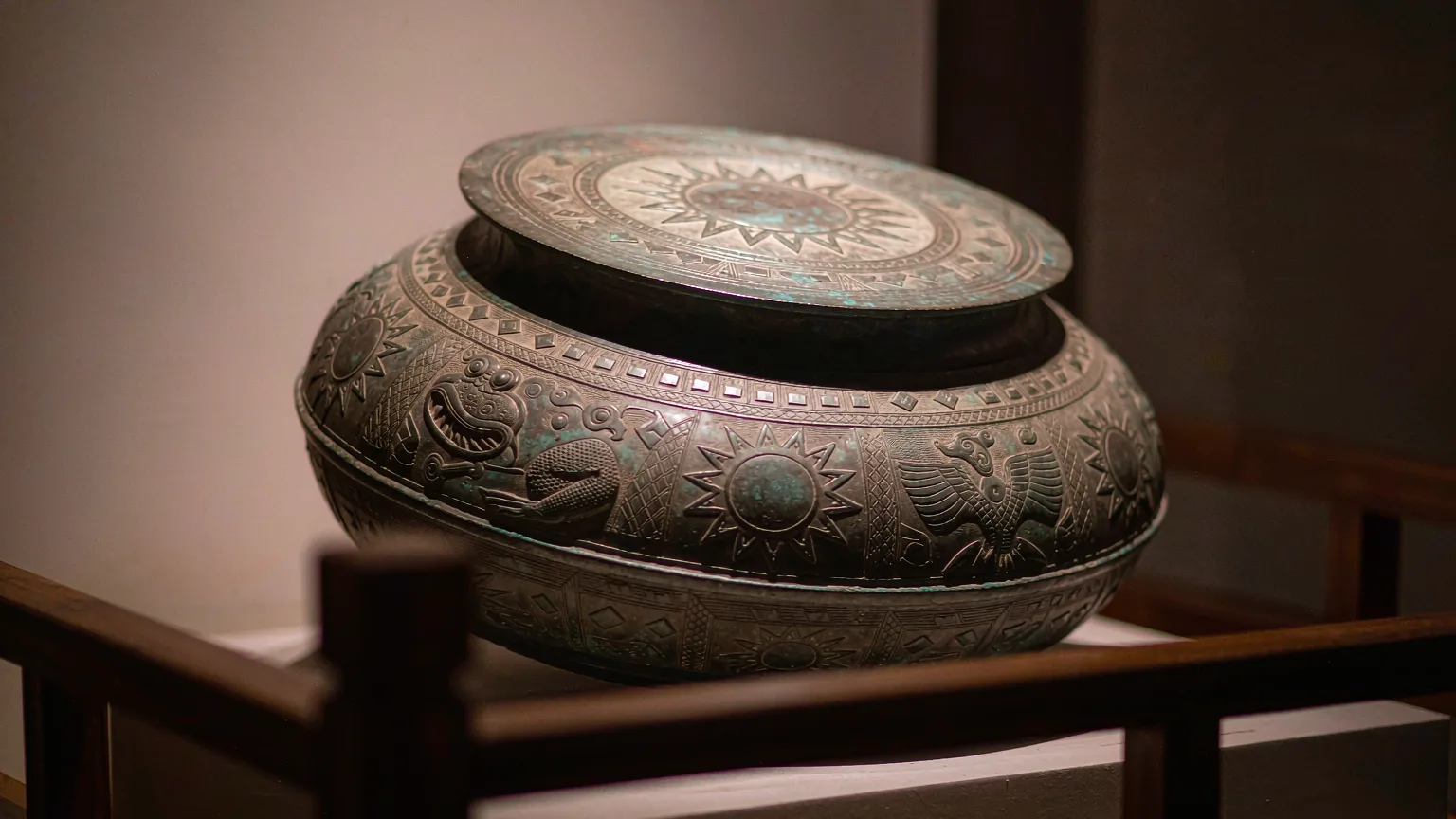
Opened in 2008 on the south bank of the Yong River in Nanning's Qingxiu district, the museum was purpose-built as the region's flagship ethnographic institution. Its architecture quotes the bronze drum, the ancient ritual instrument that still symbolises Zhuang and wider Lingnan culture; the facade's rippling copper panels echo drum patterns. Inside, permanent galleries cover the Zhuang, Yao, Miao, Dong, Mulam, Maonan, Hui, Jing, Yi, Shui, Gelao and Han peoples, with a dedicated bronze-drum hall holding hundreds of examples spanning more than two millennia. The collection is strongest on textiles, silverwork and festival ritual.
For travellers, the museum is the single best place to make sense of Guangxi before or after visiting villages in Longsheng, Sanjiang or Bama. Exhibits are arranged thematically rather than strictly by group, so you can trace how rice cultivation, river trade and mountain geography shaped distinct dress, architecture and music. English labelling is partial, which is exactly where our guides add value: they translate, explain the Zhuang script, and connect what you see to the living traditions you will encounter on the road. Allow two to three hours; the riverside setting also makes a pleasant stroll.
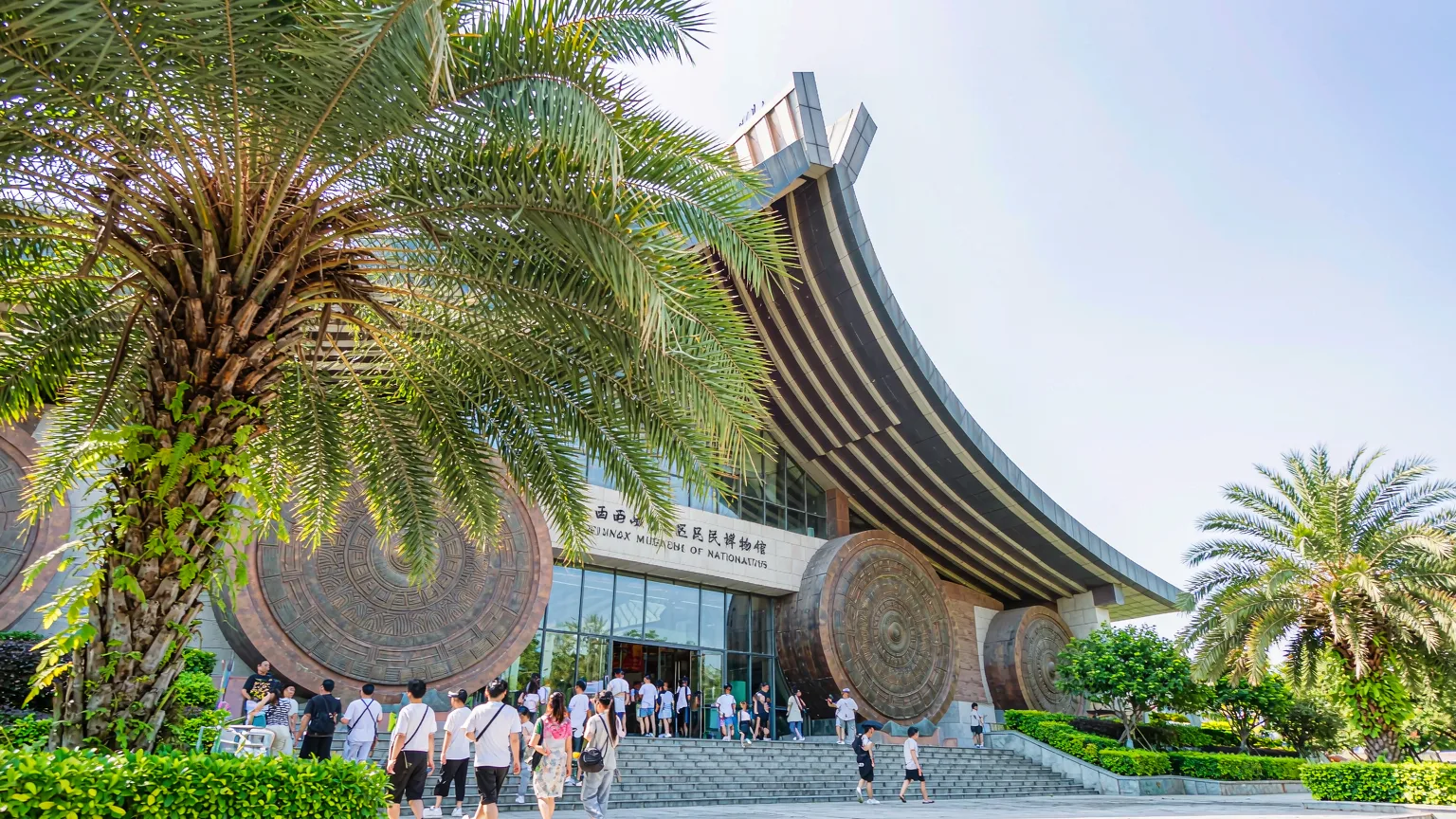
The museum sits at 34 Qinghuan Road, Qingxiu district, on the south bank of the Yong River, about 10 km southeast of Nanning's centre. The easiest approach is by taxi or DiDi from Chaoyang Square or Nanning East Railway Station (20–35 minutes, roughly ¥30–50). Public bus routes 601 and 605 stop nearby, and Metro Line 3's Qingxiu Mountain station is a short taxi ride away. It pairs naturally with Qingxiu Mountain or the Guangxi Museum in a single day; our guide can arrange a private car to link them smoothly.
Admission is free, though you must register with your passport at the entrance or reserve in advance via the museum's WeChat account; bring your passport as ID. Opening hours are 9:00–17:00, Tuesday to Sunday, with last entry at 16:00 and closed on Mondays except public holidays. Special exhibitions may charge ¥20–50. Payment for any tickets or audio guides is by WeChat Pay or Alipay, both of which now accept foreign cards; cash is rarely accepted.
Visit on a weekday morning, ideally arriving at 9:00 when doors open, to enjoy the galleries before school groups and tour buses arrive around 10:30. Guangxi's climate is hot and humid from May to September, so the air-conditioned halls are a welcome midday refuge; the dry, mild months of October to March are the most comfortable overall. Avoid Chinese public holidays, when the museum is packed.
Yes, general admission is free. You must register with your passport at the entrance or book a slot via the museum's WeChat account. Special exhibitions may charge ¥20–50.
Two to three hours covers the main galleries and bronze-drum hall comfortably. Add an hour if you want to read deeply or catch a craft demonstration.
Absolutely. It is the clearest introduction to Guangxi's twelve ethnic groups, and the bronze-drum collection alone justifies the trip.
The museum is cashless for any paid tickets or audio guides. WeChat Pay and Alipay now link to foreign cards, so set one up before you arrive.
Tell us your dates, group size and preferences — a dedicated consultant will reach out within 24 hours.